Tian Yikui, Pan Dongfeng, Chordia Mahendra D, French Brent A, Kron Irving L, Yang Zequan
Department of Cardiovascular Surgery, Tianjin Medical University General Hospital, Tianjin, China.
Department of Surgery, University of Virginia, P.O. Box 800709, Charlottesville, VA, 22908, USA.
Basic Res Cardiol. 2016 Nov;111(6):62. doi: 10.1007/s00395-016-0583-0. Epub 2016 Sep 19.
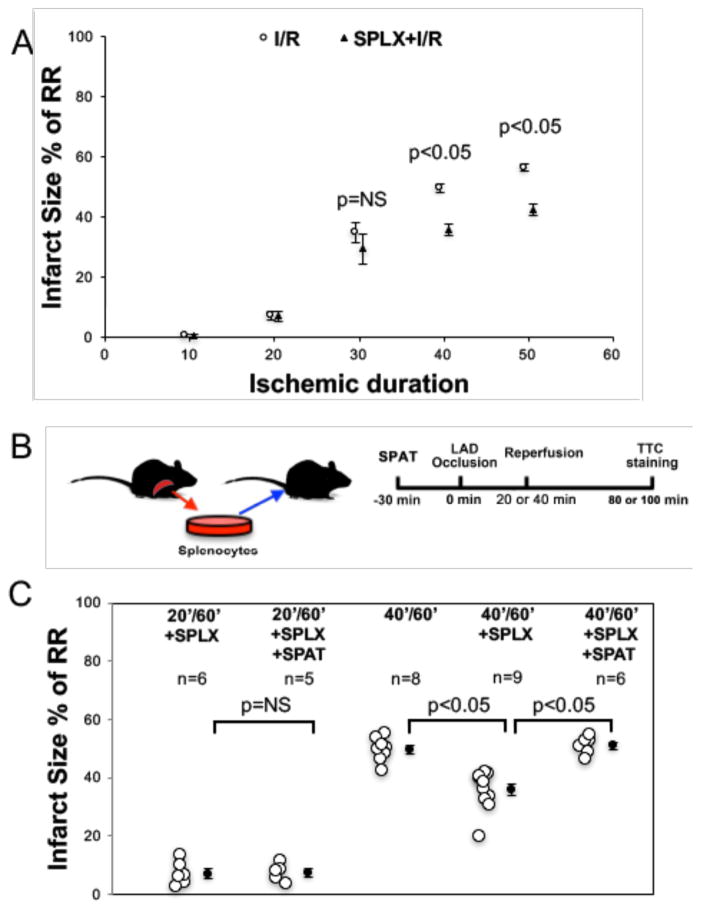
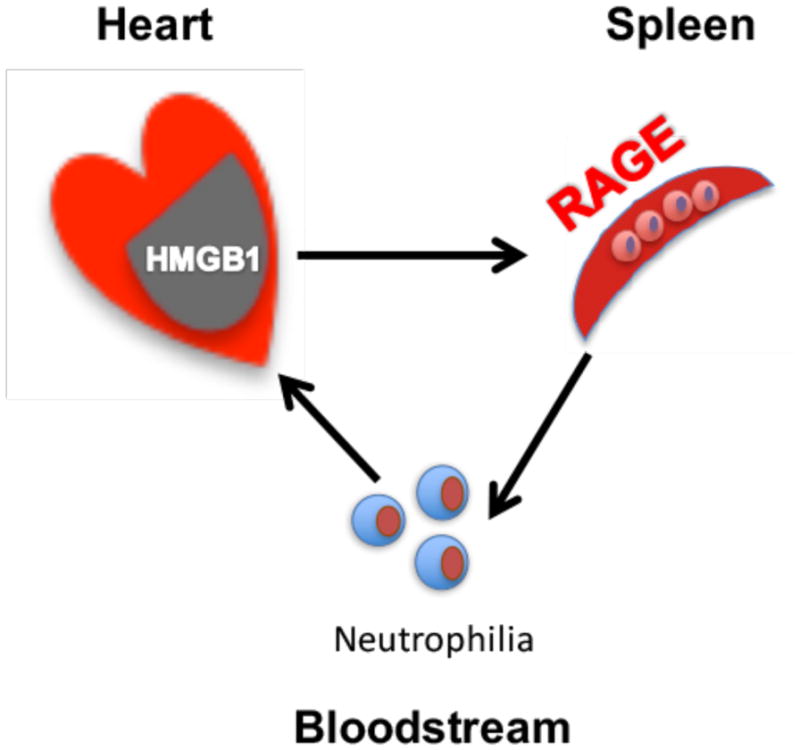
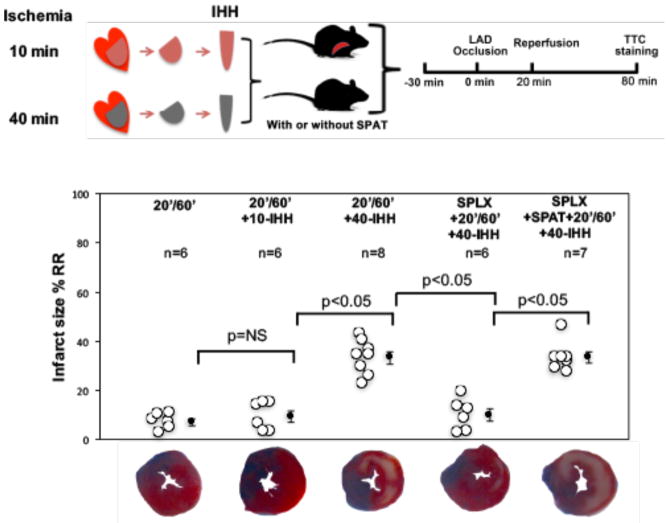
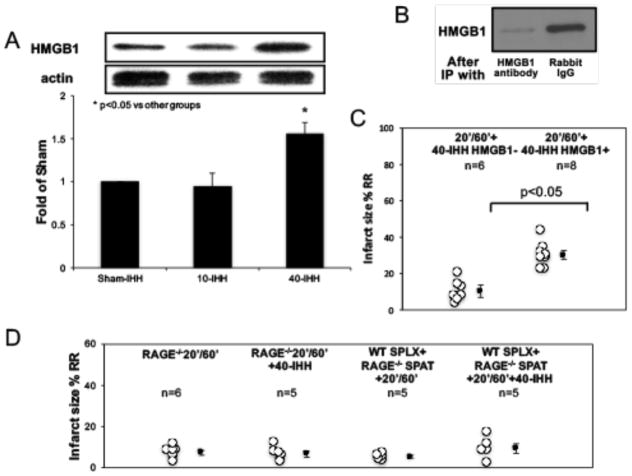
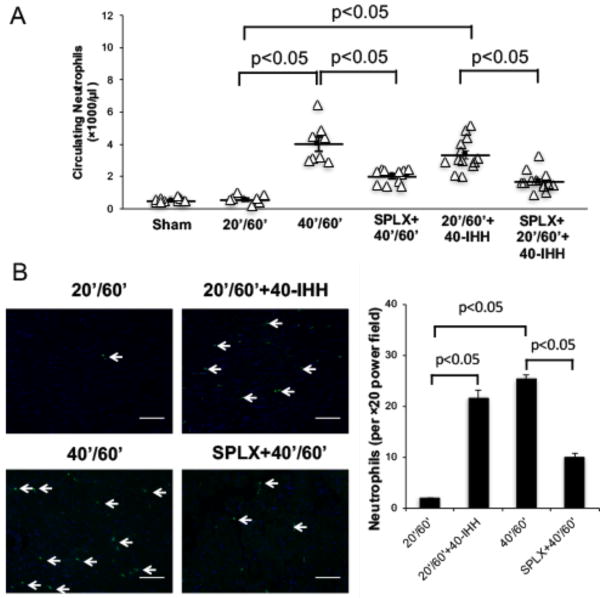
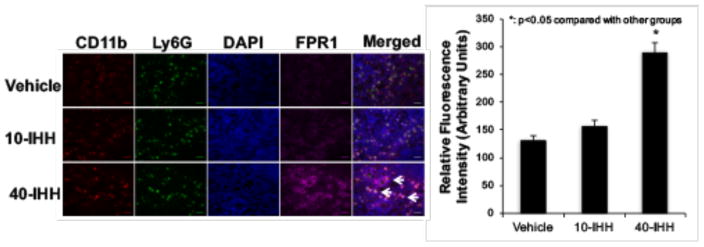
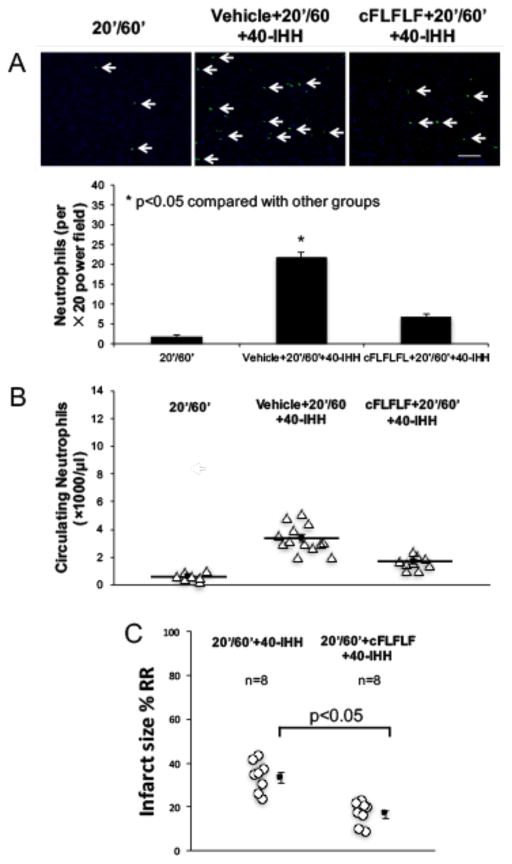
The spleen plays a critical role in post-infarct myocardial remodeling. However, the role of the spleen in exacerbating myocardial infarction (MI) during acute ischemia/reperfusion (I/R) injury is unknown. The present study tests the hypothesis that splenic leukocytes are activated by substances released from ischemic myocardium to subsequently exacerbate myocardial injury during reperfusion. The left coronary artery in C57BL/6 mice underwent various durations of occlusion followed by 60 min of reperfusion (denoted as min/min of I/R) with or without splenectomy prior to I/R injury. Splenectomy significantly decreased myocardial infarct size (IS) in 40'/60' and 50'/60' groups (p < 0.05); however, it had no effect on IS in 10'/60', 20'/60' and 30'/60' groups (p = NS). In the 20'/60' group, infusion of 40-min ischemic heart homogenate (40-IHH) upon reperfusion increased IS by >threefold versus infusion of 10-IHH (p < 0.05). Splenectomy abolished the infarct-exacerbating effect of 40-IHH, which was restored by splenic leukocyte adoptive transfer (SPAT). Furthermore, depletion of HMGB1 in the 40-IHH group abolished its infarct-exacerbating effect (p < 0.05), and 40-IHH failed to increase IS in both RAGE(-/-) mice and splenectomized wild-type mice with SPAT from RAGE(-/-) mice. The injection of 40-IHH significantly increased formyl peptide receptor 1 (FPR1) expression in sham spleens when compared to 10-IHH-treated sham and control mice. cFLFLF, a specific FPR1 antagonist, reduced myocardial neutrophil infiltration and abrogated the infarct-exacerbating effect of 40-IHH during reperfusion. A cardio (HMGB1)-splenic (RAGE receptor) signaling axis exists and contributes to myocardial infarct exacerbation during reperfusion after prolonged ischemic insults by activating splenic leukocytes. The FPR1 is a potential therapeutic target for inhibiting the cardio-splenic axis that augments infarct size during post-ischemic reperfusion.
脾脏在心肌梗死后的心肌重塑中起关键作用。然而,脾脏在急性缺血/再灌注(I/R)损伤期间加重心肌梗死(MI)的作用尚不清楚。本研究检验了以下假设:脾脏白细胞被缺血心肌释放的物质激活,进而在再灌注期间加重心肌损伤。对C57BL/6小鼠的左冠状动脉进行不同时长的阻塞,然后在I/R损伤前进行或不进行脾切除的情况下再灌注60分钟(表示为I/R的分钟数/分钟数)。脾切除显著减小了40'/60'和50'/60'组的心肌梗死面积(IS)(p<0.05);然而,它对10'/60'、20'/60'和30'/60'组的IS没有影响(p=无显著性差异)。在20'/60'组中,再灌注时输注40分钟缺血心脏匀浆(40-IHH)使IS增加了三倍以上,而输注10-IHH时则不然(p<0.05)。脾切除消除了40-IHH的梗死加重作用,而通过脾白细胞过继转移(SPAT)可恢复该作用。此外,40-IHH组中HMGB1的缺失消除了其梗死加重作用(p<0.05),并且40-IHH在RAGE(-/-)小鼠以及来自RAGE(-/-)小鼠的SPAT脾切除野生型小鼠中均未能增加IS。与10-IHH处理的假手术和对照小鼠相比,注射40-IHH显著增加了假手术脾脏中甲酸肽受体1(FPR1)的表达。cFLFLF,一种特异性FPR1拮抗剂,减少了心肌中性粒细胞浸润,并消除了再灌注期间40-IHH的梗死加重作用。存在一条心脏(HMGB1)-脾脏(RAGE受体)信号轴,通过激活脾脏白细胞,在长时间缺血损伤后的再灌注期间促进心肌梗死加重。FPR1是抑制在缺血后再灌注期间增大梗死面积的心脏-脾脏轴的一个潜在治疗靶点。