Jagannathan Sujatha, Bradley Robert K
Computational Biology Program, Public Health Sciences Division, Fred Hutchinson Cancer Research Center, Seattle, Washington 98109, USA.
Basic Sciences Division, Fred Hutchinson Cancer Research Center, Seattle, Washington 98109, USA.
Genome Res. 2016 Dec;26(12):1639-1650. doi: 10.1101/gr.205070.116. Epub 2016 Sep 19.
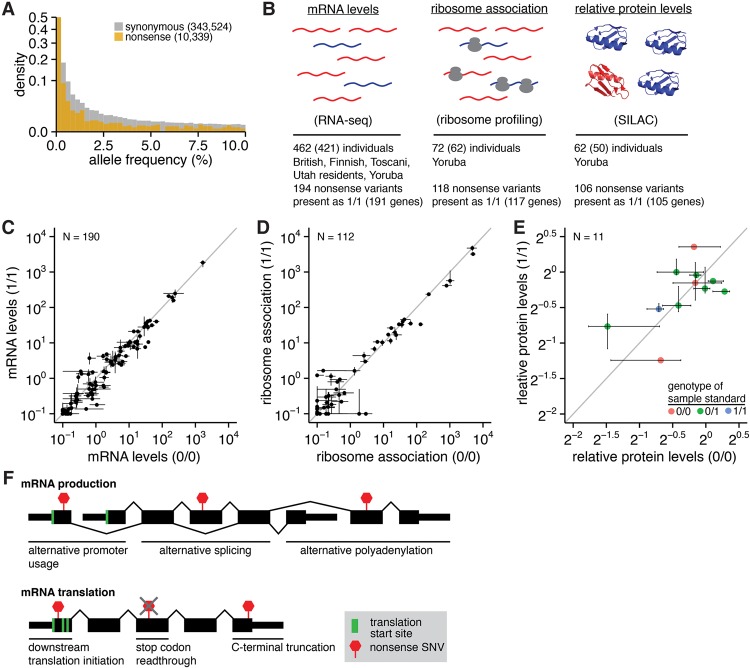
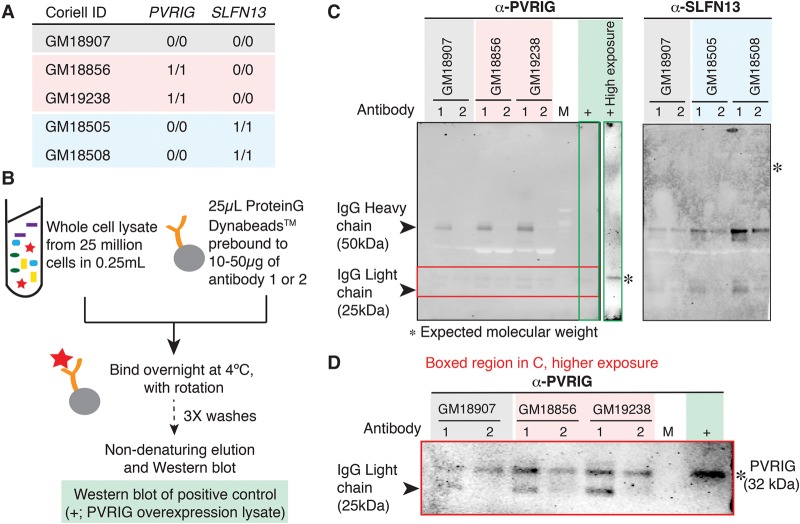
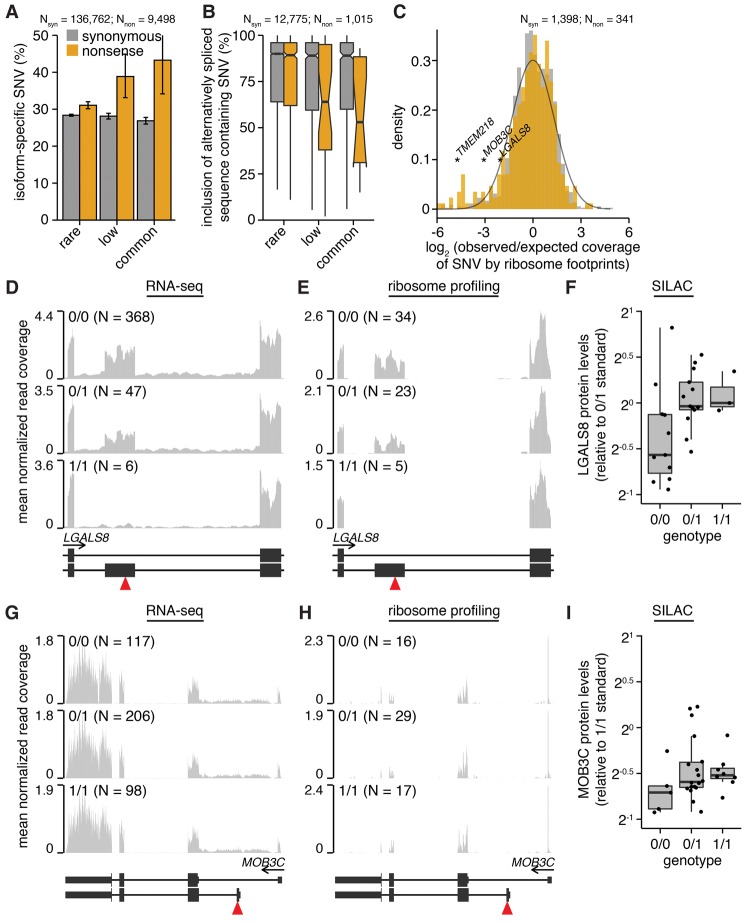
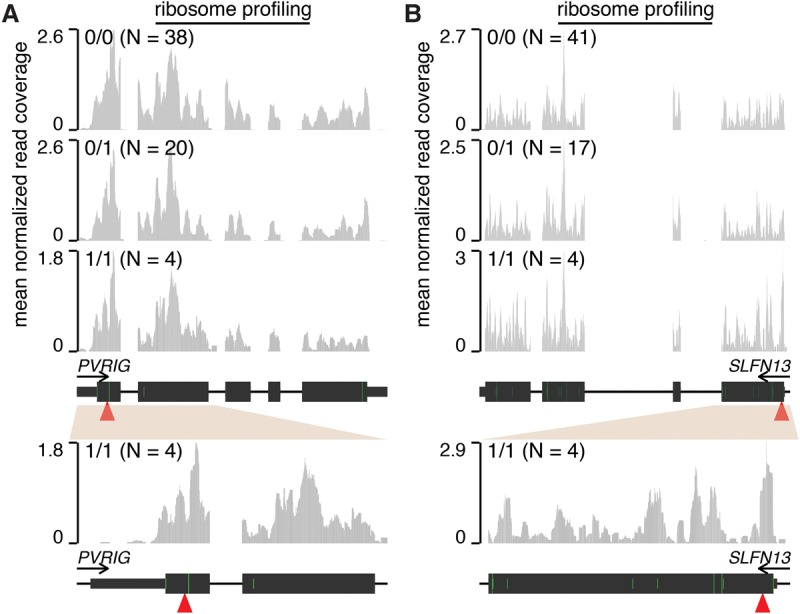
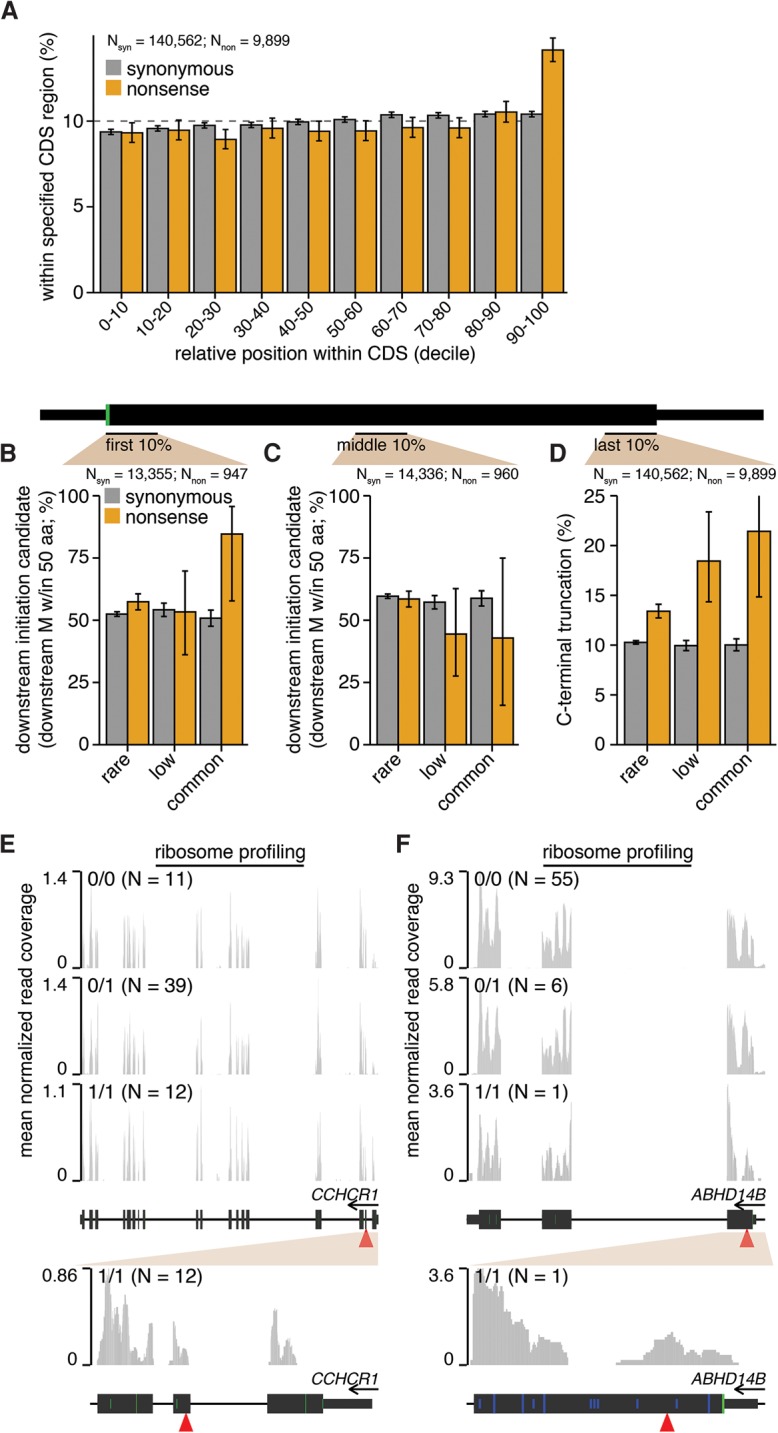
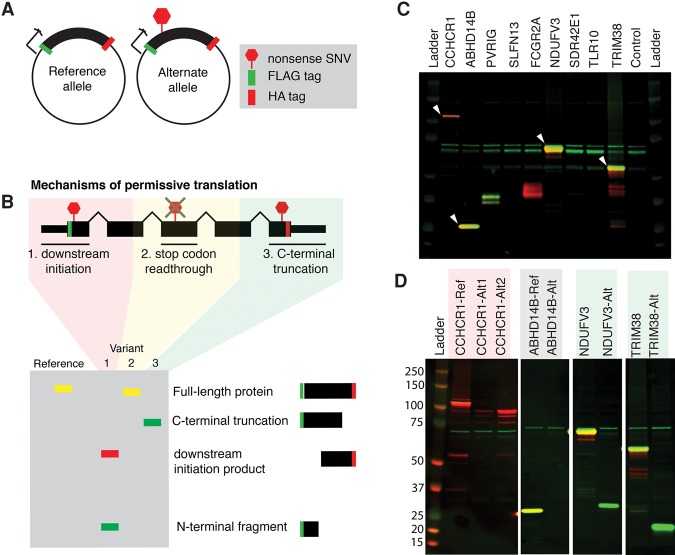
Genetic variants that disrupt protein-coding DNA are ubiquitous in the human population, with about 100 such loss-of-function variants per individual. While most loss-of-function variants are rare, a subset have risen to high frequency and occur in a homozygous state in healthy individuals. It is unknown why these common variants are well tolerated, even though some affect essential genes implicated in Mendelian disease. Here, we combine genomic, proteomic, and biochemical data to demonstrate that many common nonsense variants do not ablate protein production from their host genes. We provide computational and experimental evidence for diverse mechanisms of gene rescue, including alternative splicing, stop codon readthrough, alternative translation initiation, and C-terminal truncation. Our results suggest a molecular explanation for the mild fitness costs of many common nonsense variants and indicate that translational plasticity plays a prominent role in shaping human genetic diversity.
破坏蛋白质编码DNA的基因变异在人类群体中普遍存在,每个人大约有100个这样的功能丧失变异。虽然大多数功能丧失变异是罕见的,但有一部分已上升到高频,并在健康个体中以纯合状态出现。目前尚不清楚为什么这些常见变异能被很好地耐受,尽管有些变异影响了与孟德尔疾病相关的关键基因。在这里,我们结合基因组、蛋白质组和生化数据,证明许多常见的无义变异不会消除其宿主基因的蛋白质产生。我们为多种基因拯救机制提供了计算和实验证据,包括可变剪接、终止密码子通读、可变翻译起始和C末端截短。我们的结果为许多常见无义变异的轻微适应性代价提供了分子解释,并表明翻译可塑性在塑造人类遗传多样性中起着重要作用。