Instituto de Investigação e Inovação em Saúde (i3S), Universidade do Porto, NanoBiomaterials for targeted therapies Group, Rua Alfredo Allen 208, 4200-135 Porto, Portugal.
Instituto de Engenharia Biomédica (INEB), Universidade do Porto, Porto, Portugal.
Sci Rep. 2016 Sep 20;6:33470. doi: 10.1038/srep33470.
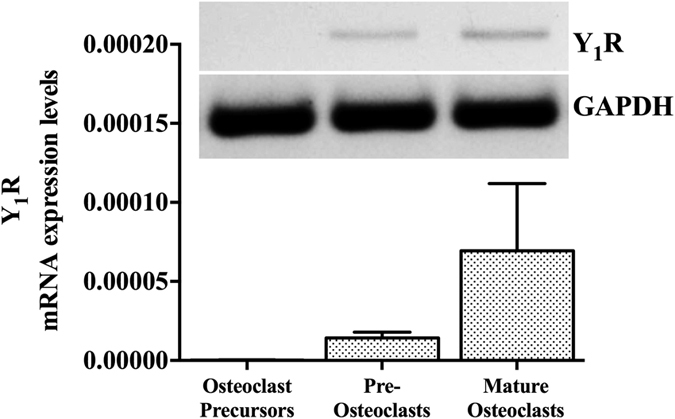
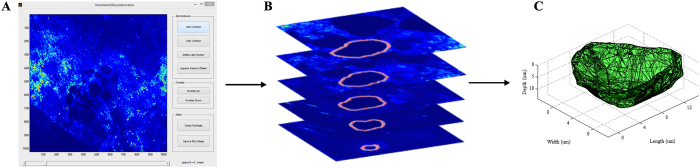
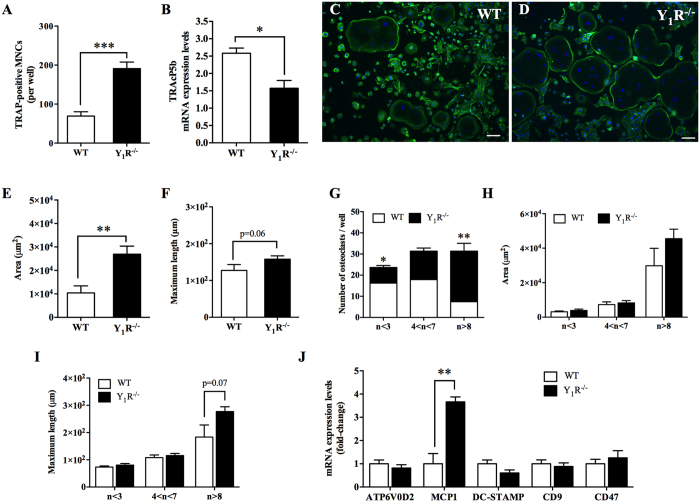
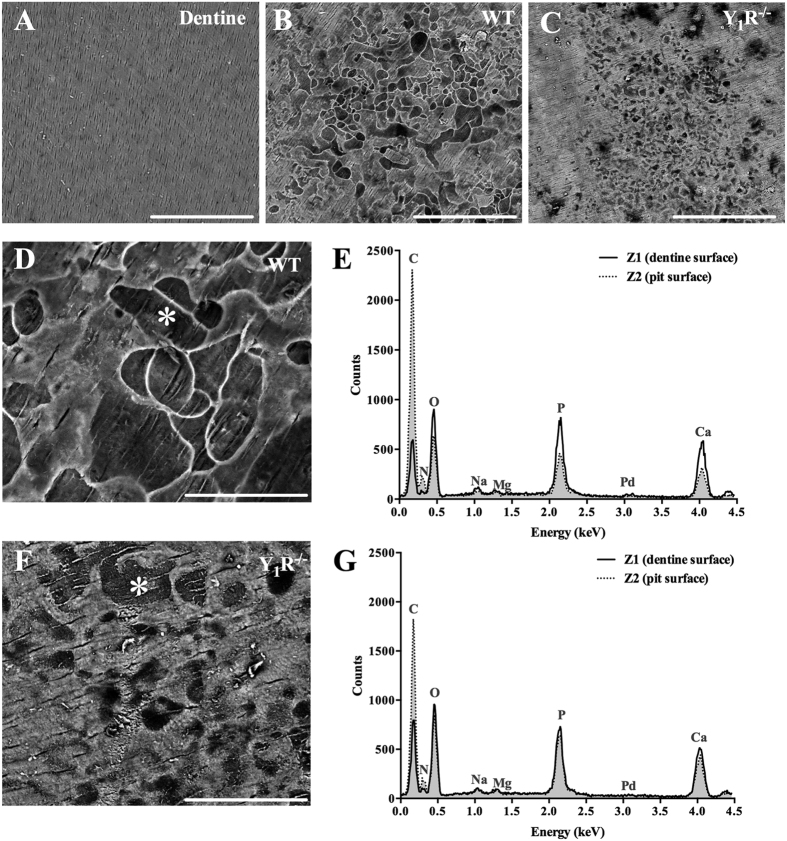
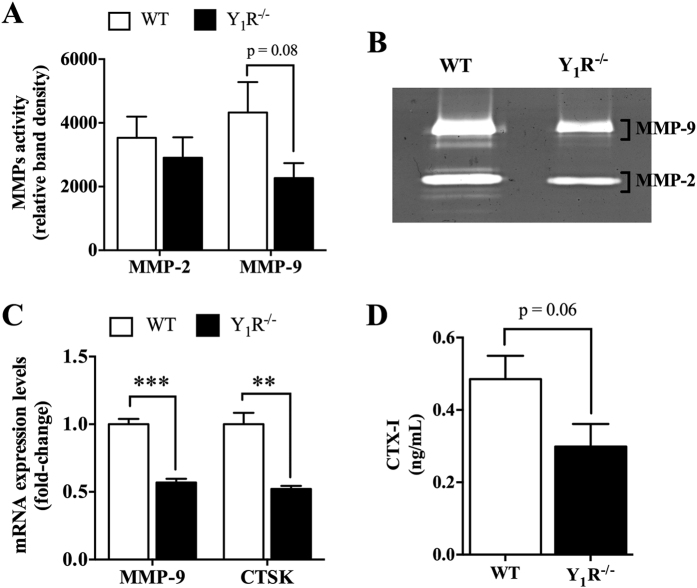
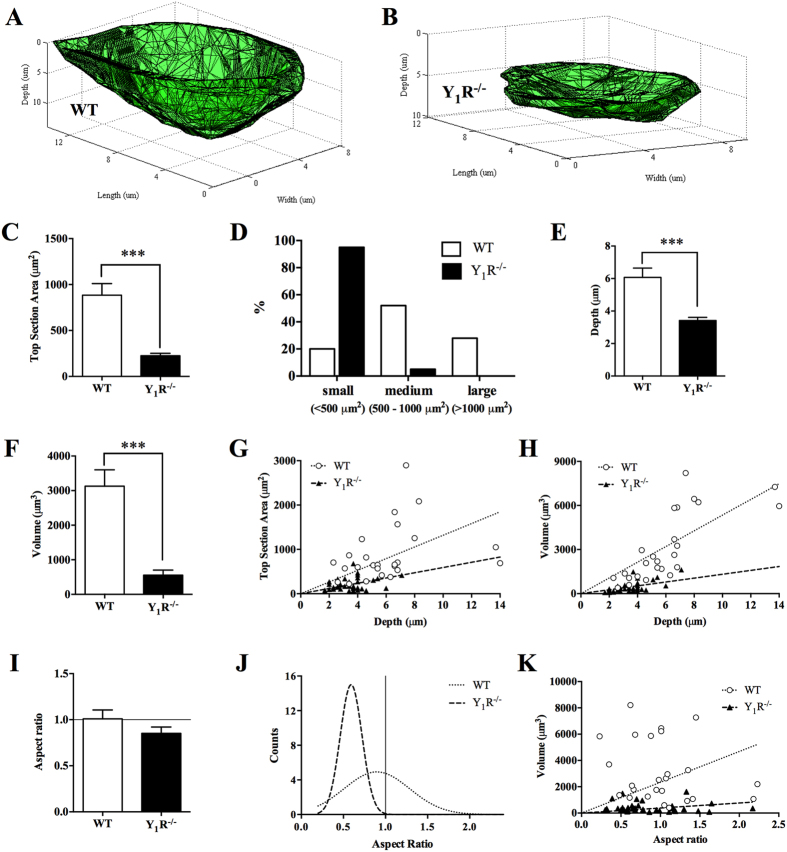
Y1 receptor (Y1R)-signalling pathway plays a pivotal role in the regulation of bone metabolism. The lack of Y1R-signalling stimulates bone mass accretion that has been mainly attributed to Y1R disruption from bone-forming cells. Still, the involvement of Y1R-signalling in the control of bone-resorbing cells remained to be explored. Therefore, in this study we assessed the role of Y1R deficiency in osteoclast formation and resorption activity. Here we demonstrate that Y1R germline deletion (Y1R(-/-)) led to increased formation of highly multinucleated (n > 8) osteoclasts and enhanced surface area, possibly due to monocyte chemoattractant protein-1 (MCP-1) overexpression regulated by RANKL-signalling. Interestingly, functional studies revealed that these giant Y1R(-/-) multinucleated cells produce poorly demineralized eroded pits, which were associated to reduce expression of osteoclast matrix degradation markers, such as tartrate-resistant acid phosphatase-5b (TRAcP5b), matrix metalloproteinase-9 (MMP-9) and cathepsin-K (CTSK). Tridimensional (3D) morphologic analyses of resorption pits, using an in-house developed quantitative computational tool (BonePit), showed that Y1R(-/-) resorption pits displayed a marked reduction in surface area, volume and depth. Together, these data demonstrates that the lack of Y1Rs stimulates the formation of larger multinucleated osteoclasts in vitro with reduced bone-resorbing activity, unveiling a novel therapeutic option for osteoclastic bone diseases based on Y1R-signalling ablation.
Y1 受体 (Y1R)-信号通路在调节骨代谢中发挥着关键作用。缺乏 Y1R 信号会刺激骨量增加,这主要归因于成骨细胞中 Y1R 的破坏。然而,Y1R 信号在控制破骨细胞中的作用仍有待探索。因此,在这项研究中,我们评估了 Y1R 缺乏在破骨细胞形成和吸收活性中的作用。我们证明 Y1R 种系缺失 (Y1R(-/-)) 导致高度多核 (n > 8) 破骨细胞的形成和表面积增加,这可能是由于 RANKL 信号调节的单核细胞趋化蛋白 1 (MCP-1) 过表达所致。有趣的是,功能研究表明,这些巨大的 Y1R(-/-)多核细胞产生的矿化侵蚀小窝较差,这与破骨细胞基质降解标志物的表达减少有关,如抗酒石酸酸性磷酸酶 5b (TRAcP5b)、基质金属蛋白酶 9 (MMP-9) 和组织蛋白酶 K (CTSK)。使用内部开发的定量计算工具 (BonePit) 对侵蚀小窝进行三维 (3D) 形态分析表明,Y1R(-/-) 侵蚀小窝的表面积、体积和深度明显减少。综上所述,这些数据表明,缺乏 Y1R 会刺激体外形成更大的多核破骨细胞,骨吸收活性降低,为基于 Y1R 信号消融的破骨细胞骨疾病提供了一种新的治疗选择。