Crawford Lisa J, Anderson Gordon, Johnston Cliona K, Irvine Alexandra E
Centre for Cancer Research and Cell Biology (CCRCB), Queen's University Belfast, Belfast, UK.
Oncotarget. 2016 Oct 25;7(43):70481-70493. doi: 10.18632/oncotarget.12026.
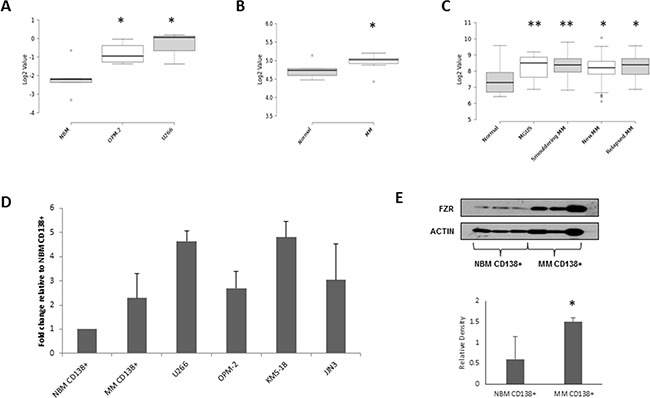
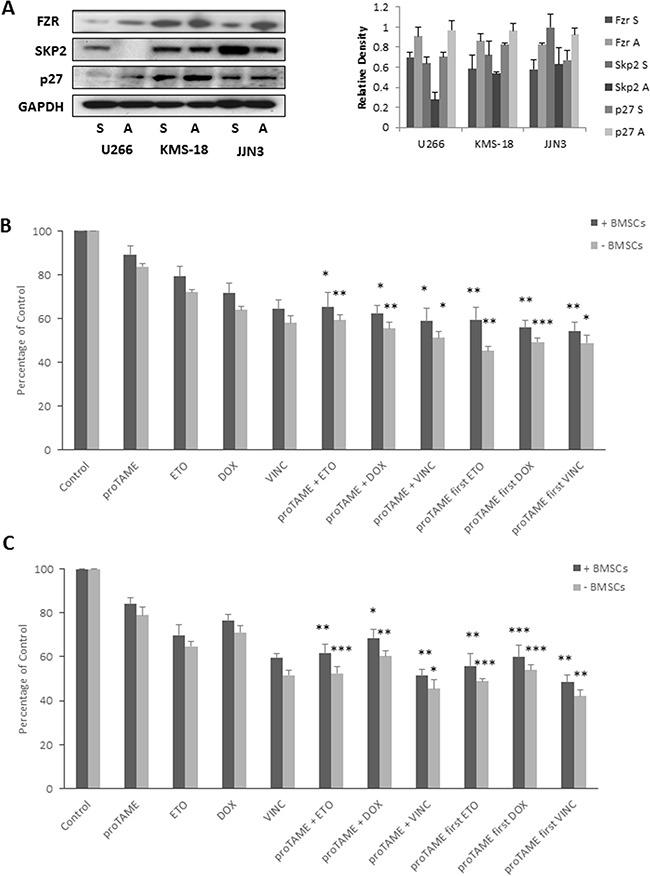
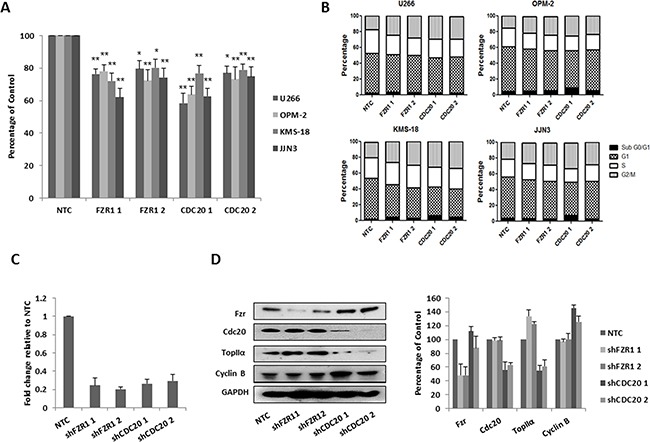
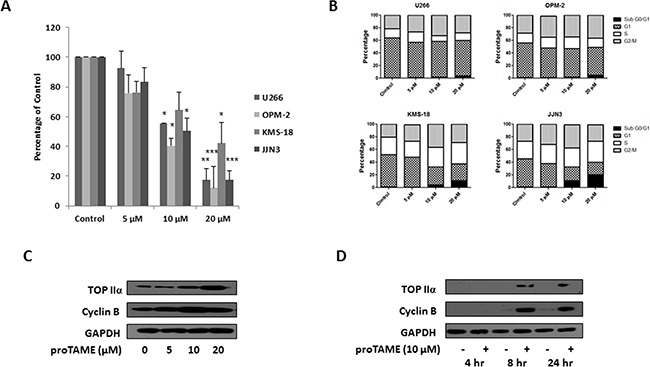
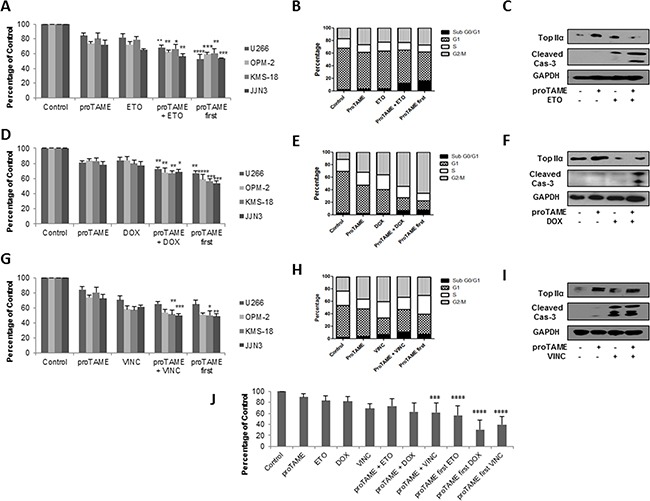
Multiple Myeloma (MM) is a haematological neoplasm characterised by the clonal proliferation of malignant plasma cells in the bone marrow. The success of proteasome inhibitors in the treatment of MM has highlighted the importance of the ubiquitin proteasome system (UPS) in the pathogenesis of this disease. In this study, we analysed gene expression of UPS components to identify novel therapeutic targets within this pathway in MM. Here we demonstrate how this approach identified previously validated and novel therapeutic targets. In addition we show that FZR1 (Fzr), a cofactor of the multi-subunit E3 ligase complex anaphase-promoting complex/cyclosome (APC/C), represents a novel therapeutic target in myeloma. The APC/C associates independently with two cofactors, Fzr and Cdc20, to control cell cycle progression. We found high levels of FZR1 in MM primary cells and cell lines and demonstrate that expression is further increased on adhesion to bone marrow stromal cells (BMSCs). Specific knockdown of either FZR1 or CDC20 reduced viability and induced growth arrest of MM cell lines, and resulted in accumulation of APC/CFzr substrate Topoisomerase IIα (TOPIIα) or APC/CCdc20 substrate Cyclin B. Similar effects were observed following treatment with proTAME, an inhibitor of both APC/CFzr and APC/CCdc20. Combinations of proTAME with topoisomerase inhibitors, etoposide and doxorubicin, significantly increased cell death in MM cell lines and primary cells, particularly if TOPIIα levels were first increased through pre-treatment with proTAME. Similarly, combinations of proTAME with the microtubule inhibitor vincristine resulted in enhanced cell death. This study demonstrates the potential of targeting the APC/C and its cofactors as a therapeutic approach in MM.
多发性骨髓瘤(MM)是一种血液系统肿瘤,其特征是骨髓中恶性浆细胞的克隆性增殖。蛋白酶体抑制剂在MM治疗中的成功突出了泛素蛋白酶体系统(UPS)在该疾病发病机制中的重要性。在本研究中,我们分析了UPS组分的基因表达,以确定MM中该信号通路内的新治疗靶点。在此我们展示了这种方法如何鉴定出先前已验证的和新的治疗靶点。此外,我们表明,多亚基E3连接酶复合物后期促进复合物/细胞周期体(APC/C)的辅因子FZR1(Fzr)是骨髓瘤中的一个新治疗靶点。APC/C独立地与两个辅因子Fzr和Cdc20结合,以控制细胞周期进程。我们发现MM原代细胞和细胞系中FZR1水平较高,并证明在与骨髓基质细胞(BMSC)黏附时其表达进一步增加。FZR1或CDC20的特异性敲低降低了MM细胞系的活力并诱导其生长停滞,并导致APC/CFzr底物拓扑异构酶IIα(TOPIIα)或APC/CCdc20底物细胞周期蛋白B的积累。在用APC/CFzr和APC/CCdc20的抑制剂proTAME处理后也观察到了类似的效果。proTAME与拓扑异构酶抑制剂依托泊苷和阿霉素联合使用,可显著增加MM细胞系和原代细胞的细胞死亡,特别是如果TOPIIα水平首先通过proTAME预处理而升高。同样,proTAME与微管抑制剂长春新碱联合使用可增强细胞死亡。本研究证明了靶向APC/C及其辅因子作为MM治疗方法的潜力。