Wei Huilin, An Jie, Shen Hui, Zeng Ling-Li, Qiu Shijun, Hu Dewen
Department of Automatic Control, College of Mechatronics and Automation, National University of Defense Technology Changsha, China.
Department of Medical Imaging, The First Affiliated Hospital of Guangzhou University of Chinese Medicine Guangzhou, China.
Front Hum Neurosci. 2016 Sep 7;10:447. doi: 10.3389/fnhum.2016.00447. eCollection 2016.
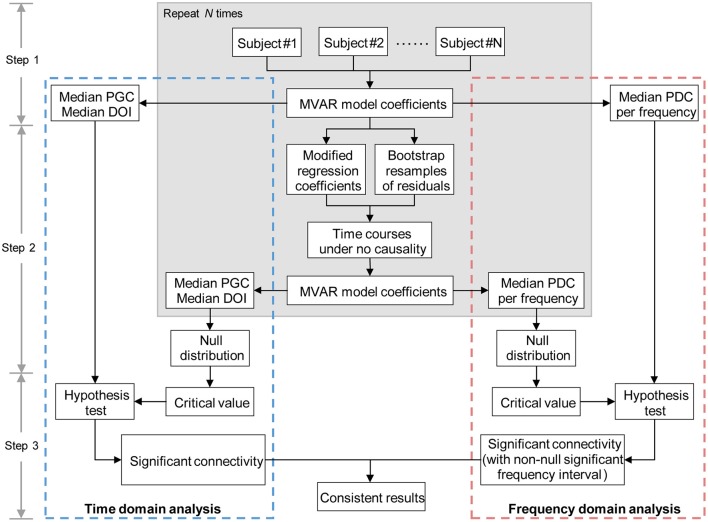
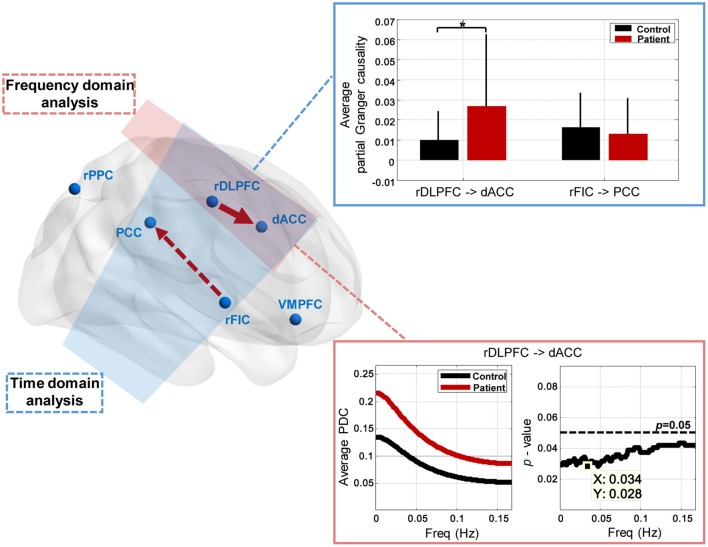
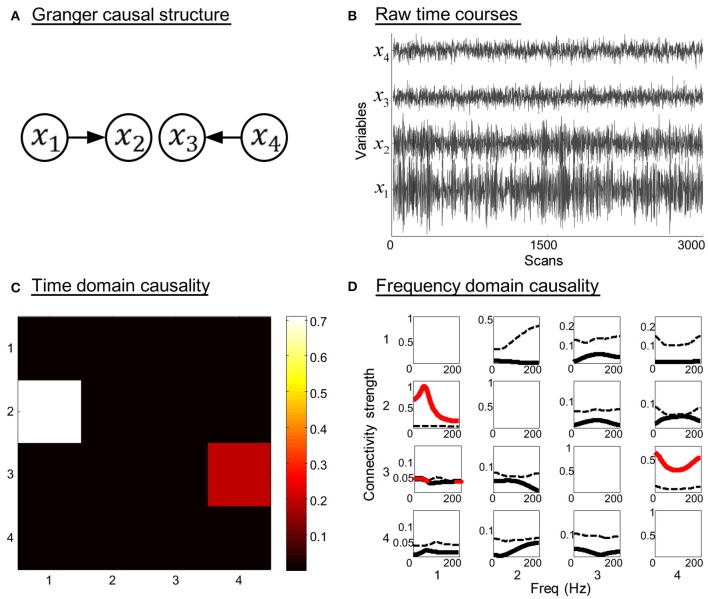
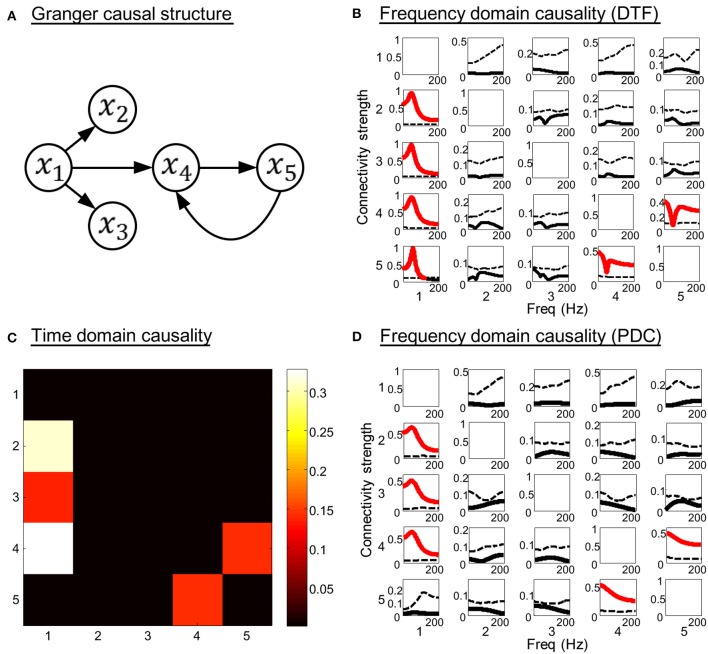
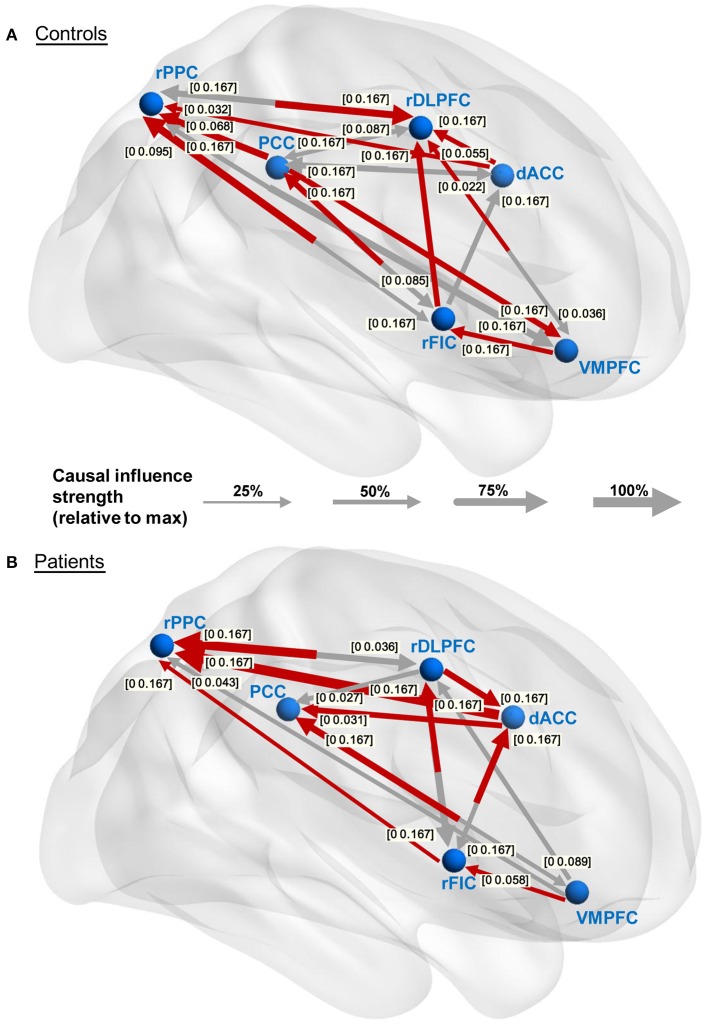
Idiopathic generalized epilepsy (IGE) patients with generalized tonic-clonic seizures (GTCS) suffer long-term cognitive impairments, and present a higher incidence of psychosocial and psychiatric disturbances than healthy people. It is possible that the cognitive dysfunctions and higher psychopathological risk in IGE-GTCS derive from disturbed causal relationship among core neurocognitive brain networks. To test this hypothesis, we examined the effective connectivity across the salience network (SN), default mode network (DMN), and central executive network (CEN) using resting-state functional magnetic resonance imaging (fMRI) data collected from 27 IGE-GTCS patients and 29 healthy controls. In the study, a combination framework of time domain and frequency domain multivariate Granger causality analysis was firstly proposed, and proved to be valid and accurate by simulation experiments. Using this method, we then observed significant differences in the effective connectivity graphs between the patient and control groups. Specifically, between-group statistical analysis revealed that relative to the healthy controls, the patients established significantly enhanced Granger causal influence from the dorsolateral prefrontal cortex to the dorsal anterior cingulate cortex, which is coherent both in the time and frequency domains analyses. Meanwhile, time domain analysis also revealed decreased Granger causal influence from the right fronto-insular cortex to the posterior cingulate cortex in the patients. These findings may provide new evidence for functional brain organization disruption underlying cognitive dysfunctions and psychopathological risk in IGE-GTCS.
患有全身强直阵挛发作(GTCS)的特发性全身性癫痫(IGE)患者存在长期认知障碍,且与健康人相比,其社会心理和精神障碍的发生率更高。IGE-GTCS患者的认知功能障碍和较高的精神病理风险可能源于核心神经认知脑网络之间因果关系的紊乱。为了验证这一假设,我们使用从27例IGE-GTCS患者和29名健康对照者收集的静息态功能磁共振成像(fMRI)数据,研究了突显网络(SN)、默认模式网络(DMN)和中央执行网络(CEN)之间的有效连接性。在本研究中,首次提出了时域和频域多变量格兰杰因果分析的联合框架,并通过模拟实验证明其有效且准确。使用该方法,我们随后观察到患者组和对照组之间有效连接图存在显著差异。具体而言,组间统计分析显示,相对于健康对照者,患者从背外侧前额叶皮质到背侧前扣带回皮质建立了显著增强的格兰杰因果影响,这在时域和频域分析中均是一致的。同时,时域分析还显示患者从右侧额岛叶皮质到后扣带回皮质的格兰杰因果影响降低。这些发现可能为IGE-GTCS患者认知功能障碍和精神病理风险背后的脑功能组织破坏提供新证据。