Hong Yu-Pu, Guo Wen-Yi, Wang Wei-Xing, Zhao Liang, Xiang Ming-Wei, Mei Fang-Chao, Abliz Ablikim, Hu Peng, Deng Wen-Hong, Yu Jia
Department of General Surgery, Renmin Hospital of Wuhan University, 238 Jiefang Road, Wuhan, Hubei Province 430060, China; Key Laboratory of Hubei Province for Digestive System Disease, 9 Zhangzhidong Road, Wuhan, Hubei Province 430060, China.
Department of General Surgery, Renmin Hospital of Wuhan University, 238 Jiefang Road, Wuhan, Hubei Province 430060, China.
Int J Endocrinol. 2016;2016:4592346. doi: 10.1155/2016/4592346. Epub 2016 Aug 30.
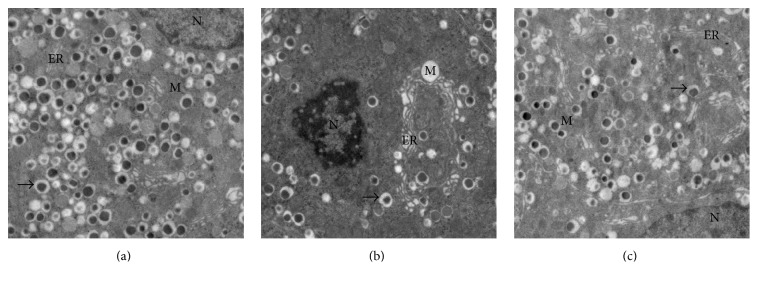
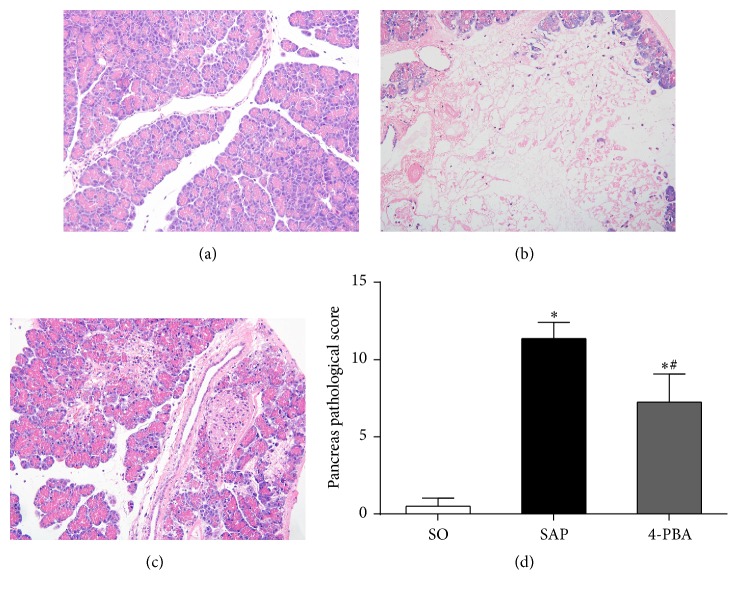
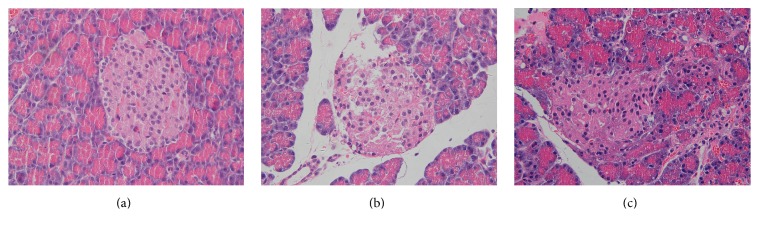
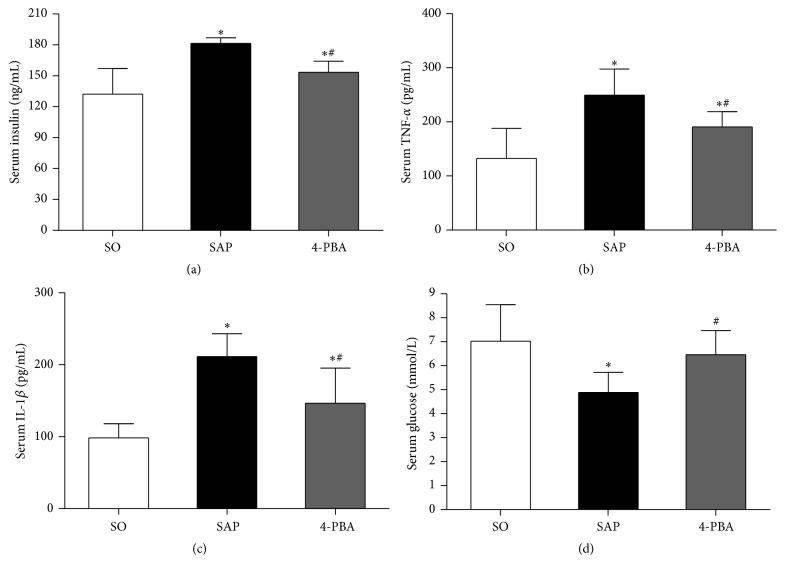
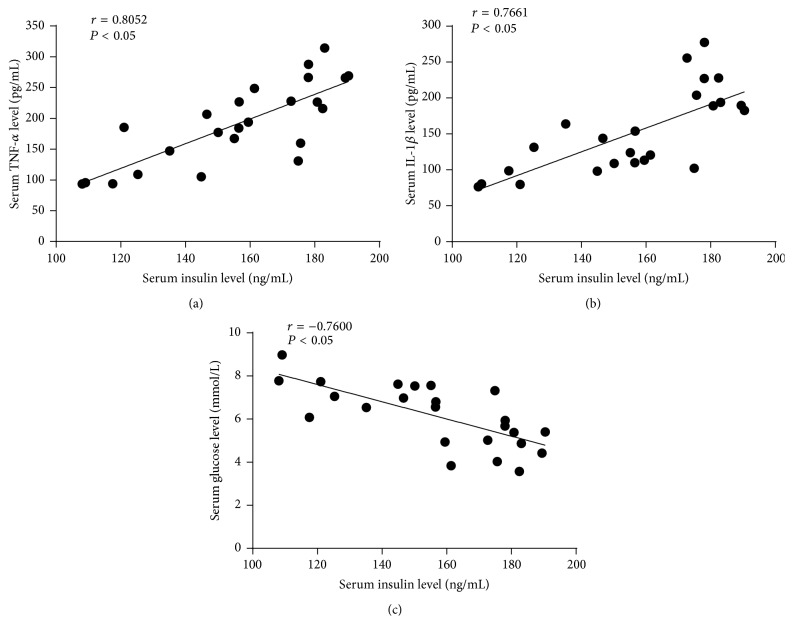
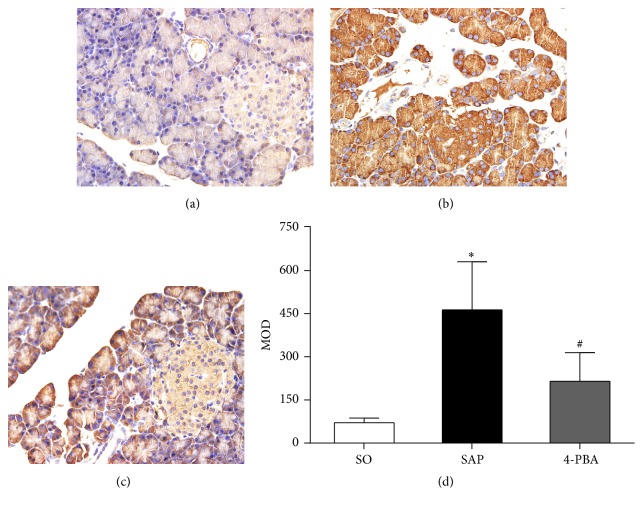
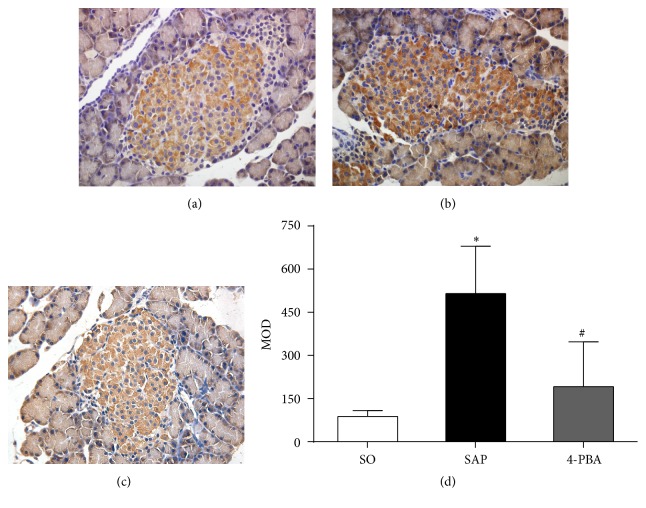
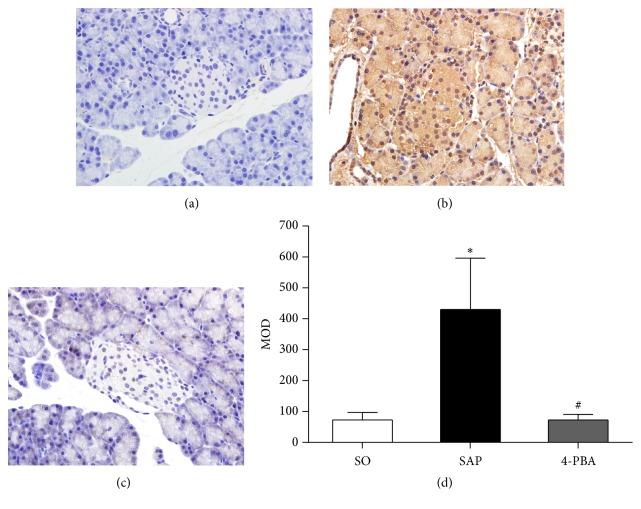
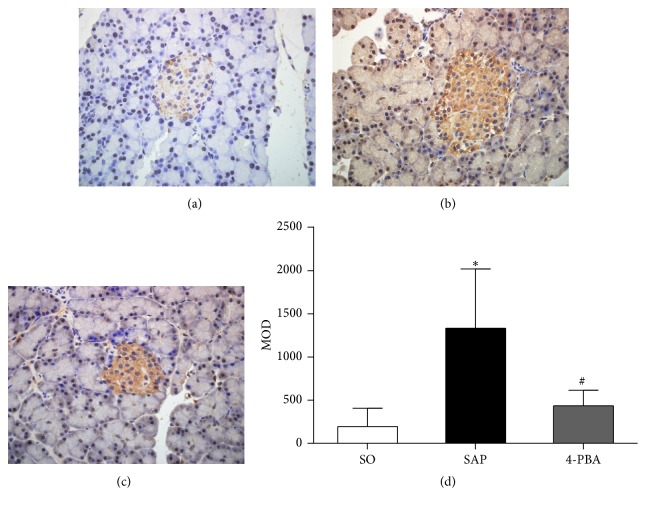
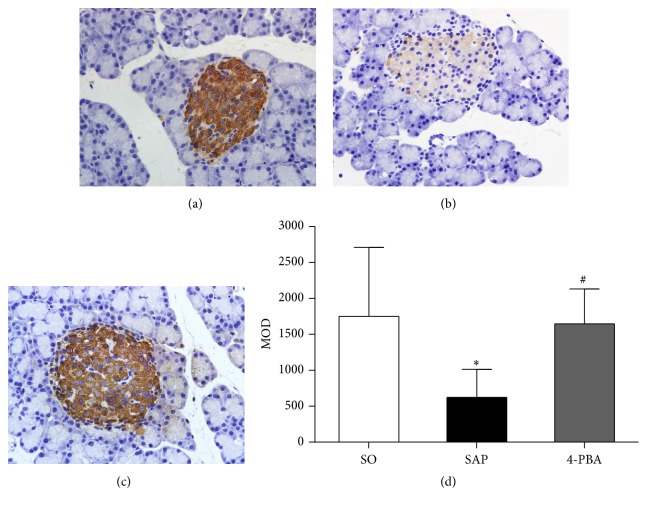
Endoplasmic reticulum (ER) stress is a particular process with an imbalance of homeostasis, which plays an important role in pancreatitis, but little is known about how ER stress is implicated in severe acute pancreatitis (SAP) induced pancreatic beta-cell injury. To investigate the effect of 4-phenylbutyric acid (4-PBA) on the beta-cell injury following SAP and the underlying mechanism, twenty-four Sprague-Dawley rats were randomly divided into sham-operation (SO) group, SAP model group, and 4-PBA treatment group. SAP model was induced by infusion of 5% sodium taurocholate into the biliopancreatic duct. 4-PBA or normal saline was injected intraperitoneally for 3 days in respective group before successful modeling. Results showed that 4-PBA attenuated the following: (1) pancreas and islet pathological injuries, (2) serum TNF-α and IL-1β, (3) serum insulin and glucose, (4) beta-cell ultrastructural changes, (5) ER stress markers (BiP, ORP150, and CHOP), Caspase-3, and insulin expression in islet. These results suggested that 4-PBA mitigates pancreatic beta-cell injury and endocrine disorder in SAP, presumably because of its role in inhibiting excessive endoplasmic reticulum stress. This may serve as a new therapeutic target for reducing pancreatic beta-cell injury and endocrine disorder in SAP upon 4-PBA treatment.
内质网(ER)应激是一种内环境稳态失衡的特殊过程,在胰腺炎中起重要作用,但关于ER应激如何参与重症急性胰腺炎(SAP)诱导的胰腺β细胞损伤知之甚少。为了研究4-苯基丁酸(4-PBA)对SAP后β细胞损伤的影响及其潜在机制,将24只Sprague-Dawley大鼠随机分为假手术(SO)组、SAP模型组和4-PBA治疗组。通过向胆胰管内注入5%牛磺胆酸钠诱导建立SAP模型。在成功建模前,各组分腹腔注射4-PBA或生理盐水,连续3天。结果显示,4-PBA减轻了以下各项:(1)胰腺和胰岛的病理损伤;(2)血清肿瘤坏死因子-α(TNF-α)和白细胞介素-1β(IL-1β);(3)血清胰岛素和葡萄糖;(4)β细胞超微结构变化;(5)ER应激标志物(结合免疫球蛋白蛋白(BiP)、150 kDa氧化还原蛋白(ORP150)和Caspase-12同源蛋白(CHOP))、Caspase-3以及胰岛中胰岛素的表达。这些结果表明,4-PBA减轻了SAP中胰腺β细胞损伤和内分泌紊乱,可能是因为其在抑制过度内质网应激方面的作用。这可能为4-PBA治疗减轻SAP中胰腺β细胞损伤和内分泌紊乱提供一个新的治疗靶点。