Xu Xinrong, Li Min, Chen Weiwei, Yu Haitao, Yang Yan, Hang Li
Department of Ophthalmology, Affiliated Hospital of Nanjing University of Chinese Medicine, Nanjing 210029, China.
School of Pharmacy, Nanjing University of Chinese Medicine, Nanjing 210023, China.
Oxid Med Cell Longev. 2016;2016:4378461. doi: 10.1155/2016/4378461. Epub 2016 Aug 31.
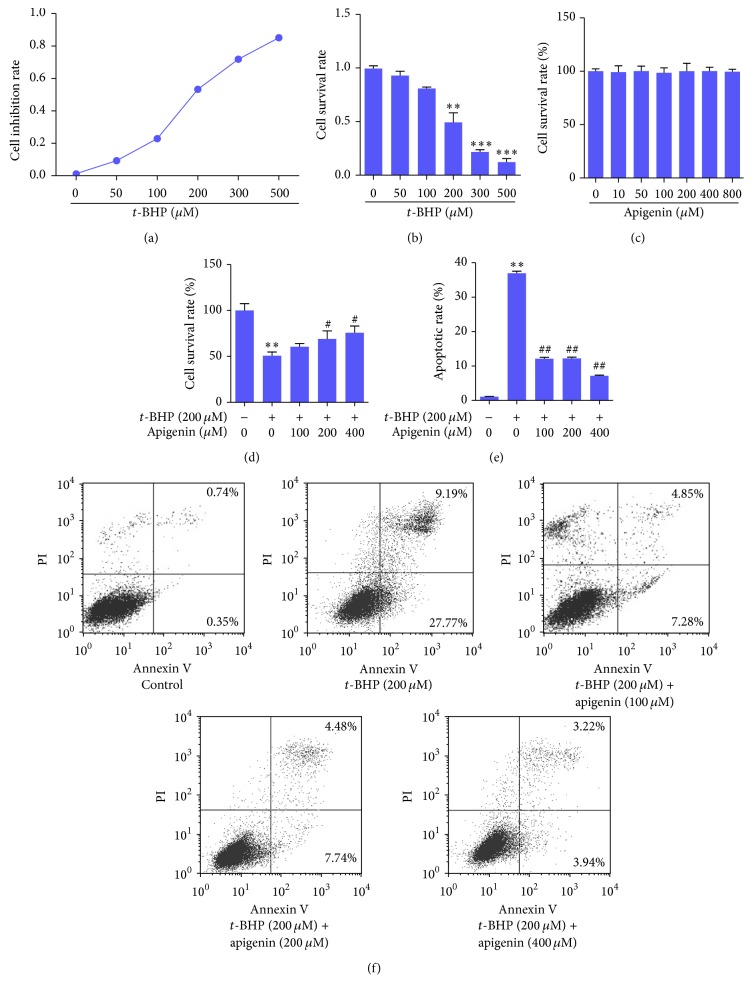
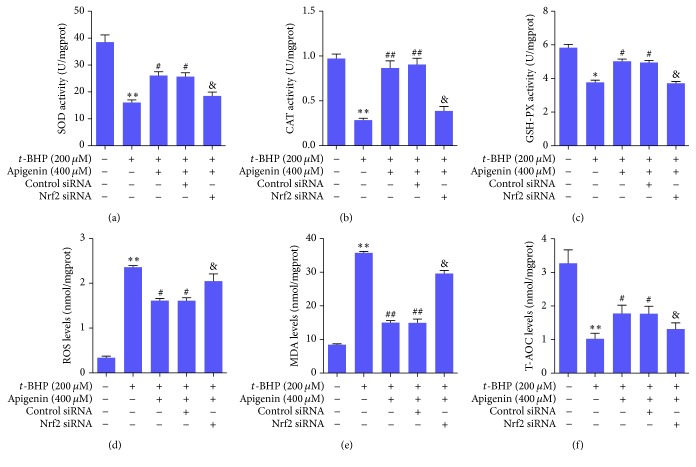
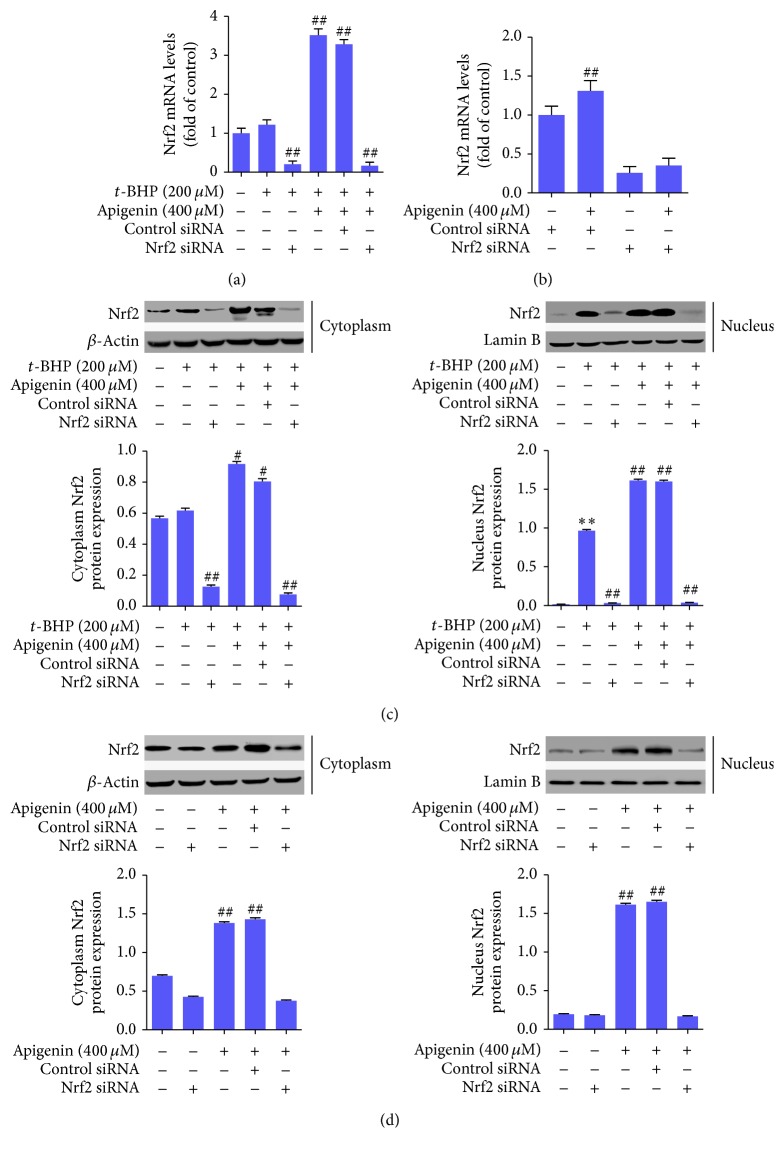
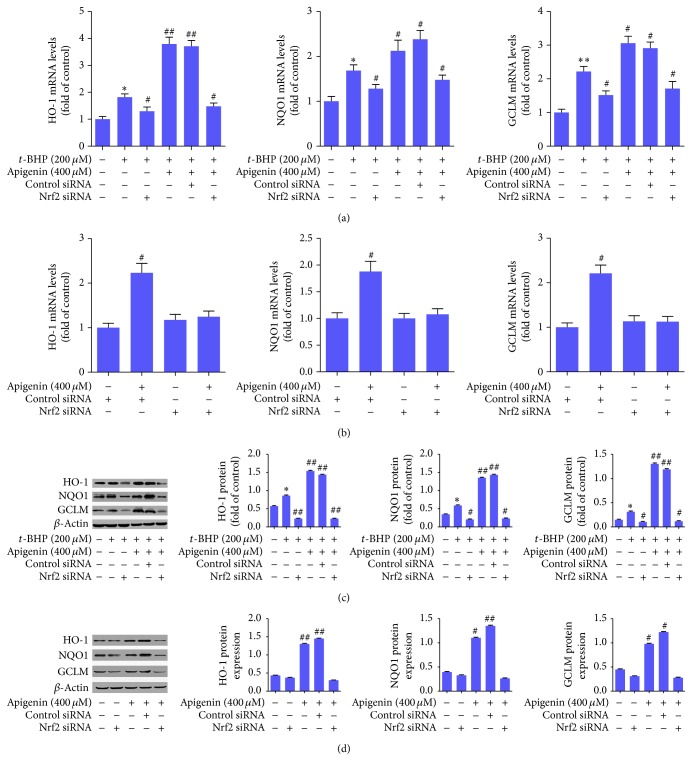
The current study was aimed at evaluating the therapeutic implication of apigenin and to elucidate the underlying mechanism. The -butyl hydroperoxide (-BHP) at 200 M was used to induce oxidative stress-associated injury in ARPE-19 cells. Apigenin at concentrations less than 800 M did not cause cytotoxic effects on ARPE-19 cells. Cell viability assay showed that apigenin at 200 M significantly promoted cell survival in -BHP-treated ARPE-19 cells. Additionally, apigenin at 100 M significantly protected ARPE-19 cells from -BHP-induced apoptosis. Molecular examinations demonstrated that apigenin at 400 M significantly upregulated the mRNA and protein expression of Nrf2 and stimulated its nuclear translocation in ARPE-19 cells treated with or without -BHP. Apigenin 400 M also significantly elevated the expression of HO-1, NQO1, and GCLM at both mRNA and protein levels in the presence or absence of -BHP. Furthermore, apigenin at 400 M significantly increased the activities of SOD, CAT, GSH-PX, and T-AOC and reduced the levels of ROS and MDA in -BHP-treated ARPE-19 cells. However, these effects of apigenin were all abolished by being transfected with Nrf2 siRNA. Collectively, our current data indicated that apigenin exerted potent antioxidant properties in ARPE-19 cells challenged with -BHP, which were dependent on activation of Nrf2 signaling.
本研究旨在评估芹菜素的治疗意义并阐明其潜在机制。使用200μM的叔丁基过氧化氢(t-BHP)诱导ARPE-19细胞中与氧化应激相关的损伤。浓度低于800μM的芹菜素对ARPE-19细胞没有细胞毒性作用。细胞活力测定表明,200μM的芹菜素显著促进了t-BHP处理的ARPE-19细胞的存活。此外,100μM的芹菜素显著保护ARPE-19细胞免受t-BHP诱导的凋亡。分子检测表明,400μM的芹菜素显著上调了Nrf2的mRNA和蛋白表达,并刺激了其在经或未经t-BHP处理的ARPE-19细胞中的核转位。400μM的芹菜素在有或无t-BHP的情况下,还显著提高了HO-1、NQO1和GCLM在mRNA和蛋白水平上的表达。此外,400μM的芹菜素显著提高了t-BHP处理的ARPE-19细胞中SOD、CAT、GSH-PX和T-AOC的活性,并降低了ROS和MDA的水平。然而,通过转染Nrf2 siRNA,芹菜素的这些作用均被消除。总的来说,我们目前的数据表明,芹菜素在受到t-BHP攻击的ARPE-19细胞中发挥了强大的抗氧化特性,这依赖于Nrf2信号通路的激活。