Cropley Jennifer E, Eaton Sally A, Aiken Alastair, Young Paul E, Giannoulatou Eleni, Ho Joshua W K, Buckland Michael E, Keam Simon P, Hutvagner Gyorgy, Humphreys David T, Langley Katherine G, Henstridge Darren C, Martin David I K, Febbraio Mark A, Suter Catherine M
Molecular, Structural and Computational Biology Division, Victor Chang Cardiac Research Institute, Darlinghurst, NSW, 2010, Australia; Faculty of Medicine, University of New South Wales, Kensington, NSW, 2052, Australia.
Molecular, Structural and Computational Biology Division, Victor Chang Cardiac Research Institute, Darlinghurst, NSW, 2010, Australia; Faculty of Medicine, University of New South Wales, Kensington, NSW, 2052, Australia.
Mol Metab. 2016 Jun 23;5(8):699-708. doi: 10.1016/j.molmet.2016.06.008. eCollection 2016 Aug.
Parental obesity can induce metabolic phenotypes in offspring independent of the inherited DNA sequence. Here we asked whether such non-genetic acquired metabolic traits can be passed on to a second generation that has never been exposed to obesity, even as germ cells.
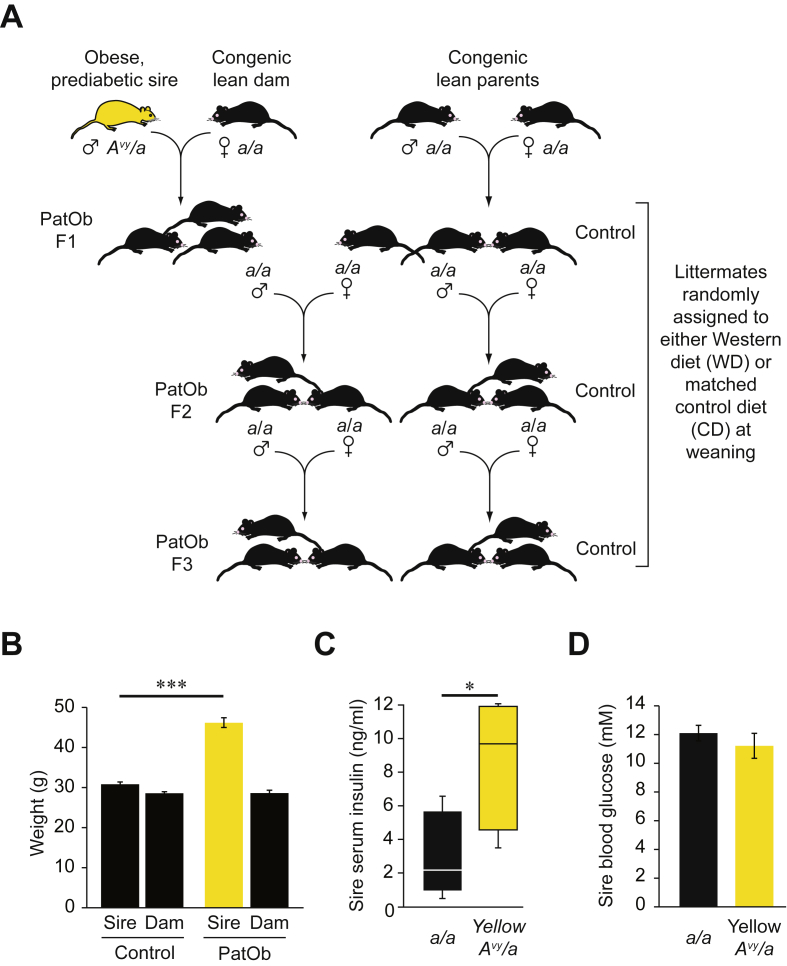
We examined the F1, F2, and F3 a/a offspring derived from F0 matings of obese prediabetic A (vy) /a sires and lean a/a dams. After F0, only lean a/a mice were used for breeding.
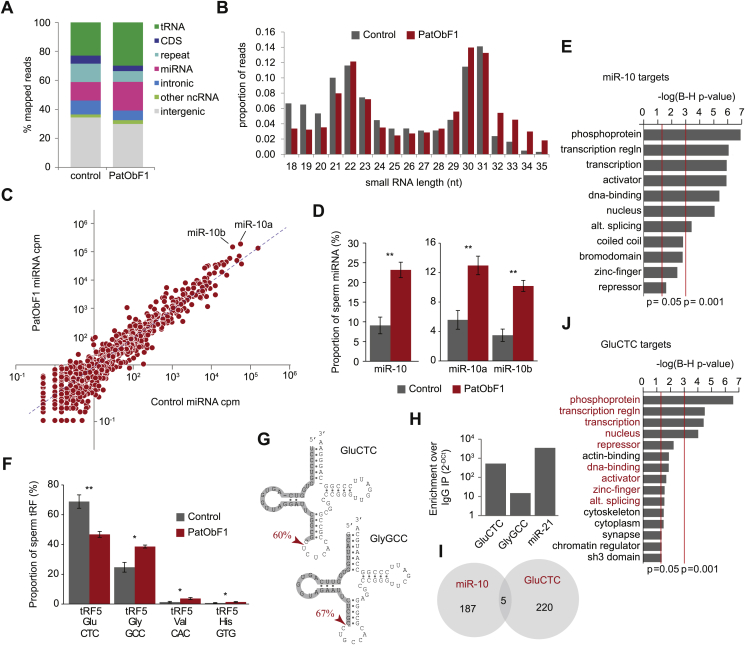
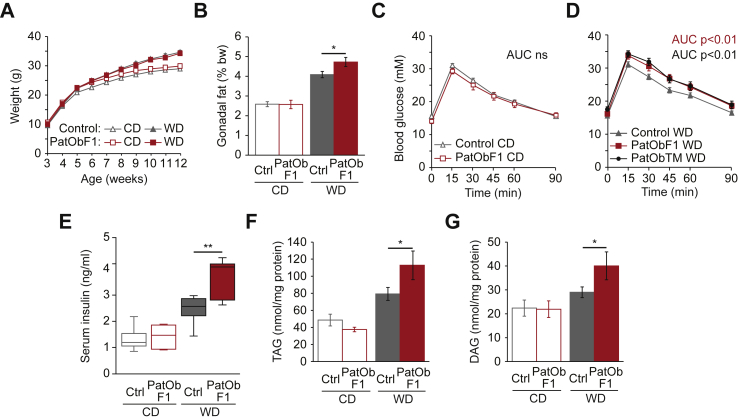
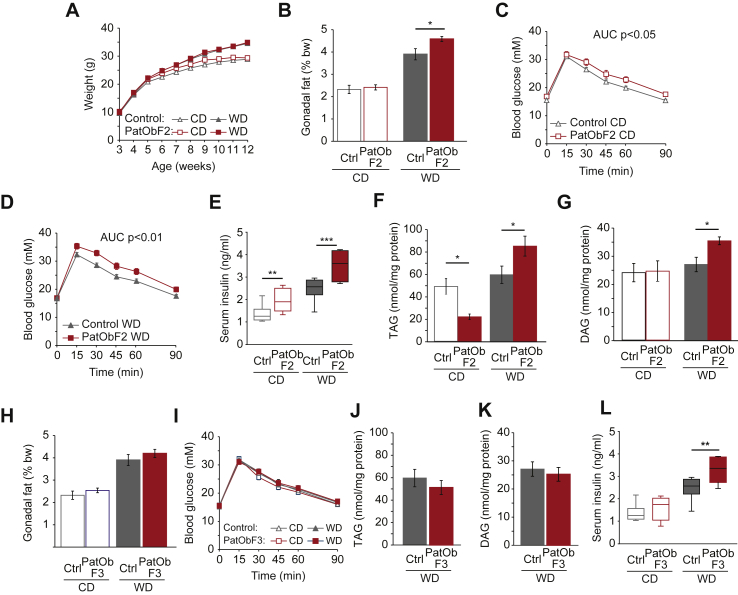
We found that F1 sons of obese founder males exhibited defects in glucose and lipid metabolism, but only upon a post-weaning dietary challenge. F1 males transmitted these defects to their own male progeny (F2) in the absence of the dietary challenge, but the phenotype was largely attenuated by F3. The sperm of F1 males exhibited changes in the abundance of several small RNA species, including the recently reported diet-responsive tRNA-derived fragments.
These data indicate that induced metabolic phenotypes may be propagated for a generation beyond any direct exposure to an inducing factor. This non-genetic inheritance likely occurs via the actions of sperm noncoding RNA.
父母肥胖可在不依赖遗传DNA序列的情况下在子代中诱发代谢表型。在此,我们探究了这种非遗传获得性代谢特征是否能传递给从未接触过肥胖的第二代,即便其作为生殖细胞。
我们检测了肥胖的糖尿病前期A(vy)/a雄性小鼠与瘦的a/a雌性小鼠进行F0交配所产生的F1、F2和F3代a/a子代。在F0代之后,仅使用瘦的a/a小鼠进行繁殖。
我们发现肥胖奠基雄性小鼠的F1代雄性子代在葡萄糖和脂质代谢方面存在缺陷,但仅在断奶后饮食刺激的情况下出现。F1代雄性在无饮食刺激时将这些缺陷传递给了它们自己的雄性后代(F2代),但F3代时该表型在很大程度上减弱。F1代雄性的精子在几种小RNA种类的丰度上出现了变化,包括最近报道的饮食反应性tRNA衍生片段。
这些数据表明,诱导产生的代谢表型可能在没有任何直接接触诱导因子的情况下传递一代。这种非遗传继承可能通过精子非编码RNA的作用发生。