Hwang Yun Tae, Dudding Tracy, Aliaga Solange Mabel, Arpone Marta, Francis David, Li Xin, Slater Howard Robert, Rogers Carolyn, Bretherton Lesley, du Sart Desirée, Heard Robert, Godler David Eugeny
Department of Neurology, Gosford Hospital, Gosford 2250, Australia.
Institute of Neurology, University College London, London WC1N 3BG, UK.
Genes (Basel). 2016 Sep 21;7(9):68. doi: 10.3390/genes7090068.
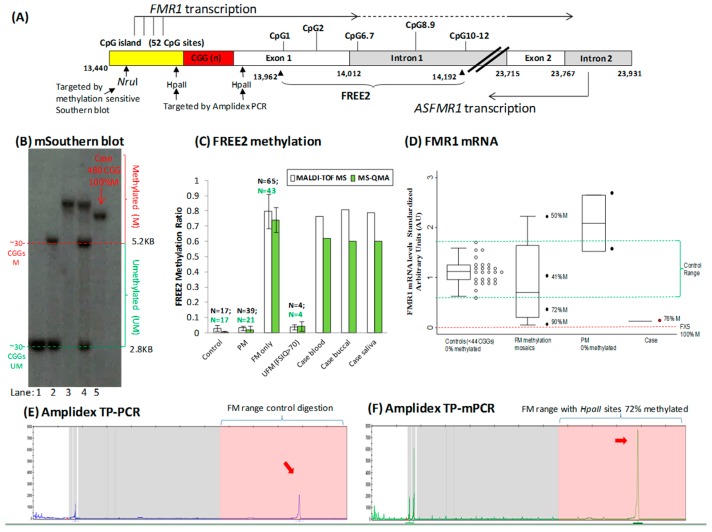
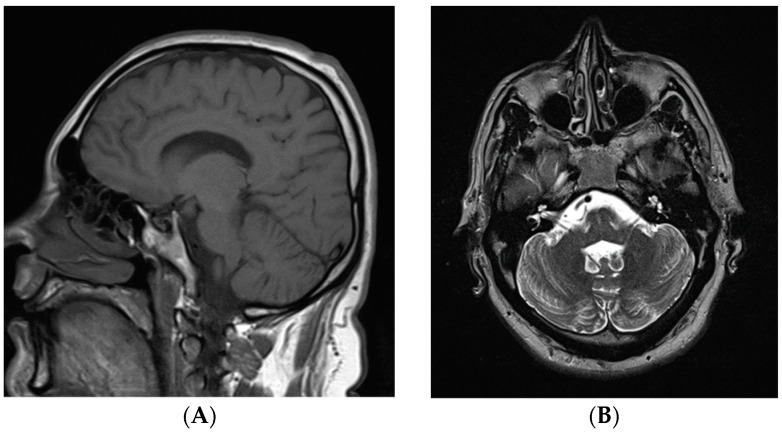
Mosaicism for FMR1 premutation (PM: 55-199 CGG)/full mutation (FM: >200 CGG) alleles or the presence of unmethylated FM (UFM) have been associated with a less severe fragile X syndrome (FXS) phenotype and fragile X associated tremor/ataxia syndrome (FXTAS)-a late onset neurodegenerative disorder. We describe a 38 year old male carrying a 100% methylated FM detected with Southern blot (SB), which is consistent with complete silencing of FMR1 and a diagnosis of fragile X syndrome. However, his formal cognitive scores were not at the most severe end of the FXS phenotype and he displayed tremor and ataxic gait. With the association of UFM with FXTAS, we speculated that his ataxia might be related to an undetected proportion of UFM alleles. Such UFM alleles were confirmed by more sensitive PCR based methylation testing showing FM methylation between 60% and 70% in blood, buccal, and saliva samples and real-time PCR analysis showing incomplete silencing of FMR1. While he did not meet diagnostic criteria for FXTAS based on MRI findings, the underlying cause of his ataxia may be related to UFM alleles not detected by SB, and follow-up clinical and molecular assessment are justified if his symptoms worsen.
FMR1前突变(PM:55 - 199个CGG)/全突变(FM:>200个CGG)等位基因的嵌合现象或未甲基化FM(UFM)的存在与较轻的脆性X综合征(FXS)表型以及脆性X相关震颤/共济失调综合征(FXTAS,一种迟发性神经退行性疾病)有关。我们描述了一名38岁男性,通过Southern印迹法(SB)检测到其携带100%甲基化的FM,这与FMR1的完全沉默以及脆性X综合征的诊断一致。然而,他的正式认知评分并不处于FXS表型的最严重程度,并且他表现出震颤和共济失调步态。鉴于UFM与FXTAS的关联,我们推测他的共济失调可能与未检测到的UFM等位基因比例有关。通过更敏感的基于PCR的甲基化检测证实了此类UFM等位基因,检测显示血液、颊黏膜和唾液样本中FM甲基化在60%至70%之间,实时PCR分析显示FMR1未完全沉默。虽然根据MRI结果他不符合FXTAS的诊断标准,但他共济失调的潜在原因可能与SB未检测到的UFM等位基因有关,如果他的症状恶化,进行后续临床和分子评估是合理的。