Nguyen Thi Hiep, Maltby Steven, Eyers Fiona, Foster Paul S, Yang Ming
Priority Research Centre for Healthy Lungs, School of Biomedical Sciences & Pharmacy, Faculty of Health and Medicine and Hunter Medical Research Institute, The University of Newcastle, Callaghan, NSW 2300, Australia.
PLoS One. 2016 Sep 22;11(9):e0163392. doi: 10.1371/journal.pone.0163392. eCollection 2016.
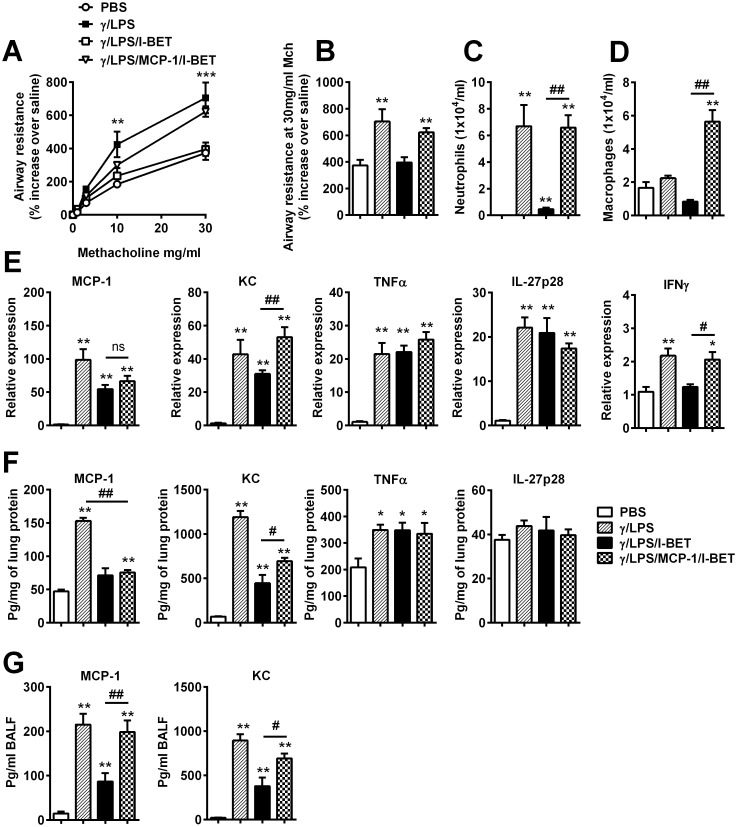
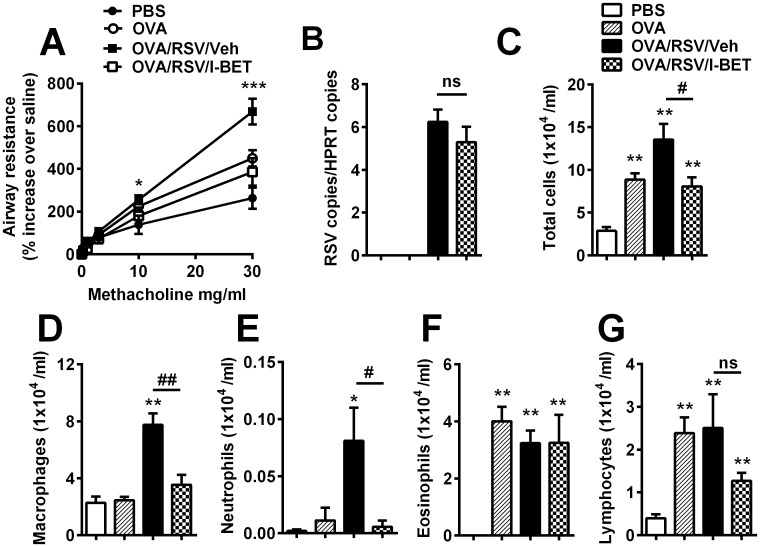
Exacerbations of asthma are linked to significant decline in lung function and are often poorly controlled by corticosteroid treatment. Clinical investigations indicate that viral and bacterial infections play crucial roles in the onset of steroid-resistant inflammation and airways hyperresponsiveness (AHR) that are hallmark features of exacerbations. We have previously shown that interferon γ (IFNγ) and lipopolysaccharide (LPS) cooperatively activate pulmonary macrophages and induce steroid-resistant airway inflammation and AHR in mouse models. Furthermore, we have established a mouse model of respiratory syncytial virus (RSV)-induced exacerbation of asthma, which exhibits macrophage-dependent, steroid-resistant lung disease. Emerging evidence has demonstrated a key role for bromo- and extra-terminal (BET) proteins in the regulation of inflammatory gene expression in macrophages. We hypothesised that BET proteins may be involved in the regulation of AHR and airway inflammation in our steroid-resistant exacerbation models.
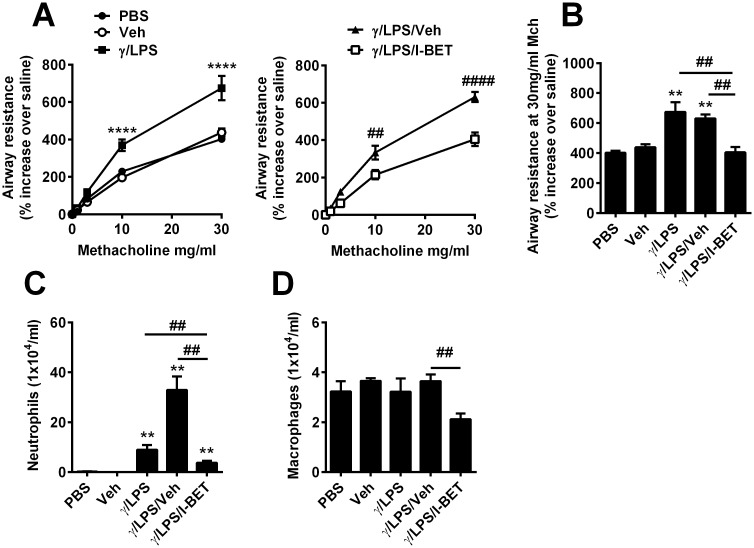
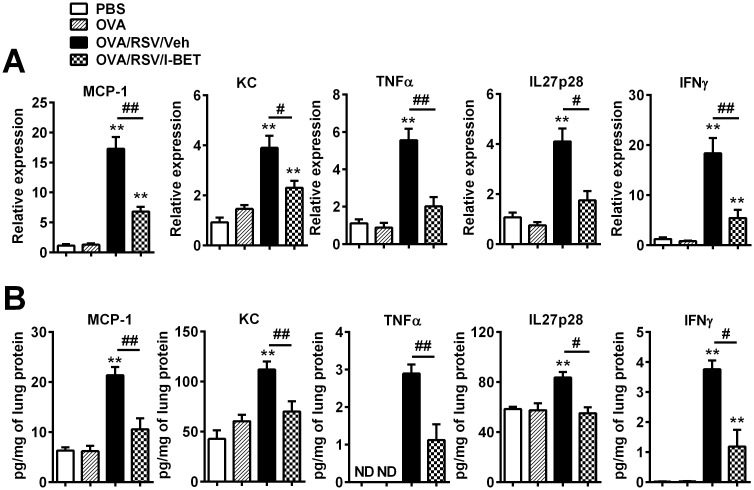
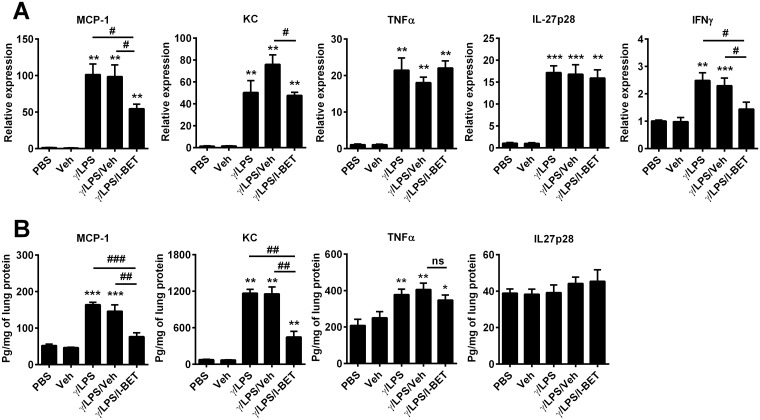
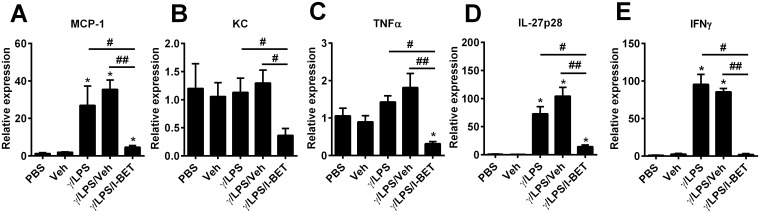
METHODOLOGY/PRINCIPAL FINDINGS: We investigated the effects of a BET inhibitor (I-BET-762) on the development of steroid-resistant AHR and airway inflammation in two mouse models. I-BET-762 administration decreased macrophage and neutrophil infiltration into the airways, and suppressed key inflammatory cytokines in both models. I-BET treatment also suppressed key inflammatory cytokines linked to the development of steroid-resistant inflammation such as monocyte chemoattractant protein 1 (MCP-1), keratinocyte-derived protein chemokine (KC), IFNγ, and interleukin 27 (IL-27). Attenuation of inflammation was associated with suppression of AHR.
CONCLUSIONS/SIGNIFICANCE: Our results suggest that BET proteins play an important role in the regulation of steroid-resistant exacerbations of airway inflammation and AHR. BET proteins may be potential targets for the development of future therapies to treat steroid-resistant inflammatory components of asthma.
哮喘急性发作与肺功能显著下降相关,且通常难以通过皮质类固醇治疗得到有效控制。临床研究表明,病毒和细菌感染在类固醇抵抗性炎症和气道高反应性(AHR)的发作中起关键作用,而这两者是急性发作的标志性特征。我们之前已经表明,干扰素γ(IFNγ)和脂多糖(LPS)在小鼠模型中协同激活肺巨噬细胞,并诱导类固醇抵抗性气道炎症和AHR。此外,我们建立了呼吸道合胞病毒(RSV)诱导的哮喘急性发作小鼠模型,该模型表现出巨噬细胞依赖性、类固醇抵抗性肺病。新出现的证据表明,溴结构域和额外末端(BET)蛋白在巨噬细胞炎症基因表达的调控中起关键作用。我们假设BET蛋白可能参与了我们的类固醇抵抗性急性发作模型中AHR和气道炎症的调控。
方法/主要发现:我们在两种小鼠模型中研究了BET抑制剂(I-BET-762)对类固醇抵抗性AHR和气道炎症发展的影响。给予I-BET-762可减少气道中巨噬细胞和中性粒细胞的浸润,并抑制两种模型中的关键炎症细胞因子。I-BET治疗还抑制了与类固醇抵抗性炎症发展相关的关键炎症细胞因子,如单核细胞趋化蛋白1(MCP-1)、角质形成细胞衍生蛋白趋化因子(KC)、IFNγ和白细胞介介介素27(IL-27)。炎症的减轻与AHR的抑制相关。
结论/意义:我们的结果表明,BET蛋白在类固醇抵抗性气道炎症和AHR急性发作的调控中起重要作用。BET蛋白可能是未来治疗哮喘类固醇抵抗性炎症成分的潜在治疗靶点。