Paul Kush, Cauller Lawrence J, Llano Daniel A
Department of Molecular and Integrative Physiology, University of Illinois at Urbana-ChampaignUrbana, IL, USA; Beckman Institute for Advanced Science and Technology, University of Illinois at Urbana-ChampaignUrbana, IL, USA; School of Behavioral and Brain Sciences, University of Texas at DallasRichardson, TX, USA.
School of Behavioral and Brain Sciences, University of Texas at Dallas Richardson, TX, USA.
Front Comput Neurosci. 2016 Sep 1;10:91. doi: 10.3389/fncom.2016.00091. eCollection 2016.
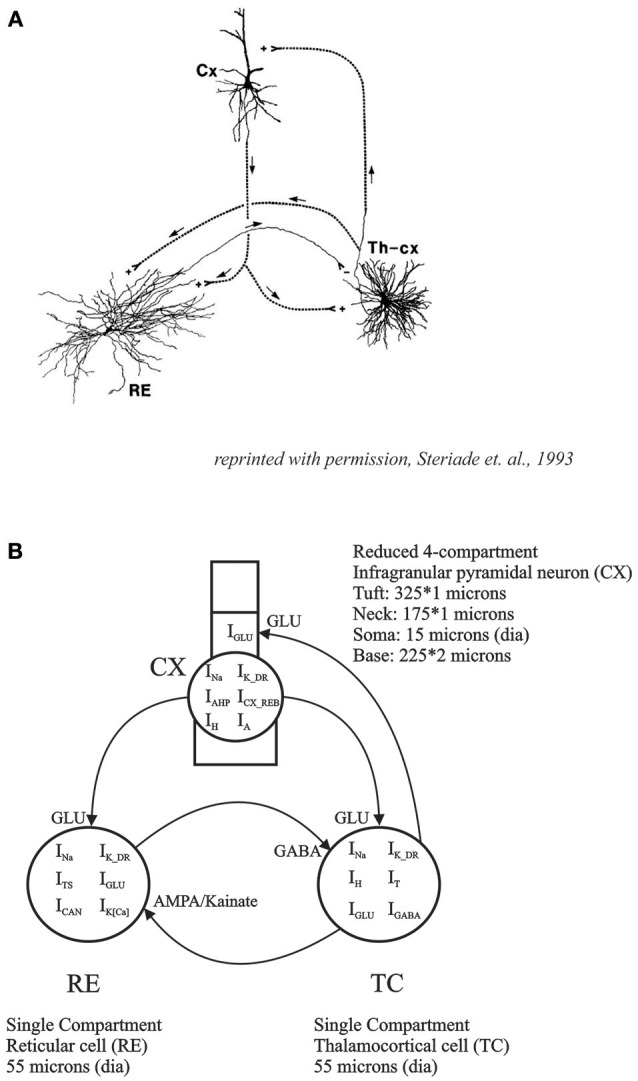
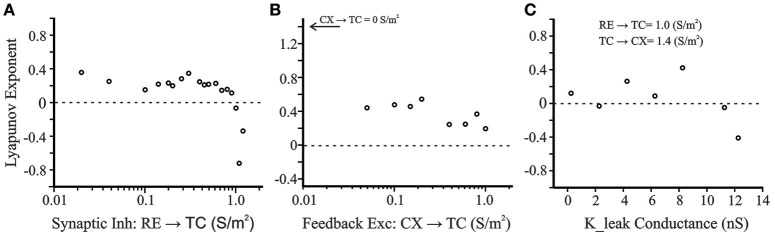
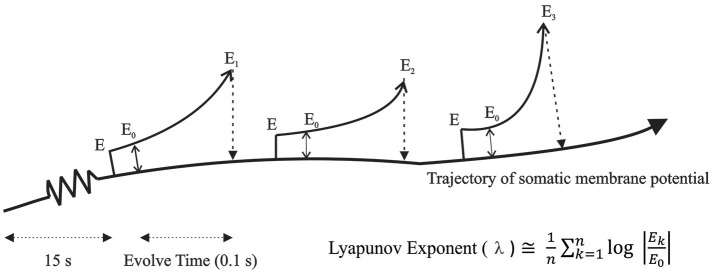
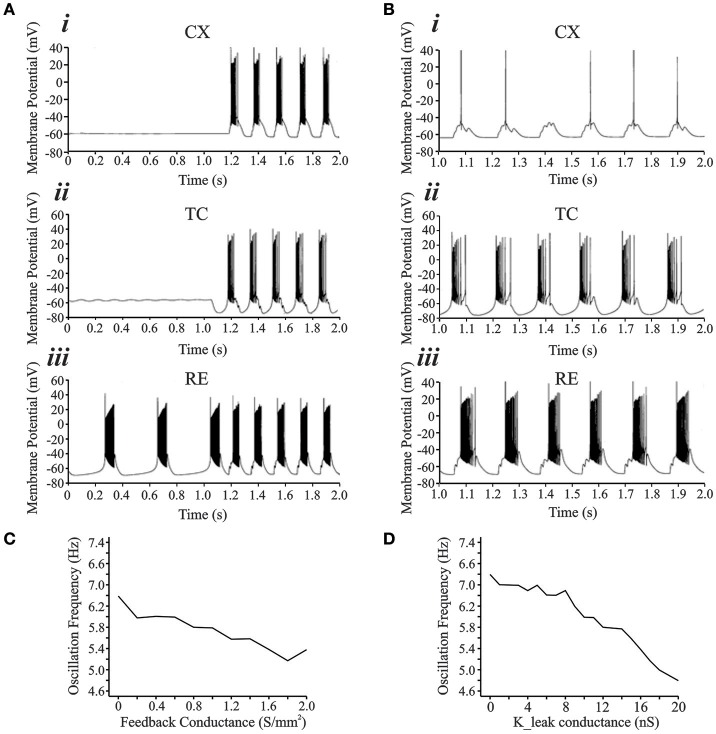
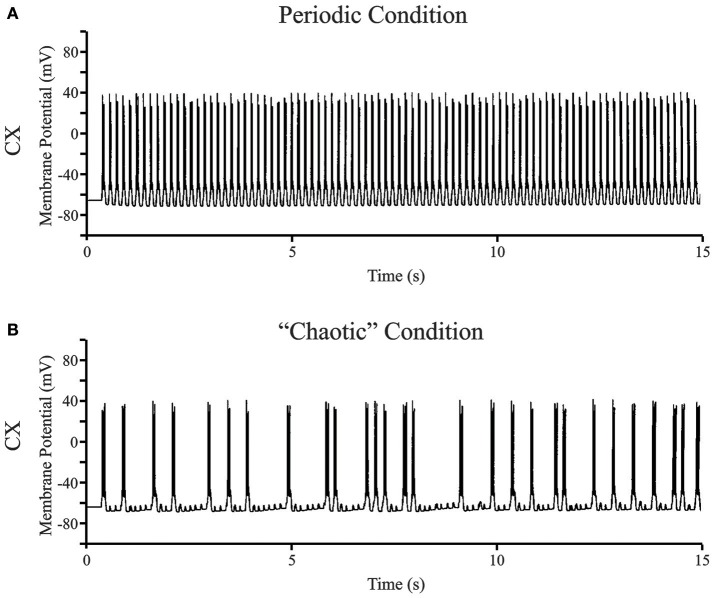
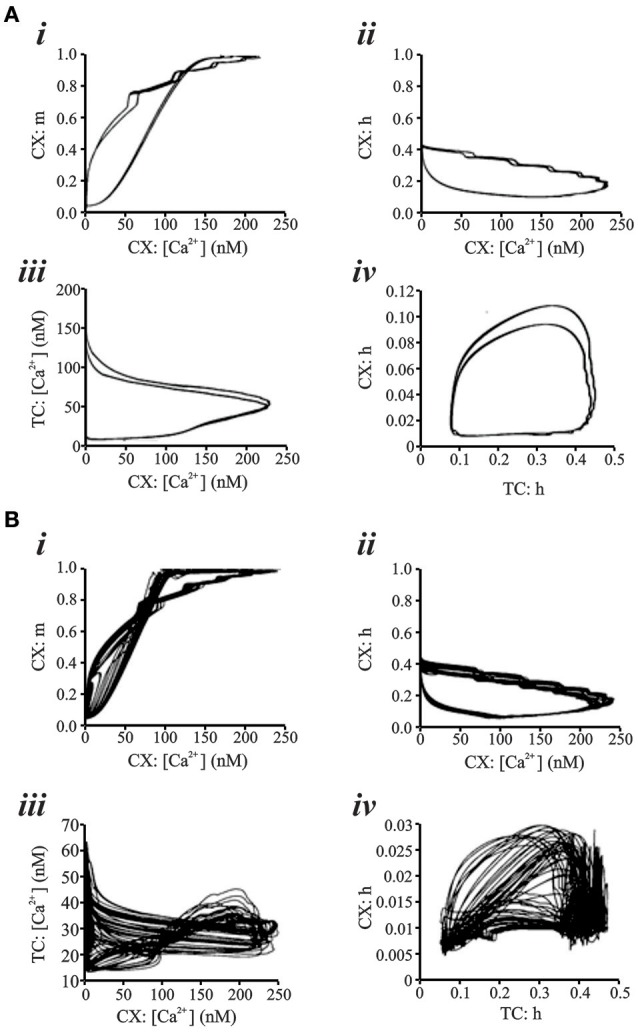
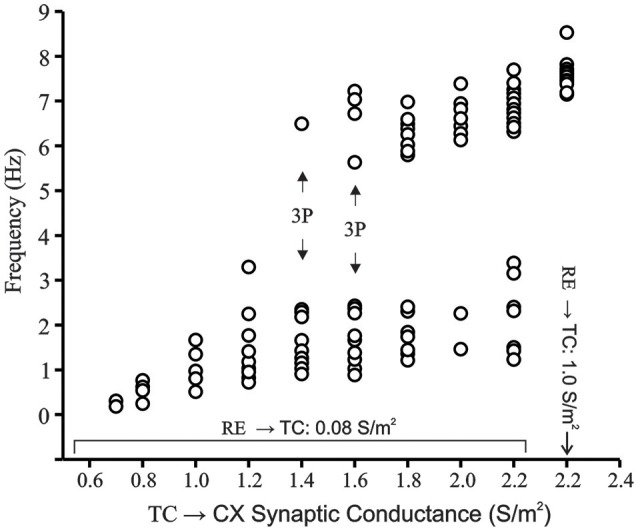
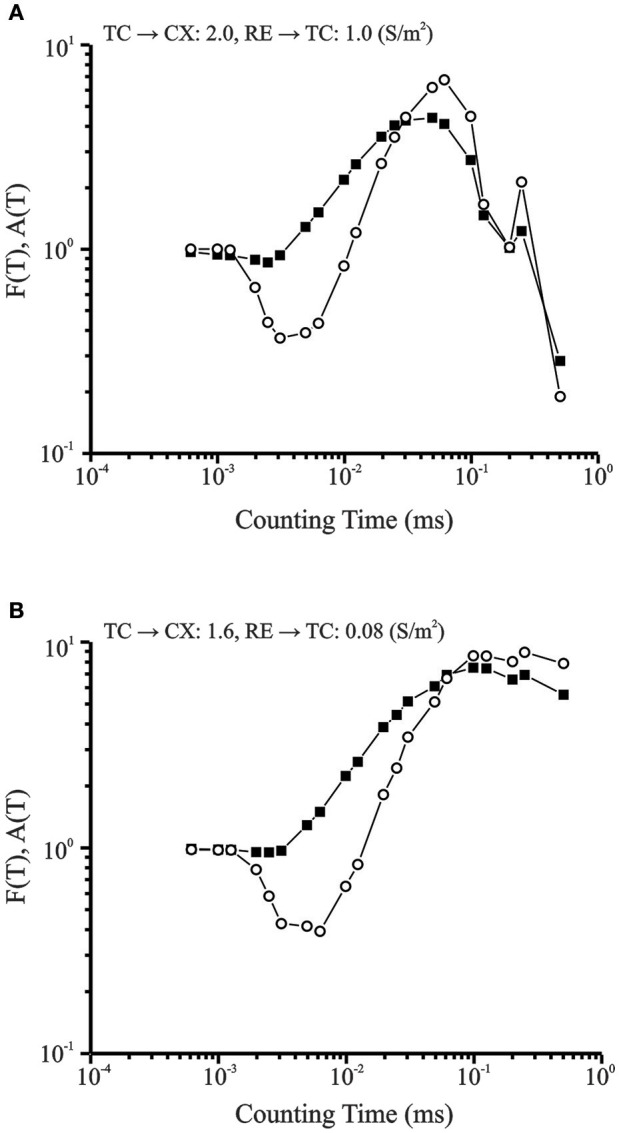
Sleep and wakefulness are characterized by distinct states of thalamocortical network oscillations. The complex interplay of ionic conductances within the thalamo-reticular-cortical network give rise to these multiple modes of activity and a rapid transition exists between these modes. To better understand this transition, we constructed a simplified computational model based on physiological recordings and physiologically realistic parameters of a three-neuron network containing a thalamocortical cell, a thalamic reticular neuron, and a corticothalamic cell. The network can assume multiple states of oscillatory activity, resembling sleep, wakefulness, and the transition between these two. We found that during the transition period, but not during other states, thalamic and cortical neurons displayed chaotic dynamics, based on the presence of strange attractors, estimation of positive Lyapunov exponents and the presence of a fractal dimension in the spike trains. These dynamics were quantitatively dependent on certain features of the network, such as the presence of corticothalamic feedback and the strength of inhibition between the thalamic reticular nucleus and thalamocortical neurons. These data suggest that chaotic dynamics facilitate a rapid transition between sleep and wakefulness and produce a series of experimentally testable predictions to further investigate the events occurring during the sleep-wake transition period.
睡眠和清醒的特征是丘脑皮质网络振荡的不同状态。丘脑 - 网状 - 皮质网络中离子电导的复杂相互作用产生了这些多种活动模式,并且这些模式之间存在快速转换。为了更好地理解这种转换,我们基于包含丘脑皮质细胞、丘脑网状神经元和皮质丘脑细胞的三神经元网络的生理记录和生理现实参数构建了一个简化的计算模型。该网络可以呈现多种振荡活动状态,类似于睡眠、清醒以及这两者之间的转换。我们发现,在转换期而非其他状态下,基于奇异吸引子的存在、正李雅普诺夫指数的估计以及动作电位序列中分形维数的存在,丘脑和皮质神经元表现出混沌动力学。这些动力学在数量上取决于网络的某些特征,例如皮质丘脑反馈的存在以及丘脑网状核与丘脑皮质神经元之间抑制的强度。这些数据表明,混沌动力学促进了睡眠和清醒之间的快速转换,并产生了一系列可通过实验验证的预测,以进一步研究睡眠 - 清醒转换期发生的事件。