Tachioka Mikako, Sugimoto Naohisa, Nakamura Akihiko, Sunagawa Naoki, Ishida Takuya, Uchiyama Taku, Igarashi Kiyohiko, Samejima Masahiro
Department of Biomaterial Sciences, Graduate School of Agricultural and Life Sciences, The University of Tokyo, Yayoi 1-1-1, Bunkyo-ku, Tokyo, 113-8657 Japan.
Department of Biomaterial Sciences, Graduate School of Agricultural and Life Sciences, The University of Tokyo, Yayoi 1-1-1, Bunkyo-ku, Tokyo, 113-8657 Japan ; Biomaterial in Tokyo Co., Ltd., Fukuoka Lab, Ōnojō, Fukuoka 816-0905 Japan.
Biotechnol Biofuels. 2016 Sep 19;9:199. doi: 10.1186/s13068-016-0613-z. eCollection 2016.
Random mutagenesis is a powerful technique to obtain mutant proteins with different properties from the wild-type molecule. Error-prone PCR is often employed for random mutagenesis in bacterial protein expression systems, but has rarely been used in the methylotrophic yeast Pichia pastoris system, despite its significant advantages, mainly because large (μg-level) amounts of plasmids are required for transformation.
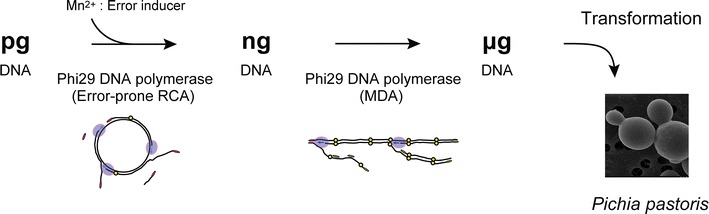
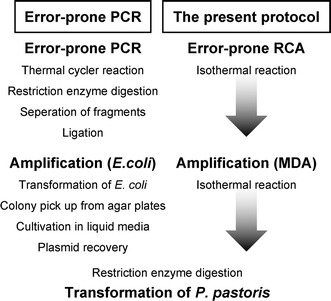
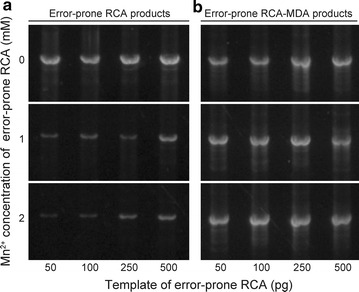
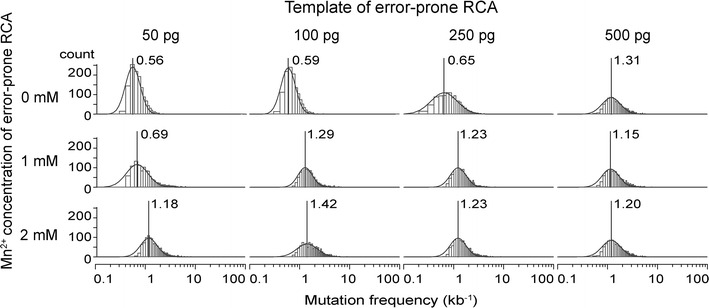
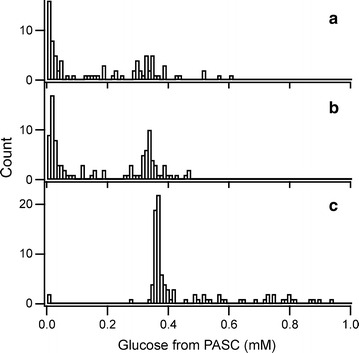
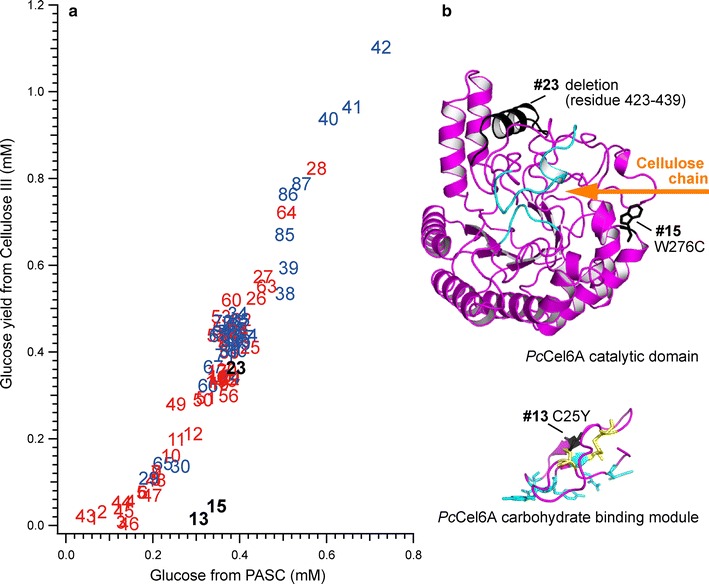
We developed a quick and easy technique for random mutagenesis in P. pastoris by sequential Phi29 DNA polymerase-based amplification methods, error-prone rolling circle amplification (RCA) and multiple displacement amplification (MDA). The methodology was validated by applying it for random mutation of the gene encoding cellulase from the basidiomycete Phanerochaete chrysosporium (PcCel6A), a key enzyme in degradation of cellulosic biomass. In the error-prone RCA step, the concentrations of manganese ion (Mn(2+)) and cellulase gene-containing plasmid were varied, and the products obtained under each condition were subjected to the second MDA step in the absence of Mn(2+). The maximum error rate was 2.6 mutations/kb, as evaluated from the results of large-scale sequencing. Several μg of MDA products was transformed by electroporation into Pichia cells, and the activities of extracellularly expressed PcCel6A mutants towards crystalline and amorphous celluloses were compared with those of wild-type enzyme to identify key amino acid residues affecting degradation of crystalline cellulose.
We present a rapid and convenient random mutagenesis method that does not require laborious steps such as ligation, cloning, and synthesis of specific primers. This method was successfully applied to the protein expression system in P. pastoris.
随机诱变是一种从野生型分子获得具有不同特性的突变蛋白的强大技术。易错PCR常用于细菌蛋白表达系统中的随机诱变,但在甲基营养酵母毕赤酵母系统中很少使用,尽管它具有显著优势,主要是因为转化需要大量(微克级)质粒。
我们通过基于Phi29 DNA聚合酶的连续扩增方法,即易错滚环扩增(RCA)和多重置换扩增(MDA),开发了一种在毕赤酵母中进行随机诱变的快速简便技术。通过将该方法应用于担子菌黄孢原毛平革菌(Phanerochaete chrysosporium)编码纤维素酶(PcCel6A)的基因的随机突变来验证该方法,PcCel6A是纤维素生物质降解中的关键酶。在易错RCA步骤中,改变锰离子(Mn(2+))和含纤维素酶基因质粒的浓度,并将每种条件下获得的产物在不存在Mn(2+)的情况下进行第二步MDA。根据大规模测序结果评估,最大错误率为2.6个突变/kb。通过电穿孔将几微克的MDA产物转化到毕赤酵母细胞中,并将细胞外表达的PcCel6A突变体对结晶纤维素和无定形纤维素的活性与野生型酶的活性进行比较,以鉴定影响结晶纤维素降解的关键氨基酸残基。
我们提出了一种快速简便的随机诱变方法,该方法不需要诸如连接、克隆和合成特异性引物等繁琐步骤。该方法已成功应用于毕赤酵母中的蛋白质表达系统。