Park Young-Min, Padilla Jaume, Kanaley Jill A, Zidon Terese M, Welly Rebecca J, Britton Steven L, Koch Lauren G, Thyfault John P, Booth Frank W, Vieira-Potter Victoria J
1Nutrition and Exercise Physiology, University of Missouri, Columbia, MO; 2Child Health, University of Missouri, Columbia, MO; 3Dalton Cardiovascular Research Center, University of Missouri, Columbia, MO; 4Department of Anesthesiology, University of Michigan Medical School, Ann Arbor, MI; 5Department of Molecular Integrative Physiology, University of Kansas Medical Center, Kansas City, KS; and 6Biomedical Sciences, University of Missouri, Columbia, MO.
Med Sci Sports Exerc. 2017 Feb;49(2):254-264. doi: 10.1249/MSS.0000000000001101.
Ovariectomy and high-fat diet (HFD) worsen obesity and metabolic dysfunction associated with low aerobic fitness. Exercise training mitigates metabolic abnormalities induced by low aerobic fitness, but whether the protective effect is maintained after ovariectomy and HFD is unknown.
This study determined whether, after ovariectomy and HFD, exercise training improves metabolic function in rats bred for low intrinsic aerobic capacity.
Female rats selectively bred for low (LCR) and high (HCR) intrinsic aerobic capacity (n = 30) were ovariectomized, fed HFD, and randomized to either a sedentary (SED) or voluntary wheel running (EX) group. Resting energy expenditure, glucose tolerance, and spontaneous physical activity were determined midway through the experiment, whereas body weight, wheel running volume, and food intake were assessed throughout the study. Body composition, circulating metabolic markers, and skeletal muscle gene and protein expression were measured at sacrifice.
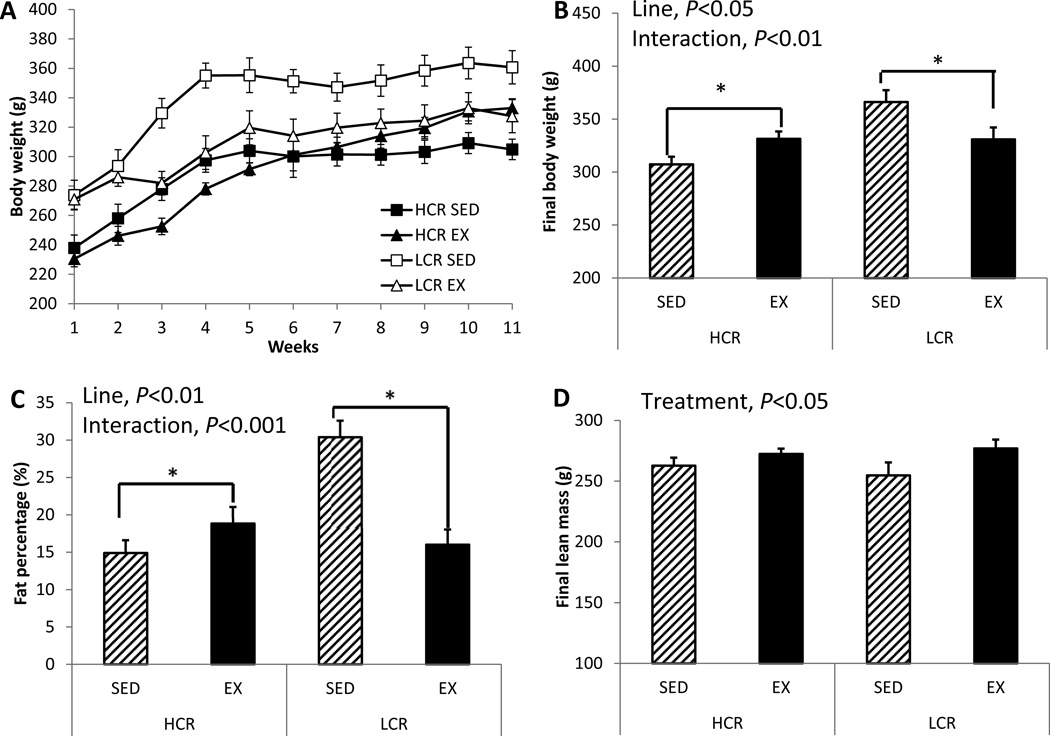
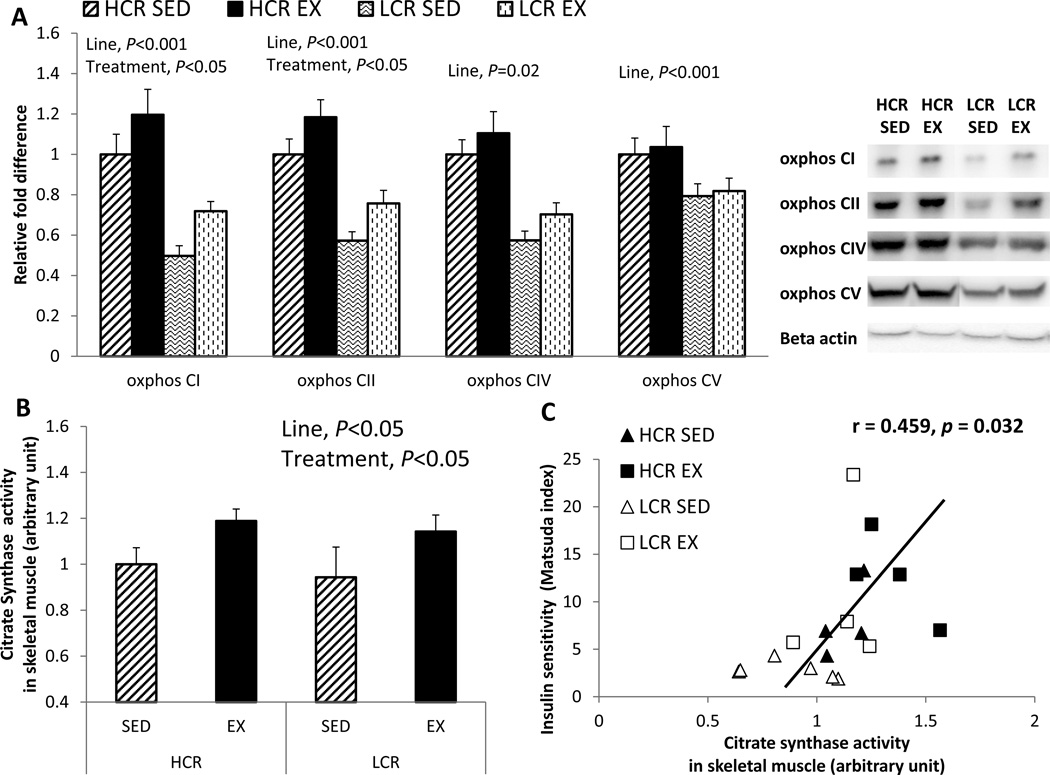
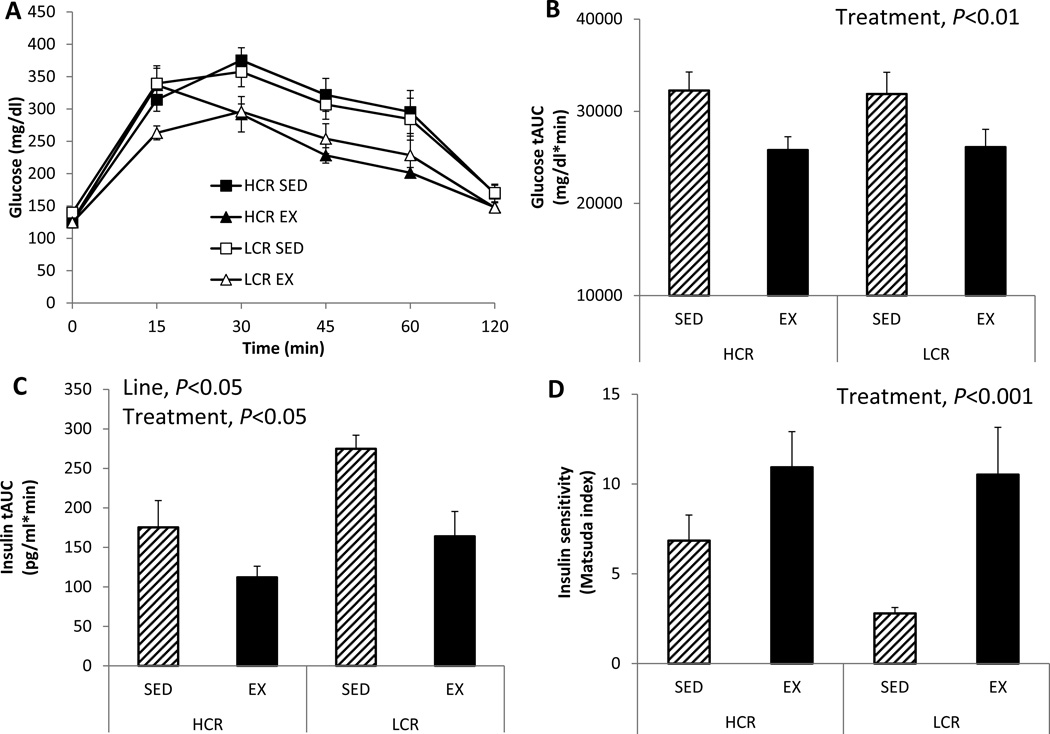
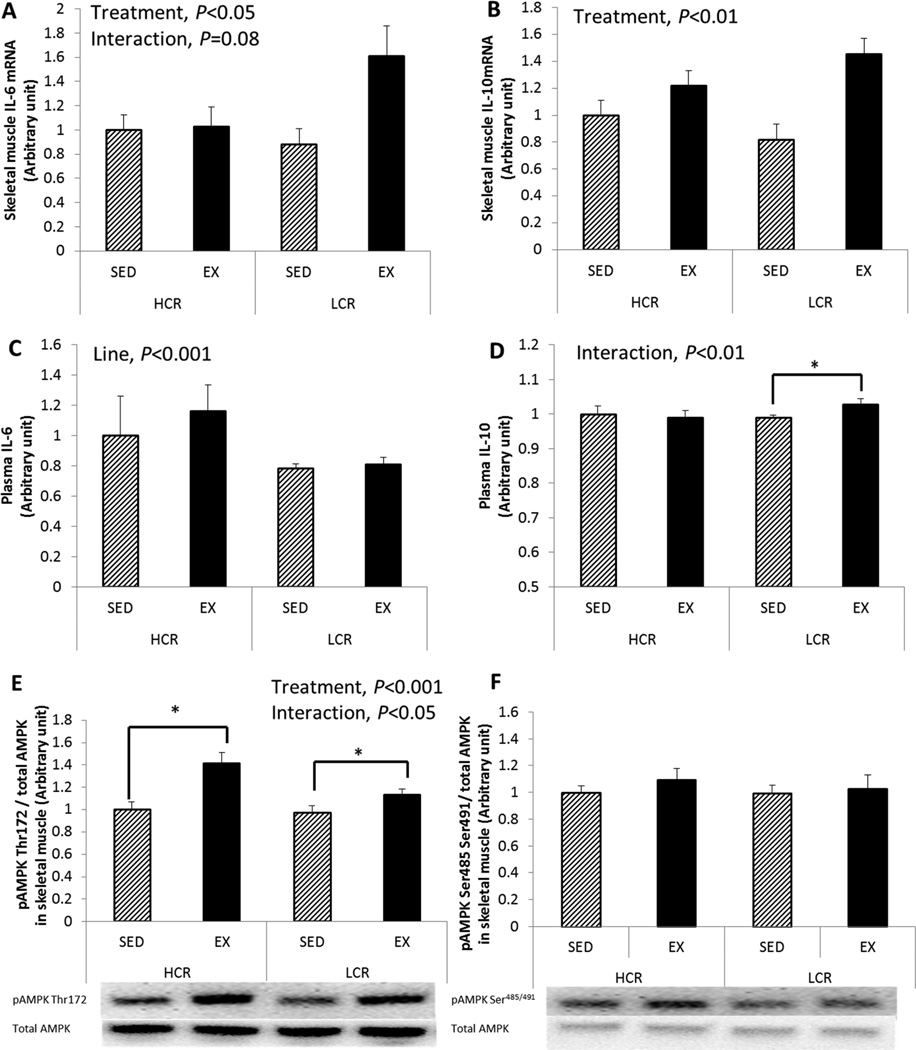
EX reduced body weight and adiposity in LCR rats (-10% and -50%, respectively; P < 0.05) and, unexpectedly, increased these variables in HCR rats (+7% and +37%, respectively; P < 0.05) compared with their respective SED controls, likely because of dietary overcompensation. Wheel running volume was approximately fivefold greater in HCR than LCR rats, yet EX enhanced insulin sensitivity equally in LCR and HCR rats (P < 0.05). This EX-mediated improvement in metabolic function was associated with thee gene upregulation of skeletal muscle interleukin-6 and interleukin-10. EX also increased resting energy expenditure, skeletal muscle mitochondrial content (oxidative phosphorylation complexes and citrate synthase activity), and adenosine monophosphate-activated protein kinase activation similarly in both lines (all P <0.05).
Despite a fivefold difference in running volume between rat lines, EX similarly improved systemic insulin sensitivity, resting energy expenditure, and skeletal muscle mitochondrial content and adenosine monophosphate-activated protein kinase activation in ovariectomized LCR and HCR rats fed HFD compared with their respective SED controls.
卵巢切除术和高脂饮食(HFD)会加重与低有氧适能相关的肥胖和代谢功能障碍。运动训练可减轻由低有氧适能引起的代谢异常,但在卵巢切除术后和高脂饮食情况下这种保护作用是否依然存在尚不清楚。
本研究确定在卵巢切除术后和高脂饮食情况下,运动训练是否能改善低固有有氧能力大鼠的代谢功能。
将选择性培育出的低(LCR)和高(HCR)固有有氧能力的雌性大鼠(n = 30)进行卵巢切除,给予高脂饮食,并随机分为久坐不动(SED)组或自愿轮跑(EX)组。在实验进行到一半时测定静息能量消耗、葡萄糖耐量和自发身体活动,而在整个研究过程中评估体重、轮跑量和食物摄入量。在处死时测量身体成分、循环代谢标志物以及骨骼肌基因和蛋白质表达。
与各自的SED对照组相比,EX使LCR大鼠的体重和肥胖程度降低(分别降低10%和50%;P < 0.05),而意外的是,使HCR大鼠的这些变量增加(分别增加7%和37%;P < 0.05),这可能是由于饮食过度补偿。HCR大鼠的轮跑量比LCR大鼠大约高五倍,但EX在LCR和HCR大鼠中同样增强了胰岛素敏感性(P < 0.05)。这种由EX介导的代谢功能改善与骨骼肌白细胞介素-6和白细胞介素-10的基因上调有关。EX在两条品系中同样增加了静息能量消耗、骨骼肌线粒体含量(氧化磷酸化复合物和柠檬酸合酶活性)以及腺苷单磷酸激活的蛋白激酶激活(所有P <0.05)。
尽管大鼠品系之间的跑量相差五倍,但与各自的SED对照组相比,EX同样改善了卵巢切除的LCR和HCR高脂饮食大鼠的全身胰岛素敏感性、静息能量消耗、骨骼肌线粒体含量以及腺苷单磷酸激活的蛋白激酶激活。