Hsiao Sarah T, Spencer Tim, Boldock Luke, Prosseda Svenja Dannewitz, Xanthis Ioannis, Tovar-Lopez Francesco J, Van Beusekom Heleen M M, Khamis Ramzi Y, Foin Nicolas, Bowden Neil, Hussain Adil, Rothman Alex, Ridger Victoria, Halliday Ian, Perrault Cecile, Gunn Julian, Evans Paul C
Department of Infection, Immunity and Cardiovascular Disease, University of Sheffield, Sheffield S10 2RX, UK.
INSIGNEO Institute of In Silico Medicine, University of Sheffield, Sheffield S10 2RX, UK.
Cardiovasc Res. 2016 Dec;112(3):689-701. doi: 10.1093/cvr/cvw210. Epub 2016 Sep 26.
Stent deployment causes endothelial cells (EC) denudation, which promotes in-stent restenosis and thrombosis. Thus endothelial regrowth in stented arteries is an important therapeutic goal. Stent struts modify local hemodynamics, however the effects of flow perturbation on EC injury and repair are incompletely understood. By studying the effects of stent struts on flow and EC migration, we identified an intervention that promotes endothelial repair in stented arteries.
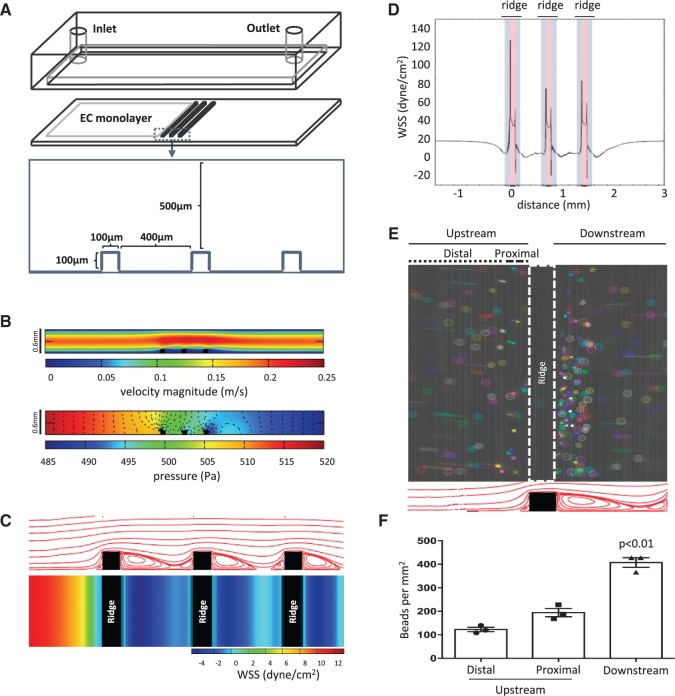
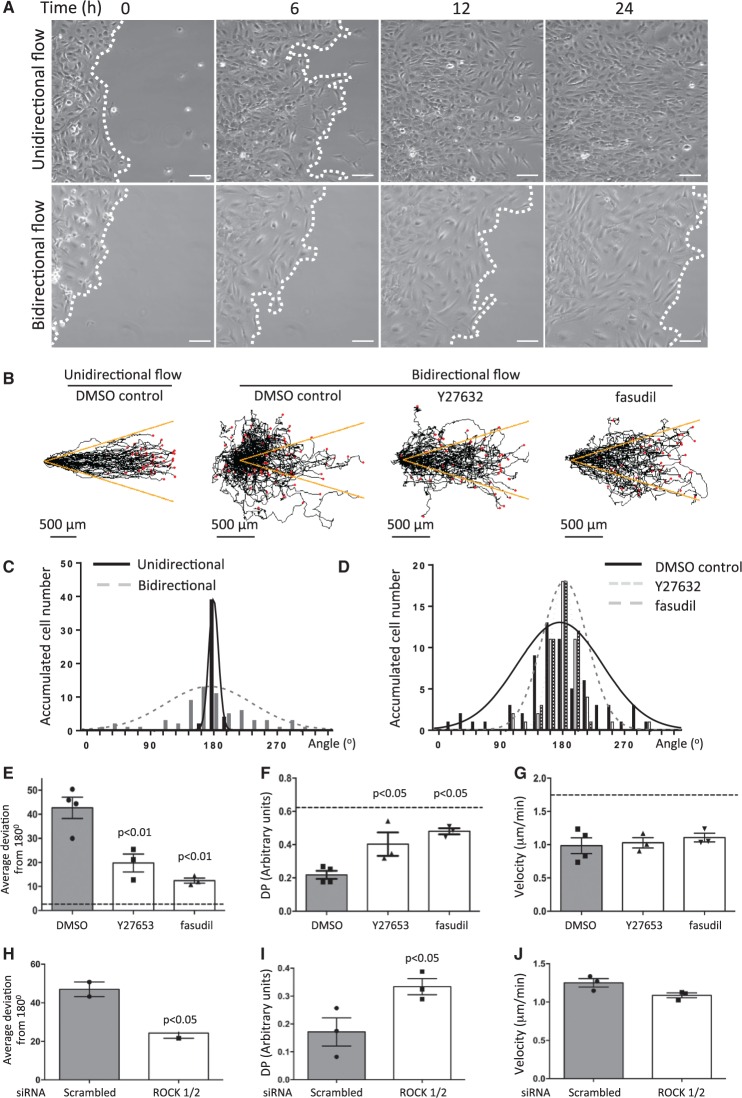
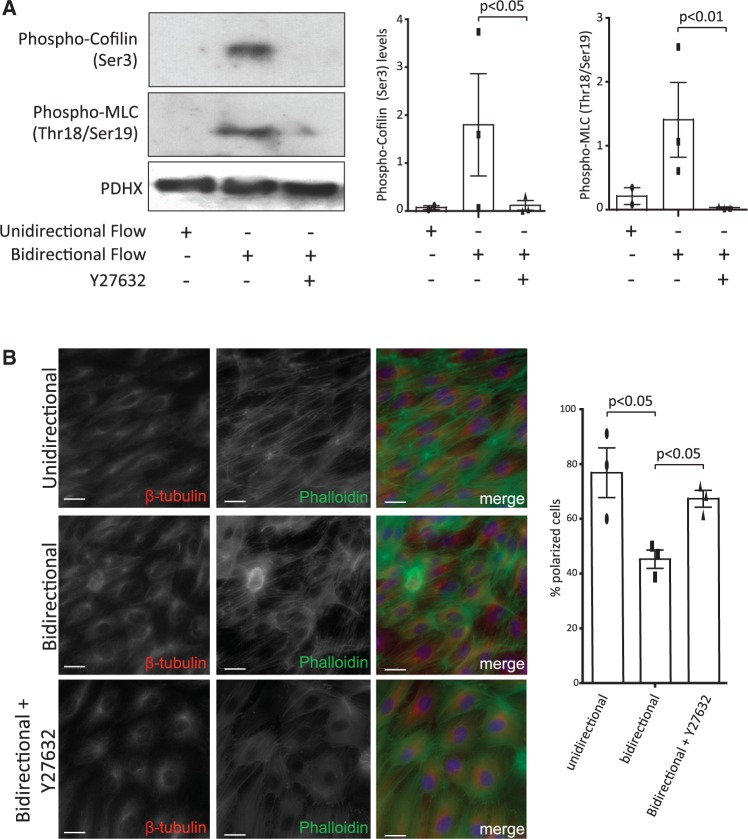
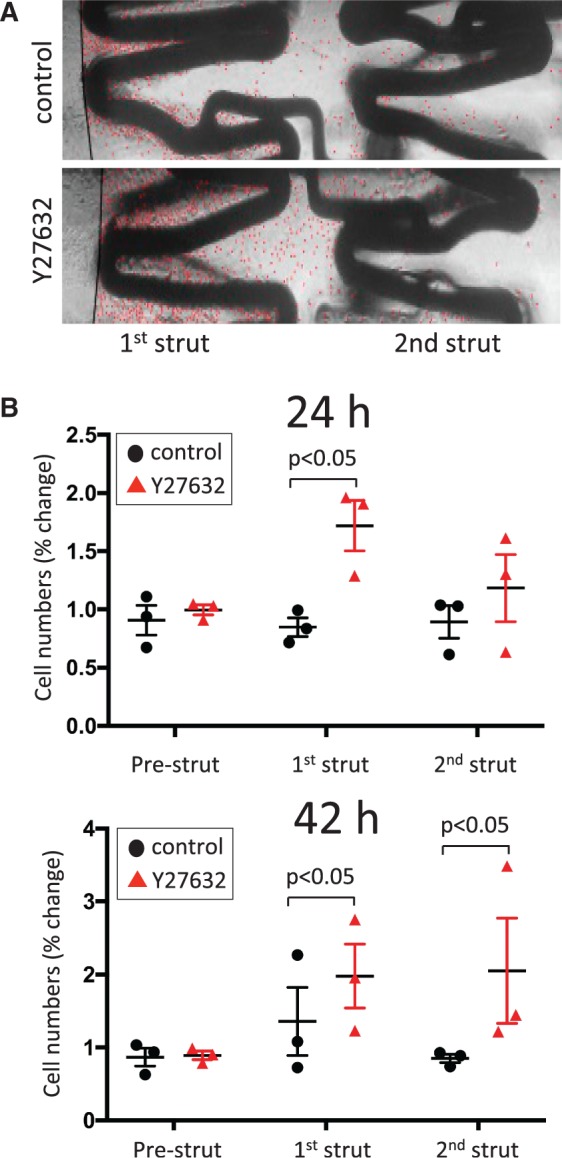
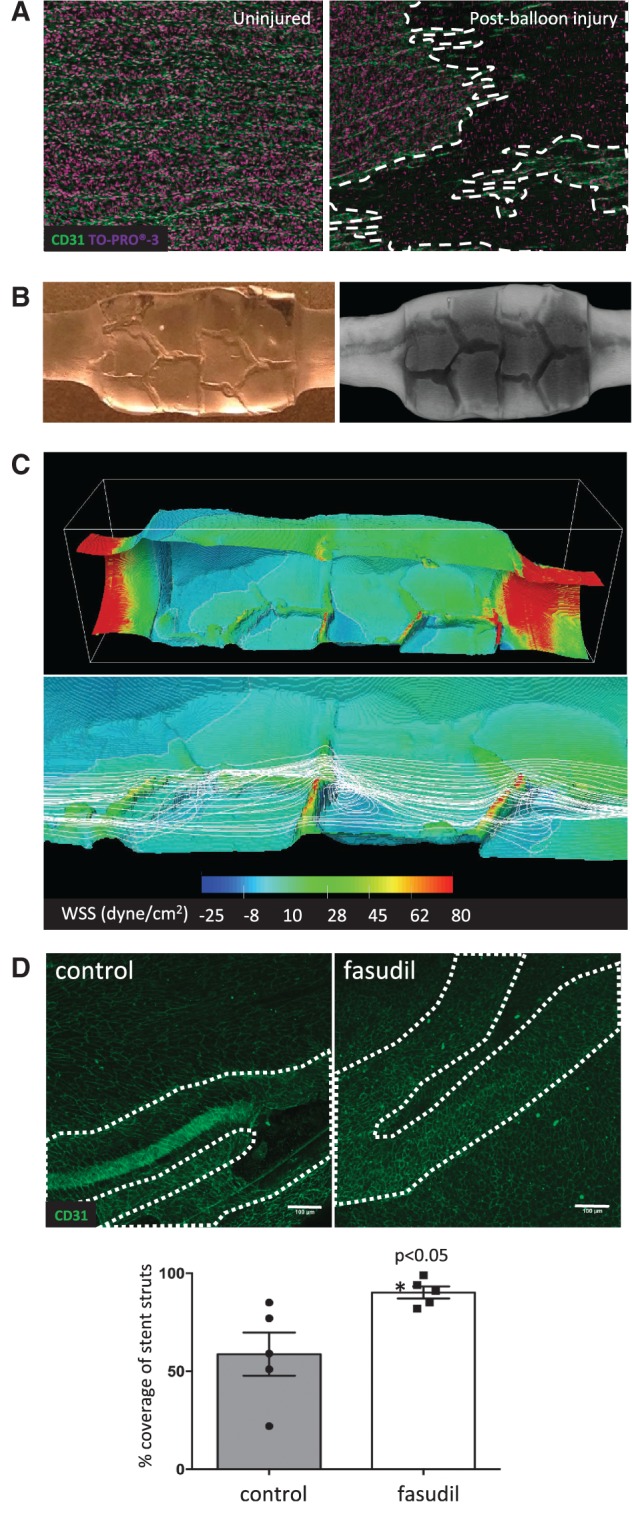
In vitro and in vivo models were developed to monitor endothelialization under flow and the influence of stent struts. A 2D parallel-plate flow chamber with 100 μm ridges arranged perpendicular to the flow was used. Live cell imaging coupled to computational fluid dynamic simulations revealed that EC migrate in the direction of flow upstream from the ridges but subsequently accumulate downstream from ridges at sites of bidirectional flow. The mechanism of EC trapping by bidirectional flow involved reduced migratory polarity associated with altered actin dynamics. Inhibition of Rho-associated protein kinase (ROCK) enhanced endothelialization of ridged surfaces by promoting migratory polarity under bidirectional flow (P < 0.01). To more closely mimic the in vivo situation, we cultured EC on the inner surface of polydimethylsiloxane tubing containing Coroflex Blue stents (65 μm struts) and monitored migration. ROCK inhibition significantly enhanced EC accumulation downstream from struts under flow (P < 0.05). We investigated the effects of ROCK inhibition on re-endothelialization in vivo using a porcine model of EC denudation and stent placement. En face staining and confocal microscopy revealed that inhibition of ROCK using fasudil (30 mg/day via osmotic minipump) significantly increased re-endothelialization of stented carotid arteries (P < 0.05).
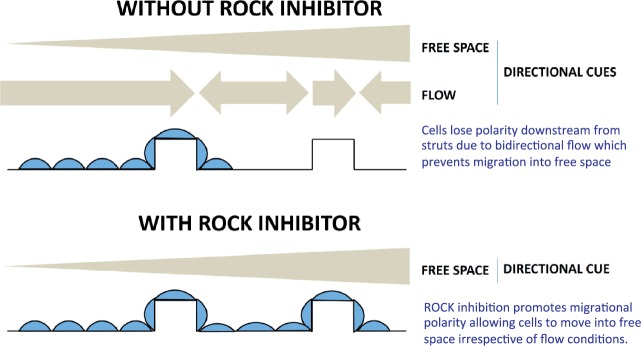
Stent struts delay endothelial repair by generating localized bidirectional flow which traps migrating EC. ROCK inhibitors accelerate endothelial repair of stented arteries by enhancing EC polarity and migration through regions of bidirectional flow.
支架植入会导致内皮细胞(EC)剥脱,进而促进支架内再狭窄和血栓形成。因此,支架置入动脉的内皮再生是一个重要的治疗目标。支架支柱会改变局部血流动力学,然而血流扰动对内皮细胞损伤和修复的影响尚未完全明确。通过研究支架支柱对血流和内皮细胞迁移的影响,我们确定了一种促进支架置入动脉内皮修复的干预措施。
建立体外和体内模型,以监测血流条件下的内皮化以及支架支柱的影响。使用了一个二维平行平板流动腔,其中有100μm的脊,垂直于血流排列。结合计算流体动力学模拟的活细胞成像显示,内皮细胞在脊上游的血流方向迁移,但随后在双向血流部位的脊下游聚集。双向血流捕获内皮细胞的机制涉及与肌动蛋白动力学改变相关的迁移极性降低。抑制Rho相关蛋白激酶(ROCK)可通过在双向血流下促进迁移极性来增强有脊表面的内皮化(P<0.01)。为了更接近体内情况,我们在含有Coroflex Blue支架(65μm支柱)的聚二甲基硅氧烷管内表面培养内皮细胞并监测迁移。ROCK抑制显著增强了血流条件下支柱下游的内皮细胞聚集(P<0.05)。我们使用猪内皮剥脱和支架置入模型研究了ROCK抑制对体内再内皮化的影响。表面染色和共聚焦显微镜显示,使用法舒地尔(通过渗透微型泵每天30mg)抑制ROCK可显著增加支架置入颈动脉的再内皮化(P<0.05)。
支架支柱通过产生局部双向血流捕获迁移的内皮细胞,从而延迟内皮修复。ROCK抑制剂通过增强内皮细胞极性并促进其通过双向血流区域的迁移,加速支架置入动脉的内皮修复。