Shen Hua, Kormpakis Ioannis, Havlioglu Necat, Linderman Stephen W, Sakiyama-Elbert Shelly E, Erickson Isaac E, Zarembinski Thomas, Silva Matthew J, Gelberman Richard H, Thomopoulos Stavros
Department of Orthopaedic Surgery, Washington University, 660 South Euclid, Campus, Box 8233, St. Louis, MO, 63110, USA.
Department of Pathology, John Cochran VA Medical Center, St. Louis, MO, USA.
Stem Cell Res Ther. 2016 Sep 27;7(1):144. doi: 10.1186/s13287-016-0406-0.
The clinical outcomes following intrasynovial flexor tendon repair are highly variable. Excessive inflammation is a principal factor underlying the formation of adhesions at the repair surface and affecting matrix regeneration at the repair center that limit tendon excursion and impair tendon healing. A previous in-vitro study revealed that adipose-derived mesenchymal stromal cells (ASCs) modulate tendon fibroblast response to macrophage-induced inflammation. The goal of the current study was therefore to explore the effectiveness of autologous ASCs on the inflammatory stage of intrasynovial tendon healing in vivo using a clinically relevant animal model.
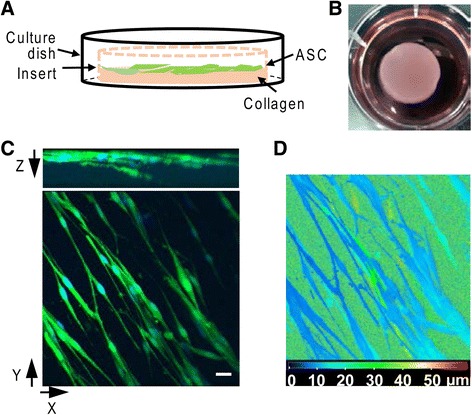
Zone II flexor tendon transections and suture repairs were performed in a canine model. Autologous ASC sheets were delivered to the surface of repaired tendons. Seven days after repair, the effects of ASCs on tendon healing, with a focus on the inflammatory response, were evaluated using gene expression assays, immunostaining, and histological assessments.
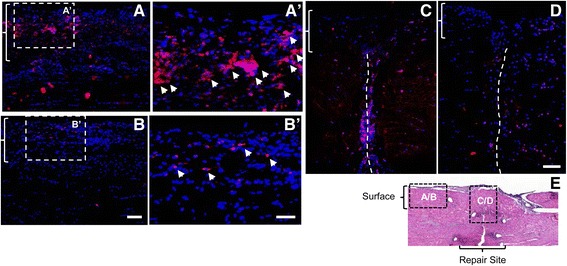
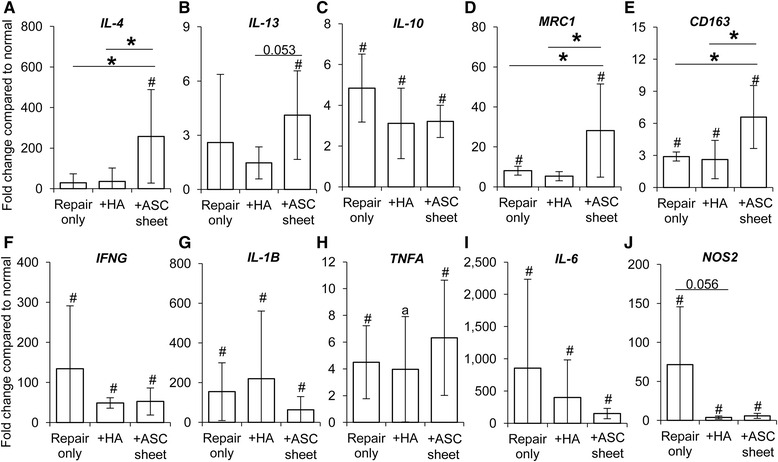
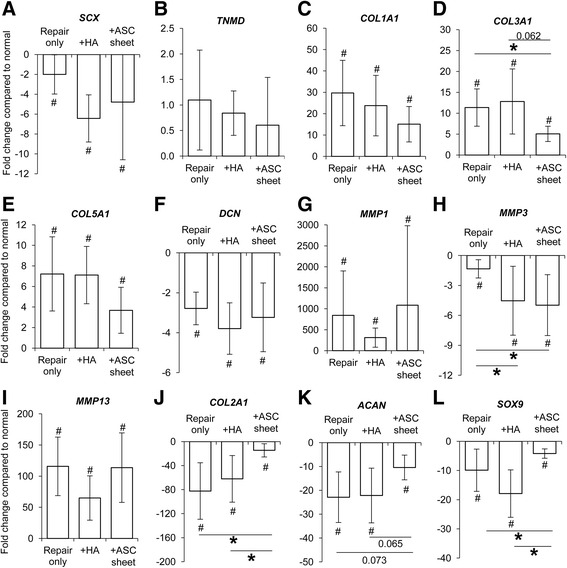
ASCs delivered via the cell sheet infiltrated the host tendon, including the repair surface and the space between the tendon ends, as viewed histologically by tracking GFP-expressing ASCs. Gene expression results demonstrated that ASCs promoted a regenerative/anti-inflammatory M2 macrophage phenotype and regulated tendon matrix remodeling. Specifically, there were significant increases in M2-stimulator (IL-4), marker (CD163 and MRC1), and effector (VEGF) gene expression in ASC-sheet treated tendons compared with nontreated tendons. When examining changes in extracellular matrix expression, tendon injury caused a significant increase in scar-associated COL3A1 expression and reductions in COL2A1 and ACAN expression. The ASC treatment effectively counteracted these changes, returning the expression levels of these genes closer to normal. Immunostaining further confirmed that ASC treatment increased CD163 M2 cells in the repaired tendons and suppressed cell apoptosis at the repair site.
This study provides a novel approach for delivering ASCs with outcomes indicating potential for substantial modulation of the inflammatory environment and enhancement of tendon healing after flexor tendon repair.
滑膜内屈肌腱修复后的临床结果差异很大。过度炎症是修复表面形成粘连以及影响修复中心基质再生的主要因素,这会限制肌腱的活动并损害肌腱愈合。先前的一项体外研究表明,脂肪来源的间充质基质细胞(ASC)可调节肌腱成纤维细胞对巨噬细胞诱导的炎症的反应。因此,本研究的目的是使用具有临床相关性的动物模型,在体内探索自体ASC对滑膜内肌腱愈合炎症阶段的有效性。
在犬模型中进行II区屈肌腱横断和缝合修复。将自体ASC片放置于修复肌腱的表面。修复7天后,使用基因表达分析、免疫染色和组织学评估来评估ASC对肌腱愈合的影响,重点是炎症反应。
通过追踪表达绿色荧光蛋白的ASC进行组织学观察发现,经细胞片递送的ASC浸润了宿主肌腱,包括修复表面和肌腱断端之间的间隙。基因表达结果表明,ASC促进了再生/抗炎M2巨噬细胞表型并调节肌腱基质重塑。具体而言,与未处理的肌腱相比,ASC片处理的肌腱中M2刺激因子(IL-4)、标志物(CD163和MRC1)和效应因子(VEGF)的基因表达显著增加。在检查细胞外基质表达的变化时,肌腱损伤导致瘢痕相关的COL3A1表达显著增加,而COL2A1和ACAN表达降低。ASC治疗有效地抵消了这些变化,使这些基因的表达水平更接近正常。免疫染色进一步证实,ASC治疗增加了修复肌腱中CD163 M2细胞的数量,并抑制了修复部位的细胞凋亡。
本研究提供了一种递送ASC的新方法,结果表明其有可能显著调节炎症环境并增强屈肌腱修复后的肌腱愈合。