Hudler Petra, Britovsek Nina Kocevar, Grazio Snjezana Frkovic, Komel Radovan
University of Ljubljana, Faculty of Medicine, Institute of Biochemistry, Ljubljana, Slovenia.
University Clinical Hospital Ljubljana, Department of Obstetrics and Gynecology, Department of Gynecological Pathology and Cytology, Ljubljana, Slovenia.
Radiol Oncol. 2016 Jul 19;50(3):297-307. doi: 10.1515/raon-2015-0047. eCollection 2016 Sep 1.
Malignant transformation of normal gastric cells is a complex and multistep process, resulting in development of heterogeneous tumours. Susceptible genetic background, accumulation of genetic changes, and environmental factors play an important role in gastric carcinogenesis. Single nucleotide polymorphisms (SNPs) in mitotic segregation genes could be responsible for inducing the slow process of accumulation of genetic changes, leading to genome instability.
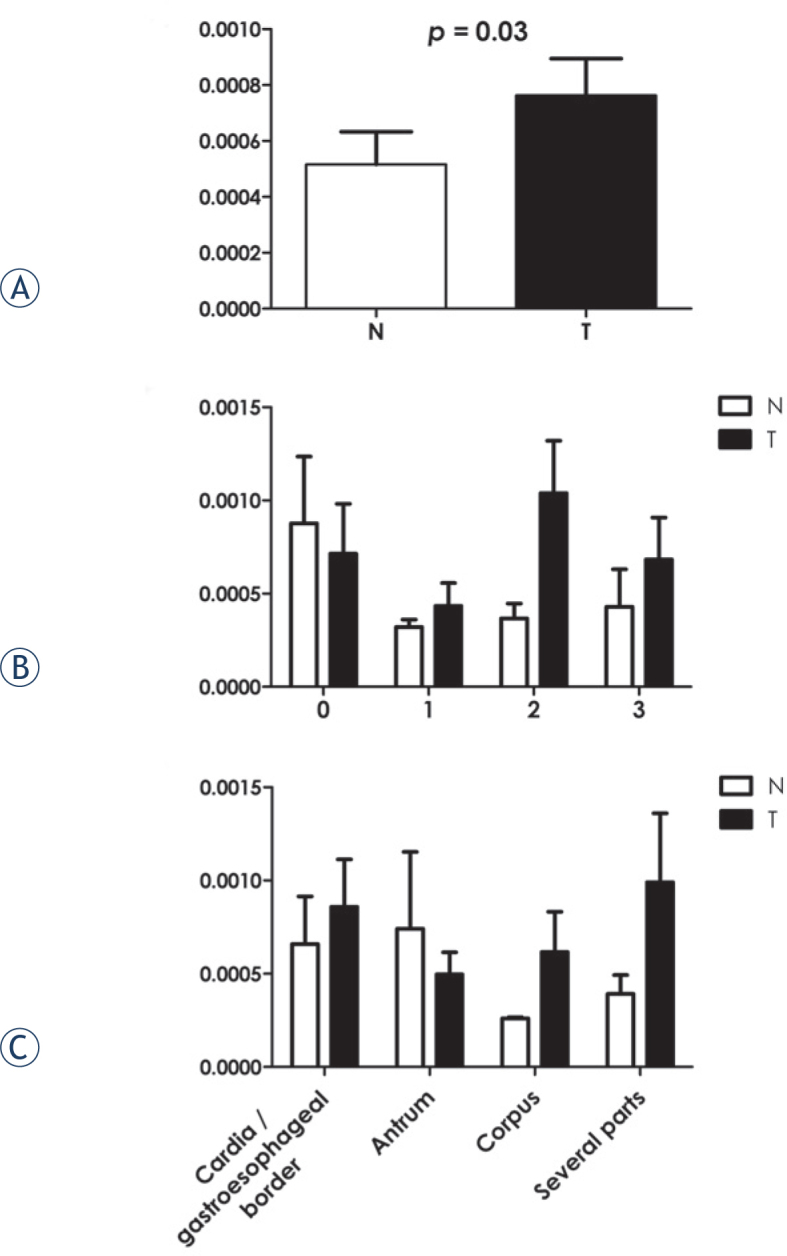
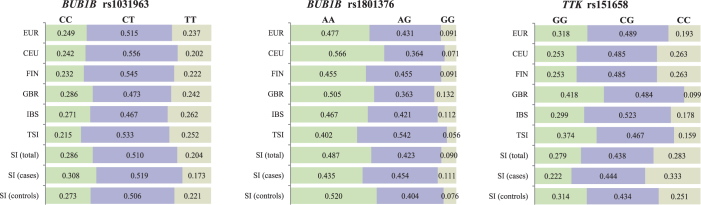
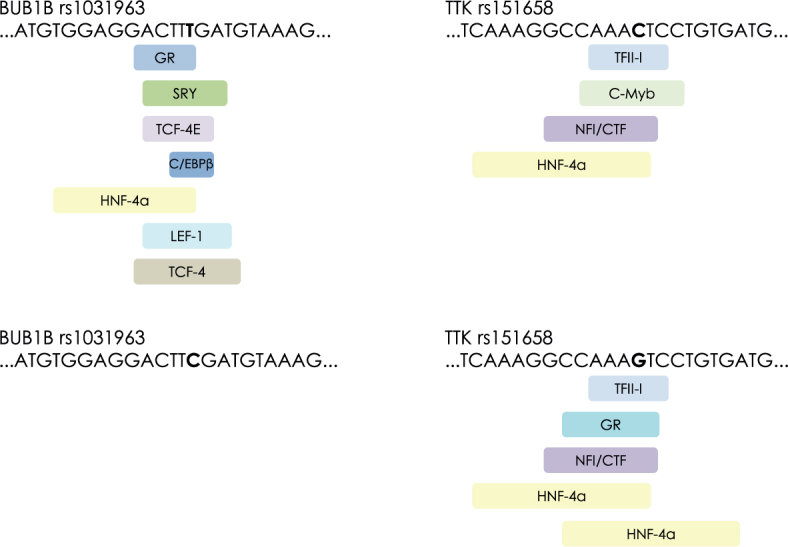
We performed a case-control study of polymorphisms in mitotic kinases TTK rs151658 and BUB1B rs1031963 and rs1801376 to assess their effects on gastric cancer risk. We examined the TTK abundance in gastric cancer tissues using immunoblot analysis.
C/G genotype of rs151658 was more frequent in patients with diffuse type of gastric cancer and G/G genotype was more common in intestinal types of gastric cancers (p = 0.049). Polymorphic genotype A/A of rs1801376 was associated with higher risk for developing diffuse type of gastric cancer in female population (p = 0.007), whereas A/A frequencies were increased in male patients with subserosa tumour cell infiltration (p = 0.009). T/T genotype of rs1031963 was associated with well differentiated tumours (p = 0.035). TT+CT genotypes of rs1031963 and GG+AG genotypes of rs1801376 were significantly associated with gastric cancer risk (dominant model; OR = 2,929, 95% CI: 1.281-6.700; p = 0.017 and dominant model; OR = 0,364, 95% CI: 0.192-0.691; p = 0.003 respectively).
Our results suggest that polymorphisms in mitotic kinases TTK and BUB1B may contribute to gastric tumorigenesis and risk of tumour development. Further investigations on large populations and populations of different ethnicity are needed to determine their clinical utility.
正常胃细胞的恶性转化是一个复杂的多步骤过程,会导致异质性肿瘤的发生。易感的遗传背景、基因变化的积累以及环境因素在胃癌发生过程中起着重要作用。有丝分裂分离基因中的单核苷酸多态性(SNP)可能导致基因变化积累的缓慢过程,从而导致基因组不稳定。
我们对有丝分裂激酶TTK rs151658和BUB1B rs1031963及rs1801376的多态性进行了病例对照研究,以评估它们对胃癌风险的影响。我们使用免疫印迹分析检测了胃癌组织中TTK的丰度。
rs151658的C/G基因型在弥漫型胃癌患者中更为常见,而G/G基因型在肠型胃癌中更为常见(p = 0.049)。rs1801376的多态性基因型A/A与女性人群发生弥漫型胃癌的较高风险相关(p = 0.007),而在肿瘤细胞浸润至浆膜下层的男性患者中A/A频率增加(p = 0.009)。rs1031963的T/T基因型与高分化肿瘤相关(p = 0.035)。rs1031963的TT + CT基因型和rs1801376的GG + AG基因型与胃癌风险显著相关(显性模型;OR = 2.929,95% CI:1.281 - 6.700;p = 0.017和显性模型;OR = 0.364,95% CI:0.192 - 0.691;p = 0.003)。
我们的结果表明,有丝分裂激酶TTK和BUB1B的多态性可能有助于胃癌的发生和肿瘤发展风险。需要对大量人群和不同种族人群进行进一步研究,以确定它们的临床应用价值。