Bard Eleanor, Knight Marian, Plugge Emma
Oxford University Hospitals NHS Trust/Nuffield Department of Population Health, University of Oxford, Old Road Campus, Roosevelt Drive, Oxford, OX3 7LF, UK.
National Perinatal Epidemiology Unit (NPEU), University of Oxford, Old Road Campus, Oxford, OX3 7LF, UK.
BMC Pregnancy Childbirth. 2016 Sep 29;16(1):285. doi: 10.1186/s12884-016-1080-z.
Women are an increasing minority of prisoners worldwide, and most are of childbearing age. Prisons offer unique opportunities for improving the pregnancy outcomes of these high-risk women, and no systematic review to date has looked at their care. This systematic review identified studies describing models of perinatal health care for imprisoned women which report maternal and child health and care outcomes.
We systematically searched for literature published between 1980 and April 2014. Studies were eligible if they included a group of imprisoned pregnant women, a description of perinatal health care and any maternal or infant health or care outcomes. Two authors independently extracted data. We described relevant outcomes in prisons (including jails) under models of care we termed PRISON, PRISON+ and PRISON++, depending on the care provided. Where outcomes were available on a comparison group of women, we calculated odds ratios with 95 % confidence intervals.
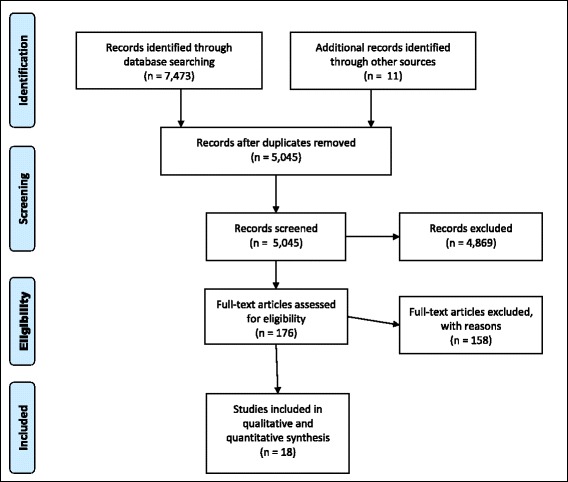
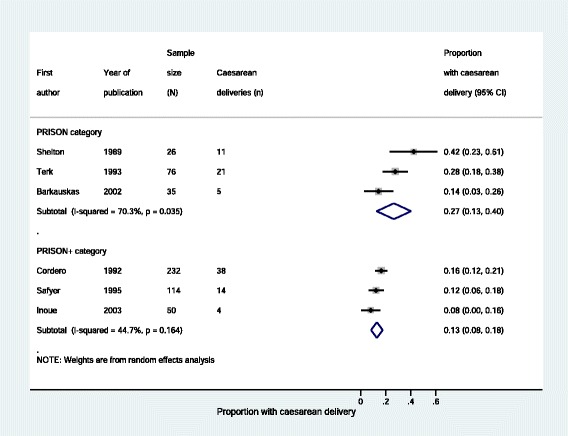
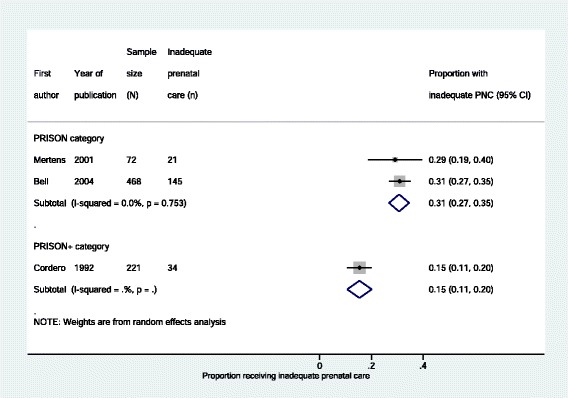
Eighteen studies were reported, comprising 2001 imprisoned pregnant women. Fifteen were in the US, two in the UK and one in Germany. Nine contained a comparison group of women comprising 849 pregnant women. Study quality was variable and outcome reporting was inconsistent. There was some evidence that women in prisons receiving enhanced prison care, PRISON+, were less likely to have inadequate prenatal care (15.4 % vs 30.7 %, p < 0 · 001), preterm delivery (6.4 % vs 19.0 %, p = 0 · 001) or caesarean delivery (12.9 % vs 26.5 %, p = 0 · 005) compared to women in prisons receiving usual care (PRISON). Women participating in two PRISON++ interventions, that is, interventions which included not only enhanced care in prisons but also coordination of community care on release, demonstrated reductions in long term recidivism rates (summary OR 0 · 37, 95 % CI 0 · 19-0 · 70) compared to pregnant women in the same prisons who did not participate in the intervention.
Enhanced perinatal care can improve both short and long-term outcomes but there is a lack of data. Properly designed programmes with rigorous evaluation are needed to address the needs of this vulnerable population. The cost to mothers, children and to society of failing to address these important public health issues are likely to be substantial.
PROSPERO registration: CRD42012002384 .
在全球范围内,女性囚犯的比例日益增加,且大多数处于育龄期。监狱为改善这些高危女性的妊娠结局提供了独特的机会,而迄今为止尚无系统综述关注她们的护理情况。本系统综述旨在识别描述被监禁女性围产期保健模式的研究,这些研究报告了母婴健康及护理结局。
我们系统检索了1980年至2014年4月期间发表的文献。若研究纳入了一组被监禁的孕妇、围产期保健的描述以及任何母婴健康或护理结局,则该研究符合纳入标准。两名作者独立提取数据。我们根据所提供的护理模式,将监狱(包括看守所)中的相关结局描述为PRISON、PRISON+和PRISON++。若有来自女性对照组的结局数据,我们计算了比值比及95%置信区间。
共报告了18项研究,涉及2001名被监禁的孕妇。其中15项研究来自美国,2项来自英国,1项来自德国。9项研究包含了一个由849名孕妇组成的女性对照组。研究质量参差不齐,结局报告也不一致。有证据表明,与接受常规护理(PRISON)的监狱女性相比,接受强化监狱护理(PRISON+)的监狱女性产前护理不足的可能性更低(15.4%对30.7%,p<0.001)、早产率更低(6.4%对19.0%,p=0.001)或剖宫产率更低(12.9%对26. .5%,p=0.005)。与未参与干预的同监狱孕妇相比,参与两项PRISON++干预措施(即不仅包括监狱内的强化护理,还包括出狱后社区护理协调)的女性长期再犯率有所降低(汇总比值比0.37,95%置信区间0.19 - 0.70)。
强化围产期护理可改善短期和长期结局,但数据不足。需要设计合理且经过严格评估的项目来满足这一弱势群体的需求。未能解决这些重要公共卫生问题对母亲、儿童及社会造成的代价可能是巨大的。
PROSPERO注册编号:CRD42012002384 。