Shcherbakova Viktoria, Oshurkova Viktoria, Yoshimura Yoshitaka
Skryabin Institute of Biochemistry and Physiology of Microorganisms, Russian Academy of Sciences, Prospect Nauki 5, Pushchino, Moscow, 142290, Russia.
Japan Aerospace Exploration Agency, Institute of Space and Astronautical Science (ISAS), 3-1-1 Yoshinodai, Chuo-ku, Sagamihara, Kanagawa, 252-5210, Japan.
Microorganisms. 2015 Sep 9;3(3):518-34. doi: 10.3390/microorganisms3030518.
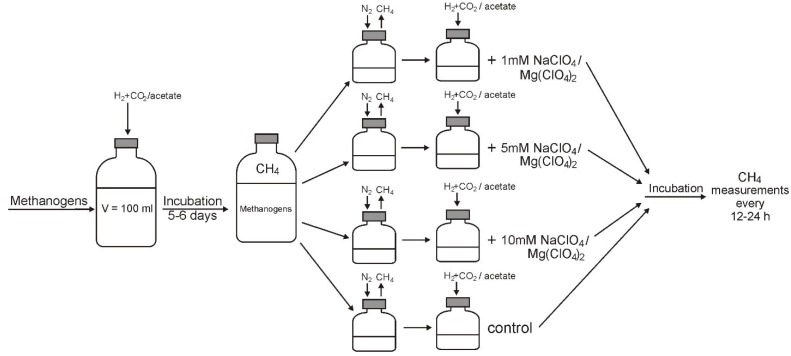
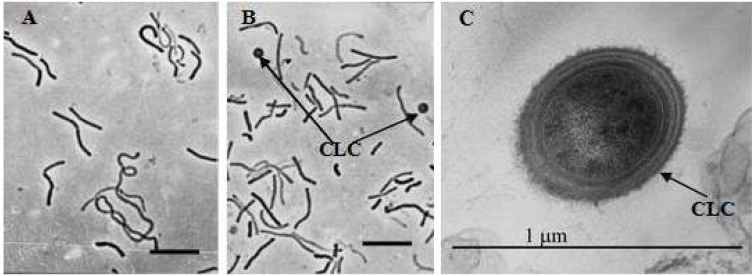
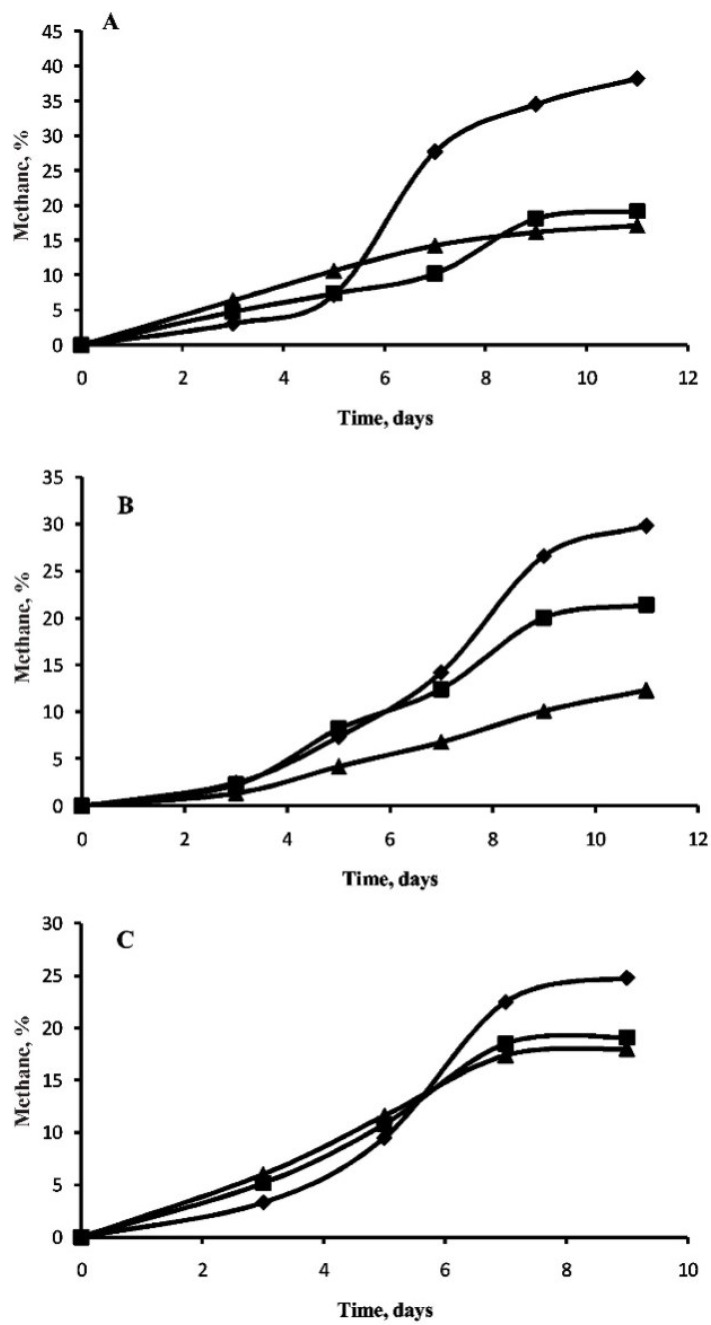
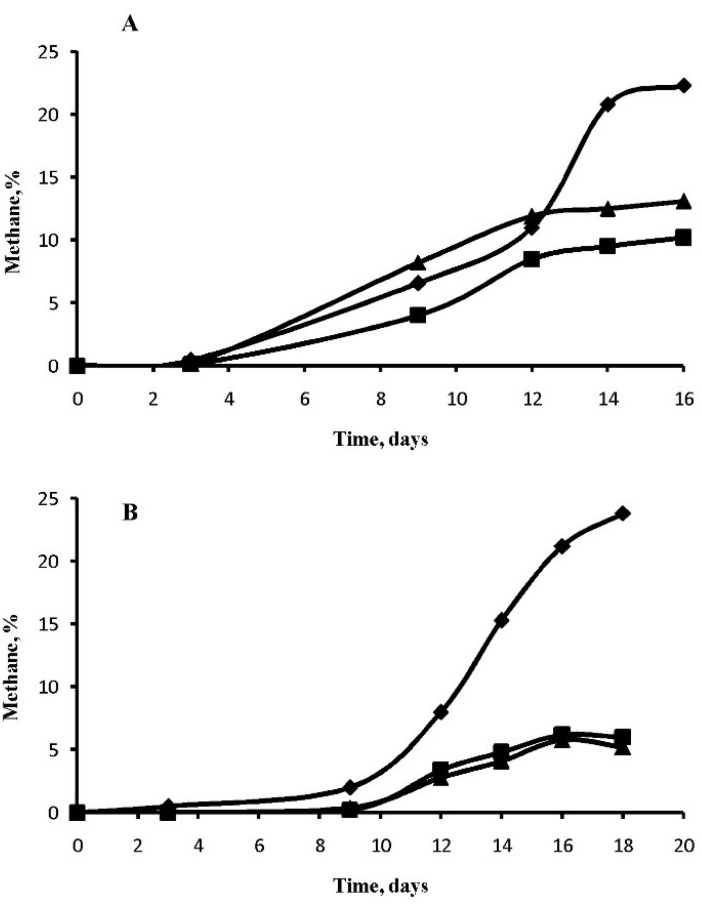
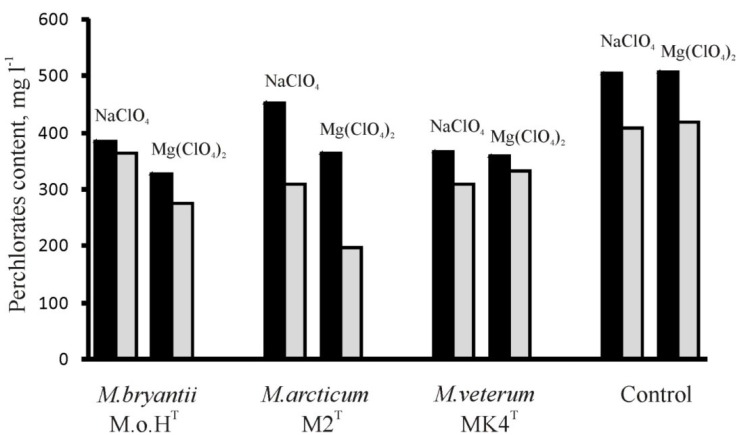
The terrestrial permafrost represents a range of possible cryogenic extraterrestrial ecosystems on Earth-like planets without obvious surface ice, such as Mars. The autotrophic and chemolithotrophic psychrotolerant methanogens are more likely than aerobes to function as a model for life forms that may exist in frozen subsurface environments on Mars, which has no free oxygen, inaccessible organic matter, and extremely low amounts of unfrozen water. Our research on the genesis of methane, its content and distribution in permafrost horizons of different ages and origin demonstrated the presence of methane in permanently frozen fine-grained sediments. Earlier, we isolated and described four strains of methanogenic archaea of Methanobacterium and Methanosarcina genera from samples of Pliocene and Holocene permafrost from Eastern Siberia. In this paper we study the effect of sodium and magnesium perchlorates on growth of permafrost and nonpermafrost methanogens, and present evidence that permafrost hydogenotrophic methanogens are more resistant to the chaotropic agent found in Martian soil. In this paper we study the effect of sodium and magnesium perchlorates on the growth of permafrost and nonpermafrost methanogens, and present evidence that permafrost hydogenotrophic methanogens are more resistant to the chaotropic agent found in Martian soil. Furthermore, as shown in the studies strain M2(T) M. arcticum, probably can use perchlorate anion as an electron acceptor in anaerobic methane oxidation. Earth's subzero subsurface environments are the best approximation of environments on Mars, which is most likely to harbor methanogens; thus, a biochemical understanding of these pathways is expected to provide a basis for designing experiments to detect autotrophic methane-producing life forms on Mars.
陆地永久冻土代表了在类地行星(如火星)上一系列可能的低温外星生态系统,这些行星没有明显的地表冰。自养和化能自养的耐低温产甲烷菌比需氧生物更有可能作为火星冰冻地下环境中可能存在的生命形式的模型,因为火星没有游离氧、难以获取的有机物以及极少量的未冻水。我们对不同年龄和来源的永久冻土中甲烷的产生、含量及分布的研究表明,在永久冻结的细粒沉积物中存在甲烷。此前,我们从东西伯利亚上新世和全新世永久冻土样本中分离并描述了四株甲烷杆菌属和甲烷八叠球菌属的产甲烷古菌。在本文中,我们研究了高氯酸钠和高氯酸镁对永久冻土和非永久冻土产甲烷菌生长的影响,并提供证据表明永久冻土中氢营养型产甲烷菌对火星土壤中发现的离液剂更具抗性。此外,如对北极甲烷杆菌M2(T)菌株的研究所示,它可能在厌氧甲烷氧化过程中利用高氯酸根阴离子作为电子受体。地球的零下地下环境是火星环境的最佳近似,而火星最有可能存在产甲烷菌;因此,对这些途径的生化理解有望为设计检测火星上自养产甲烷生命形式的实验提供基础。