Lee Sanghoon, Park Yu Rang, Kim Su-Hwa, Park Eun-Jung, Kang Min Ji, So Insuk, Chun Jung Nyeo, Jeon Ju-Hong
Department of Biochemistry, University of Utah School of Medicine, Salt Lake City, Utah, 84112 5650.
Office of Clinical Research Information, Asan Medical Center, Seoul, 05535, Korea.
Cancer Med. 2016 Oct;5(10):2899-2908. doi: 10.1002/cam4.864. Epub 2016 Sep 28.
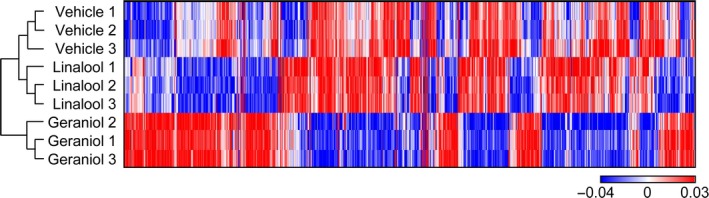
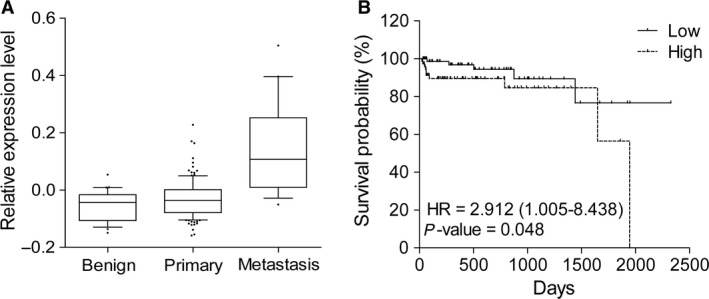
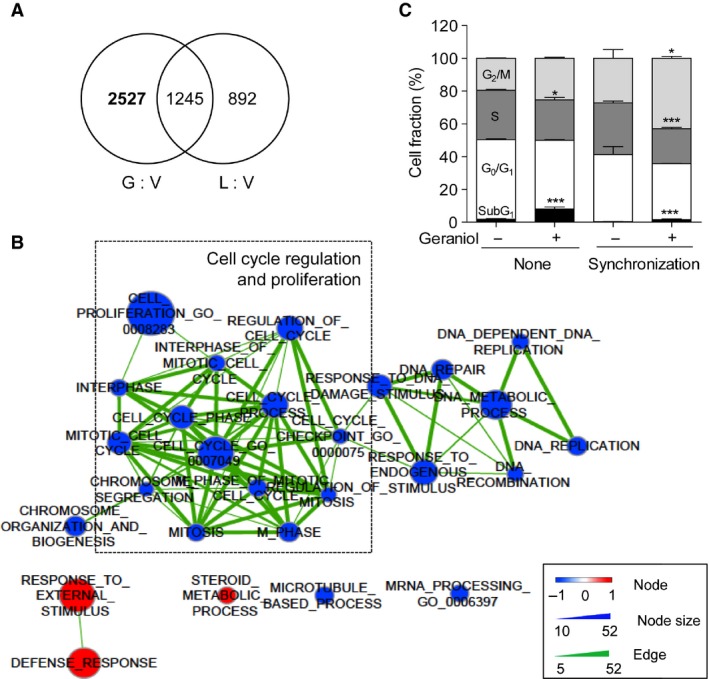
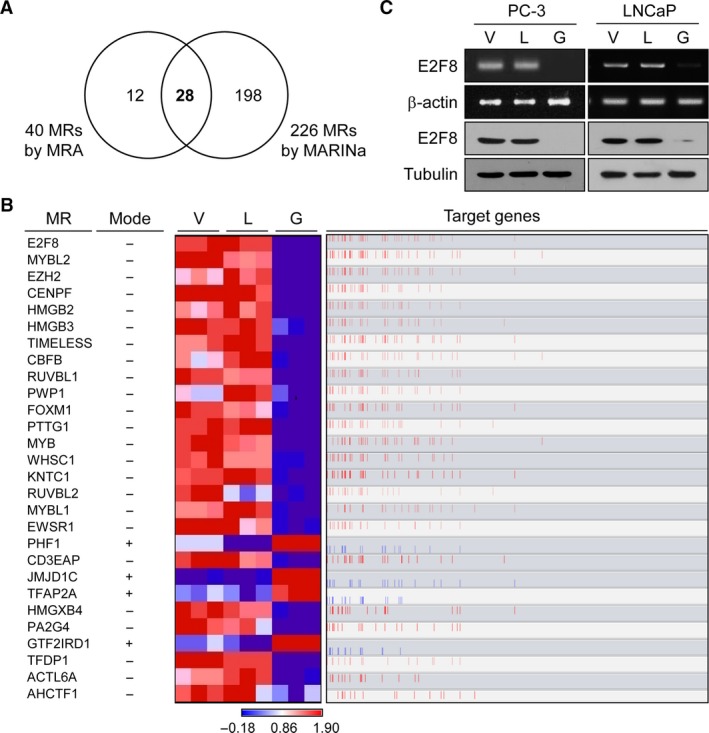
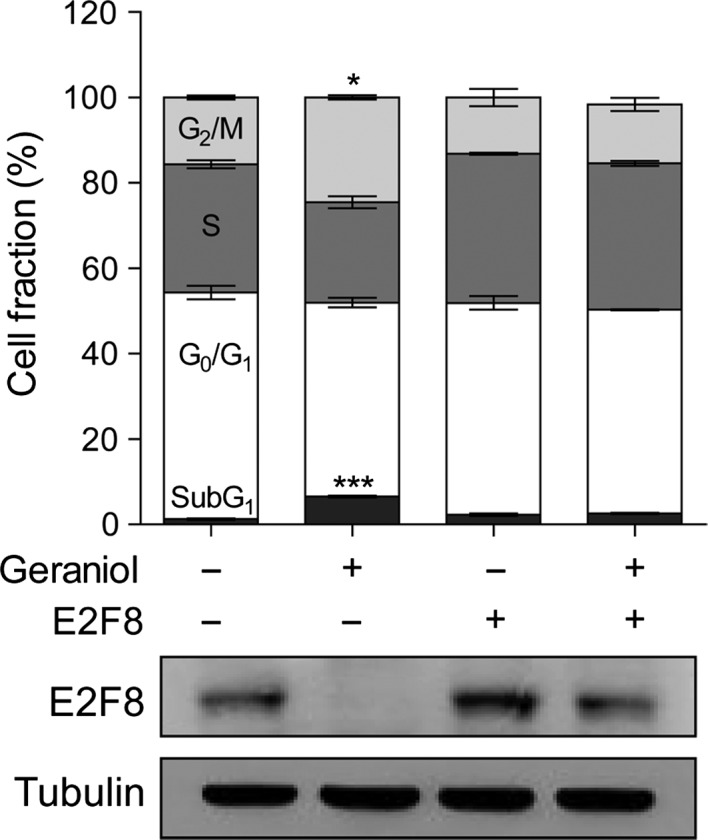
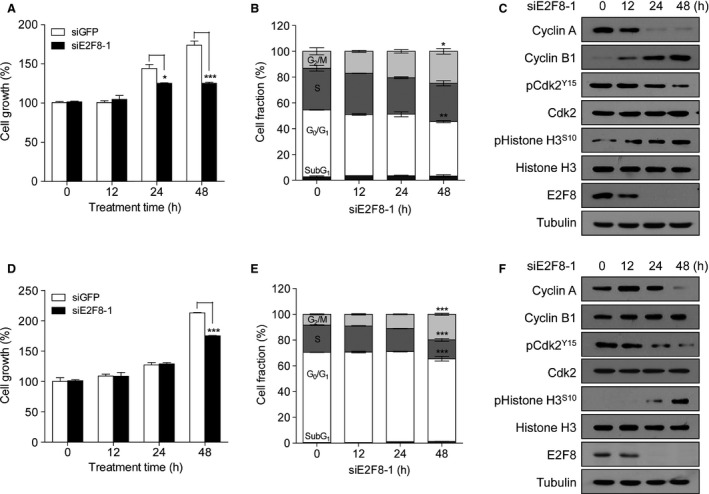
Geraniol, an acyclic dietary monoterpene, has been found to suppress cancer survival and growth. However, the molecular mechanism underlying the antitumor action of geraniol has not been investigated at the genome-wide level. In this study, we analyzed the microarray data obtained from geraniol-treated prostate cancer cells. Geraniol potently altered a gene expression profile and primarily down-regulated cell cycle-related gene signatures, compared to linalool, another structurally similar monoterpene that induces no apparent phenotypic changes. Master regulator analysis using the prostate cancer-specific regulatory interactome identified that the transcription factor E2F8 as a specific target molecule regulates geraniol-specific cell cycle signatures. Subsequent experiments confirmed that geraniol down-regulated E2F8 expression and the knockdown of E2F8 was sufficient to suppress cell growth by inducing G /M arrest. Epidemiological analysis showed that E2F8 is up-regulated in metastatic prostate cancer and associated with poor prognosis. These results indicate that E2F8 is a crucial transcription regulator controlling cell cycle and survival in prostate cancer cells. Therefore, our study provides insight into the role of E2F8 in prostate cancer biology and therapeutics.
香叶醇是一种无环膳食单萜,已被发现可抑制癌症的存活和生长。然而,香叶醇抗肿瘤作用的分子机制尚未在全基因组水平上进行研究。在本研究中,我们分析了从香叶醇处理的前列腺癌细胞中获得的微阵列数据。与另一种结构相似但未诱导明显表型变化的单萜芳樟醇相比,香叶醇有力地改变了基因表达谱,并主要下调了细胞周期相关的基因特征。使用前列腺癌特异性调控相互作用组进行的主调控因子分析确定,转录因子E2F8作为一个特定的靶分子调节香叶醇特异性的细胞周期特征。随后的实验证实,香叶醇下调了E2F8的表达,而敲低E2F8足以通过诱导G/M期阻滞来抑制细胞生长。流行病学分析表明,E2F8在转移性前列腺癌中上调,且与预后不良相关。这些结果表明,E2F8是控制前列腺癌细胞周期和存活的关键转录调节因子。因此,我们的研究为E2F8在前列腺癌生物学和治疗中的作用提供了见解。