Yang Yu, Arenas-Hernandez Marcia, Gomez-Lopez Nardhy, Dai Jing, Parker Graham C, Puscheck Elizabeth E, Rappolee Daniel A
CS Mott Center for Human Growth and Development, Department of Ob/Gyn, Reproductive Endocrinology and Infertility, Wayne State University School of Medicine, Detroit, Michigan.
Department of Physiology, Wayne State University School of Medicine, Detroit, Michigan.
Biol Reprod. 2016 Nov;95(5):110. doi: 10.1095/biolreprod.116.138412. Epub 2016 Sep 28.
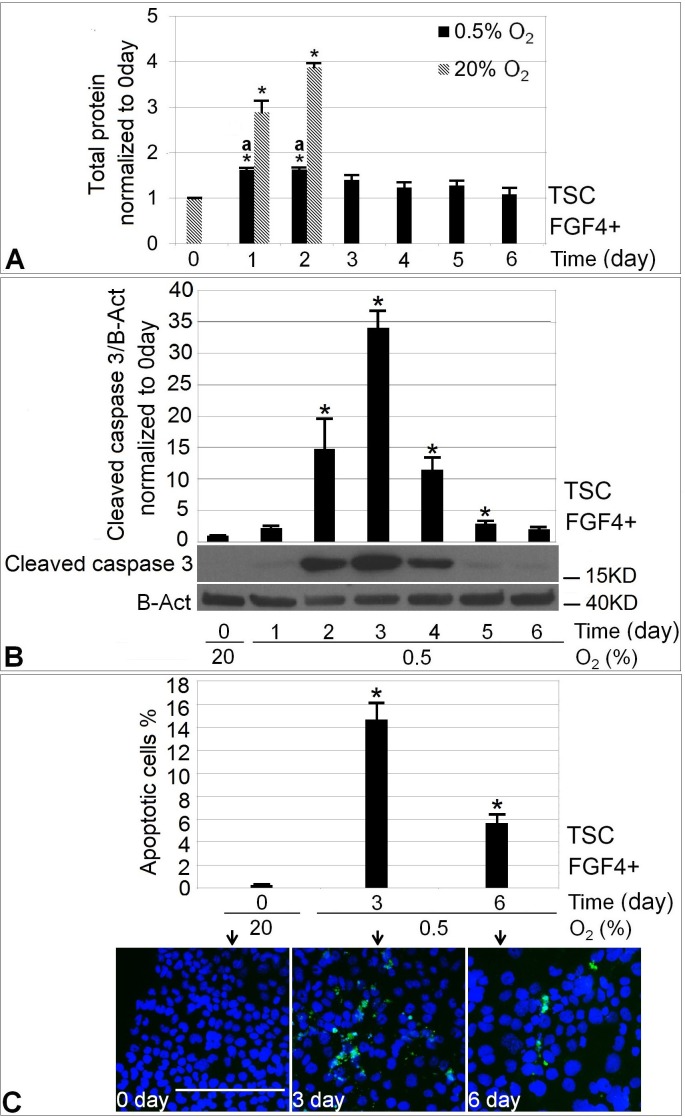
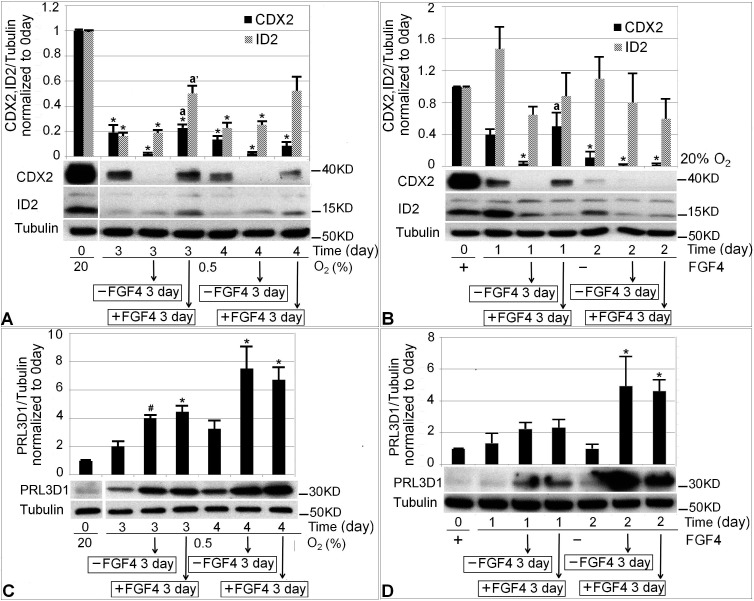
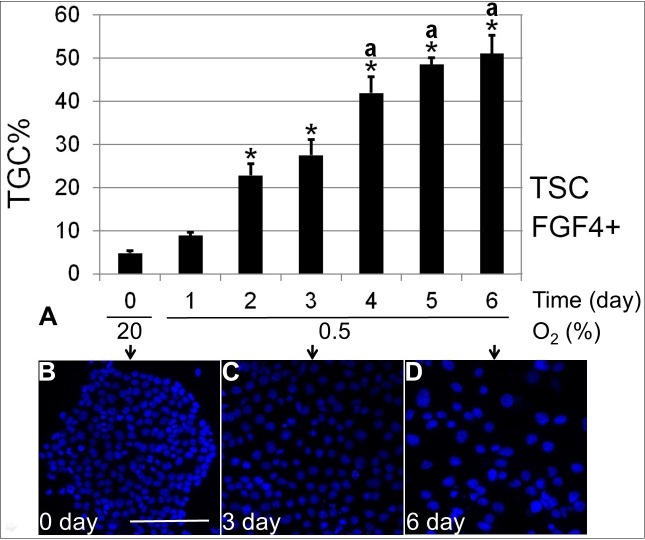
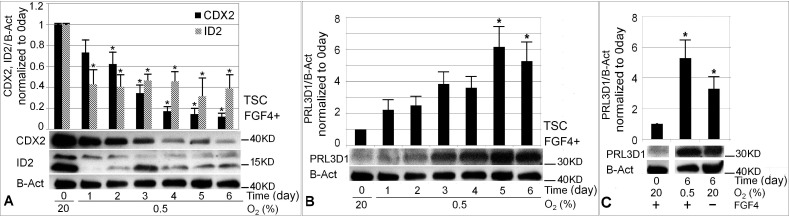
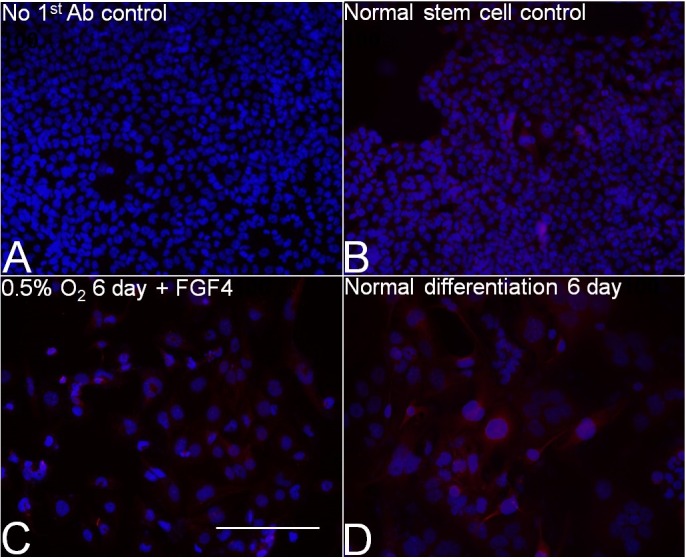
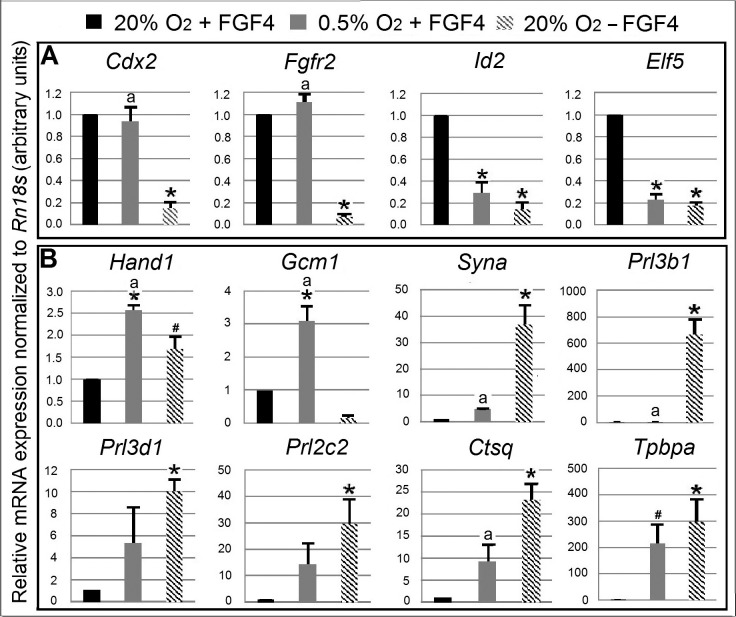
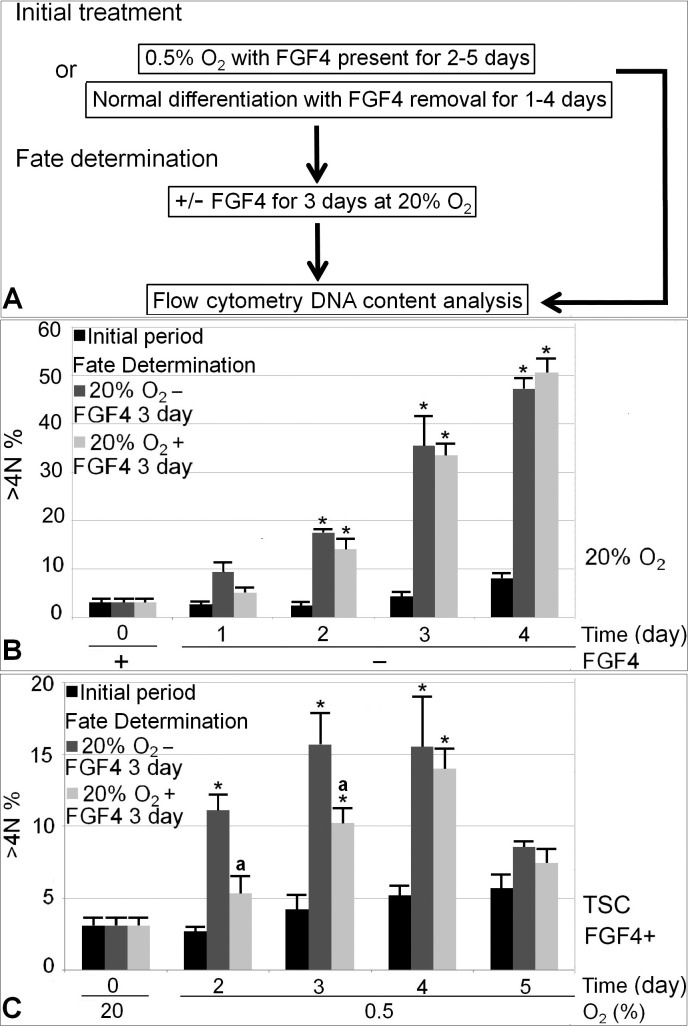
Hypoxic, hyperosmotic, and genotoxic stress slow mouse trophoblast stem cell (mTSC) proliferation, decrease potency/stemness, and increase differentiation. Previous reports suggest a period of reversibility in stress-induced mTSC differentiation. Here we show that hypoxic stress at 0.5% O decreased potency factor protein by ∼60%-90% and reduced growth to nil. Hypoxia caused a 35-fold increase in apoptosis at Day 3 and a 2-fold increase at Day 6 above baseline. The baseline apoptosis rate was only 0.3%. Total protein was never less than baseline during hypoxic treatment, suggesting 0.5% O is a robust, nonmorbid stressor. Hypoxic stress induced ∼50% of trophoblast giant cell (TGC) differentiation with a simultaneous 5- to 6-fold increase in the TGC product antiluteolytic prolactin family 3, subfamily d, member 1 (PRL3D1), despite the presence of fibroblast growth factor 4 (FGF4). Hypoxia-induced TGC differentiation was also supported by potency and differentiation mRNA marker analysis. FGF4 removal at 20% O committed cell fate towards irreversible differentiation at 2 days, with similar TGC percentages after an additional 3 days of culture under potency conditions when FGF4 was readded or under differentiation conditions without FGF4. However, hypoxic stress required 4 days to irreversibly differentiate cells. Runted stem cell growth, forced differentiation of fewer cells, and irreversible differentiation limit total available stem cell population. Were mTSCs to respond to stress in a similar mode in vivo, miscarriage might occur as a result, which should be tested in the future.
缺氧、高渗和基因毒性应激会减缓小鼠滋养层干细胞(mTSC)的增殖,降低其潜能/干性,并增加其分化。先前的报道表明,应激诱导的mTSC分化存在一段可逆期。在此,我们表明,0.5%氧气浓度下的缺氧应激使潜能因子蛋白减少了约60%-90%,并使生长降至零。缺氧导致第3天的细胞凋亡增加了35倍,第6天比基线水平增加了2倍。基线凋亡率仅为0.3%。在缺氧处理期间,总蛋白从未低于基线水平,这表明0.5%的氧气浓度是一种强烈的、非致命的应激源。尽管存在成纤维细胞生长因子4(FGF4),缺氧应激仍诱导了约50%的滋养层巨细胞(TGC)分化,同时TGC产物抗黄体溶解催乳素家族3、亚家族d、成员1(PRL3D1)增加了5至6倍。潜能和分化mRNA标记分析也支持缺氧诱导的TGC分化。在20%氧气浓度下去除FGF4会使细胞命运在2天内不可逆地分化,在添加FGF4的潜能条件下或不添加FGF4的分化条件下再培养3天后,TGC百分比相似。然而,缺氧应激需要4天才能使细胞不可逆地分化。干细胞生长受阻、较少细胞的强制分化以及不可逆分化限制了总的可用干细胞群体。如果mTSCs在体内以类似模式对应激做出反应,可能会导致流产,这有待未来进行测试。