Jing Hongmei, Cheung Shunyan, Zhou Zhi, Wu Chen, Nagarajan Sanjay, Liu Hongbin
Sanya Institute of Deep-sea Science and Engineering, Chinese Academy of Sciences, Sanya, China.
Division of Life Science, The Hong Kong University of Science and Technology, Clear Water Bay, Kowloon, Hong Kong SAR, China.
PLoS One. 2016 Sep 29;11(9):e0161065. doi: 10.1371/journal.pone.0161065. eCollection 2016.
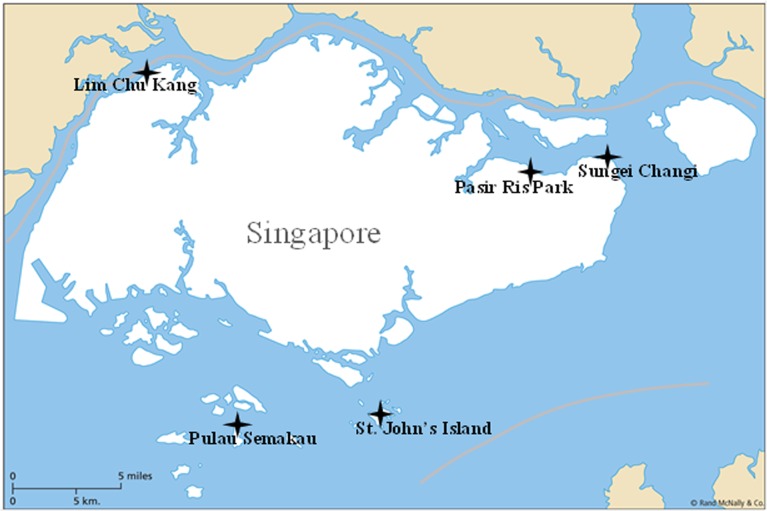
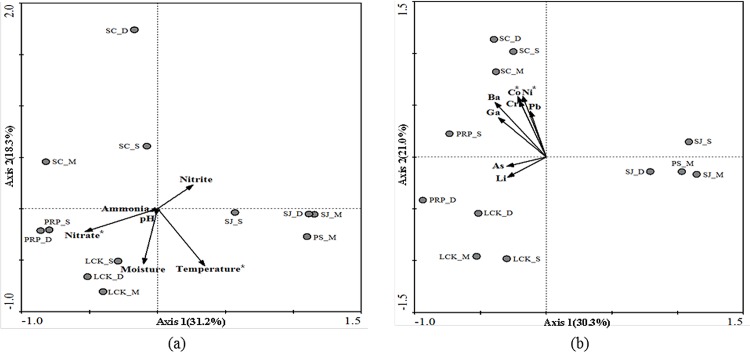
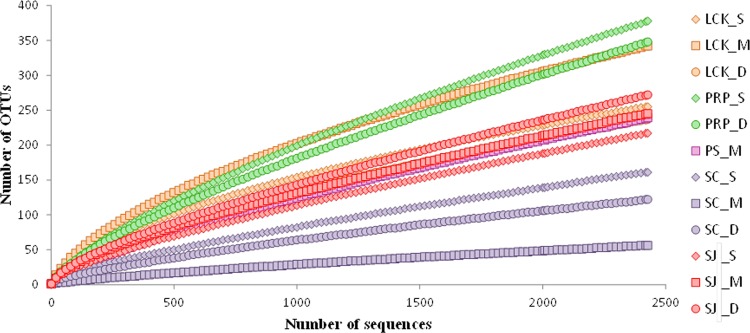
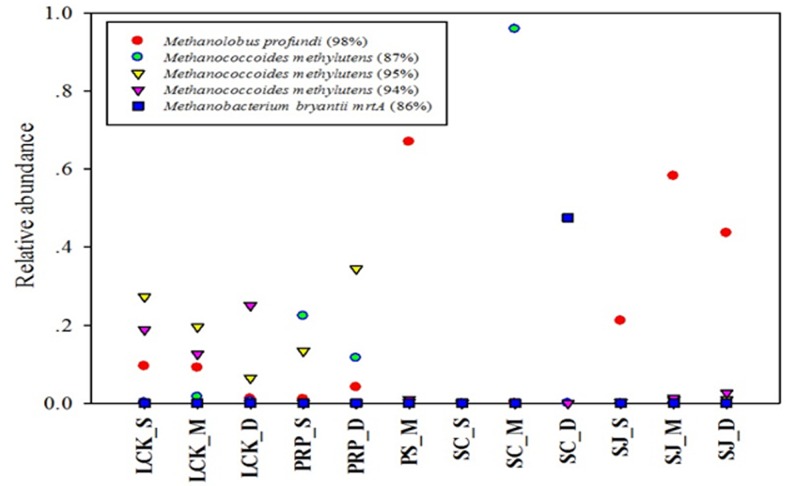
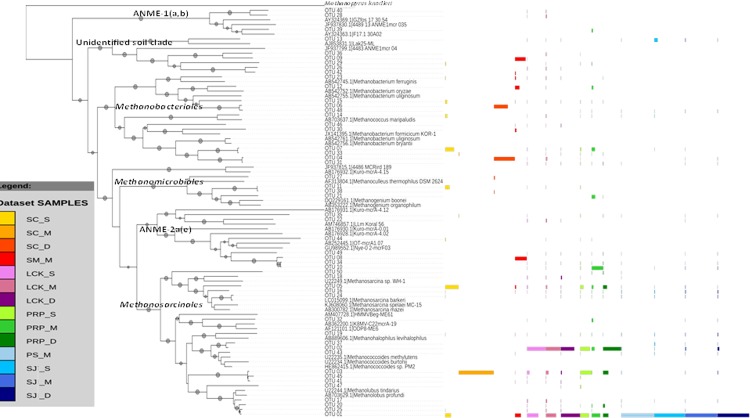
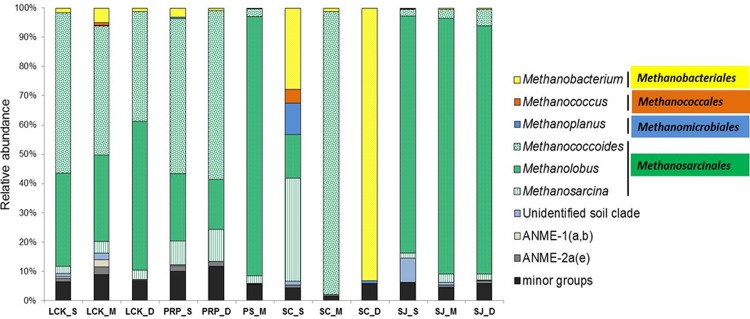
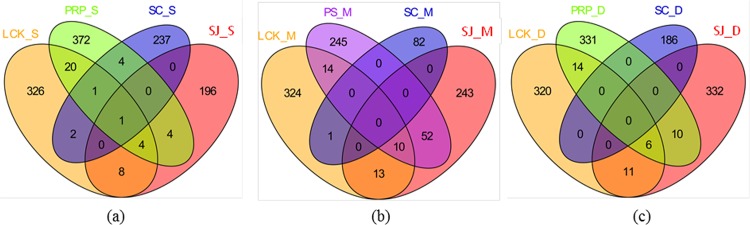
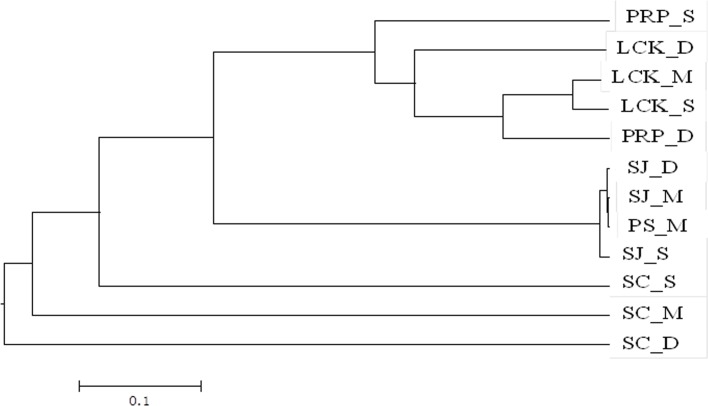
Methane production by methanogens in mangrove sediments is known to contribute significantly to global warming, but studies on the shift of methanogenic community in response to anthropogenic contaminations were still limited. In this study, the effect of anthropogenic activities in the mangrove sediments along the north and south coastlines of Singapore were investigated by pyrosequencing of the mcrA gene. Our results showed that hydrogenotrophic, acetoclastic and methylotrophic methanogens coexist in the sediments. The predominance of the methylotrophic Methanosarcinales reflects the potential for high methane production as well as the possible availability of low acetate and high methylated C-1 compounds as substrates. A decline in the number of acetoclastic/methylotrophic methanogens in favor of hydrogenotrophic methanogens was observed along a vertical profile in Sungei Changi, which was contaminated by heavy metals. The diversity of methanogens in the various contaminated stations was significantly different from that in a pristine St. John's Island. The spatial variation in the methanogenic communities among the different stations was more distinct than those along the vertical profiles at each station. We suggest that the overall heterogeneity of the methanogenic communities residing in the tropical mangrove sediments might be due to the accumulated effects of temperature and concentrations of nitrate, cobalt, and nickel.
已知红树林沉积物中产甲烷菌产生的甲烷对全球变暖有显著影响,但关于产甲烷菌群落响应人为污染的变化的研究仍然有限。在本研究中,通过对mcrA基因进行焦磷酸测序,研究了新加坡南北海岸线红树林沉积物中人为活动的影响。我们的结果表明,沉积物中同时存在氢营养型、乙酸营养型和甲基营养型产甲烷菌。甲基营养型甲烷八叠球菌目占优势,这反映了甲烷高产的潜力,以及低乙酸盐和高甲基化C-1化合物作为底物的可能可用性。在受重金属污染的樟宜河中,观察到沿垂直剖面乙酸营养型/甲基营养型产甲烷菌数量下降,有利于氢营养型产甲烷菌。各污染站点中产甲烷菌的多样性与原始的圣约翰岛显著不同。不同站点间产甲烷菌群落的空间差异比每个站点沿垂直剖面的差异更明显。我们认为,热带红树林沉积物中产甲烷菌群落的总体异质性可能是由于温度以及硝酸盐、钴和镍浓度的累积效应。