Singh Kailash, Zaw Aung Moe, Sekar Revathi, Palak Ahuja, Allam Ahmed A, Ajarem Jamaan, Chow Billy K C
School of Biological Sciences, The University of Hong Kong, Pokfulam Road, Hong Kong SAR, China.
Department of Zoology, College of Science, King Saud University, Riyadh 11451, Saudi Arabia.
Molecules. 2016 Sep 27;21(10):1291. doi: 10.3390/molecules21101291.
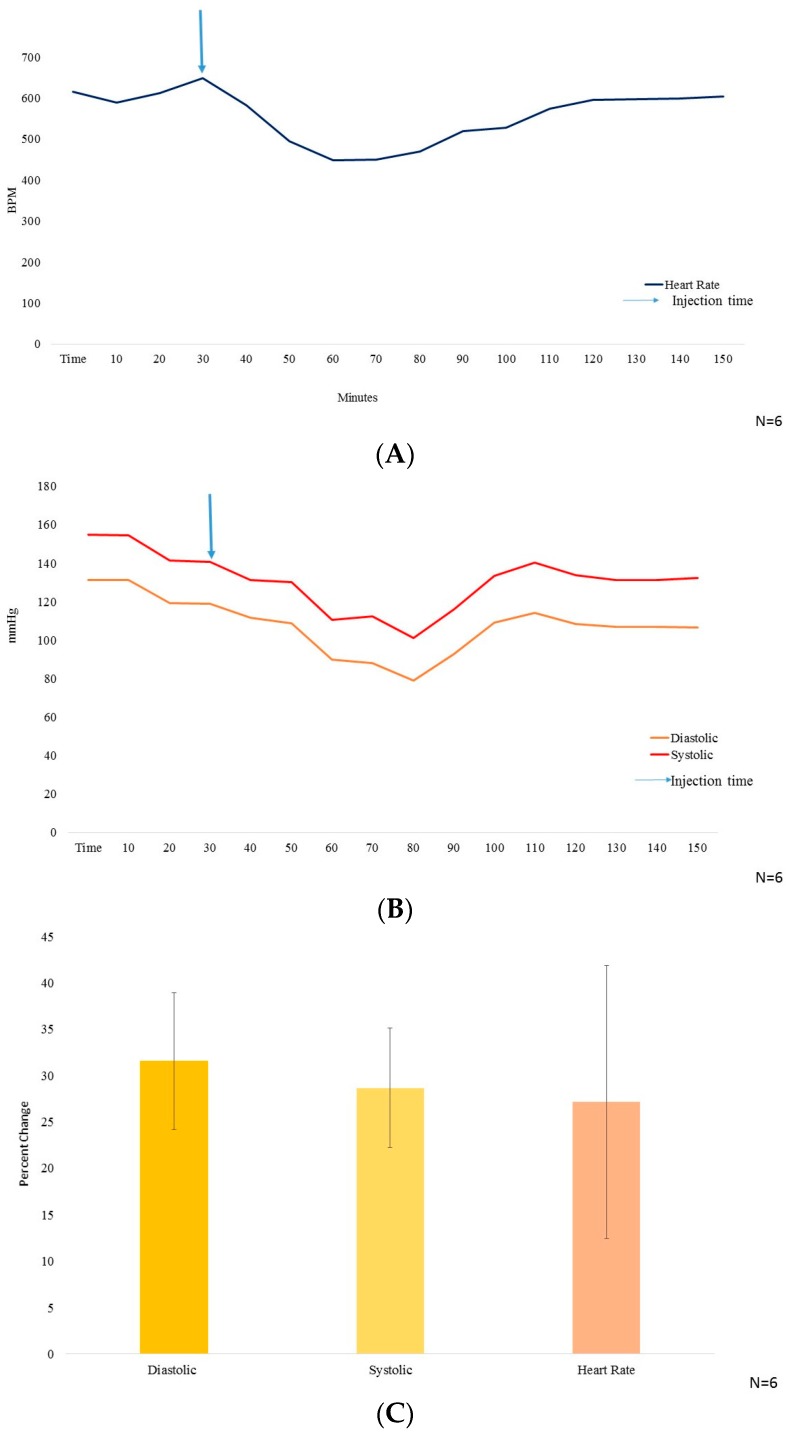
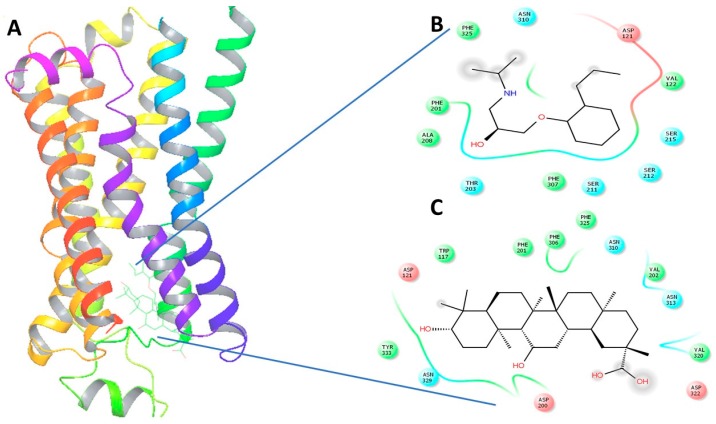
Beta adrenergic receptors are crucial for their role in rhythmic contraction of heart along with their role in the pathological conditions such as tachycardia and high risk of heart failure. Studies report that the levels of beta-1 adrenergic receptor tend to decrease by 50%, whereas, the levels of beta-2 adrenergic receptor remains constant during the risk of heart failure. Beta blockers-the antagonistic molecules for beta-adrenergic receptors, function by slowing the heart rate, which thereby allows the left ventricle to fill completely during tachycardia incidents and hence helps in blood pumping capacity of heart and reducing the risk of heart failure. In the present study, we investigate the potential of glycyrrhizic acid (GA) as a possible principal drug molecule for cardiac arrhythmias owing to its ability to induce reduction in the heart rate and blood pressure. We use in vitro and in silico approach to study GA's effect on beta adrenergic receptor along with an in vivo study to examine its effect on heart rate and blood pressure. Additionally, we explore GA's proficiency in eliciting an increase in the plasma levels of vasoactive intestinal peptide, which by dilating the blood vessel consequently, can be a crucial aid during the occurrence of a potential heart attack. Therefore, we propose GA as a potential principal drug molecule via its potential in modulating heart rate and blood pressure.
β肾上腺素能受体对于其在心脏节律性收缩中的作用以及在诸如心动过速和心力衰竭高风险等病理状况中的作用至关重要。研究报告称,在心力衰竭风险期间,β-1肾上腺素能受体水平往往会降低50%,而β-2肾上腺素能受体水平保持恒定。β受体阻滞剂——β肾上腺素能受体的拮抗分子,通过减慢心率发挥作用,从而在心动过速发作期间使左心室完全充盈,进而有助于心脏的泵血能力并降低心力衰竭风险。在本研究中,我们研究了甘草酸(GA)作为一种可能的主要药物分子治疗心律失常的潜力,因为它有降低心率和血压的能力。我们采用体外和计算机模拟方法研究GA对β肾上腺素能受体的影响,并通过体内研究来检验其对心率和血压的影响。此外,我们探究了GA在提高血管活性肠肽血浆水平方面的效能,血管活性肠肽通过扩张血管,因此在潜在心脏病发作期间可能是一种关键辅助手段。因此,我们通过GA在调节心率和血压方面的潜力,提出将其作为一种潜在的主要药物分子。