Dee Christopher T, Nagaraju Raghavendar T, Athanasiadis Emmanouil I, Gray Caroline, Fernandez Del Ama Laura, Johnston Simon A, Secombes Christopher J, Cvejic Ana, Hurlstone Adam F L
Faculty of Life Sciences, The University of Manchester, Manchester M13 9PT, United Kingdom.
Wellcome Trust Sanger Institute, Wellcome Trust Genome Campus, Hinxton, Cambridge CB10 1HH, United Kingdom.
J Immunol. 2016 Nov 1;197(9):3520-3530. doi: 10.4049/jimmunol.1600959. Epub 2016 Sep 30.
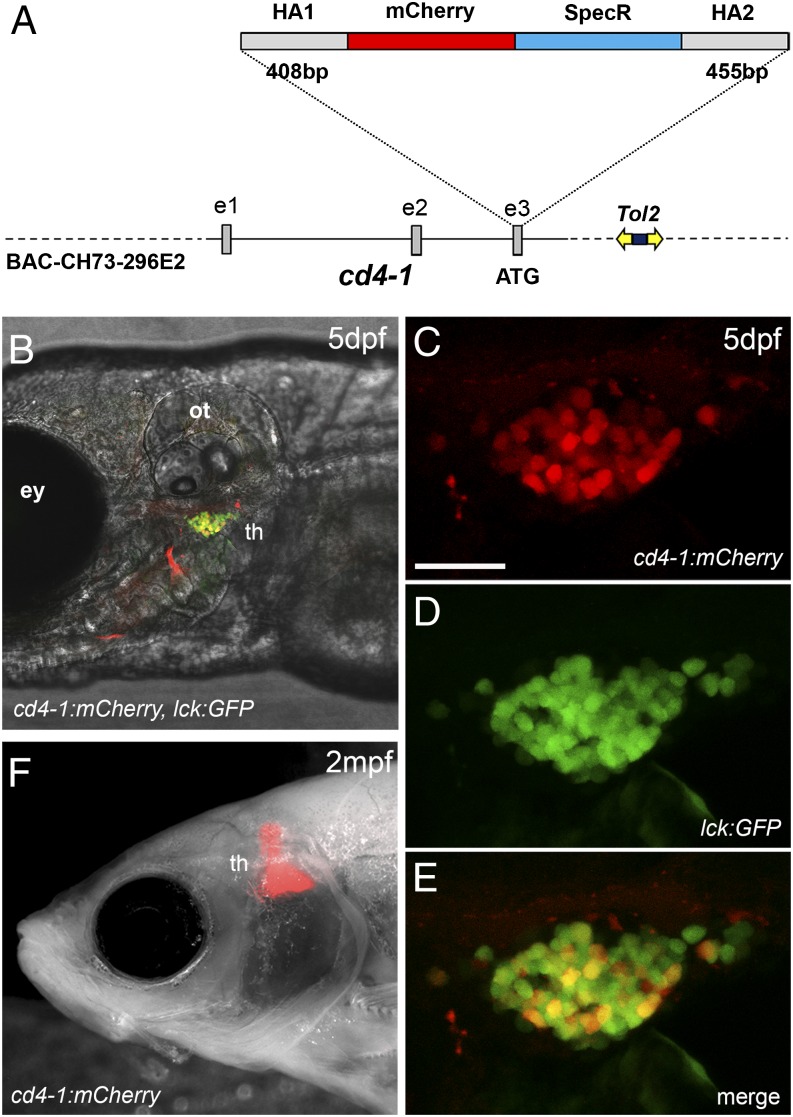
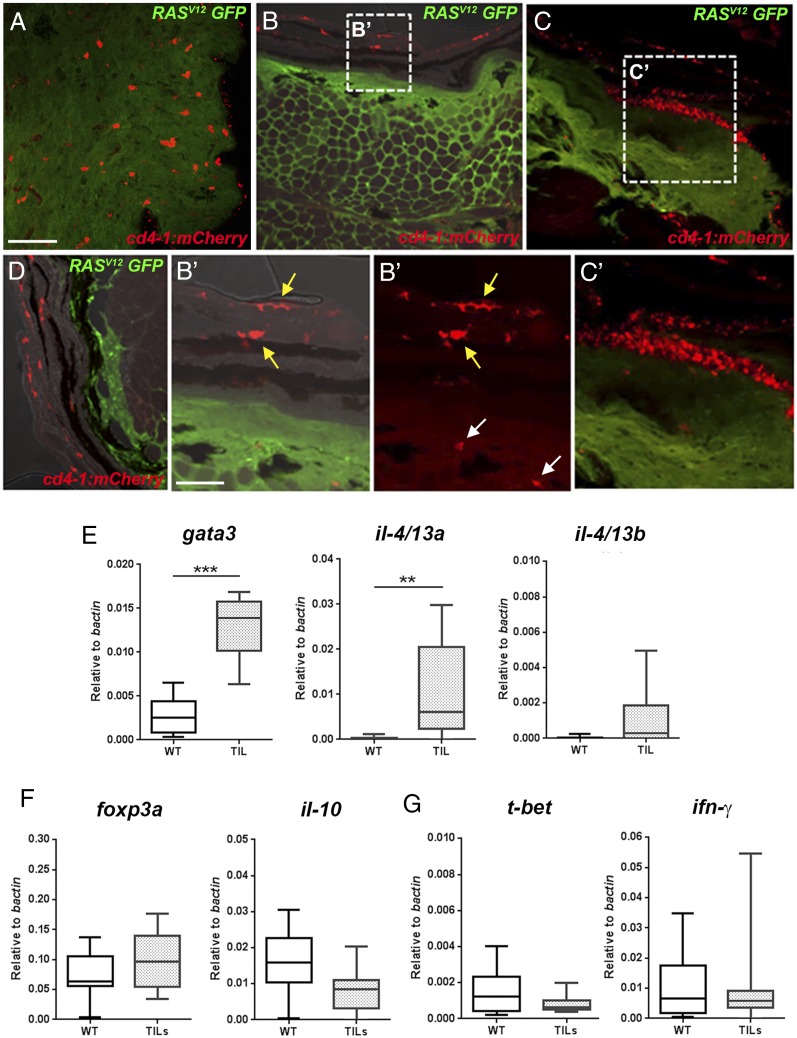
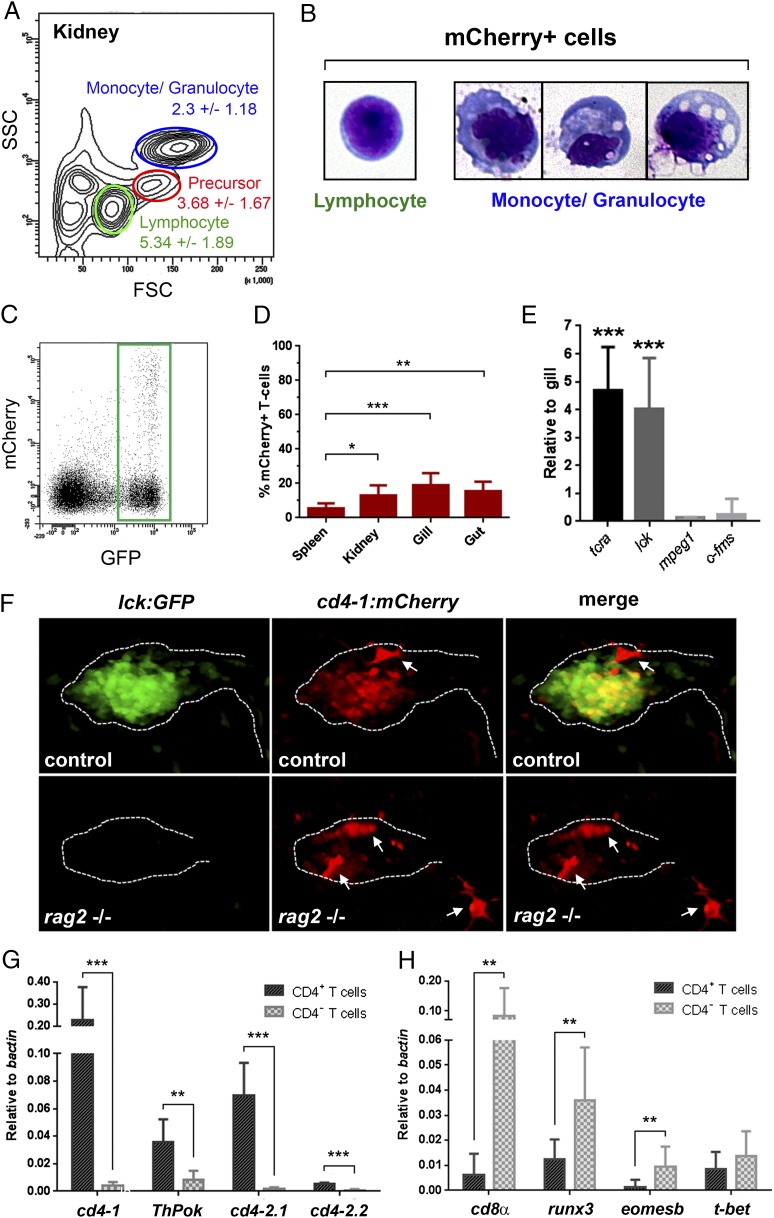
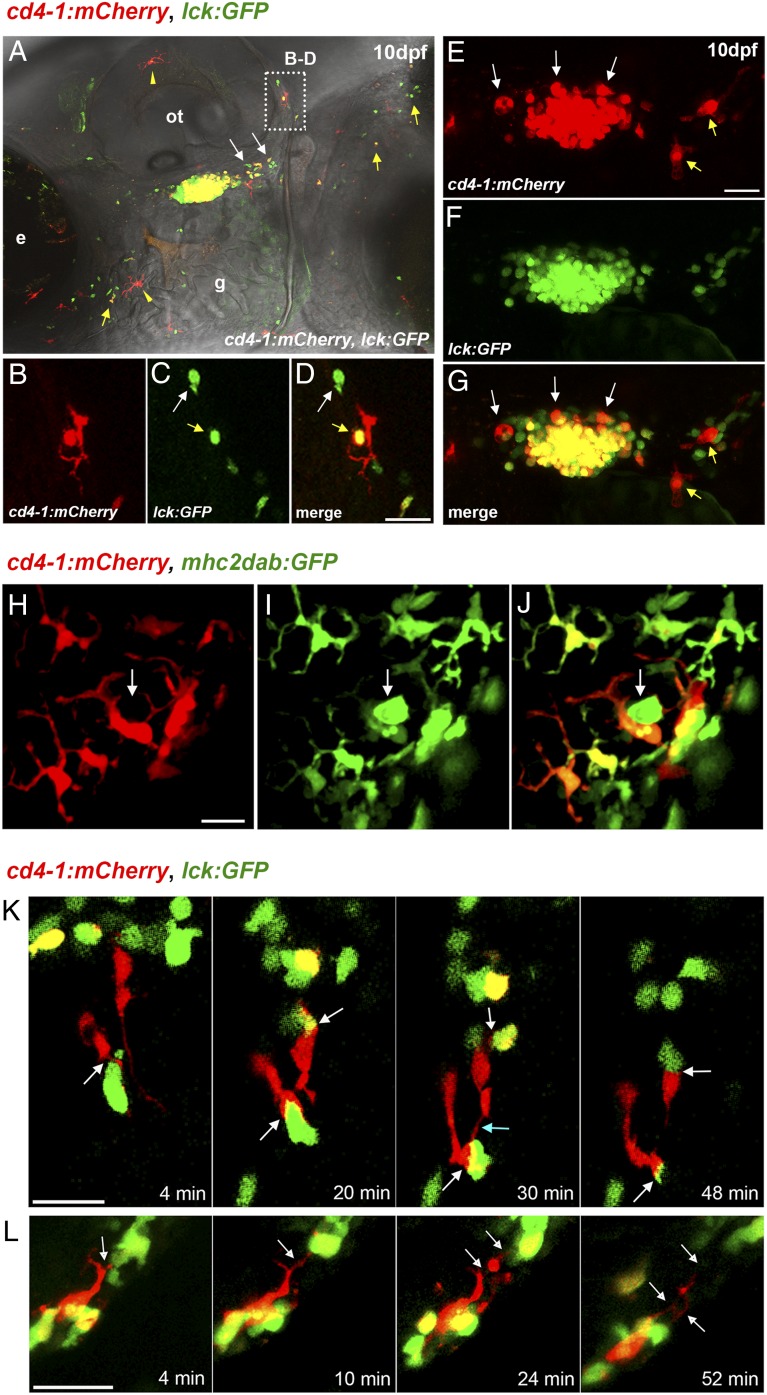
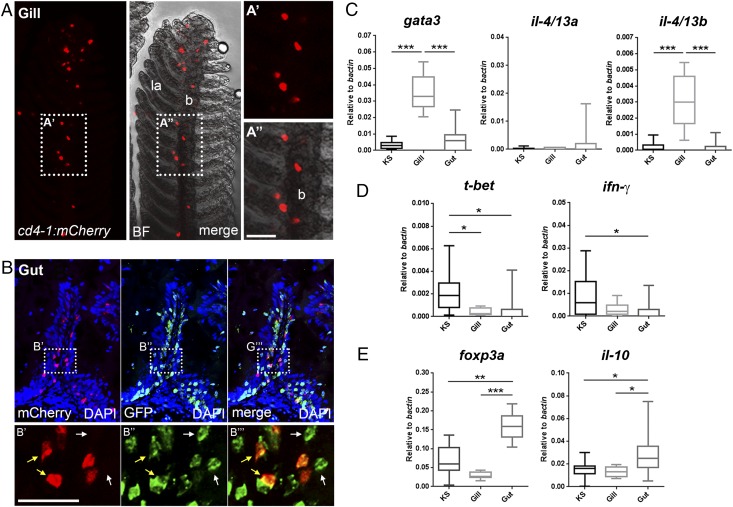
CD4 T cells are at the nexus of the innate and adaptive arms of the immune system. However, little is known about the evolutionary history of CD4 T cells, and it is unclear whether their differentiation into specialized subsets is conserved in early vertebrates. In this study, we have created transgenic zebrafish with vibrantly labeled CD4 cells allowing us to scrutinize the development and specialization of teleost CD4 leukocytes in vivo. We provide further evidence that CD4 macrophages have an ancient origin and had already emerged in bony fish. We demonstrate the utility of this zebrafish resource for interrogating the complex behavior of immune cells at cellular resolution by the imaging of intimate contacts between teleost CD4 T cells and mononuclear phagocytes. Most importantly, we reveal the conserved subspecialization of teleost CD4 T cells in vivo. We demonstrate that the ancient and specialized tissues of the gills contain a resident population of il-4/13b-expressing Th2-like cells, which do not coexpress il-4/13a Additionally, we identify a contrasting population of regulatory T cell-like cells resident in the zebrafish gut mucosa, in marked similarity to that found in the intestine of mammals. Finally, we show that, as in mammals, zebrafish CD4 T cells will infiltrate melanoma tumors and obtain a phenotype consistent with a type 2 immune microenvironment. We anticipate that this unique resource will prove invaluable for future investigation of T cell function in biomedical research, the development of vaccination and health management in aquaculture, and for further research into the evolution of adaptive immunity.
CD4 T细胞处于免疫系统先天性和适应性分支的交汇点。然而,人们对CD4 T细胞的进化历史知之甚少,而且它们分化为特定亚群的现象在早期脊椎动物中是否保守尚不清楚。在本研究中,我们创建了具有鲜明标记的CD4细胞的转基因斑马鱼,这使我们能够在体内仔细研究硬骨鱼CD4白细胞的发育和特化。我们进一步证明CD4巨噬细胞起源古老,在硬骨鱼中就已出现。我们通过对硬骨鱼CD4 T细胞与单核吞噬细胞之间密切接触的成像,展示了这种斑马鱼资源在细胞分辨率下探究免疫细胞复杂行为的效用。最重要的是,我们揭示了硬骨鱼CD4 T细胞在体内保守的亚特化。我们证明,古老且特化的鳃组织中含有一群表达il-4/13b的Th2样细胞,它们不共表达il-4/13a。此外,我们在斑马鱼肠道黏膜中鉴定出一群与之形成对比的调节性T细胞样细胞,这与在哺乳动物肠道中发现的细胞极为相似。最后,我们表明,与哺乳动物一样,斑马鱼CD4 T细胞会浸润黑色素瘤肿瘤,并获得与2型免疫微环境一致的表型。我们预计,这种独特的资源将被证明对未来生物医学研究中T细胞功能的研究、水产养殖疫苗接种和健康管理的发展以及对适应性免疫进化的进一步研究具有不可估量的价值。