Rinne Päivi L H, Paul Laju K, Vahala Jorma, Kangasjärvi Jaakko, van der Schoot Christiaan
Department of Plant Sciences, Norwegian University of Life Sciences, N-1432 Ås, Norway.
Division of Plant Biology, Department of Biosciences, University of Helsinki, FI-00014 Helsinki, Finland.
J Exp Bot. 2016 Nov;67(21):5975-5991. doi: 10.1093/jxb/erw352. Epub 2016 Oct 3.
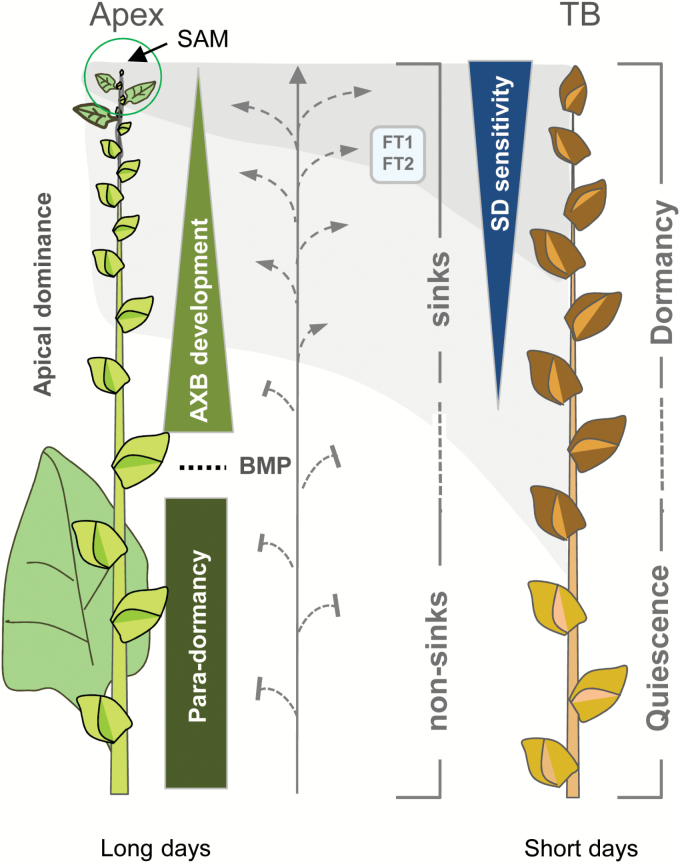
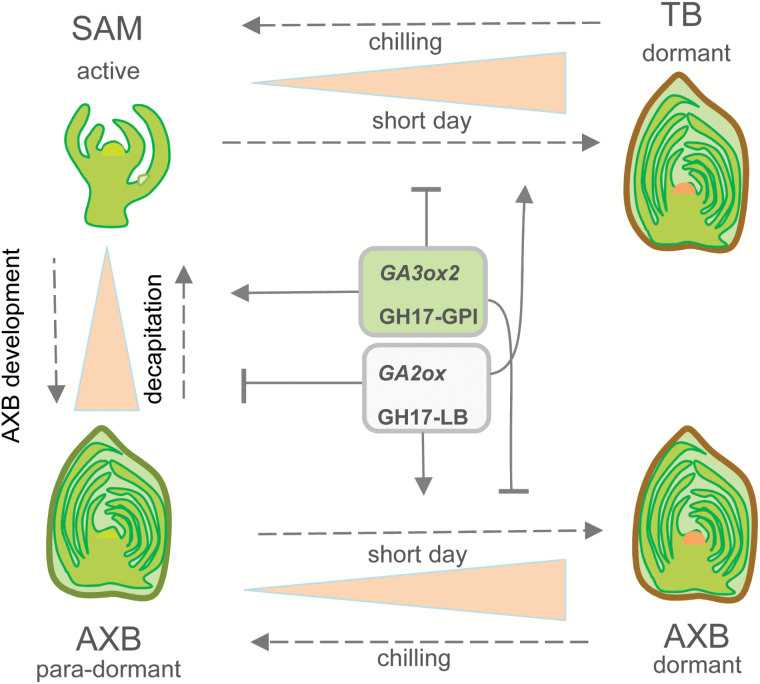
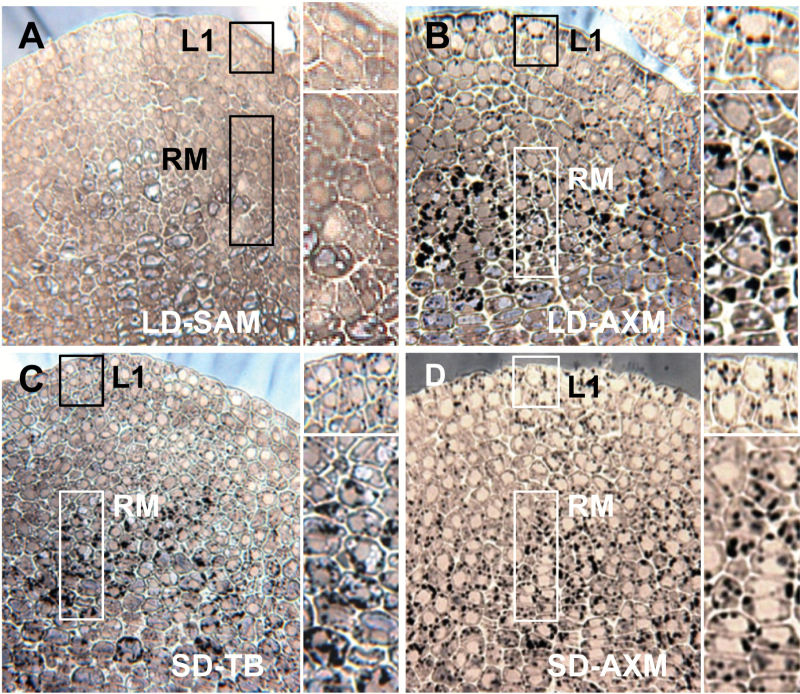
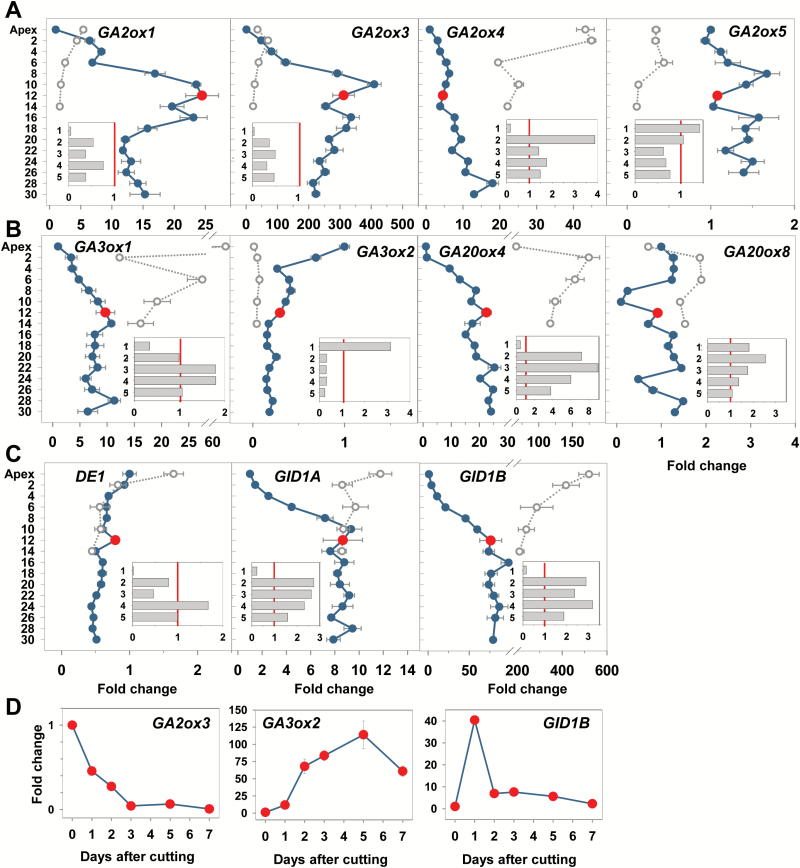
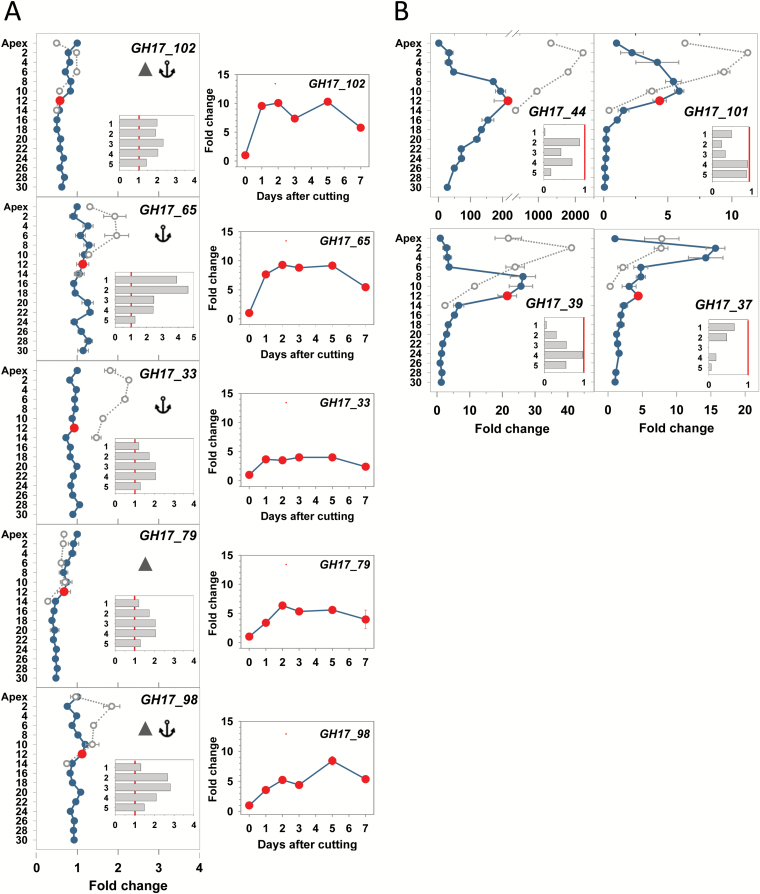
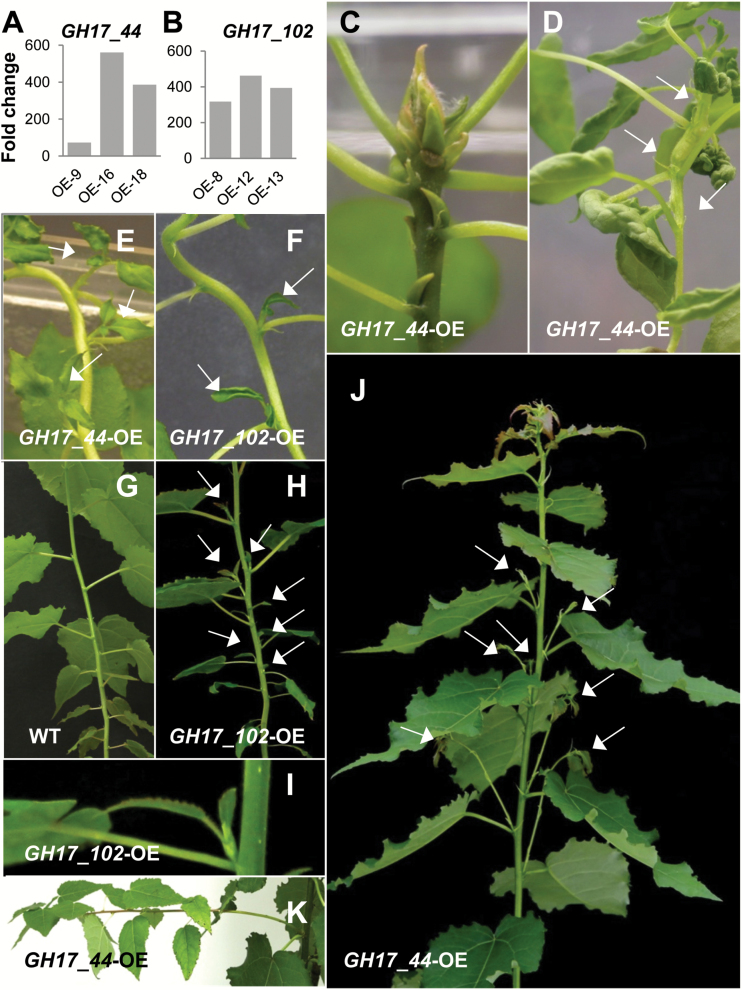
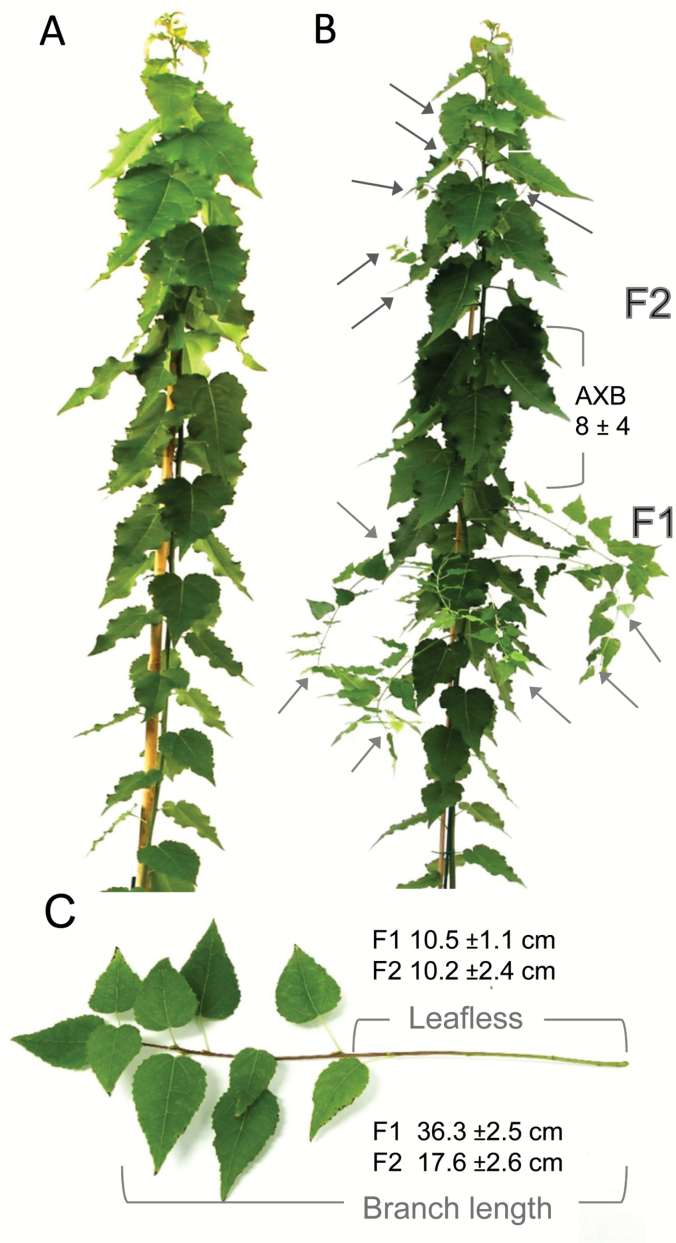
Axillary buds (AXBs) of hybrid aspen (Populus tremula×P. tremuloides) contain a developing dwarfed shoot that becomes para-dormant at the bud maturation point. Para-dormant AXBs can grow out after stem decapitation, while dormant AXBs pre-require long-term chilling to release them from dormancy. The latter is mediated by gibberellin (GA)-regulated 1,3-β-glucanases, but it is unknown if GA is also important in the development, activation, and outgrowth of para-dormant AXBs. The present data show that para-dormant AXBs up-regulate GA receptor genes during their maturation, but curtail GA biosynthesis by down-regulating the rate-limiting GIBBERELLIN 3-OXIDASE2 (GA3ox2), which is characteristically expressed in the growing apex. However, decapitation significantly up-regulated GA3ox2 and GA-responsive 1,3-β-glucanases (GH17-family; α-clade). In contrast, decapitation down-regulated γ-clade 1,3-β-glucanases, which were strongly up-regulated in maturing AXBs concomitant with lipid body accumulation. Overexpression of selected GH17 members in hybrid aspen resulted in characteristic branching patterns. The α-clade member induced an acropetal branching pattern, whereas the γ-clade member activated AXBs in recurrent flushes during transient cessation of apex proliferation. The results support a model in which curtailing the final step in GA biosynthesis dwarfs the embryonic shoot, while high levels of GA precursors and GA receptors keep AXBs poised for growth. GA signaling, induced by decapitation, reinvigorates symplasmic supply routes through GA-inducible 1,3-β-glucanases that hydrolyze callose at sieve plates and plasmodesmata.
杂交杨树(欧洲山杨×美洲山杨)的腋芽(AXBs)含有一个发育中的矮化嫩枝,该嫩枝在芽成熟时进入准休眠状态。准休眠的腋芽在茎尖被去除后能够生长,而休眠的腋芽则需要长期低温处理才能打破休眠。后者由赤霉素(GA)调控的1,3-β-葡聚糖酶介导,但尚不清楚GA在准休眠腋芽的发育、激活和生长中是否也起重要作用。目前的数据表明,准休眠腋芽在成熟过程中上调GA受体基因,但通过下调在生长顶端特异性表达的限速赤霉素3-氧化酶2(GA3ox2)来减少GA生物合成。然而,去顶显著上调了GA3ox2和GA响应性1,3-β-葡聚糖酶(GH17家族;α分支)。相反,去顶下调了γ分支1,3-β-葡聚糖酶,该酶在成熟腋芽中随着脂质体积累而强烈上调。在杂交杨树中过表达选定的GH17成员导致了特征性的分枝模式。α分支成员诱导了向顶分枝模式,而γ分支成员在顶端增殖暂时停止期间的反复萌发中激活了腋芽。结果支持了一个模型,即减少GA生物合成的最后一步使胚胎嫩枝矮化,而高水平的GA前体和GA受体使腋芽保持生长状态。去顶诱导的GA信号通过GA诱导的1,3-β-葡聚糖酶恢复共质体供应途径,这些酶在筛板和胞间连丝处水解胼胝质。