Takeshima Mika, Miyazaki Ikuko, Murakami Shinki, Kita Taizo, Asanuma Masato
Department of Brain Science, Okayama University Graduate School of Medicine, Dentistry and Pharmaceutical Sciences, Okayama 700-8558, Japan.
Department of Brain Science, Okayama University Graduate School of Medicine, Dentistry and Pharmaceutical Sciences, Okayama 700-8558, Japan; Department of Medical Neurobiology, Okayama University Graduate School of Medicine, Dentistry and Pharmaceutical Sciences, Okayama 700-8558, Japan.
J Clin Biochem Nutr. 2016 Sep;59(2):93-99. doi: 10.3164/jcbn.16-15. Epub 2016 Jul 16.
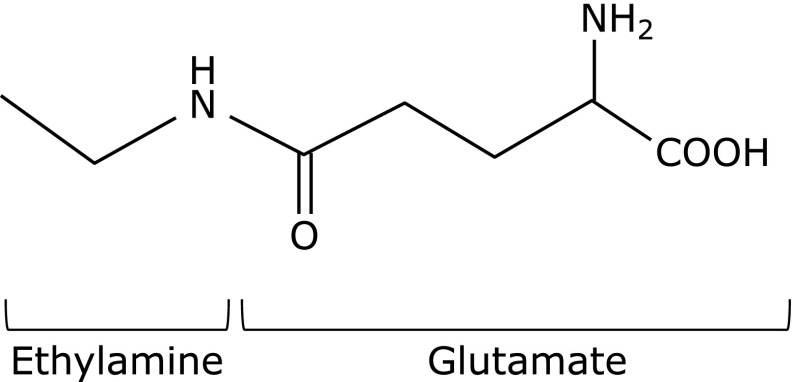
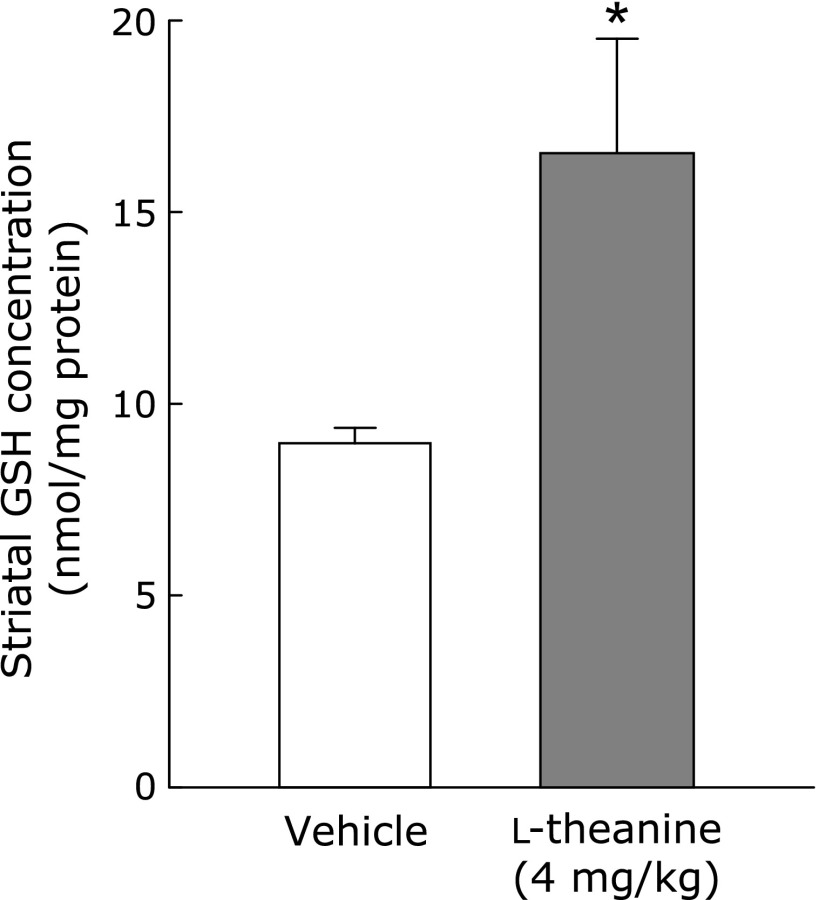
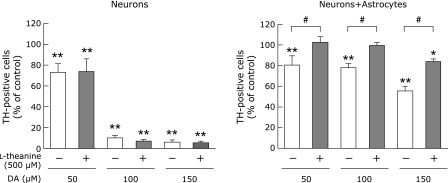
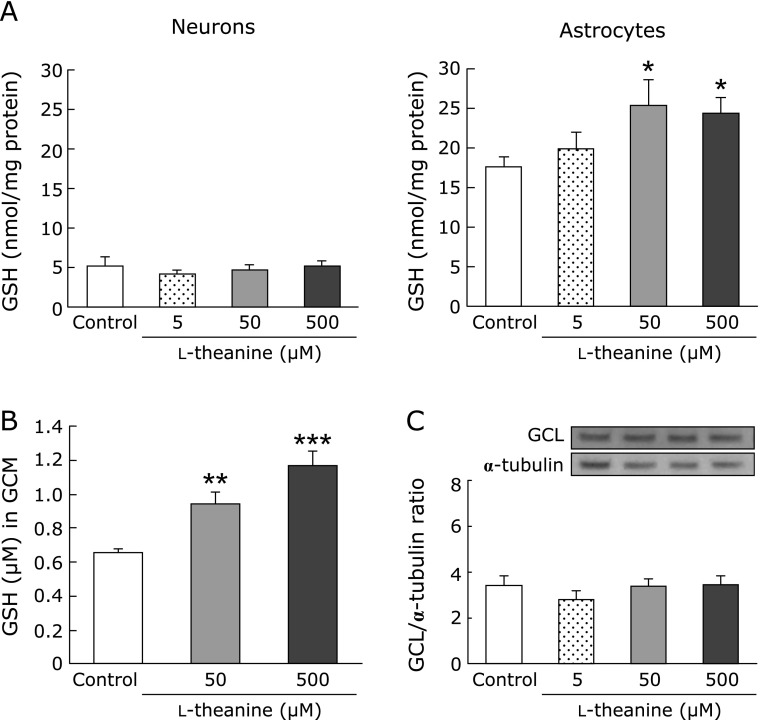
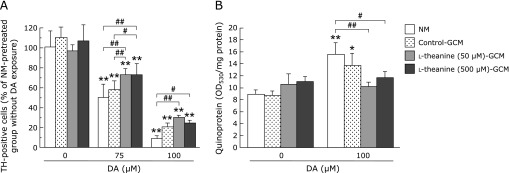
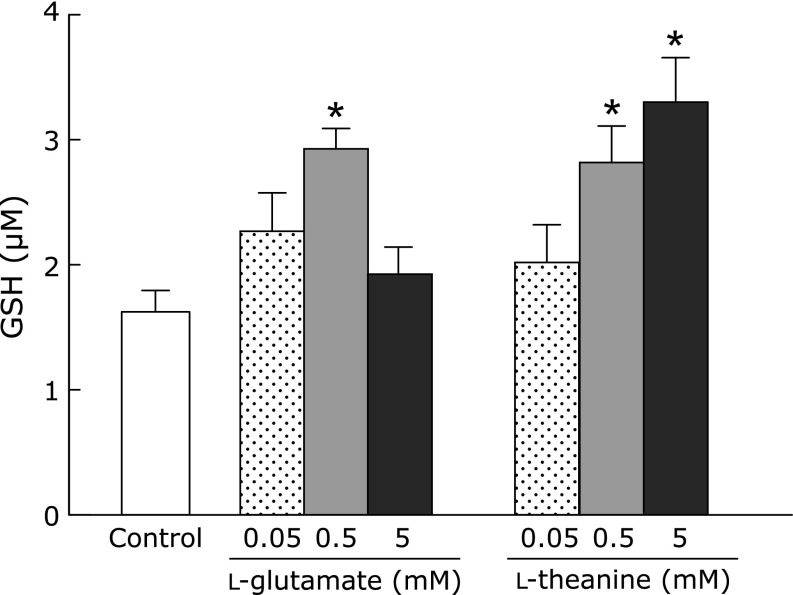
l-Theanine (γ-glutamylethylamide), a component of green tea, is considered to have regulatory and neuroprotective roles in the brain. The present study was designed to determine the effect of l-theanine on excess dopamine-induced neurotoxicity in both cell culture and animal experiments. The primary cultured mesencephalic neurons or co-cultures of mesencephalic neurons and striatal astrocytes were pretreated with l-theanine for 72 h, and then treated with excess dopamine for further 24 h. The cell viability of dopamine neurons and levels of glutathione were evaluated. Excess dopamine-induced neurotoxicity was significantly attenuated by 72 h preincubation with l-theanine in neuron-astrocyte co-cultures but not in neuron-rich cultures. Exposure to l-theanine increased the levels of glutathione in both astrocytes and glial conditioned medium. The glial conditioned medium from l-theanine-pretreated striatal astrocytes attenuated dopamine-induced neurotoxicity and quinoprotein formation in mesencephalic neurons. In addition, replacement of l-glutamate with l-theanine in an cell-free glutathione-synthesis system produced glutathione-like thiol compounds. Furthermore, l-theanine administration (4 mg/kg, p.o.) for 14 days significantly increased glutathione levels in the striatum of mice. The results suggest that l-theanine provides neuroprotection against oxidative stress-induced neuronal damage by humoral molecules released from astrocytes, probably including glutathione.
L-茶氨酸(γ-谷氨酰乙酰胺)是绿茶的一种成分,被认为在大脑中具有调节和神经保护作用。本研究旨在确定L-茶氨酸在细胞培养和动物实验中对过量多巴胺诱导的神经毒性的影响。将原代培养的中脑神经元或中脑神经元与纹状体星形胶质细胞的共培养物用L-茶氨酸预处理72小时,然后再用过量多巴胺处理24小时。评估多巴胺能神经元的细胞活力和谷胱甘肽水平。在神经元-星形胶质细胞共培养物中,L-茶氨酸预孵育72小时可显著减轻过量多巴胺诱导的神经毒性,但在富含神经元的培养物中则不然。暴露于L-茶氨酸可增加星形胶质细胞和神经胶质条件培养基中的谷胱甘肽水平。来自L-茶氨酸预处理的纹状体星形胶质细胞的神经胶质条件培养基可减轻中脑神经元中多巴胺诱导的神经毒性和喹蛋白形成。此外,在无细胞谷胱甘肽合成系统中用L-茶氨酸替代L-谷氨酸可产生类似谷胱甘肽的硫醇化合物。此外,给小鼠口服L-茶氨酸(4毫克/千克)14天可显著提高纹状体中的谷胱甘肽水平。结果表明,L-茶氨酸通过星形胶质细胞释放的体液分子(可能包括谷胱甘肽)对氧化应激诱导的神经元损伤提供神经保护。