Institute for Biology II, Department of Zoology/Animal Physiology, RWTH Aachen University , D-52074 Aachen, Germany.
Institute of Biology, Faculty of Biosciences, Pharmacy and Psychology, University of Leipzig , D-04103 Leipzig, Germany.
eNeuro. 2016 Sep 26;3(5). doi: 10.1523/ENEURO.0186-16.2016. eCollection 2016 Sep-Oct.
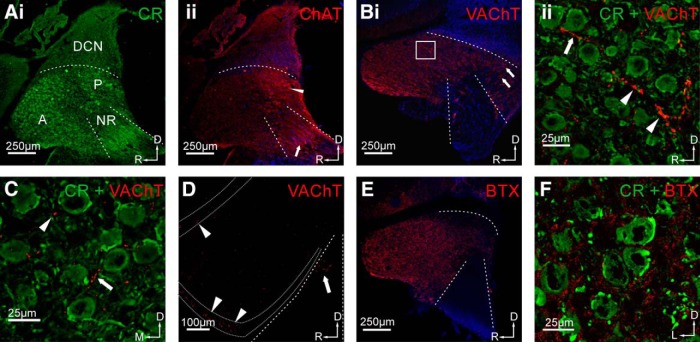
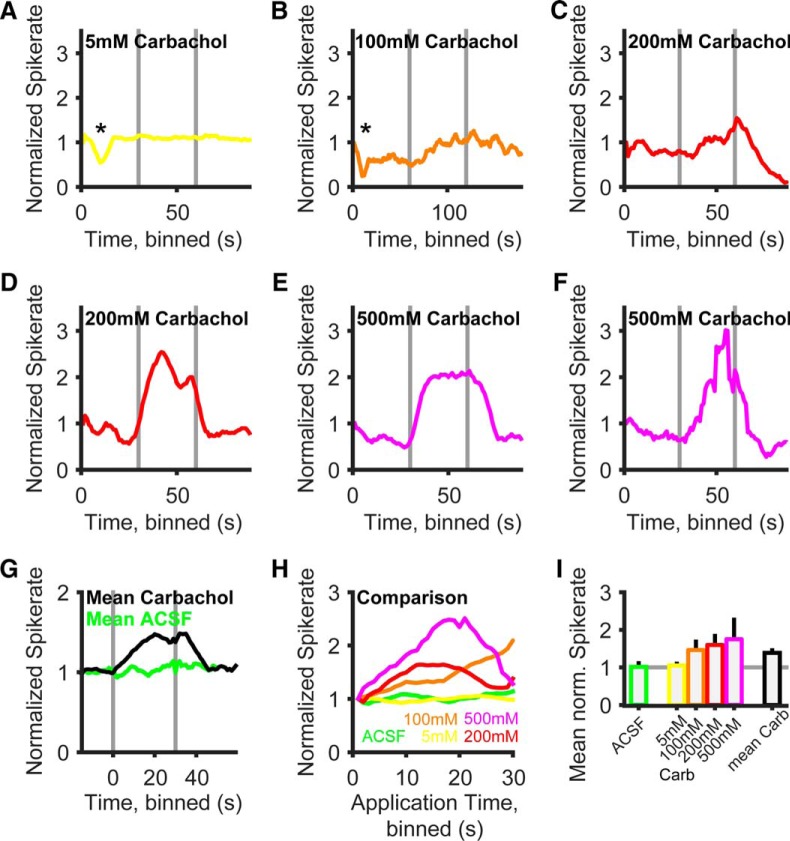
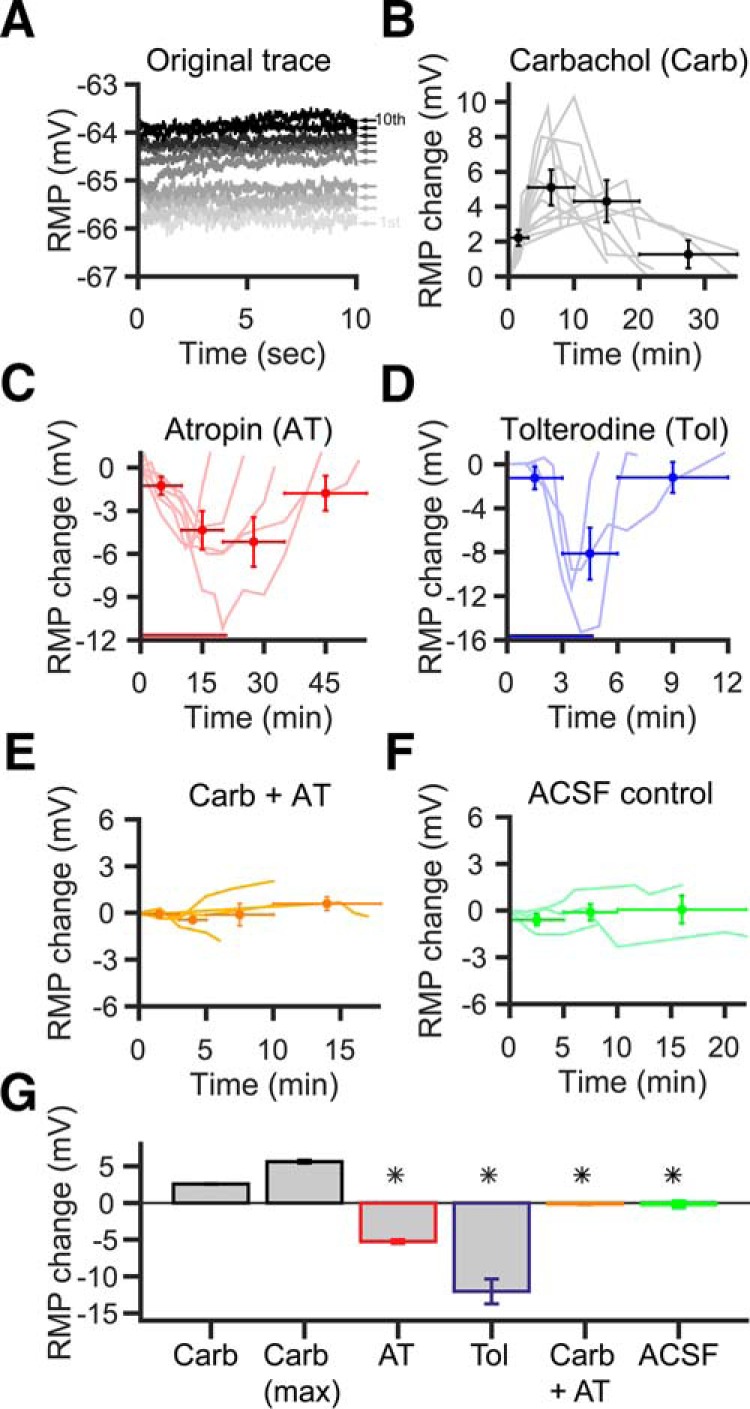
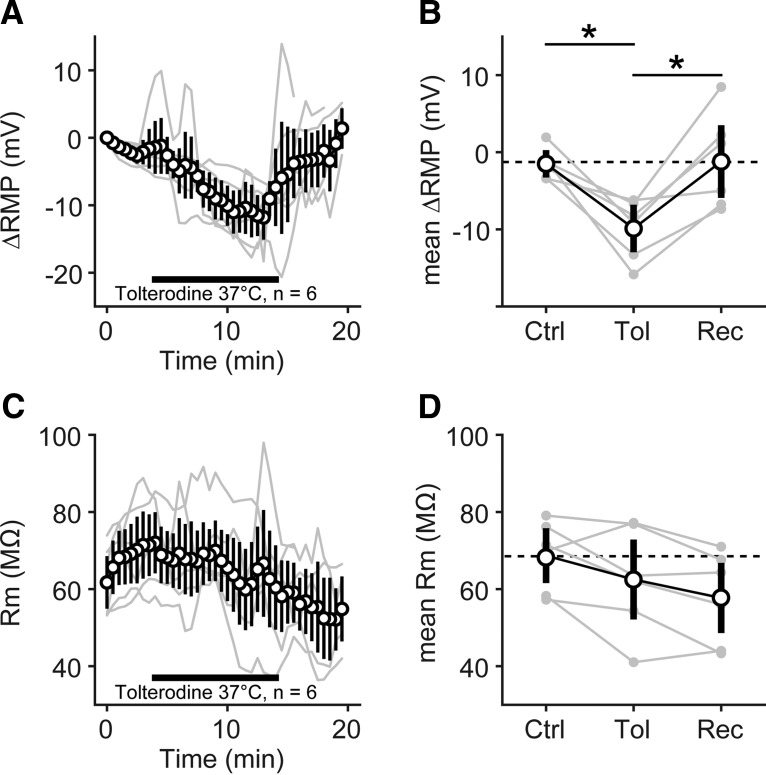
Sensory processing in the lower auditory pathway is generally considered to be rigid and thus less subject to modulation than central processing. However, in addition to the powerful bottom-up excitation by auditory nerve fibers, the ventral cochlear nucleus also receives efferent cholinergic innervation from both auditory and nonauditory top-down sources. We thus tested the influence of cholinergic modulation on highly precise time-coding neurons in the cochlear nucleus of the Mongolian gerbil. By combining electrophysiological recordings with pharmacological application and , we found 55-72% of spherical bushy cells (SBCs) to be depolarized by carbachol on two time scales, ranging from hundreds of milliseconds to minutes. These effects were mediated by nicotinic and muscarinic acetylcholine receptors, respectively. Pharmacological block of muscarinic receptors hyperpolarized the resting membrane potential, suggesting a novel mechanism of setting the resting membrane potential for SBC. The cholinergic depolarization led to an increase of spike probability in SBCs without compromising the temporal precision of the SBC output . , iontophoretic application of carbachol resulted in an increase in spontaneous SBC activity. The inclusion of cholinergic modulation in an SBC model predicted an expansion of the dynamic range of sound responses and increased temporal acuity. Our results thus suggest of a top-down modulatory system mediated by acetylcholine which influences temporally precise information processing in the lower auditory pathway.
下听觉通路的感觉处理通常被认为是刚性的,因此不易受到调制,而中央处理则不然。然而,除了听觉神经纤维的强大的自上而下的兴奋之外,腹侧耳蜗核还接收来自听觉和非听觉的自上而下的胆碱能传出神经支配。因此,我们测试了胆碱能调制对蒙古沙鼠耳蜗核中高度精确的时间编码神经元的影响。通过将电生理记录与药理学应用相结合,我们发现 55-72%的球形布什细胞(SBC)在两个时间尺度上被卡巴胆碱去极化,范围从数百毫秒到数分钟。这些效应分别由烟碱型和毒蕈碱型乙酰胆碱受体介导。毒蕈碱受体的药理学阻断使静息膜电位超极化,这表明 SBC 的静息膜电位设定有一个新的机制。胆碱能去极化导致 SBC 中尖峰概率增加,而不影响 SBC 输出的时间精度。此外,卡巴胆碱的离子电泳应用导致 SBC 自发活动增加。在 SBC 模型中包含胆碱能调制,预测了声音反应的动态范围的扩大和时间精度的提高。因此,我们的结果表明,乙酰胆碱介导的自上而下的调制系统影响下听觉通路中时间精确的信息处理。