Jing Junzhan, Hu Ming, Ngodup Tenzin, Ma Qianqian, Lau Shu-Ning Natalie, Ljungberg M Cecilia, McGinley Matthew J, Trussell Laurence O, Jiang Xiaolong
Jan and Dan Duncan Neurological Research Institute at Texas Children's Hospital, Houston, TX, USA.
Department of Neuroscience, Baylor College of Medicine, Houston, TX, USA.
Nat Commun. 2025 Jan 9;16(1):489. doi: 10.1038/s41467-024-55257-z.
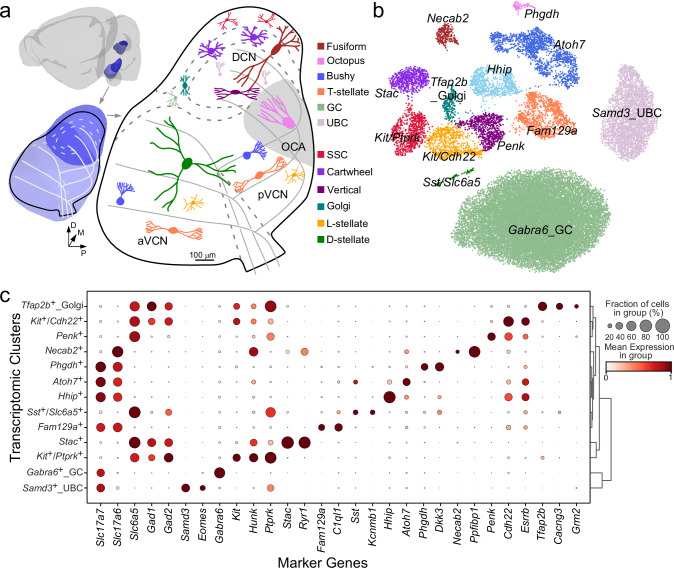
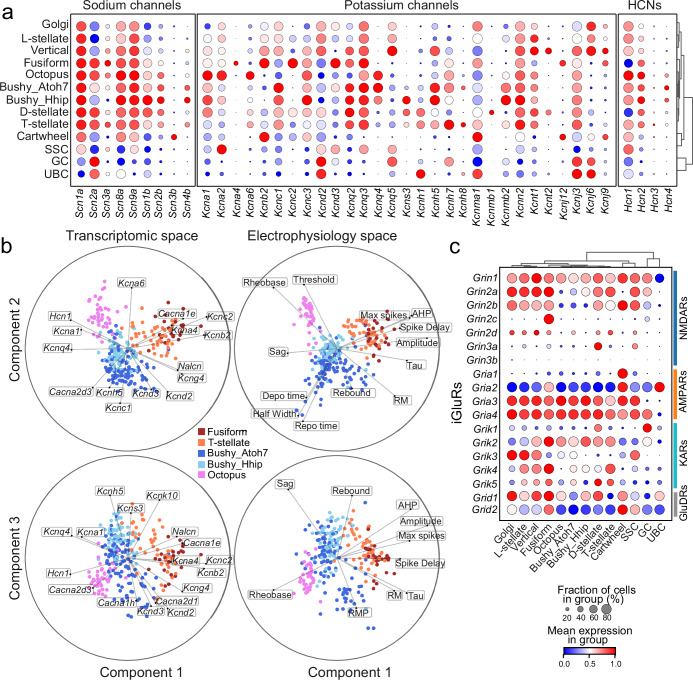
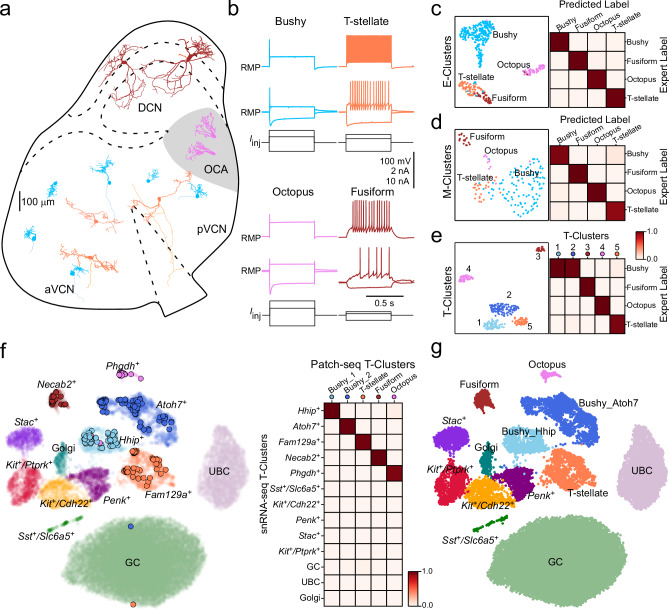
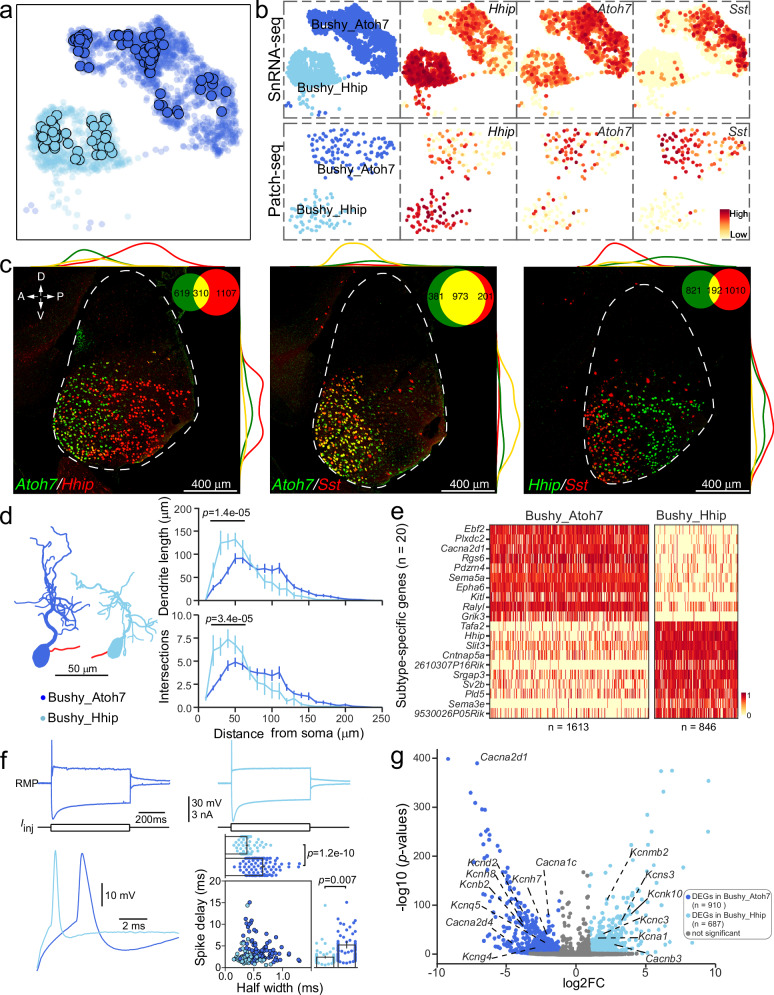
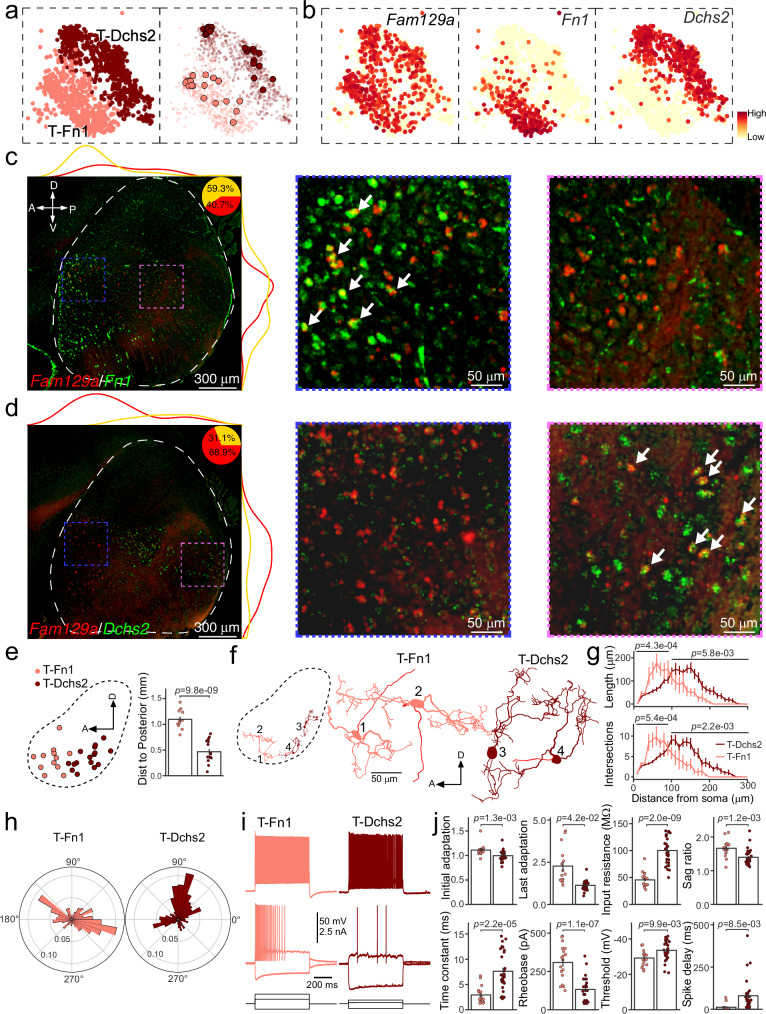
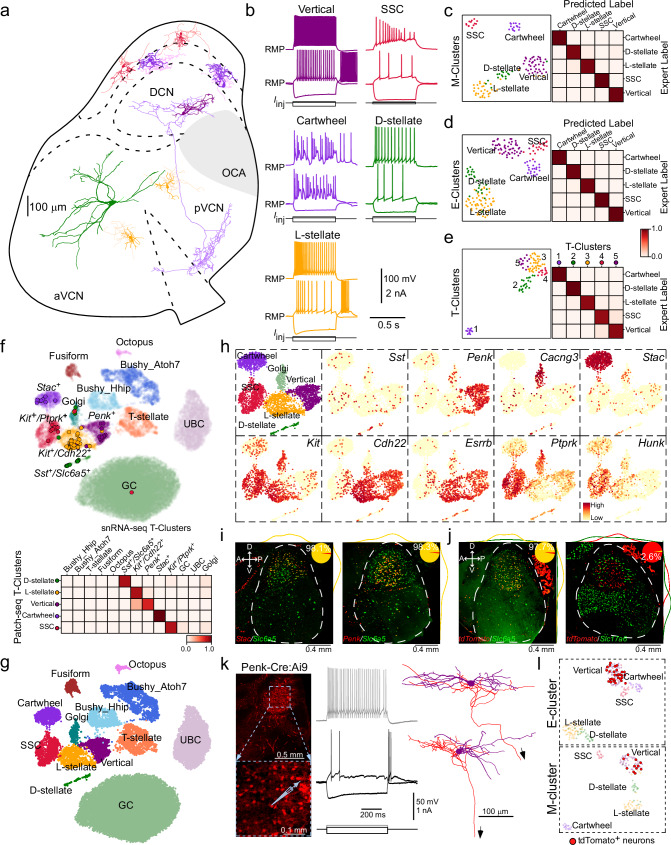
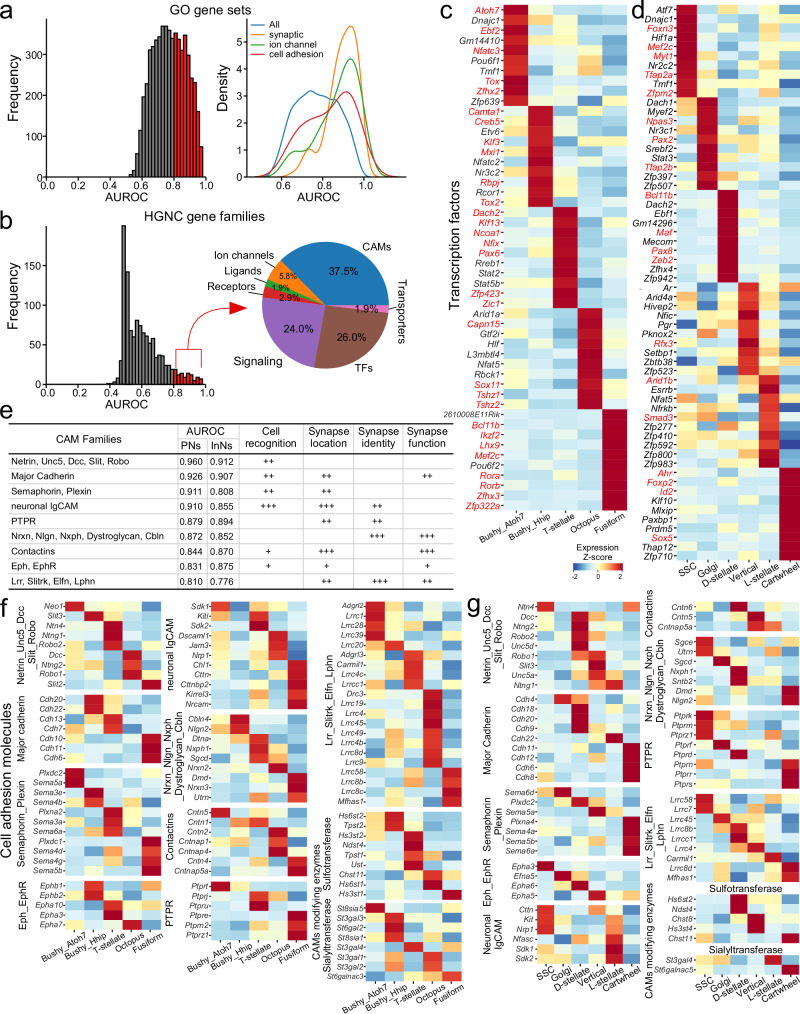
The cochlear nuclear complex (CN), the starting point for all central auditory processing, encompasses a suite of neuronal cell types highly specialized for neural coding of acoustic signals. However, the molecular logic governing these specializations remains unknown. By combining single-nucleus RNA sequencing and Patch-seq analysis, we reveal a set of transcriptionally distinct cell populations encompassing all previously observed types and discover multiple hitherto unknown subtypes with anatomical and physiological identity. The resulting comprehensive cell-type taxonomy reconciles anatomical position, morphological, physiological, and molecular criteria, enabling the determination of the molecular basis of the specialized cellular phenotypes in the CN. In particular, CN cell-type identity is encoded in a transcriptional architecture that orchestrates functionally congruent expression across a small set of gene families to customize projection patterns, input-output synaptic communication, and biophysical features required for encoding distinct aspects of acoustic signals. This high-resolution account of cellular heterogeneity from the molecular to the circuit level reveals the molecular logic driving cellular specializations, thus enabling the genetic dissection of auditory processing and hearing disorders with a high specificity.
耳蜗核复合体(CN)是所有中枢听觉处理的起点,它包含一系列高度专门用于对声信号进行神经编码的神经元细胞类型。然而,支配这些特化的分子逻辑仍然未知。通过结合单核RNA测序和膜片钳测序分析,我们揭示了一组转录上不同的细胞群体,涵盖了所有先前观察到的类型,并发现了多个迄今未知的具有解剖学和生理学特征的亚型。由此产生的全面细胞类型分类法协调了解剖位置、形态、生理和分子标准,从而能够确定CN中特化细胞表型的分子基础。特别是,CN细胞类型身份编码在一种转录结构中,该结构协调一小部分基因家族的功能一致表达,以定制投射模式、输入-输出突触通信以及编码声信号不同方面所需的生物物理特征。这种从分子到回路水平的细胞异质性的高分辨率描述揭示了驱动细胞特化的分子逻辑,从而能够以高特异性对听觉处理和听力障碍进行基因剖析。