• 文献检索
  • 文档翻译
  • 深度研究
  • 学术资讯
  • Suppr Zotero 插件Zotero 插件
  • 邀请有礼
  • 套餐&价格
  • 历史记录
应用&插件
Suppr Zotero 插件Zotero 插件浏览器插件Mac 客户端Windows 客户端微信小程序
定价
高级版会员购买积分包购买API积分包
服务
文献检索文档翻译深度研究API 文档MCP 服务
关于我们
关于 Suppr公司介绍联系我们用户协议隐私条款
关注我们

Suppr 超能文献

核心技术专利:CN118964589B侵权必究
粤ICP备2023148730 号-1Suppr @ 2026

文献检索

告别复杂PubMed语法,用中文像聊天一样搜索,搜遍4000万医学文献。AI智能推荐,让科研检索更轻松。

立即免费搜索

文件翻译

保留排版,准确专业,支持PDF/Word/PPT等文件格式,支持 12+语言互译。

免费翻译文档

深度研究

AI帮你快速写综述,25分钟生成高质量综述,智能提取关键信息,辅助科研写作。

立即免费体验

关联机制促进了昆虫拉绳行为的社会学习和文化传播。

Associative Mechanisms Allow for Social Learning and Cultural Transmission of String Pulling in an Insect.

作者信息

Alem Sylvain, Perry Clint J, Zhu Xingfu, Loukola Olli J, Ingraham Thomas, Søvik Eirik, Chittka Lars

机构信息

Department of Biological and Experimental Psychology, School of Biological and Chemical Sciences, Queen Mary University of London, London, United Kingdom.

Xishuangbanna Tropical Botanical Garden, Chinese Academy of Sciences, Menglun Town, Yunnan, P. R. China.

出版信息

PLoS Biol. 2016 Oct 4;14(10):e1002564. doi: 10.1371/journal.pbio.1002564. eCollection 2016 Oct.

DOI:10.1371/journal.pbio.1002564
PMID:27701411
原文链接:https://pmc.ncbi.nlm.nih.gov/articles/PMC5049772/
Abstract

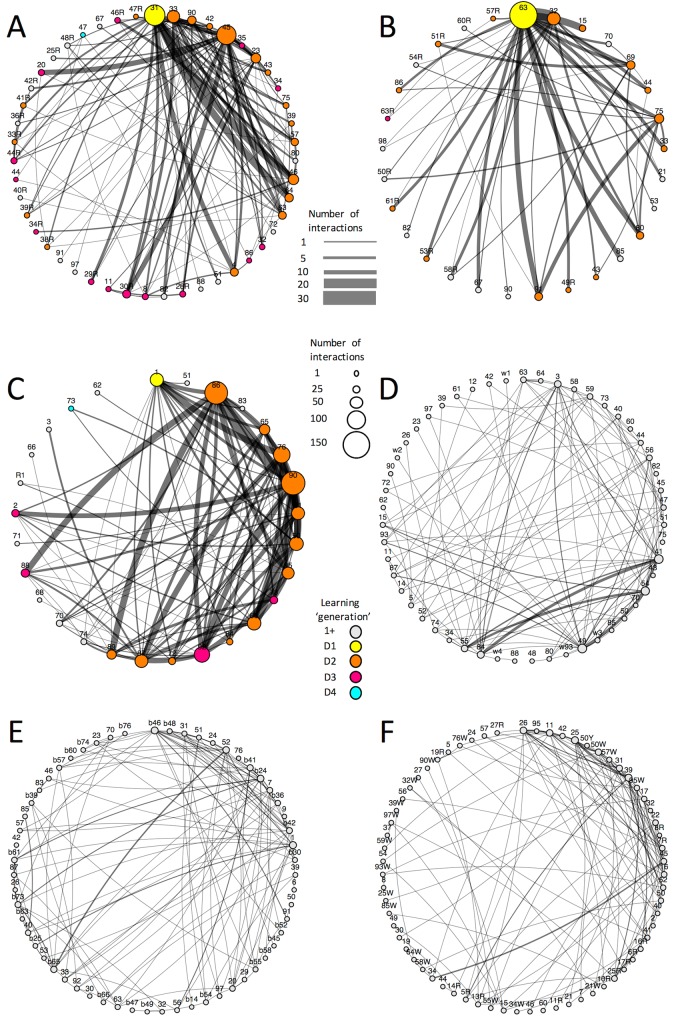
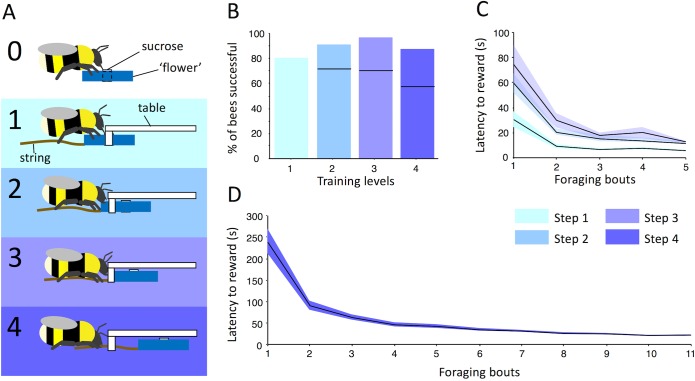
Social insects make elaborate use of simple mechanisms to achieve seemingly complex behavior and may thus provide a unique resource to discover the basic cognitive elements required for culture, i.e., group-specific behaviors that spread from "innovators" to others in the group via social learning. We first explored whether bumblebees can learn a nonnatural object manipulation task by using string pulling to access a reward that was presented out of reach. Only a small minority "innovated" and solved the task spontaneously, but most bees were able to learn to pull a string when trained in a stepwise manner. In addition, naïve bees learnt the task by observing a trained demonstrator from a distance. Learning the behavior relied on a combination of simple associative mechanisms and trial-and-error learning and did not require "insight": naïve bees failed a "coiled-string experiment," in which they did not receive instant visual feedback of the target moving closer when tugging on the string. In cultural diffusion experiments, the skill spread rapidly from a single knowledgeable individual to the majority of a colony's foragers. We observed that there were several sequential sets ("generations") of learners, so that previously naïve observers could first acquire the technique by interacting with skilled individuals and, subsequently, themselves become demonstrators for the next "generation" of learners, so that the longevity of the skill in the population could outlast the lives of informed foragers. This suggests that, so long as animals have a basic toolkit of associative and motor learning processes, the key ingredients for the cultural spread of unusual skills are already in place and do not require sophisticated cognition.

摘要

群居昆虫巧妙地利用简单机制来实现看似复杂的行为,因此可能为发现文化所需的基本认知要素提供独特资源,即通过社会学习从“创新者”传播到群体中其他个体的群体特定行为。我们首先探究了大黄蜂是否能通过拉绳子来获取够不到的奖励,从而学会一项非自然的物体操控任务。只有少数个体“创新”并自发解决了任务,但大多数蜜蜂在逐步训练后能够学会拉绳子。此外,未接触过该任务的蜜蜂通过远距离观察经过训练的示范者学会了这项任务。学习该行为依赖于简单的联想机制和试错学习的结合,并不需要“顿悟”:未接触过该任务的蜜蜂在“盘绕绳实验”中失败了,在这个实验中,它们在拉绳子时没有得到目标靠近的即时视觉反馈。在文化传播实验中,这项技能从单个有经验的个体迅速传播到蜂群中的大多数觅食者。我们观察到有几个连续的学习者群体(“代”),这样之前未接触过该任务的观察者可以首先通过与熟练个体互动来掌握这项技术,随后自己成为下一批“代”学习者的示范者,从而使这项技能在群体中的延续时间超过有经验的觅食者的寿命。这表明,只要动物具备联想和运动学习过程的基本工具包,不寻常技能文化传播的关键要素就已具备,并不需要复杂的认知。
https://cdn.ncbi.nlm.nih.gov/pmc/blobs/66f4/5049772/a1da630c1fcd/pbio.1002564.g006.jpg
https://cdn.ncbi.nlm.nih.gov/pmc/blobs/66f4/5049772/12a6f8118fd6/pbio.1002564.g001.jpg
https://cdn.ncbi.nlm.nih.gov/pmc/blobs/66f4/5049772/9045e99806d3/pbio.1002564.g002.jpg
https://cdn.ncbi.nlm.nih.gov/pmc/blobs/66f4/5049772/daea6dd965c8/pbio.1002564.g003.jpg
https://cdn.ncbi.nlm.nih.gov/pmc/blobs/66f4/5049772/dbd1475cf466/pbio.1002564.g004.jpg
https://cdn.ncbi.nlm.nih.gov/pmc/blobs/66f4/5049772/005dd20a1b3a/pbio.1002564.g005.jpg
https://cdn.ncbi.nlm.nih.gov/pmc/blobs/66f4/5049772/a1da630c1fcd/pbio.1002564.g006.jpg
https://cdn.ncbi.nlm.nih.gov/pmc/blobs/66f4/5049772/12a6f8118fd6/pbio.1002564.g001.jpg
https://cdn.ncbi.nlm.nih.gov/pmc/blobs/66f4/5049772/9045e99806d3/pbio.1002564.g002.jpg
https://cdn.ncbi.nlm.nih.gov/pmc/blobs/66f4/5049772/daea6dd965c8/pbio.1002564.g003.jpg
https://cdn.ncbi.nlm.nih.gov/pmc/blobs/66f4/5049772/dbd1475cf466/pbio.1002564.g004.jpg
https://cdn.ncbi.nlm.nih.gov/pmc/blobs/66f4/5049772/005dd20a1b3a/pbio.1002564.g005.jpg
https://cdn.ncbi.nlm.nih.gov/pmc/blobs/66f4/5049772/a1da630c1fcd/pbio.1002564.g006.jpg

相似文献

1
Associative Mechanisms Allow for Social Learning and Cultural Transmission of String Pulling in an Insect.关联机制促进了昆虫拉绳行为的社会学习和文化传播。
PLoS Biol. 2016 Oct 4;14(10):e1002564. doi: 10.1371/journal.pbio.1002564. eCollection 2016 Oct.
2
Observational conditioning in flower choice copying by bumblebees (Bombus terrestris): influence of observer distance and demonstrator movement.熊蜂(Bombus terrestris)在花朵选择模仿中的观察性条件作用:观察者距离和示范者运动的影响
PLoS One. 2014 Feb 7;9(2):e88415. doi: 10.1371/journal.pone.0088415. eCollection 2014.
3
Bumblebees show cognitive flexibility by improving on an observed complex behavior.大黄蜂通过改进观察到的复杂行为表现出认知灵活性。
Science. 2017 Feb 24;355(6327):833-836. doi: 10.1126/science.aag2360.
4
Does bumblebee preference of continuous over interrupted strings in string-pulling tasks indicate means-end comprehension?在拉绳任务中,熊蜂对连续而非中断的绳子的偏好是否表明了它们具有手段-目的理解?
Elife. 2024 Sep 18;13:RP97018. doi: 10.7554/eLife.97018.
5
Bumblebees attend to both the properties of the string and the target in string-pulling tasks, but prioritize the features of the string.在拉绳任务中,大黄蜂既关注绳子的属性,也关注目标,但会优先考虑绳子的特征。
Insect Sci. 2025 Apr;32(2):675-686. doi: 10.1111/1744-7917.13373. Epub 2024 May 1.
6
Bumblebees socially learn behaviour too complex to innovate alone.大黄蜂也通过社会学习来掌握过于复杂而无法独自创新的行为。
Nature. 2024 Mar;627(8004):572-578. doi: 10.1038/s41586-024-07126-4. Epub 2024 Mar 6.
7
Learning by observation emerges from simple associations in an insect model.通过观察学习在昆虫模型中产生于简单的联想。
Curr Biol. 2013 Apr 22;23(8):727-30. doi: 10.1016/j.cub.2013.03.035. Epub 2013 Apr 4.
8
Flower choice copying in bumblebees.大黄蜂对花朵选择的模仿行为。
Biol Lett. 2005 Dec 22;1(4):504-7. doi: 10.1098/rsbl.2005.0368.
9
Bumblebees acquire alternative puzzle-box solutions via social learning.大黄蜂通过社会学习获得替代迷箱解决方案。
PLoS Biol. 2023 Mar 7;21(3):e3002019. doi: 10.1371/journal.pbio.3002019. eCollection 2023 Mar.
10
Social Contact Acts as Appetitive Reinforcement and Supports Associative Learning in Honeybees.社会接触充当了蜜蜂的欲望强化物,并支持联想学习。
Curr Biol. 2019 Apr 22;29(8):1407-1413.e3. doi: 10.1016/j.cub.2019.03.025. Epub 2019 Apr 11.

引用本文的文献

1
Some Hooded crows (Corvus cornix) understand how a loose string works.一些冠小嘴乌鸦(小嘴乌鸦)懂得松散的绳子是如何发挥作用的。
Sci Rep. 2025 May 4;15(1):15569. doi: 10.1038/s41598-025-99778-z.
2
An associative account of collective learning.集体学习的关联阐述。
R Soc Open Sci. 2025 Mar 26;12(3):241907. doi: 10.1098/rsos.241907. eCollection 2025 Mar.
3
Bee reasonable: Do bumblebees reason by exclusion?保持理性:大黄蜂会通过排除法进行推理吗?

本文引用的文献

1
Cultural diffusion in humans and other animals.人类和其他动物中的文化传播。
Curr Opin Psychol. 2016 Apr;8:15-21. doi: 10.1016/j.copsyc.2015.09.002. Epub 2015 Sep 14.
2
Who Knows? Metacognitive Social Learning Strategies.谁知道呢?元认知社会学习策略。
Trends Cogn Sci. 2016 Mar;20(3):204-213. doi: 10.1016/j.tics.2015.12.007. Epub 2016 Jan 14.
3
Social learning and traditions in animals: evidence, definitions, and relationship to human culture.动物的社会学习和传统:证据、定义以及与人类文化的关系。
Learn Behav. 2025 Jan 9. doi: 10.3758/s13420-024-00661-0.
4
Bumblebee social learning outcomes correlate with their flower-facing behaviour.大黄蜂的社会学习成果与其面向花朵的行为有关。
Anim Cogn. 2024 Nov 26;27(1):80. doi: 10.1007/s10071-024-01918-x.
5
Does bumblebee preference of continuous over interrupted strings in string-pulling tasks indicate means-end comprehension?在拉绳任务中,熊蜂对连续而非中断的绳子的偏好是否表明了它们具有手段-目的理解?
Elife. 2024 Sep 18;13:RP97018. doi: 10.7554/eLife.97018.
6
Diversity of visual inputs to Kenyon cells of the Drosophila mushroom body.果蝇蘑菇体中 Kenyon 细胞的视觉输入多样性。
Nat Commun. 2024 Jul 7;15(1):5698. doi: 10.1038/s41467-024-49616-z.
7
Feathered Lectures-Evidence of Perceptual Factors on Social Learning in Kea Parrots ().羽毛讲座——啄羊鹦鹉社会学习中感知因素的证据()
Animals (Basel). 2024 May 31;14(11):1651. doi: 10.3390/ani14111651.
8
Evidence for socially influenced and potentially actively coordinated cooperation by bumblebees.熊蜂存在受社会影响且可能积极协调合作的证据。
Proc Biol Sci. 2024 May;291(2022):20240055. doi: 10.1098/rspb.2024.0055. Epub 2024 May 1.
9
Do They Know What They Are Doing? Cognitive Aspects of Rescue Behaviour Directed by Workers of the Red Wood Ant to Nestmate Victims Entrapped in Artificial Snares.它们知道自己在做什么吗?红木蚁工蚁对被困在人工陷阱中的巢伴受害者实施救援行为的认知方面。
Life (Basel). 2024 Apr 16;14(4):515. doi: 10.3390/life14040515.
10
Bumblebee Foraging Dynamics and Pollination Outcomes for Cherry Tomato and Pear Varieties in Northern China.中国北方地区熊蜂对樱桃番茄和梨品种的觅食动态及授粉结果
Insects. 2024 Mar 22;15(4):216. doi: 10.3390/insects15040216.
Wiley Interdiscip Rev Cogn Sci. 2012 Nov;3(6):581-592. doi: 10.1002/wcs.1196. Epub 2012 Aug 9.
4
The string-pulling paradigm in comparative psychology.比较心理学中的拉绳范式。
J Comp Psychol. 2015 May;129(2):89-120. doi: 10.1037/a0038746.
5
Not-so-social learning strategies.不太社会化的学习策略。
Proc Biol Sci. 2015 Mar 7;282(1802). doi: 10.1098/rspb.2014.1709.
6
Ecology of information: social transmission dynamics within groups of non-social insects.信息生态学:非社会性昆虫群体内的社会传播动态
Proc Biol Sci. 2015 Feb 22;282(1801):20142480. doi: 10.1098/rspb.2014.2480.
7
Experimental evidence for the co-evolution of hominin tool-making teaching and language.古人类工具制造教学与语言共同进化的实验证据。
Nat Commun. 2015 Jan 13;6:6029. doi: 10.1038/ncomms7029.
8
Experimentally induced innovations lead to persistent culture via conformity in wild birds.实验诱导的创新通过野生鸟类的从众行为导致文化的持久性。
Nature. 2015 Feb 26;518(7540):538-41. doi: 10.1038/nature13998. Epub 2014 Dec 3.
9
Insights from insects about adaptive social information use.昆虫的适应性社会信息利用的启示。
Trends Ecol Evol. 2014 Mar;29(3):177-84. doi: 10.1016/j.tree.2014.01.004. Epub 2014 Feb 19.
10
Imitation is necessary for cumulative cultural evolution in an unfamiliar, opaque task.在一项不熟悉的、晦涩的任务中,模仿对于累积性文化进化是必要的。
Hum Nat. 2014 Mar;25(1):161-79. doi: 10.1007/s12110-014-9192-5.