Chang Simon, Bok Philane, Sun Cheng-Pu, Edwards Andrew, Huang Guo-Jen
Department and Graduate Institute of Biomedical Sciences, College of Medicine, Chang Gung University, Tao-Yuan, Taiwan.
Institute of Biomedical Sciences, Academia Sinica, Taipei, Taiwan.
PLoS Genet. 2016 Oct 4;12(10):e1006356. doi: 10.1371/journal.pgen.1006356. eCollection 2016 Oct.
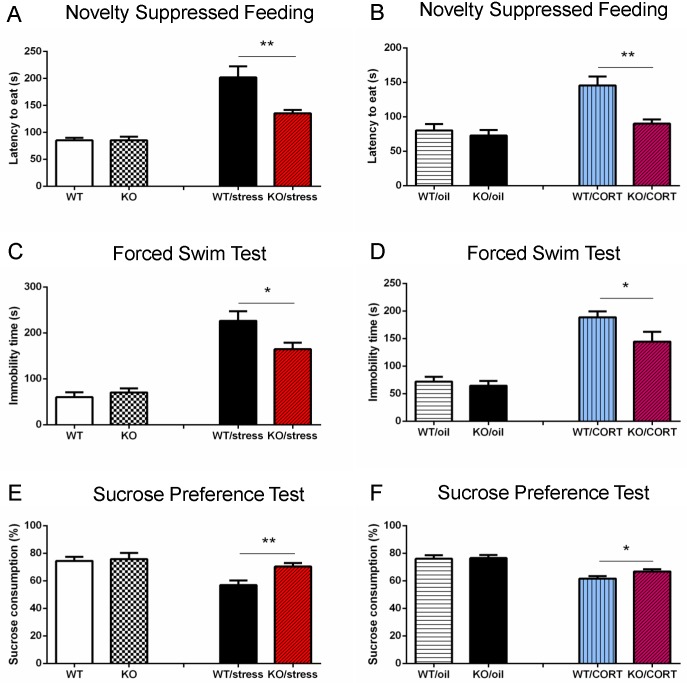
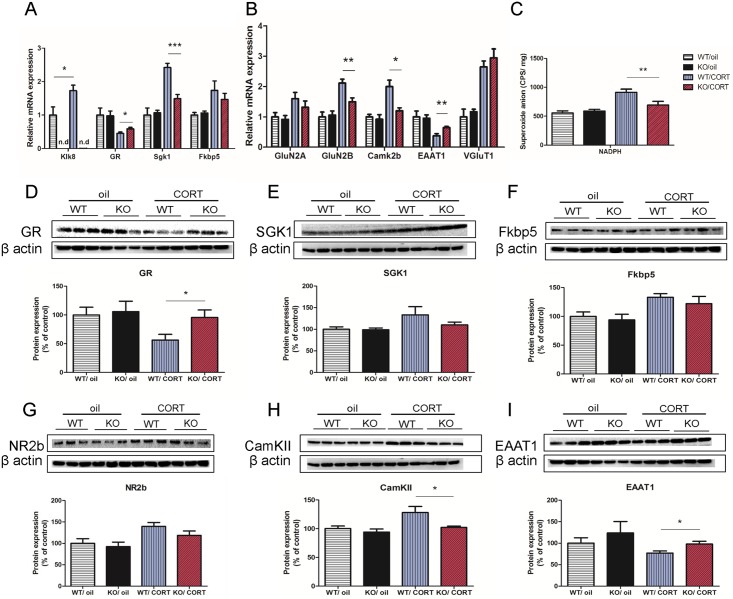
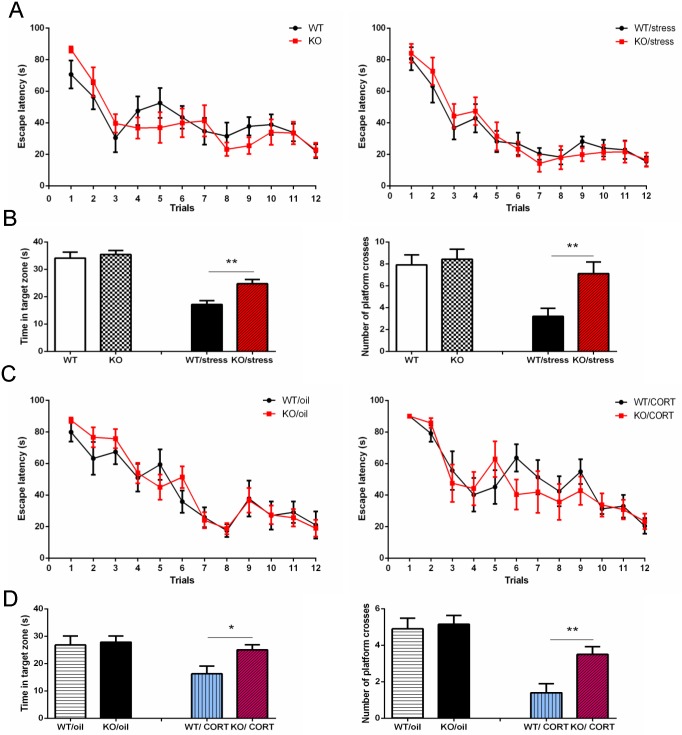
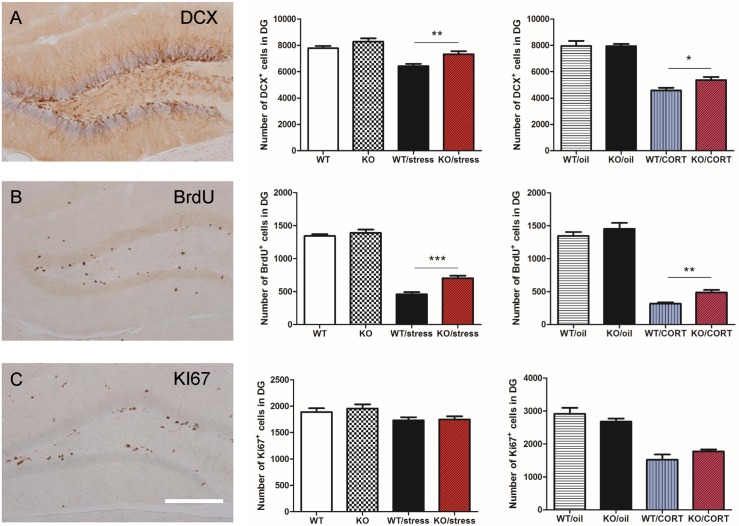
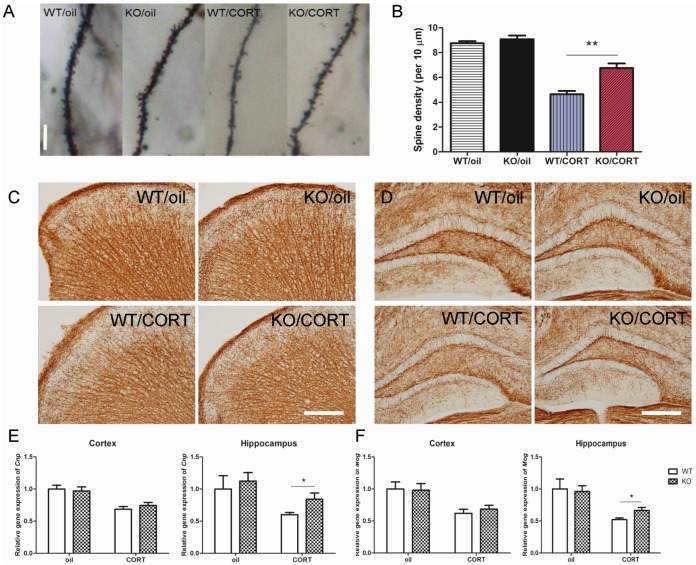
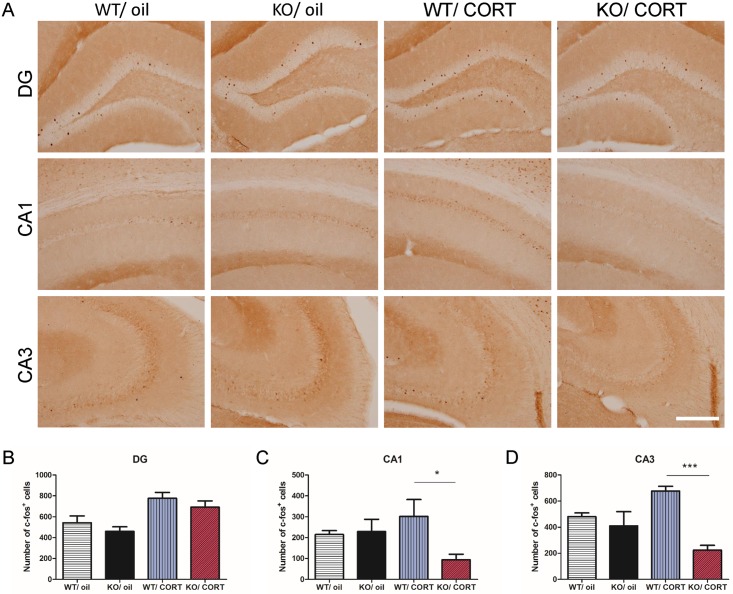
Mounting evidence suggests the interaction between stress and genetics contribute to the development of depressive symptoms. Currently, the molecular mechanisms mediating this process are poorly understood, hindering the development of new clinical interventions. Here, we investigate the interaction between neuropsin, a serine protease, and chronic stress on the development of depressive-like behaviours in mice. We found no difference in baseline behaviour between neuropsin knockout and wild-type mice. However, our results show that neuropsin knockout mice are protected against the development of depressive-like behaviours and memory impairment following chronic stress. We hypothesised that this difference in behaviour may be due to an interaction between neuropsin and elevated plasma corticosterone. To test this, we subjected mice to chronic corticosterone injections. These injections resulted in changes to hippocampal structure similar to that observed following chronic stress. We found that inactivation of neuropsin limits the extent of these anatomical changes in both the chronic stress and the corticosterone injection exposed cohorts. We next used viral vectors to knockdown or overexpress neuropsin in the hippocampus to confirm the results of the KO study. Additionally, we found that inactivation of neuropsin limited glutamate dysregulation, associated with increased generation of reactive oxygen species, resulting from prolonged elevated plasma corticosterone. In this study, we demonstrate that neuropsin inactivation protects against the impairment of hippocampal functions and the depressive-like behaviour induced by chronic stress or high levels of corticosterone. Consequently, we suggest neuropsin is a potential target for clinical interventions for the management of stress disorders.
越来越多的证据表明,压力与基因之间的相互作用会导致抑郁症状的出现。目前,介导这一过程的分子机制尚不清楚,这阻碍了新的临床干预措施的开发。在此,我们研究了神经胰蛋白酶(一种丝氨酸蛋白酶)与慢性应激对小鼠抑郁样行为发展的相互作用。我们发现神经胰蛋白酶基因敲除小鼠和野生型小鼠在基线行为上没有差异。然而,我们的结果表明,神经胰蛋白酶基因敲除小鼠在慢性应激后可免受抑郁样行为和记忆障碍的影响。我们推测这种行为差异可能是由于神经胰蛋白酶与血浆皮质酮升高之间的相互作用所致。为了验证这一点,我们对小鼠进行了慢性皮质酮注射。这些注射导致海马结构发生变化,类似于慢性应激后观察到的变化。我们发现,在慢性应激和皮质酮注射组中,神经胰蛋白酶失活限制了这些解剖学变化的程度。接下来,我们使用病毒载体在海马体中敲低或过表达神经胰蛋白酶,以证实基因敲除研究的结果。此外,我们发现神经胰蛋白酶失活限制了谷氨酸失调,这与血浆皮质酮长期升高导致的活性氧生成增加有关。在这项研究中,我们证明神经胰蛋白酶失活可防止慢性应激或高水平皮质酮诱导的海马功能损害和抑郁样行为。因此,我们认为神经胰蛋白酶是应激障碍临床干预的潜在靶点。