Yamada Hiroshi, Yaguchi Hiroaki, Tomatsu Saeka, Takei Tomohiko, Oya Tomomichi, Seki Kazuhiko
Department of Neurophysiology, National Institute of Neuroscience, National Center of Neurology and Psychiatry, Kodaira, Tokyo, 187-8502, Japan.
Division of Biomedical Science, Faculty of Medicine, University of Tsukuba, Tsukuba, Ibaraki, 305-8577, Japan.
PLoS One. 2016 Oct 4;11(10):e0163948. doi: 10.1371/journal.pone.0163948. eCollection 2016.
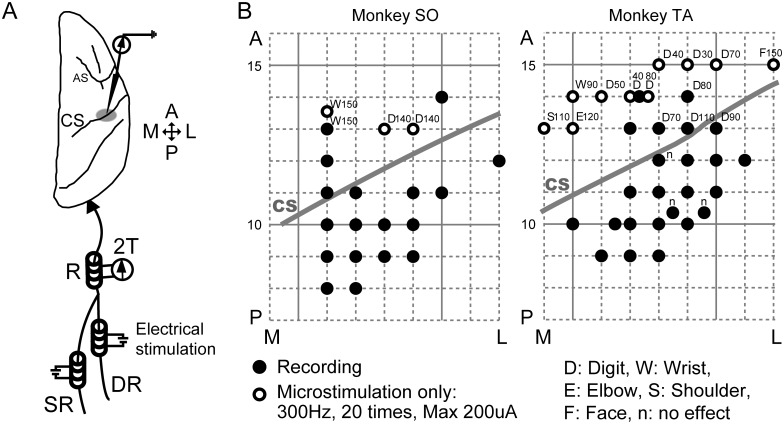
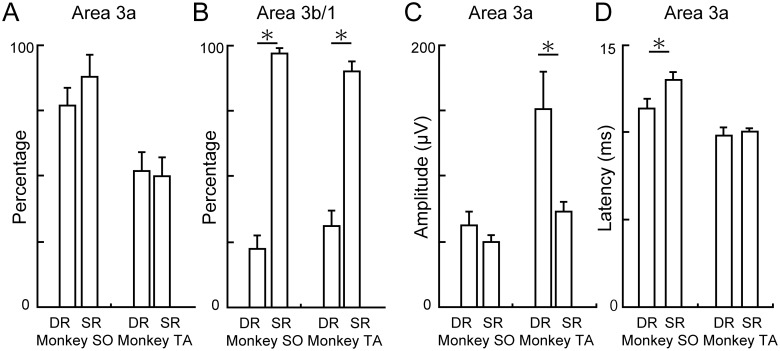
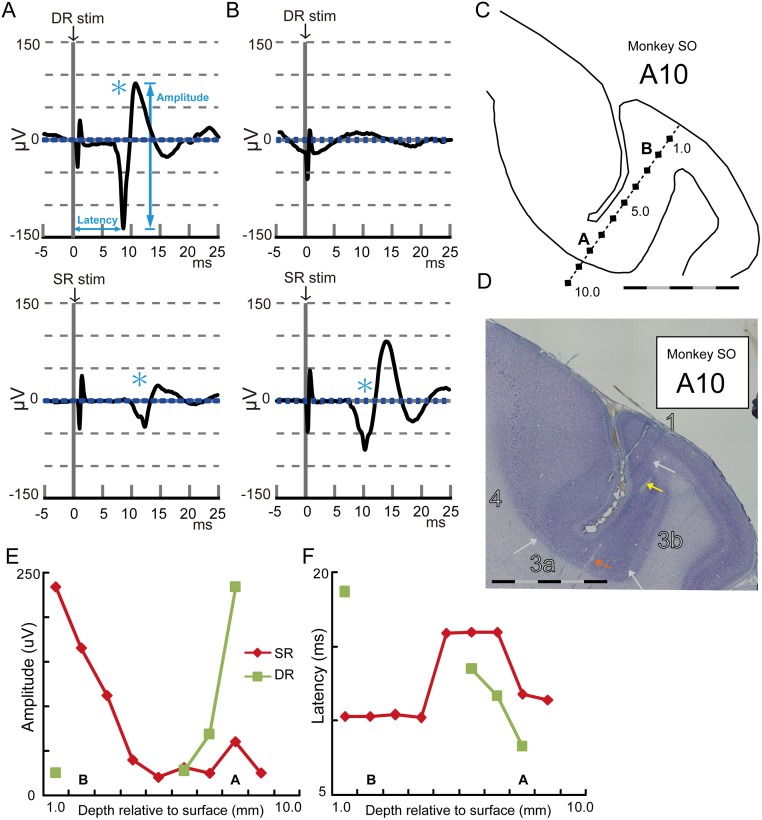
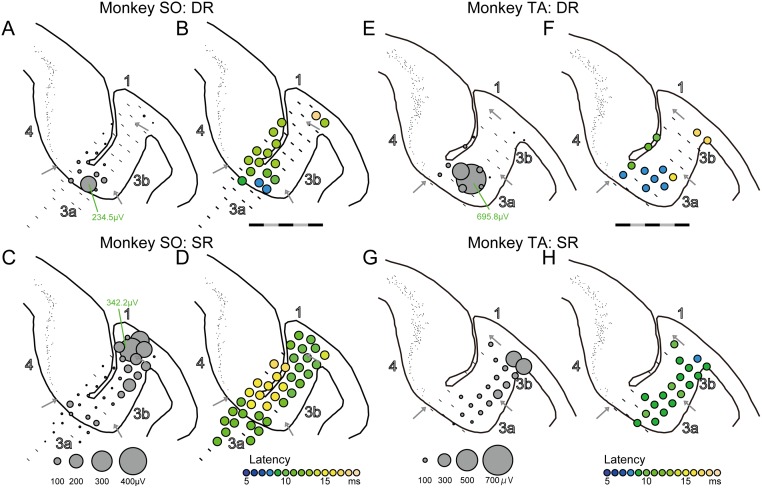
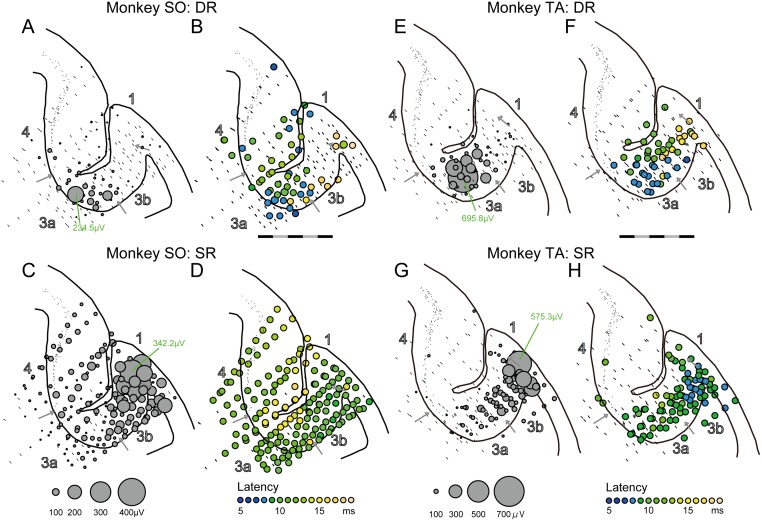
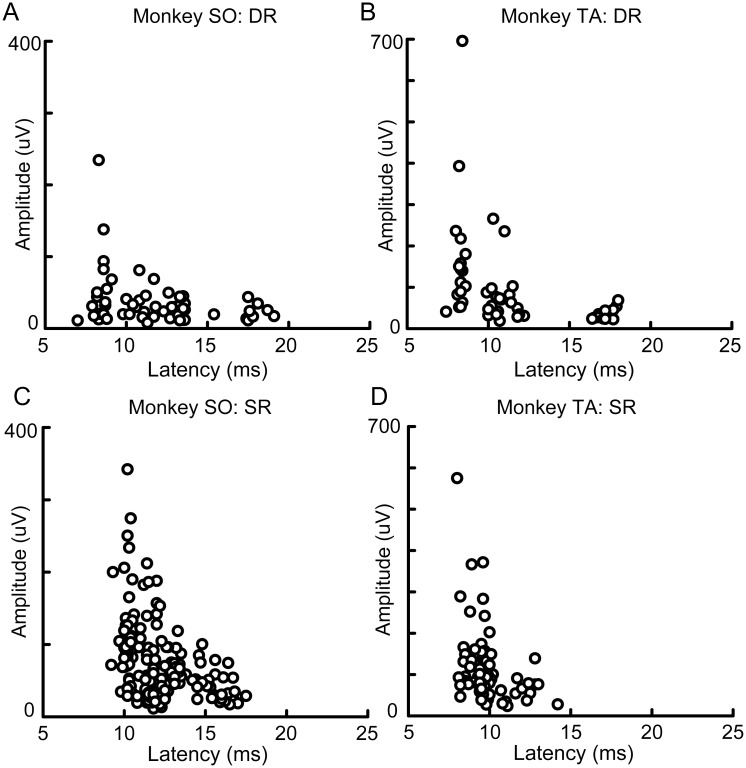
Proprioception is one's overall sense of the relative positions and movements of the various parts of one's body. The primary somatosensory cortex (SI) is involved in generating the proprioception by receiving peripheral sensory inputs from both cutaneous and muscle afferents. In particular, area 3a receives input from muscle afferents and areas 3b and 1 from cutaneous afferents. However, segregation of two sensory inputs to these cortical areas has not been evaluated quantitatively because of methodological difficulties in distinguishing the incoming signals. To overcome this, we applied electrical stimulation separately to two forearm nerves innervating muscle (deep radial nerve) and skin (superficial radial nerve), and examined the spatiotemporal distribution of sensory evoked potentials (SEPs) in SI of anaesthetized macaques. The SEPs arising from the deep radial nerve were observed exclusively at the bottom of central sulcus (CS), which was identified as area 3a using histological reconstruction. In contrast, SEPs evoked by stimulation of the superficial radial nerve were observed in the superficial part of SI, identified as areas 3b and 1. In addition to these earlier, larger potentials, we also found small and slightly delayed SEPs evoked by cutaneous nerve stimulation in area 3a. Coexistence of the SEPs from both deep and superficial radial nerves suggests that area 3a could integrate muscle and cutaneous signals to shape proprioception.
本体感觉是个体对自身身体各部位相对位置和运动的整体感知。初级体感皮层(SI)通过接收来自皮肤和肌肉传入神经的外周感觉输入来参与本体感觉的产生。具体而言,3a区接收来自肌肉传入神经的输入,3b区和1区接收来自皮肤传入神经的输入。然而,由于区分传入信号存在方法学上的困难,尚未对这两种感觉输入在这些皮层区域的分离情况进行定量评估。为了克服这一问题,我们分别对支配肌肉的两条前臂神经(桡神经深支)和皮肤的神经(桡神经浅支)施加电刺激,并检查了麻醉猕猴SI区感觉诱发电位(SEP)的时空分布。由桡神经深支产生的SEP仅在中央沟(CS)底部被观察到,通过组织学重建确定该区域为3a区。相比之下,刺激桡神经浅支诱发的SEP在SI区的浅层被观察到,确定为3b区和1区。除了这些较早出现的较大电位外,我们还发现在3a区由皮肤神经刺激诱发的小且稍有延迟的SEP。来自桡神经深支和浅支的SEP共存表明,3a区可能整合肌肉和皮肤信号以形成本体感觉。