Abdel-Azeem Ahmed M, Zaki Sherif M, Khalil Waleed F, Makhlouf Noha A, Farghaly Lamiaa M
Botany Department, Faculty of Science, Suez Canal University Ismailia, Egypt.
Microbiology Department, Faculty of Science, Ain Shams University Cairo, Egypt.
Front Microbiol. 2016 Sep 20;7:1477. doi: 10.3389/fmicb.2016.01477. eCollection 2016.
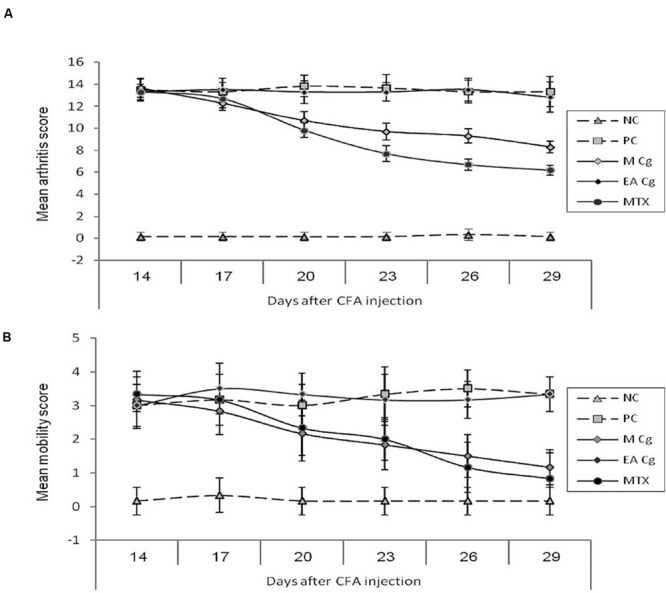
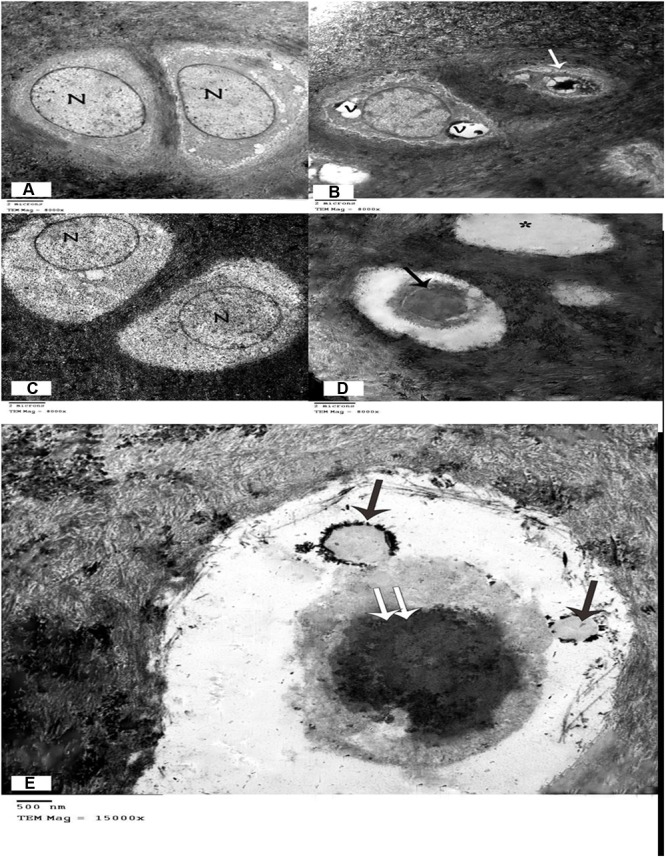
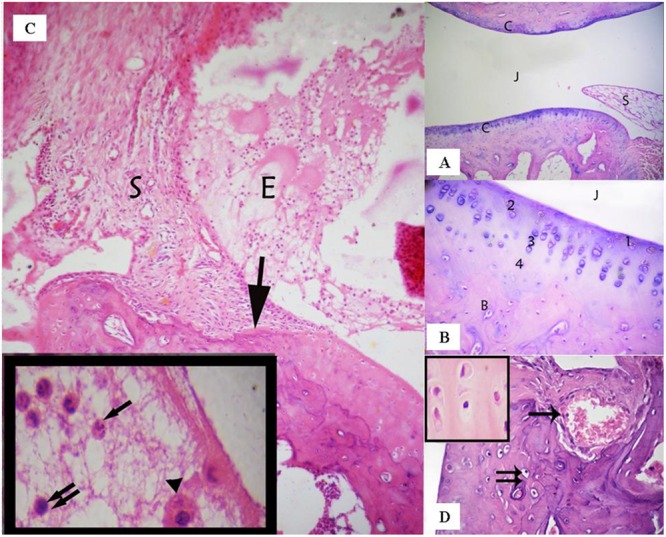
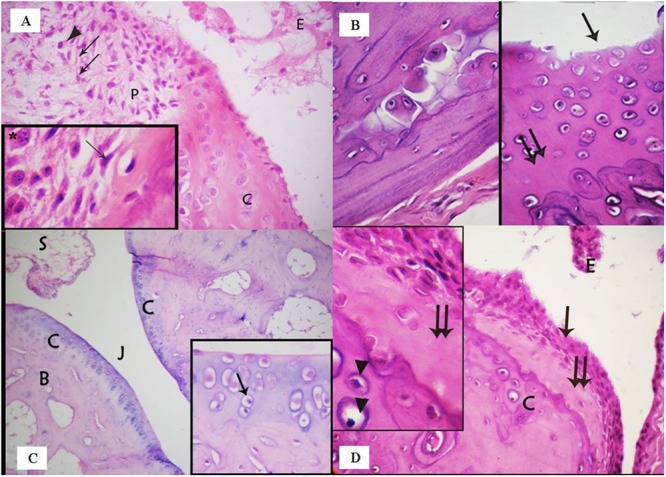
The aim of the present study was to investigate the anti-rheumatoid activity of secondary metabolites produced by endophytic mycobiota in Egypt. A total of 27 endophytic fungi were isolated from 10 dominant medicinal plant host species in Wadi Tala, Saint Katherine Protectorate, arid Sinai, Egypt. Of those taxa, seven isolates of (CG1-CG7), being the most frequent taxon, were recovered from seven different host plants and screened for production of active anti-inflammatory metabolites. Isolates were cultivated on half - strength potato dextrose broth for 21 days at 28°C on a rotatory shaker at 180 rpm, and extracted in ethyl acetate and methanol, respectively. The probable inhibitory effects of both extracts against an adjuvant induced arthritis (AIA) rat model were examined and compared with the effects of methotrexate (MTX) as a standard disease-modifying anti-rheumatoid drug. Disease activity and mobility scoring of AIA, histopathology and transmission electron microscopy (TEM) were used to evaluate probable inhibitory roles. A significant reduction ( < 0.05) in the severity of arthritis was observed in both the methanolic extract of CG6 (MCG6) and MTX treatment groups 6 days after treatment commenced. The average arthritis score of the MCG6 treatment group was (10.7 ± 0.82) compared to (13.8 ± 0.98) in the positive control group. The mobility score of the MCG6 treatment group (1.50 ± 0.55) was significantly lower than that of the positive control group (3.33 ± 0.82). In contrast, the ethyl acetate extract of CG6 (EACG6) treatment group showed no improvements in arthritis and mobility scores in AIA model rats. Histopathology and TEM findings confirmed the observation. Isolate CG6 was subjected to sequencing for confirmation of phenotypic identification. The internal transcribed spacer (ITS) 1-5.8 s - ITS2 rDNA sequences obtained were compared with those deposited in the GenBank Database and registered with accession number KC811080 in the NCBI Database. The present study revealed that the methanol extract of endophytic fungus (KC811080) recovered from maidenhair fern has an inhibitory effect on inflammation, histopathology and morphological features of rheumatoid arthritis in an AIA rat model.
本研究的目的是调查埃及内生真菌群产生的次生代谢产物的抗类风湿活性。从埃及干旱西奈半岛圣凯瑟琳保护区瓦迪塔拉的10种优势药用植物宿主物种中总共分离出27种内生真菌。在这些分类群中,从7种不同的宿主植物中分离出7株(CG1 - CG7),它们是最常见的分类群,并对其活性抗炎代谢产物的产生进行筛选。将分离物在半强度马铃薯葡萄糖肉汤中于28°C下以180 rpm的转速在旋转摇床上培养21天,然后分别用乙酸乙酯和甲醇萃取。检测两种提取物对佐剂诱导性关节炎(AIA)大鼠模型的可能抑制作用,并与作为标准抗类风湿疾病改善药物的甲氨蝶呤(MTX)的作用进行比较。使用AIA的疾病活动和活动评分、组织病理学和透射电子显微镜(TEM)来评估可能的抑制作用。在开始治疗6天后,CG6的甲醇提取物(MCG6)组和MTX治疗组的关节炎严重程度均显著降低(<0.05)。MCG6治疗组的平均关节炎评分为(10.7±0.82),而阳性对照组为(13.8±0.98)。MCG6治疗组的活动评分(1.50±0.55)显著低于阳性对照组(3.33±0.82)。相比之下,CG6的乙酸乙酯提取物(EACG6)治疗组在AIA模型大鼠中的关节炎和活动评分没有改善。组织病理学和TEM结果证实了这一观察结果。对分离株CG6进行测序以确认表型鉴定。将获得的内部转录间隔区(ITS)1 - 5.8 s - ITS2 rDNA序列与保存在GenBank数据库中的序列进行比较,并在NCBI数据库中注册,登录号为KC811080。本研究表明,从铁线蕨中分离出的内生真菌(KC811080)的甲醇提取物对AIA大鼠模型中类风湿关节炎的炎症、组织病理学和形态学特征具有抑制作用。