Baeck Annelies, Maes Karen, Meel Chayenne Van, Op de Beeck Hans P
Brain and Cognition, University of Leuven Leuven, Belgium.
Front Psychol. 2016 Sep 21;7:1386. doi: 10.3389/fpsyg.2016.01386. eCollection 2016.
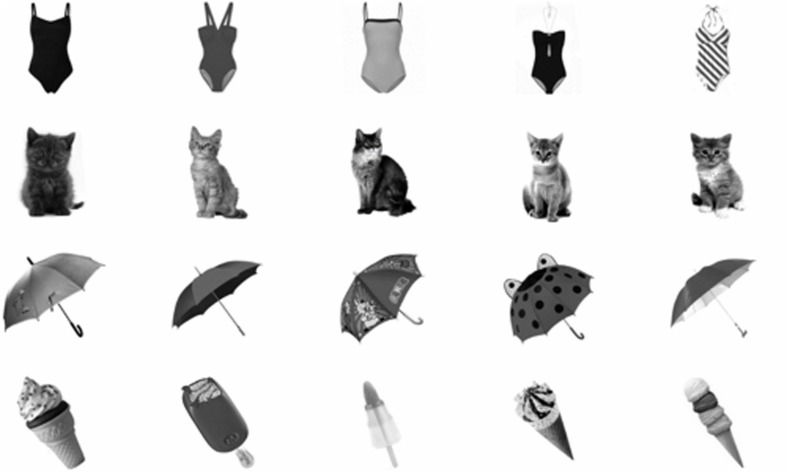
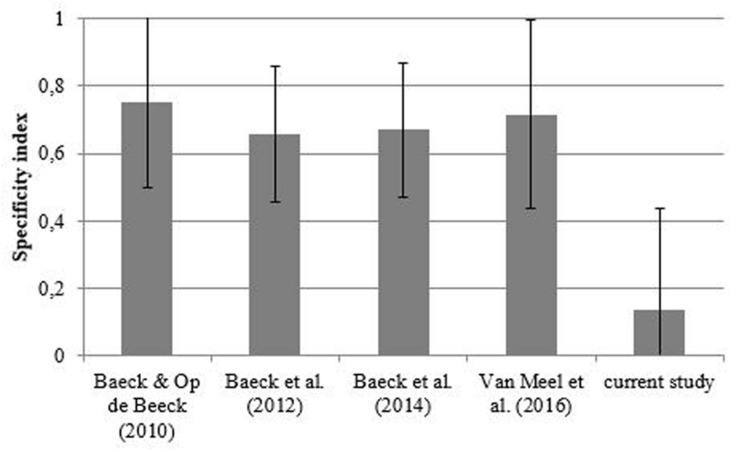
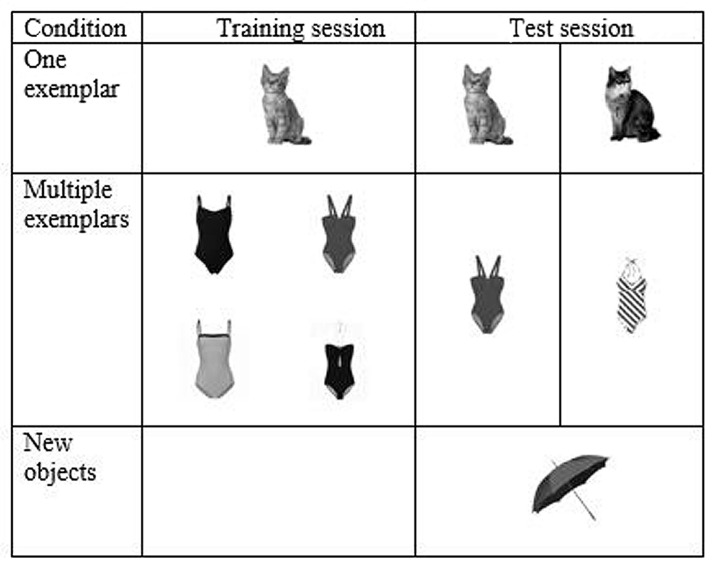
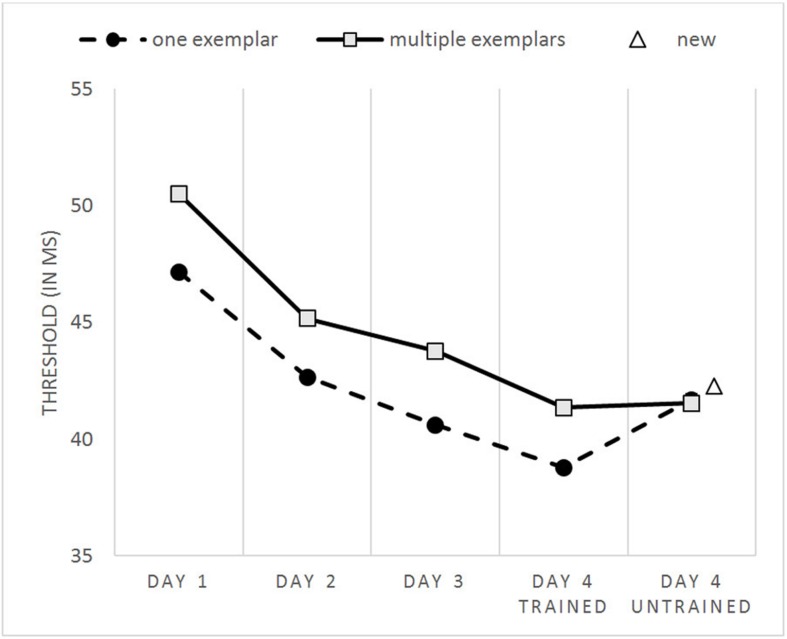
Object recognition improves with training. This training effect only partially generalizes to untrained images of the trained objects (new exemplars, orientation,…). The aim of this study is to investigate whether and to what extent the learning transfer improves when participants are trained with more exemplars of an object. Participants were trained to recognize two sets of stimuli using a backward masking paradigm. During training with the first set, only one exemplar of each object was presented. The second set was trained using four exemplars of each object. After 3 days of training, participants were tested on all the trained exemplars and a completely new exemplar of the same objects. In addition, recognition performance was compared to a set of completely new objects. For the objects of which four exemplars were used during training, participants showed more generalization toward new exemplars compared to when they were only trained with one exemplar. Part of the generalization effect extended to completely new objects. In conclusion, more variation during training leads to more generalization toward new visual stimuli.
物体识别能力会随着训练而提高。这种训练效果只能部分推广到已训练物体的未训练图像(新示例、方向等)。本研究的目的是调查当参与者使用更多物体示例进行训练时,学习迁移是否会改善以及改善的程度如何。参与者使用反向掩蔽范式接受训练以识别两组刺激。在对第一组进行训练时,每个物体仅呈现一个示例。第二组训练使用每个物体的四个示例。经过3天的训练后,对参与者进行测试,测试内容包括所有已训练的示例以及相同物体的一个全新示例。此外,将识别性能与一组全新物体进行比较。对于在训练中使用了四个示例的物体,与仅使用一个示例进行训练相比,参与者对新示例表现出了更多的推广能力。部分推广效应延伸到了全新的物体上。总之,训练期间更多的变化会导致对新视觉刺激有更多的推广。