Ge Qiu-Lin, Liu San-Hong, Ai Zhi-Hong, Tao Min-Fang, Ma Li, Wen Shan-Yun, Dai Miao, Liu Fei, Liu Han-Shao, Jiang Rong-Zhen, Xue Zhuo-Wei, Jiang Yu-Hang, Sun Xiao-Hua, Hu Yi-Ming, Zhao Yong-Xu, Chen Xi, Tao Yu, Zhu Xiao-Lu, Ding Wen-Jing, Yang Bing-Qing, Liu Dan-Dan, Zhang Xiao-Ren, Teng Yin-Cheng
Department of Obstetrics and Gynecology, The Sixth People's Hospital affiliated with Shanghai Jiao Tong University, Shanghai, China.
Key Laboratory of Stem Cell Biology, Institute of Health Sciences, Shanghai Institutes for Biological Sciences, Chinese Academy of Sciences and Shanghai Jiao Tong University School of Medicine, Shanghai, China.
Cell Death Dis. 2016 Oct 6;7(10):e2402. doi: 10.1038/cddis.2016.309.
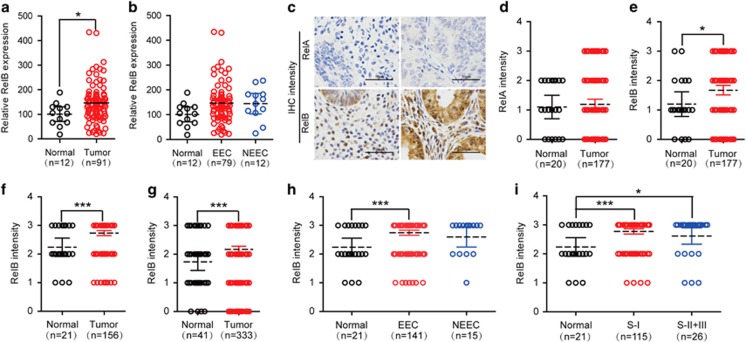
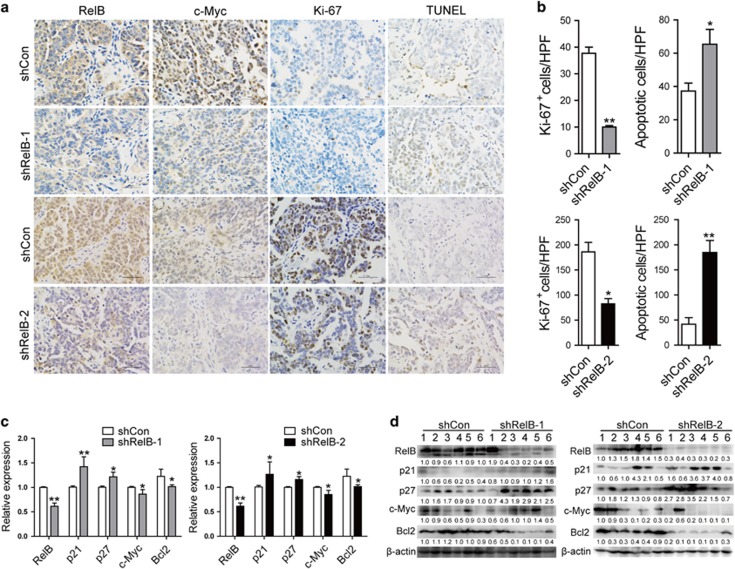
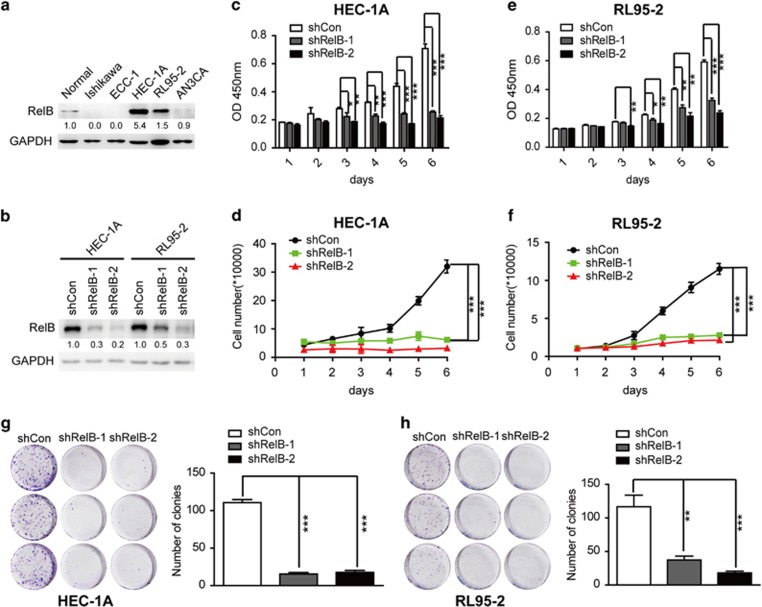
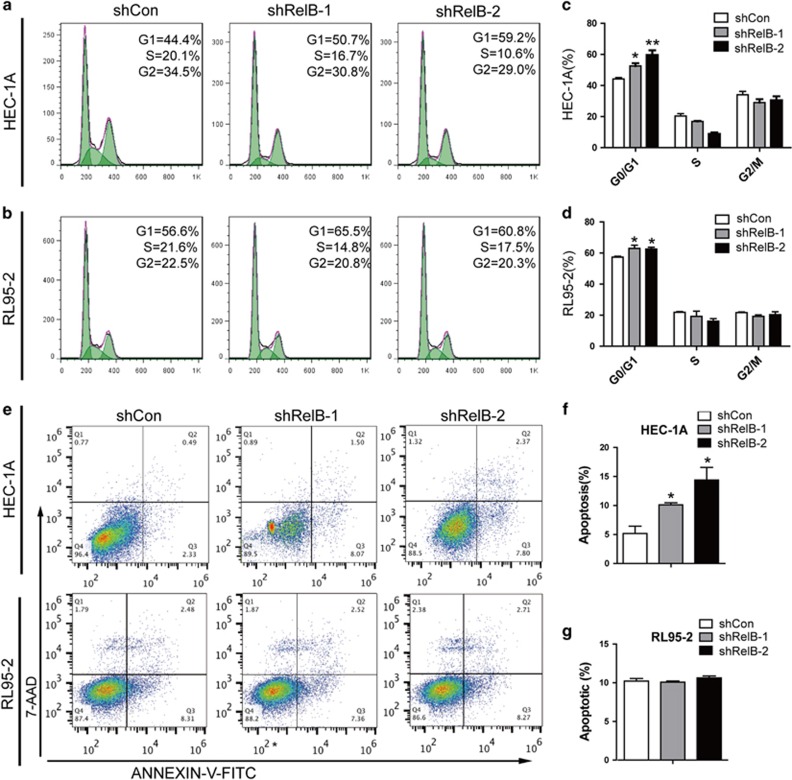
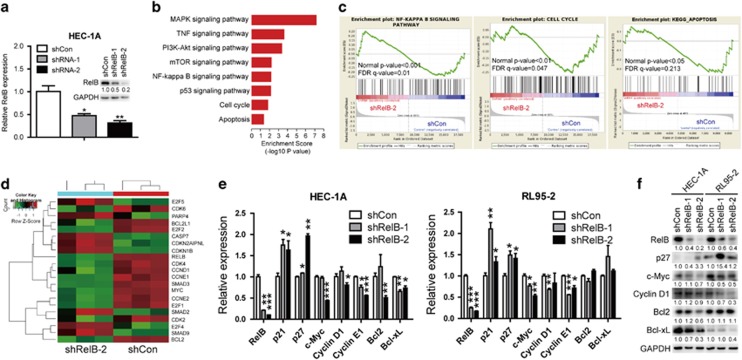
Dysfunction of nuclear factor-κB (NF-κB) signaling has been causally associated with numerous human malignancies. Although the NF-κB family of genes has been implicated in endometrial carcinogenesis, information regarding the involvement of central regulators of NF-κB signaling in human endometrial cancer (EC) is limited. Here, we investigated the specific roles of canonical and noncanonical NF-κB signaling in endometrial tumorigenesis. We found that NF-κB RelB protein, but not RelA, displayed high expression in EC samples and cell lines, with predominant elevation in endometrioid adenocarcinoma (EEC). Moreover, tumor cell-intrinsic RelB was responsible for the abundant levels of c-Myc, cyclin D1, Bcl-2 and Bcl-xL, which are key regulators of cell cycle transition, apoptosis and proliferation in EEC. In contrast, p27 expression was enhanced by RelB depletion. Thus, increased RelB in human EC is associated with enhanced EEC cell growth, leading to endometrial cell tumorigenicity. Our results reveal that regulatory RelB in noncanonical NF-κB signaling may serve as a therapeutic target to block EC initiation.
核因子-κB(NF-κB)信号功能障碍与多种人类恶性肿瘤存在因果关联。尽管NF-κB基因家族与子宫内膜癌发生有关,但关于NF-κB信号核心调节因子在人类子宫内膜癌(EC)中的作用信息有限。在此,我们研究了经典和非经典NF-κB信号在子宫内膜肿瘤发生中的具体作用。我们发现,NF-κB的RelB蛋白而非RelA在EC样本和细胞系中高表达,在子宫内膜样腺癌(EEC)中表达显著升高。此外,肿瘤细胞内源性RelB导致了c-Myc、细胞周期蛋白D1、Bcl-2和Bcl-xL的高水平表达,这些是EEC中细胞周期转换、凋亡和增殖的关键调节因子。相反,RelB缺失会增强p27表达。因此,人类EC中RelB增加与EEC细胞生长增强相关,导致子宫内膜细胞致瘤性。我们的结果表明,非经典NF-κB信号中的调节性RelB可能作为阻断EC起始的治疗靶点。