Thompson Melanie, Heath Sonya L, Sweeton Bentley, Williams Kathy, Cunningham Pamela, Keele Brandon F, Sen Sharon, Palmer Brent E, Chomont Nicolas, Xu Yongxian, Basu Rahul, Hellerstein Michael S, Kwa Suefen, Robinson Harriet L
AIDS Research Consortium of Atlanta, Atlanta, Georgia, United States of America.
Department of Medicine, University of Alabama at Birmingham, Birmingham, Alabama, United States of America.
PLoS One. 2016 Oct 6;11(10):e0163164. doi: 10.1371/journal.pone.0163164. eCollection 2016.
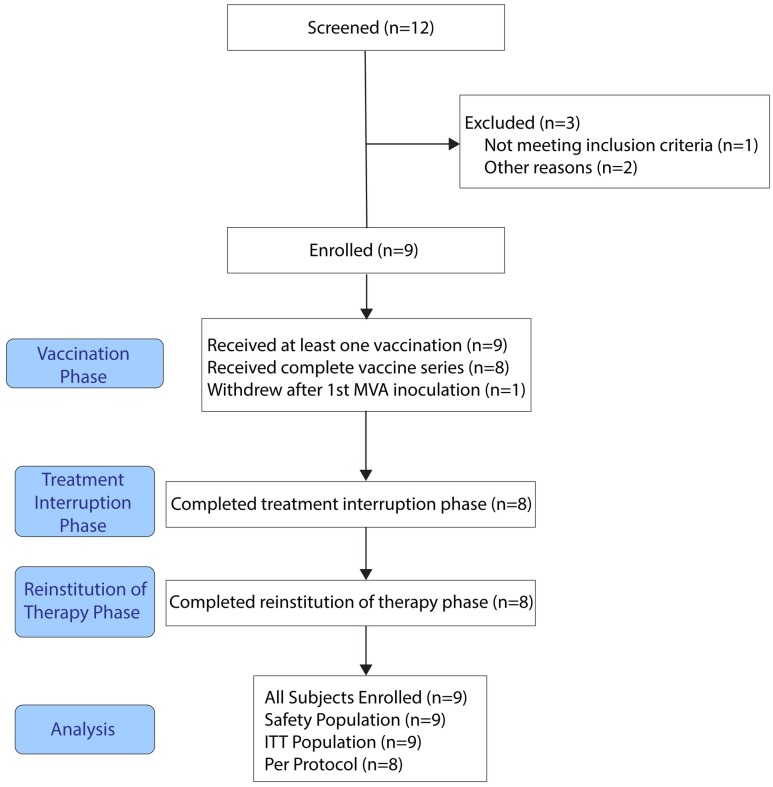
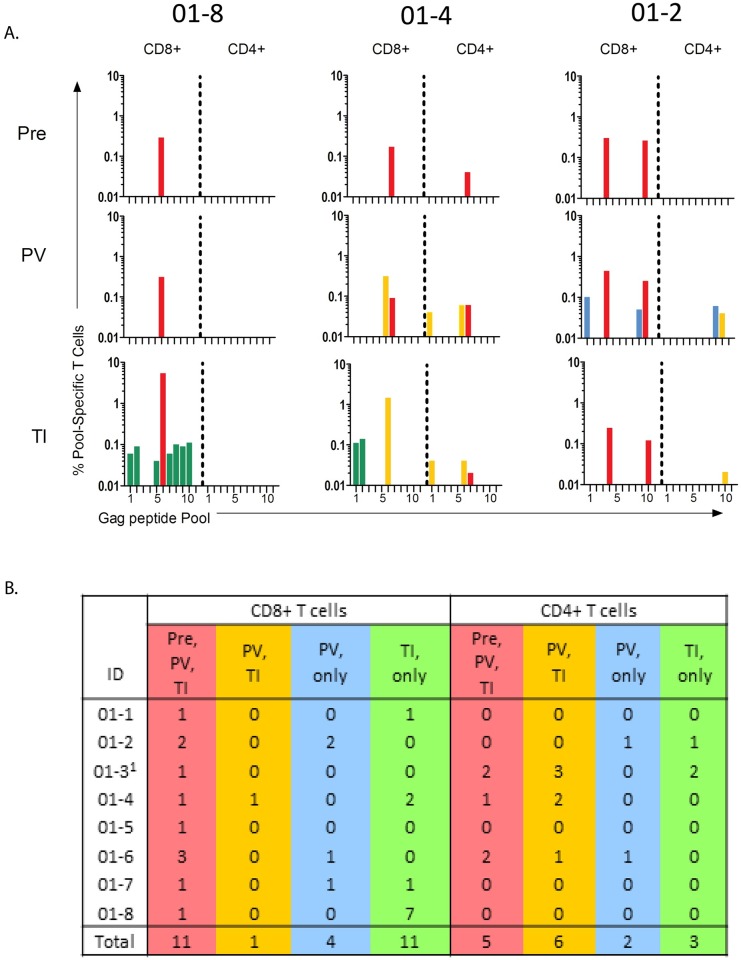
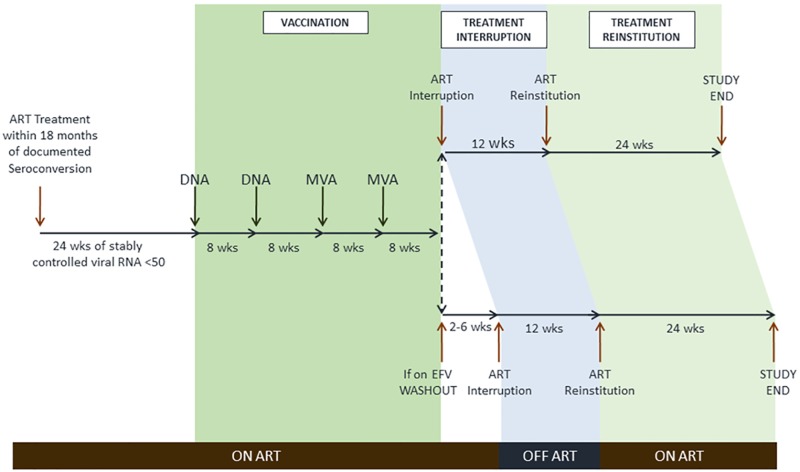
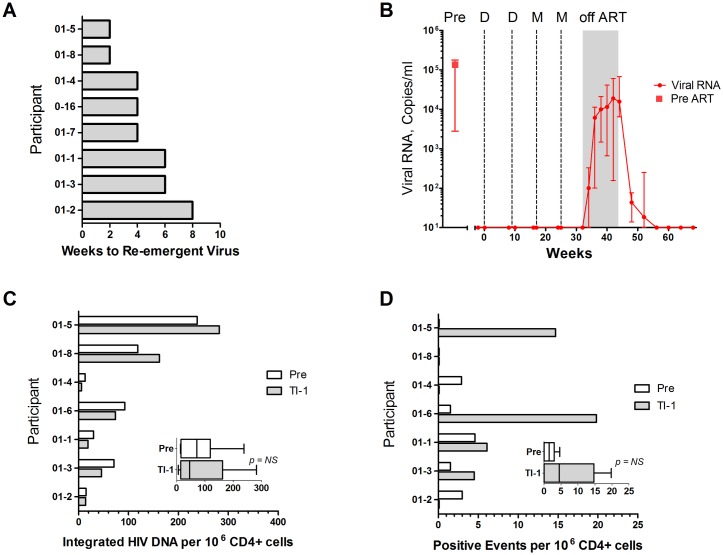
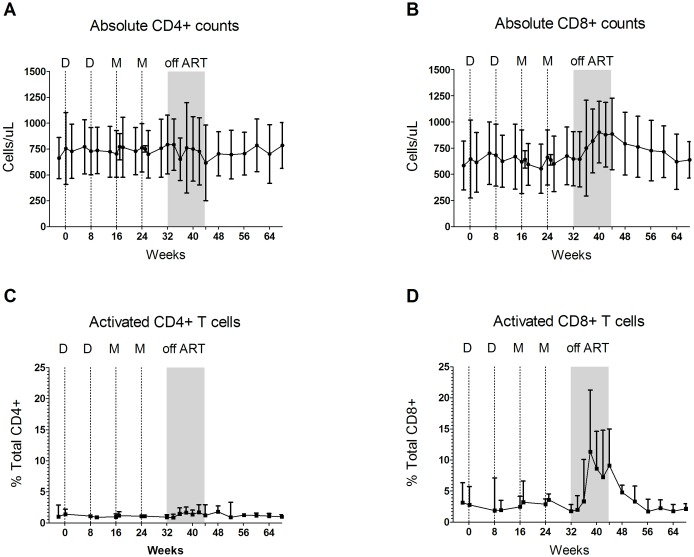
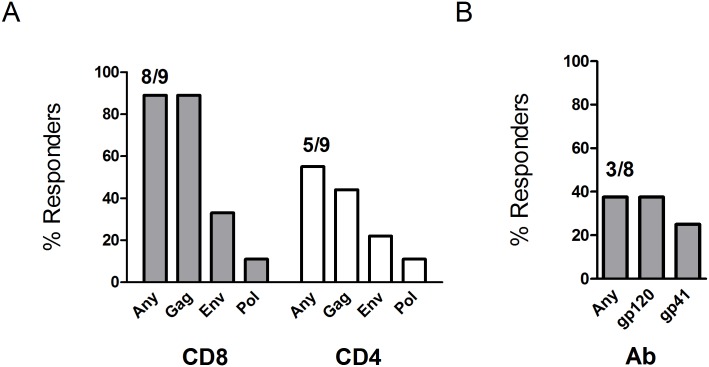
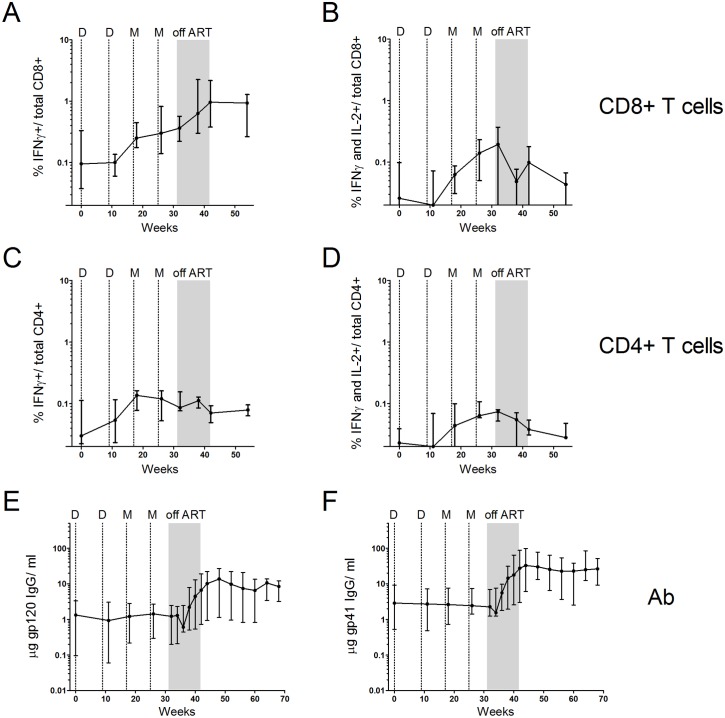
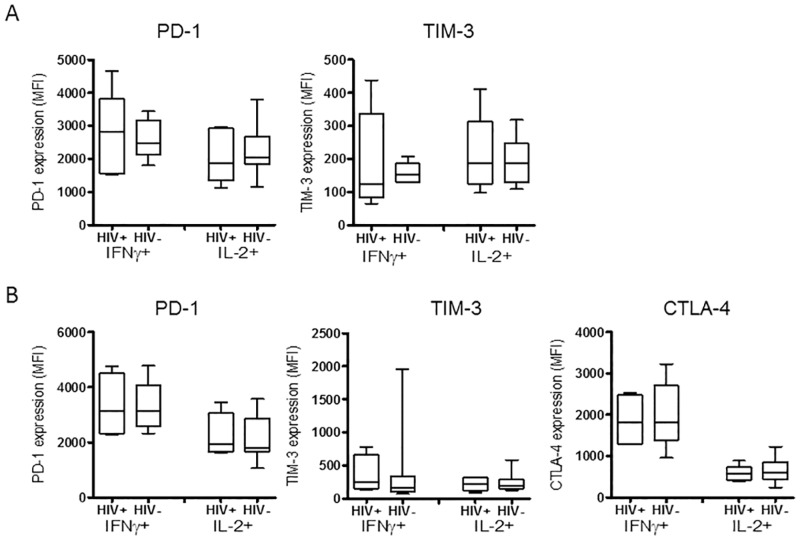
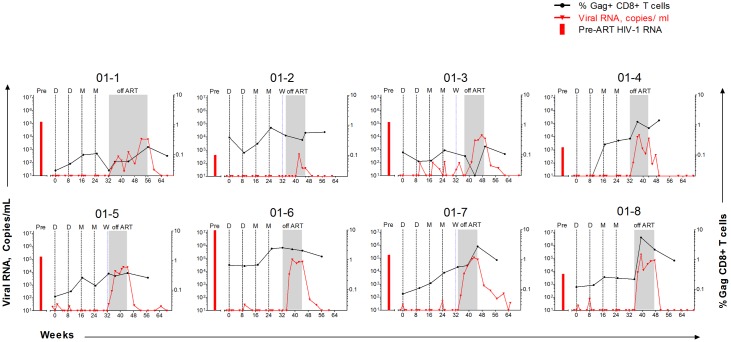
GV-TH-01, a Phase 1 open-label trial of a DNA prime—Modified Vaccinia Ankara (MVA) boost vaccine (GOVX-B11), was undertaken in HIV infected participants on antiretroviral treatment (ART) to evaluate safety and vaccine-elicited T cell responses, and explore the ability of elicited CD8+ T cells to control viral rebound during analytical treatment interruption (TI). Nine men who began antiretroviral therapy (ART) within 18 months of seroconversion and had sustained plasma HIV-1 RNA <50 copies/mL for at least 6 months were enrolled. Median age was 38 years, median pre-ART HIV-1 RNA was 140,000 copies/ml and mean baseline CD4 count was 755/μl. Two DNA, followed by 2 MVA, inoculations were given 8 weeks apart. Eight subjects completed all vaccinations and TI. Clinical and laboratory adverse events were generally mild, with no serious or grade 4 events. Only reactogenicity events were considered related to study drug. No treatment emergent viral resistance was seen. The vaccinations did not reduce viral reservoirs and virus re-emerged in all participants during TI, with a median time to re-emergence of 4 weeks. Eight of 9 participants had CD8+ T cells that could be stimulated by vaccine-matched Gag peptides prior to vaccination. Vaccinations boosted these responses as well as eliciting previously undetected CD8+ responses. Elicited T cells did not display signs of exhaustion. During TI, temporal patterns of viral re-emergence and Gag-specific CD8+ T cell expansion suggested that vaccine-specific CD8+ T cells had been stimulated by re-emergent virus in only 2 of 8 participants. In these 2, transient decreases in viremia were associated with Gag selection in known CD8+ T cell epitopes. We hypothesize that escape mutations, already archived in the viral reservoir, plus a poor ability of CD8+ T cells to traffic to and control virus at sites of re-emergence, limited the therapeutic efficacy of the DNA/MVA vaccine.
clinicaltrials.gov NCT01378156.
GV-TH-01是一项1期开放标签试验,使用DNA初免—改良安卡拉痘苗病毒(MVA)加强疫苗(GOVX-B11),在接受抗逆转录病毒治疗(ART)的HIV感染者中进行,以评估安全性和疫苗诱导的T细胞反应,并探索诱导的CD8+ T细胞在分析性治疗中断(TI)期间控制病毒反弹的能力。招募了9名在血清转化后18个月内开始抗逆转录病毒治疗(ART)且血浆HIV-1 RNA持续<50拷贝/mL至少6个月的男性。中位年龄为38岁,ART前HIV-1 RNA中位数为140,000拷贝/ml,基线CD4计数平均值为755/μl。间隔8周进行两次DNA接种,随后进行两次MVA接种。8名受试者完成了所有疫苗接种和TI。临床和实验室不良事件一般较轻,无严重或4级事件。仅将反应原性事件视为与研究药物有关。未观察到治疗引起的病毒耐药性。疫苗接种并未减少病毒储存库,且在TI期间所有参与者的病毒均重新出现,重新出现的中位时间为4周。9名参与者中有8名在接种疫苗前其CD8+ T细胞可被疫苗匹配的Gag肽刺激。疫苗接种增强了这些反应,并引发了先前未检测到的CD8+反应。诱导的T细胞未显示出耗竭迹象。在TI期间,病毒重新出现和Gag特异性CD8+ T细胞扩增的时间模式表明,在8名参与者中只有2名的疫苗特异性CD8+ T细胞被重新出现的病毒刺激。在这2名参与者中,病毒血症的短暂下降与已知CD8+ T细胞表位中的Gag选择有关。我们推测,已存档于病毒储存库中的逃逸突变,加上CD8+ T细胞向重新出现部位迁移并控制病毒的能力较差,限制了DNA/MVA疫苗的治疗效果。
clinicaltrials.gov NCT01378156。