Ruzza Paolo, Biondi Barbara, Marchiani Anna, Antolini Nicola, Calderan Andrea
Institute of Biomolecular Chemistry of CNR, Padova Unit, and Department of Chemical Sciences, University of Padova, via Marzolo 1, I-35131 Padova, Italy.
Pharmaceuticals (Basel). 2010 Mar 30;3(4):1045-1062. doi: 10.3390/ph3041045.
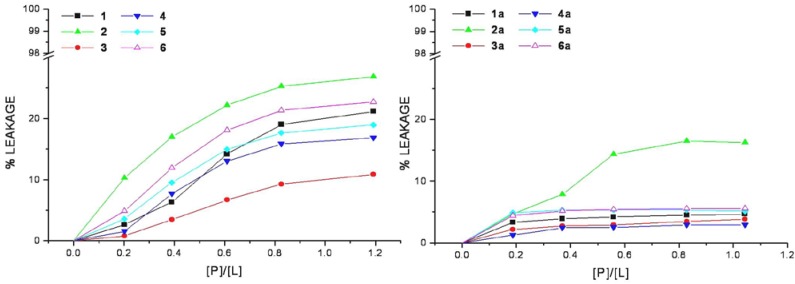
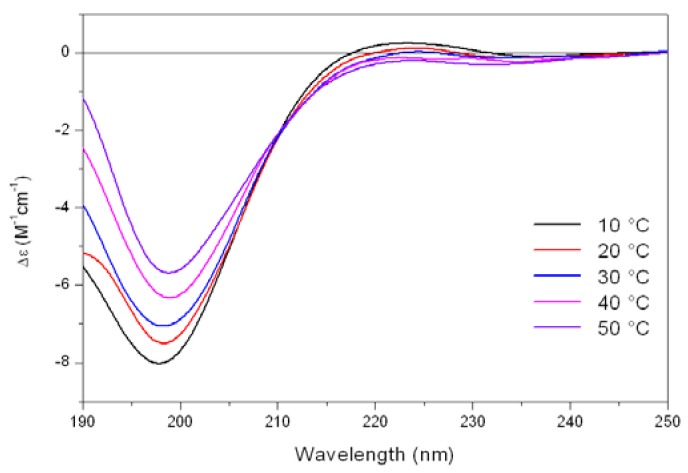
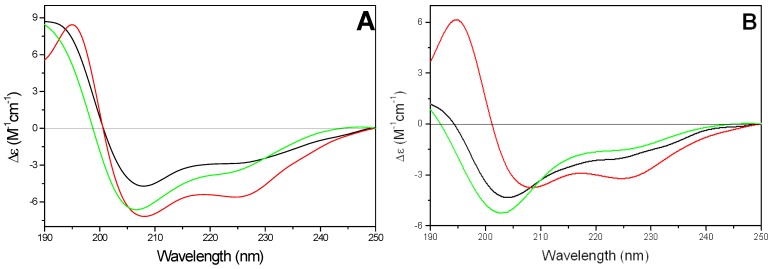
A growing number of natural and/or synthetic peptides with cell membrane penetrating capability have been identified and described in the past years. These molecules have been considered promising tools for delivering bioactive compounds into various cell types. Although the mechanism of uptake is still unclear, it is reasonable to assume that the relative contribute of each proposed mechanism could differ for the same peptide, depending on experimental protocol and cargo molecule composition. In this work we try to connect the capability to interact with model lipid membrane and structural and chemical characteristics of CPPs in order to obtain a biophysical classification that predicts the behavior of CPP-cargo molecules in cell systems. Indeed, the binding with cell membrane is one of the primary step in the interaction of CPPs with cells, and consequently the studies on model membrane could become important for understanding peptide-membrane interaction on a molecular level, explaining how CPPs may translocate a membrane without destroying it and how this interactions come into play in shuttling CPPs via different routes with different efficiency. We analyzed by CD and fluorescence spectroscopies the binding properties of six different CPPs (kFGF, Nle-Antp and Tat derived peptides, and oligoarginine peptides containing 6, 8 or 10 residues) in absence or presence of the same cargo peptide (the 392-401pTyr fragment of HS1 protein). The phospholipid binding properties were correlated to the conformational and chemical characteristics of peptides, as well as to the cell penetrating properties of the CPP-cargo conjugates. Results show that even if certain physico-chemical properties (conformation, positive charge) govern CPP capability to interact with the model membrane, these cannot fully explain cell-permeability properties.
在过去几年中,越来越多具有细胞膜穿透能力的天然和/或合成肽被发现并得以描述。这些分子被视为将生物活性化合物递送至各种细胞类型的有前景的工具。尽管摄取机制仍不明确,但可以合理推测,对于同一肽而言,每种提出的机制的相对贡献可能因实验方案和货物分子组成而异。在这项工作中,我们试图将与模型脂质膜相互作用的能力与细胞穿透肽(CPPs)的结构和化学特征联系起来,以获得一种生物物理分类,从而预测CPP-货物分子在细胞系统中的行为。事实上,与细胞膜的结合是CPPs与细胞相互作用的首要步骤之一,因此对模型膜的研究对于在分子水平上理解肽-膜相互作用、解释CPPs如何在不破坏膜的情况下穿过膜以及这种相互作用如何在以不同效率通过不同途径穿梭CPPs中发挥作用可能变得至关重要。我们通过圆二色光谱和荧光光谱分析了六种不同的CPPs(kFGF、Nle-Antp和Tat衍生肽,以及含有6、8或10个残基的寡聚精氨酸肽)在不存在或存在相同货物肽(HS1蛋白的392-401pTyr片段)的情况下的结合特性。磷脂结合特性与肽的构象和化学特征以及CPP-货物缀合物的细胞穿透特性相关。结果表明,即使某些物理化学性质(构象、正电荷)决定了CPPs与模型膜相互作用的能力,但这些性质并不能完全解释细胞通透性。