Wang Shan, He Meifang, Li Linmei, Liang Zhihua, Zou Zehong, Tao Ailin
The State Key Clinical Specialty in Allergy, the Second Affiliated Hospital of Guangzhou Medical University, Guangzhou, China.; Guangdong Provincial Key Laboratory of Allergy & Clinical Immunology, Guangzhou Medical University, Guangzhou, China.; The State Key Laboratory of Respiratory Disease, Guangzhou Medical University, Guangzhou, China.
Department of Gastroenterology, The First Affiliated Hospital, Sun Yat-Sen University, Guangzhou, China.
J Breast Cancer. 2016 Sep;19(3):231-241. doi: 10.4048/jbc.2016.19.3.231. Epub 2016 Sep 23.
Cell-in-cell structures are created by one living cell entering another homotypic or heterotypic living cell, which usually leads to the death of the internalized cell, specifically through caspase-dependent cell death (emperitosis) or lysosome-dependent cell death (entosis). Although entosis has attracted great attention, its occurrence is controversial, because one cell line used in its study (MCF-7) is deficient in caspase-3.
We investigated this issue using MCF-7 and A431 cell lines, which often display cell-in-cell invasion, and have different levels of caspase-3 expression. Cell-in-cell death morphology, microstructures, and signaling pathways were compared in the two cell lines.
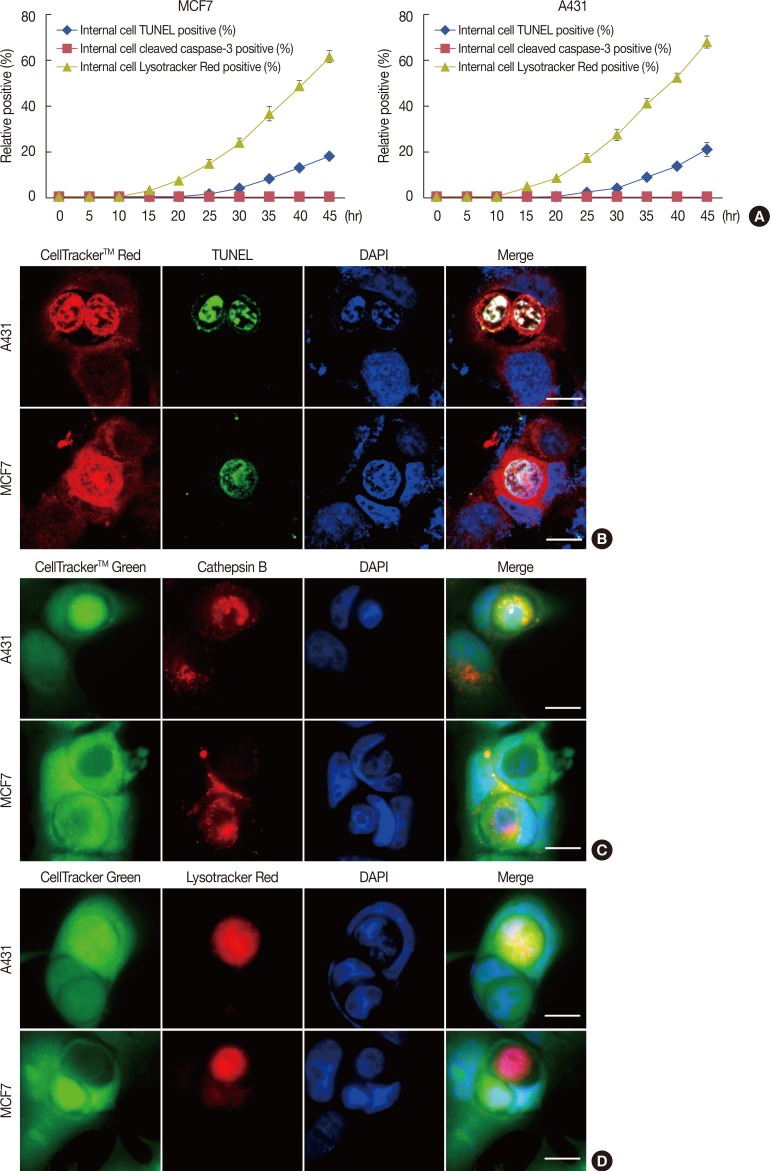
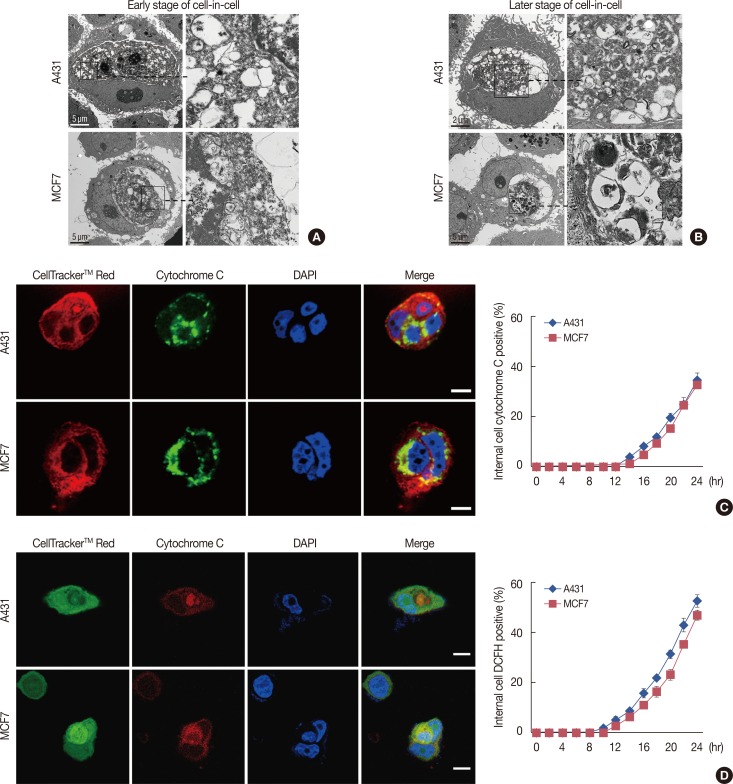
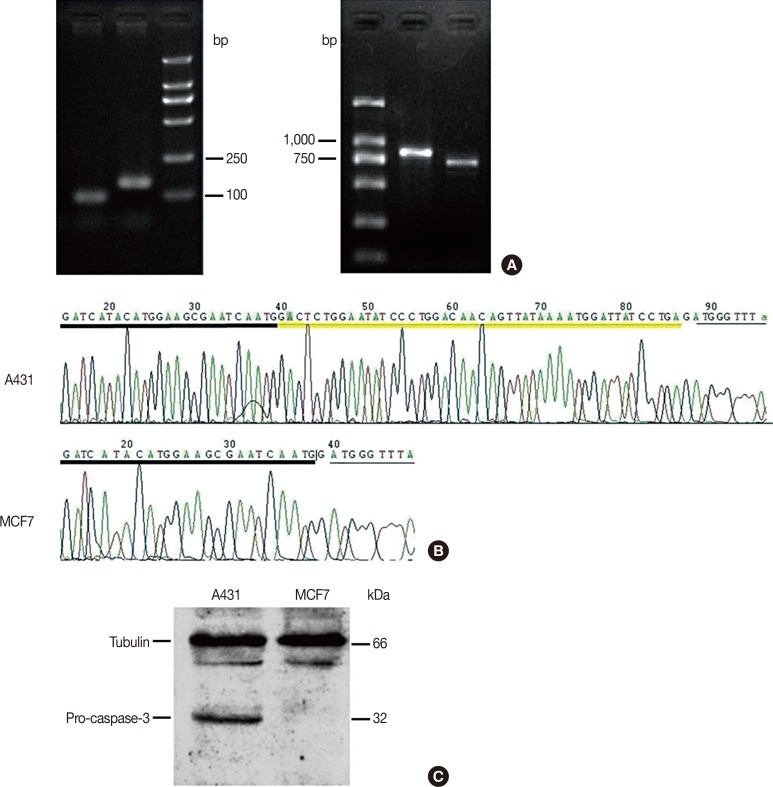
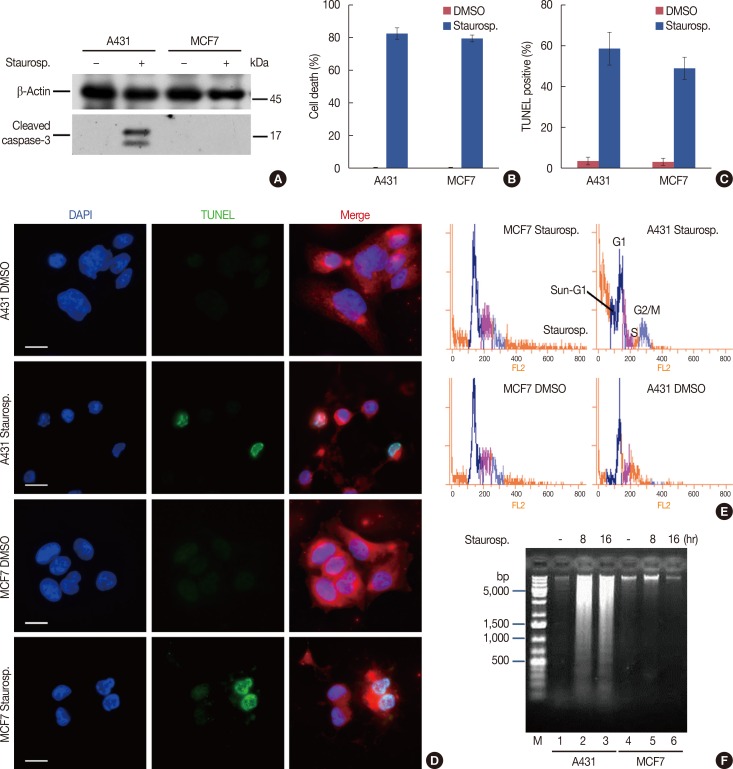
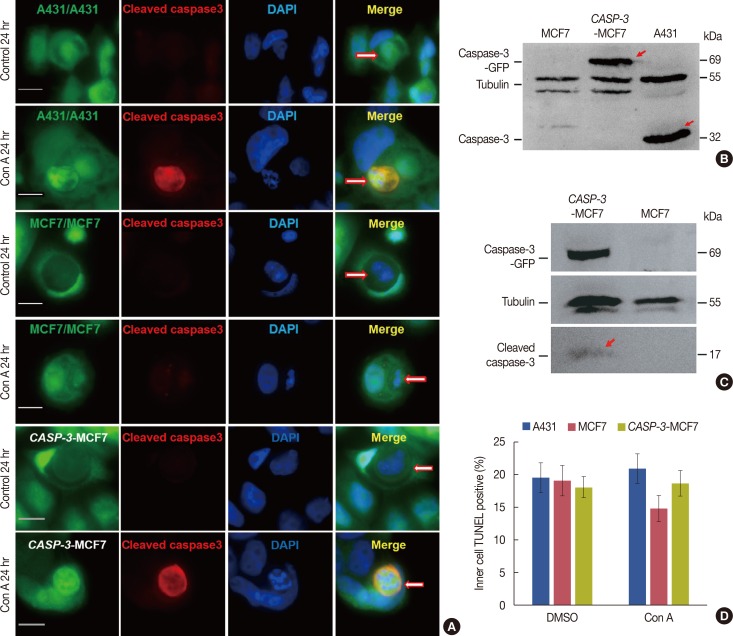
Our results confirmed that MCF-7 cells are caspase-3 deficient with a partial deletion in the gene. These cells underwent cell death that lacked typical apoptotic properties after staurosporine treatment, whereas caspase-3-sufficient A431 cells displayed typical apoptosis. The presence of caspase-3 was related neither to the lysosome-dependent nor to the caspase-dependent cell-in-cell death pathway. However, the existence of caspase-3 was associated with a switch from lysosome-dependent cell-in-cell death to the apoptotic cell-in-cell death pathway during entosis. Moreover, cellular hypoxia, mitochondrial swelling, release of cytochrome C, and autophagy were observed in internalized cells during entosis.
The occurrence of caspase-independent entosis is not a cell-specific process. In addition, entosis actually represents a cellular self-repair system, functioning through autophagy, to degrade damaged mitochondria resulting from cellular hypoxia in cell-in-cell structures. However, sustained autophagy-associated signal activation, without reduction in cellular hypoxia, eventually leads to lysosome-dependent intracellular cell death.
细胞内细胞结构是由一个活细胞进入另一个同型或异型活细胞形成的,这通常会导致内化细胞死亡,具体通过半胱天冬酶依赖性细胞死亡(emperitosis)或溶酶体依赖性细胞死亡(entosis)。尽管entosis已引起广泛关注,但其发生仍存在争议,因为其研究中使用的一种细胞系(MCF-7)缺乏半胱天冬酶-3。
我们使用经常表现出细胞内细胞侵袭且半胱天冬酶-3表达水平不同的MCF-7和A431细胞系来研究这个问题。比较了这两种细胞系中的细胞内细胞死亡形态、微观结构和信号通路。
我们的结果证实MCF-7细胞缺乏半胱天冬酶-3,其基因存在部分缺失。这些细胞在星形孢菌素处理后经历了缺乏典型凋亡特性的细胞死亡,而半胱天冬酶-3充足的A431细胞表现出典型的凋亡。半胱天冬酶-3的存在既与溶酶体依赖性细胞内细胞死亡途径无关,也与半胱天冬酶依赖性细胞内细胞死亡途径无关。然而,在entosis过程中,半胱天冬酶-3的存在与从溶酶体依赖性细胞内细胞死亡向凋亡性细胞内细胞死亡途径的转变有关。此外,在entosis过程中,在内化细胞中观察到细胞缺氧、线粒体肿胀、细胞色素C释放和自噬。
非半胱天冬酶依赖性entosis的发生不是细胞特异性过程。此外,entosis实际上代表了一种细胞自我修复系统,通过自噬发挥作用,以降解细胞内细胞结构中由细胞缺氧导致的受损线粒体。然而,持续的自噬相关信号激活,而细胞缺氧没有减轻,最终导致溶酶体依赖性细胞内细胞死亡。