Baliyan Vinit, Das Chandan J, Sharma Raju, Gupta Arun Kumar
Vinit Baliyan, Chandan J Das, Raju Sharma, Arun Kumar Gupta, Department of Radiology, All India Institute of Medical Sciences, New Delhi 110029, India.
World J Radiol. 2016 Sep 28;8(9):785-798. doi: 10.4329/wjr.v8.i9.785.
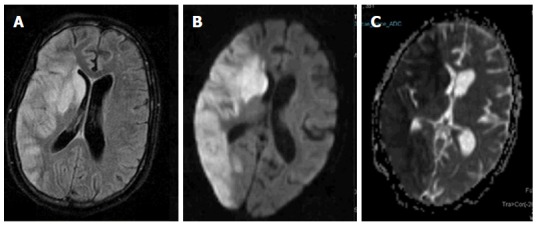
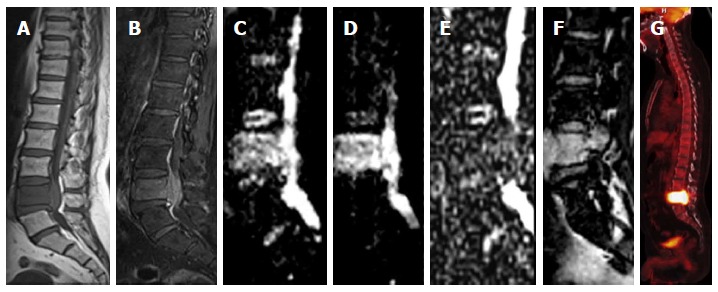
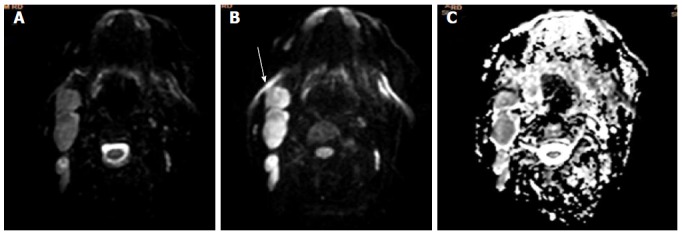
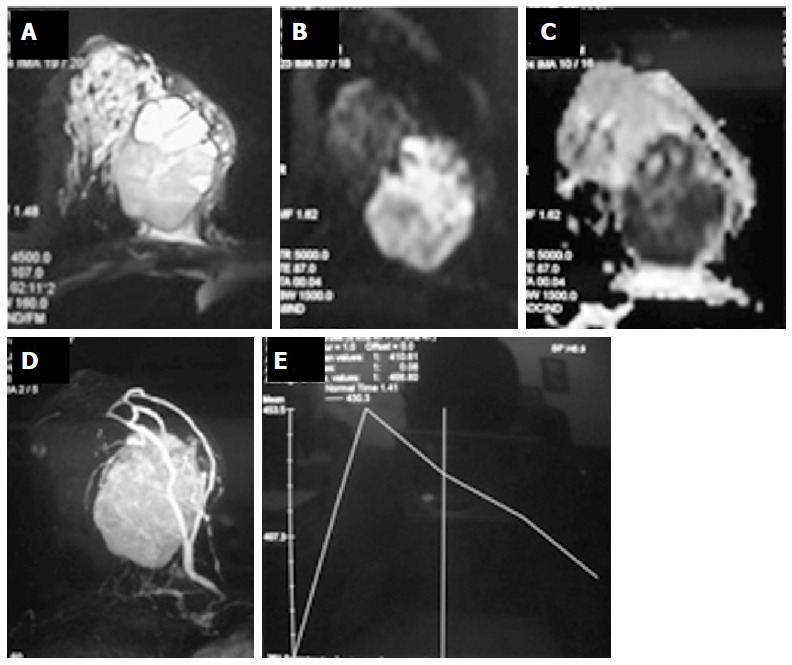
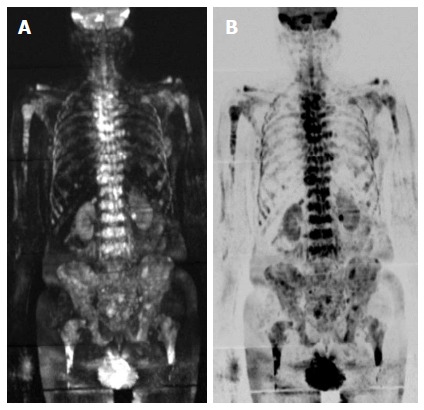
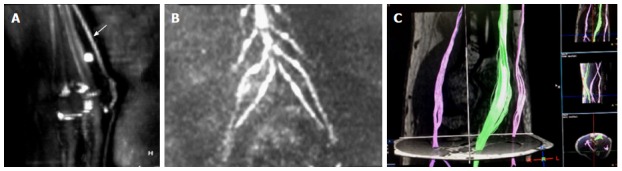
Diffusion weighted imaging (DWI) is a method of signal contrast generation based on the differences in Brownian motion. DWI is a method to evaluate the molecular function and micro-architecture of the human body. DWI signal contrast can be quantified by apparent diffusion coefficient maps and it acts as a tool for treatment response evaluation and assessment of disease progression. Ability to detect and quantify the anisotropy of diffusion leads to a new paradigm called diffusion tensor imaging (DTI). DTI is a tool for assessment of the organs with highly organised fibre structure. DWI forms an integral part of modern state-of-art magnetic resonance imaging and is indispensable in neuroimaging and oncology. DWI is a field that has been undergoing rapid technical evolution and its applications are increasing every day. This review article provides insights in to the evolution of DWI as a new imaging paradigm and provides a summary of current role of DWI in various disease processes.
扩散加权成像(DWI)是一种基于布朗运动差异产生信号对比的方法。DWI是一种评估人体分子功能和微观结构的方法。DWI信号对比可通过表观扩散系数图进行量化,它是用于评估治疗反应和疾病进展的工具。检测和量化扩散各向异性的能力导致了一种称为扩散张量成像(DTI)的新范式。DTI是一种用于评估具有高度有组织纤维结构器官的工具。DWI是现代先进磁共振成像不可或缺的一部分,在神经成像和肿瘤学中必不可少。DWI是一个技术正在迅速发展的领域,其应用日益增多。这篇综述文章深入探讨了DWI作为一种新成像范式的发展历程,并总结了DWI在各种疾病过程中的当前作用。