Southard Sheryl, Kim Ju-Ryoung, Low SiewHui, Tsika Richard W, Lepper Christoph
Department of Embryology, Carnegie Institution for Science, Baltimore, United States.
Department of Biochemistry, University of Missouri, Columbia, United States.
Elife. 2016 Oct 11;5:e15461. doi: 10.7554/eLife.15461.
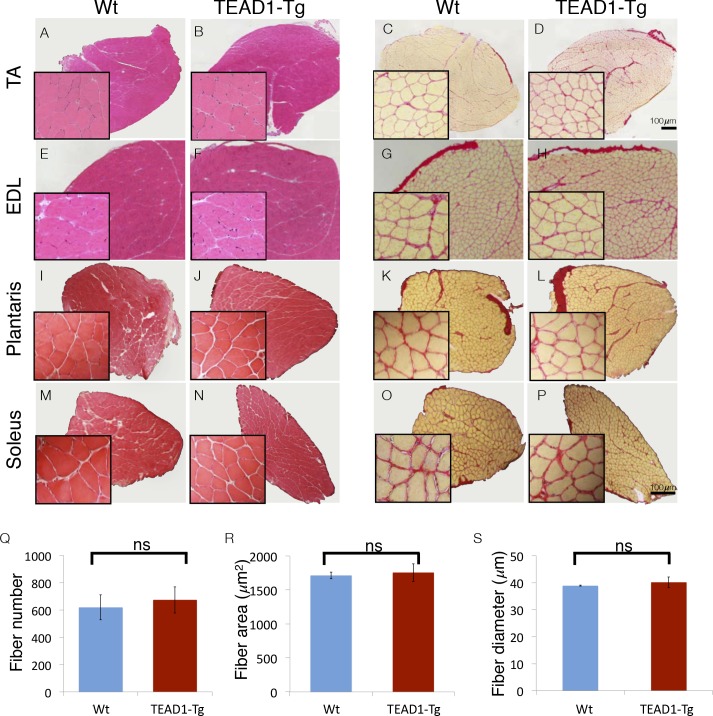
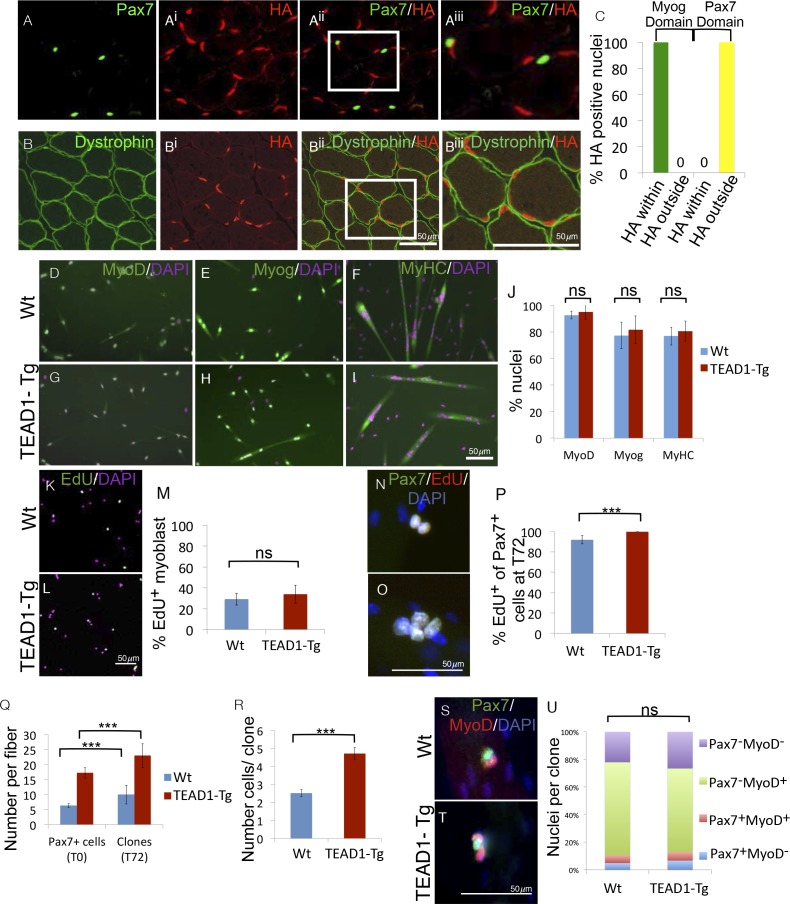
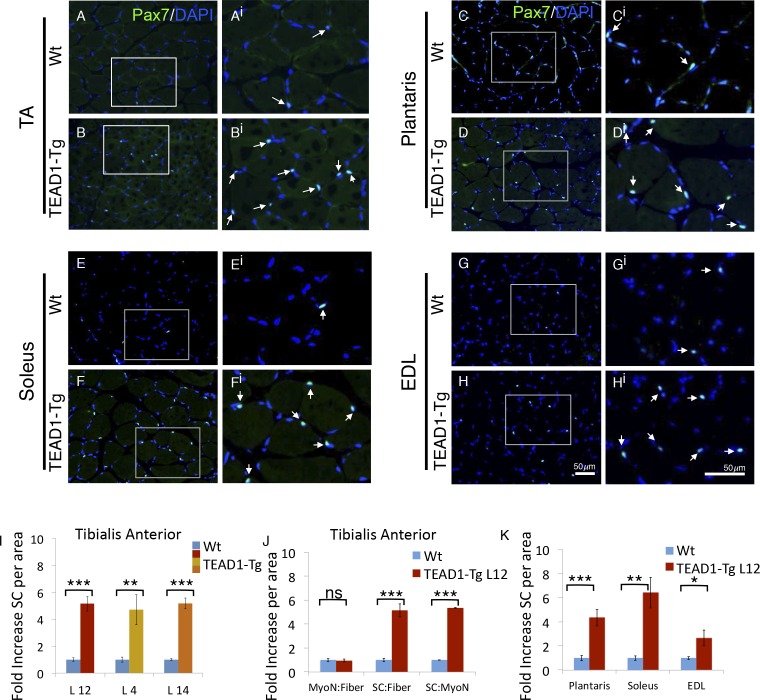
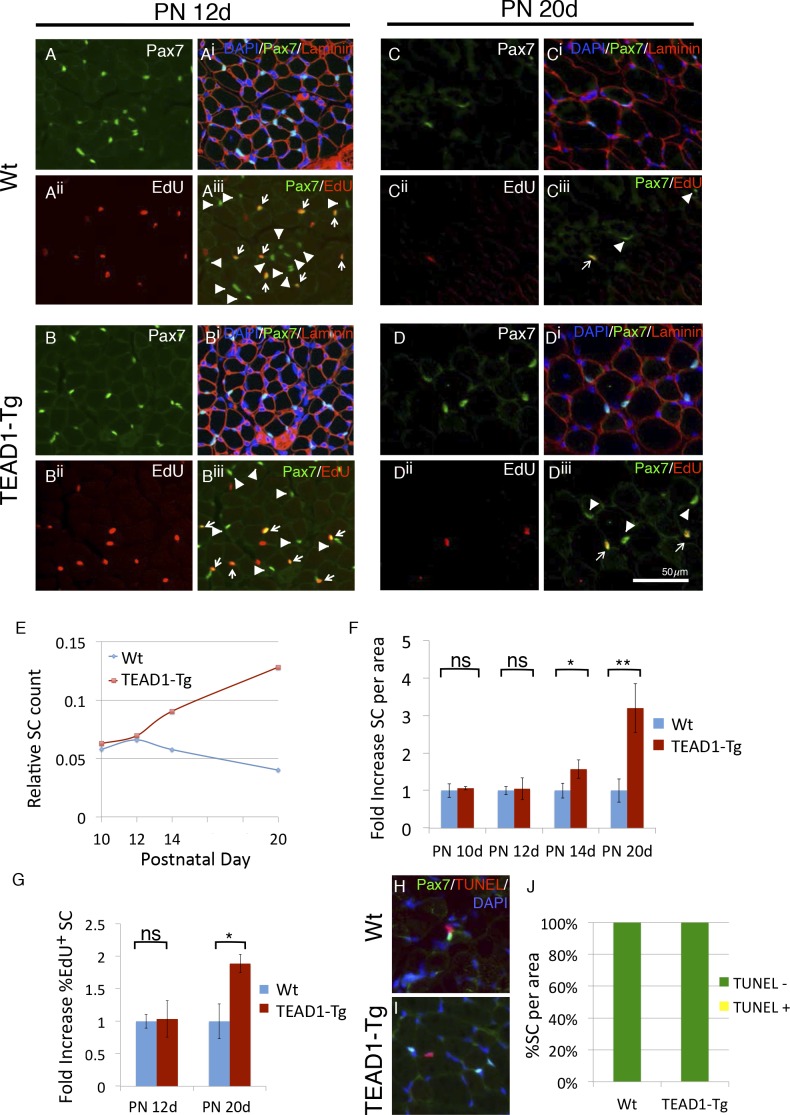
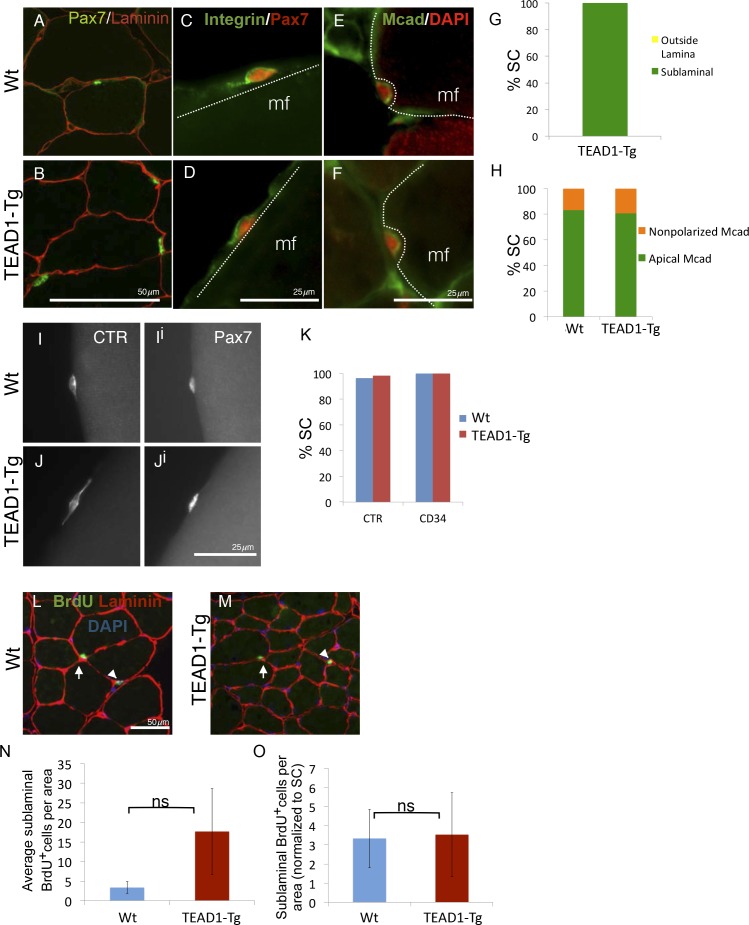
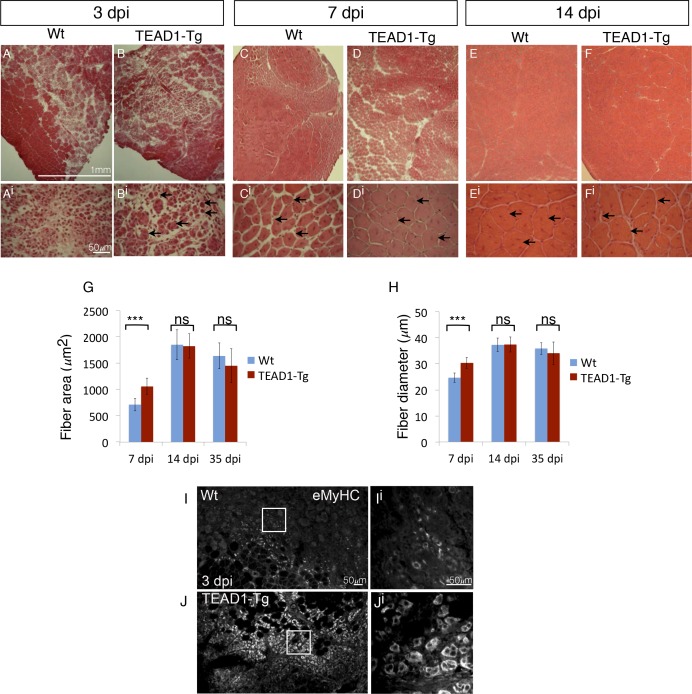
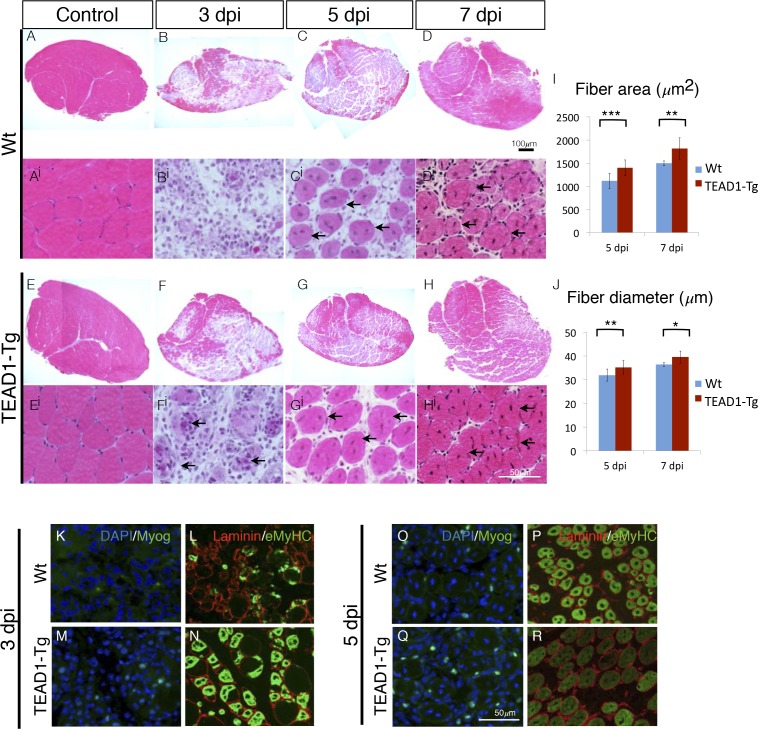
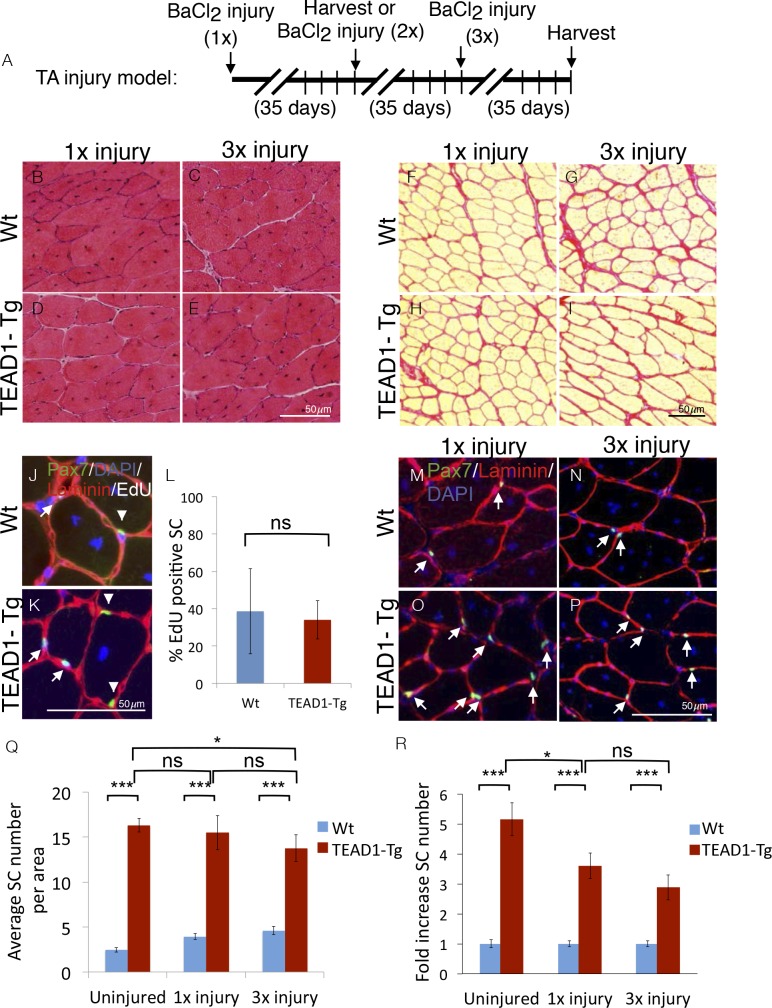
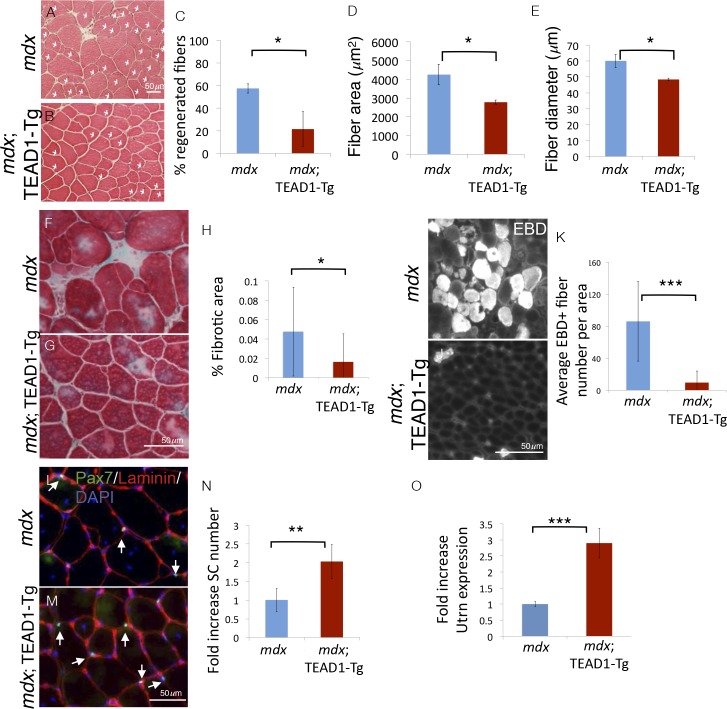
When unperturbed, somatic stem cells are poised to affect immediate tissue restoration upon trauma. Yet, little is known regarding the mechanistic basis controlling initial and homeostatic 'scaling' of stem cell pool sizes relative to their target tissues for effective regeneration. Here, we show that TEAD1-expressing skeletal muscle of transgenic mice features a dramatic hyperplasia of muscle stem cells (i.e. satellite cells, SCs) but surprisingly without affecting muscle tissue size. Super-numeral SCs attain a 'normal' quiescent state, accelerate regeneration, and maintain regenerative capacity over several injury-induced regeneration bouts. In dystrophic muscle, the TEAD1 transgene also ameliorated the pathology. We further demonstrate that hyperplastic SCs accumulate non-cell-autonomously via signal(s) from the TEAD1-expressing myofiber, suggesting that myofiber-specific TEAD1 overexpression activates a physiological signaling pathway(s) that determines initial and homeostatic SC pool size. We propose that TEAD1 and its downstream effectors are medically relevant targets for enhancing muscle regeneration and ameliorating muscle pathology.
在未受干扰时,体干细胞随时准备在创伤后实现即时组织修复。然而,对于控制干细胞库大小相对于其靶组织的初始和稳态“缩放”以实现有效再生的机制基础,我们知之甚少。在此,我们表明,转基因小鼠中表达TEAD1的骨骼肌具有肌肉干细胞(即卫星细胞,SCs)的显著增生,但令人惊讶的是,这并未影响肌肉组织大小。多余的SCs达到“正常”静止状态,加速再生,并在多次损伤诱导的再生周期中维持再生能力。在营养不良的肌肉中,TEAD1转基因也改善了病理状况。我们进一步证明,增生的SCs通过来自表达TEAD1的肌纤维的信号非细胞自主地积累,这表明肌纤维特异性TEAD1过表达激活了决定初始和稳态SCs库大小的生理信号通路。我们提出,TEAD1及其下游效应器是增强肌肉再生和改善肌肉病理状况的医学相关靶点。