• 文献检索
  • 文档翻译
  • 深度研究
  • 学术资讯
  • Suppr Zotero 插件Zotero 插件
  • 邀请有礼
  • 套餐&价格
  • 历史记录
应用&插件
Suppr Zotero 插件Zotero 插件浏览器插件Mac 客户端Windows 客户端微信小程序
定价
高级版会员购买积分包购买API积分包
服务
文献检索文档翻译深度研究API 文档MCP 服务
关于我们
关于 Suppr公司介绍联系我们用户协议隐私条款
关注我们

Suppr 超能文献

核心技术专利:CN118964589B侵权必究
粤ICP备2023148730 号-1Suppr @ 2026

文献检索

告别复杂PubMed语法,用中文像聊天一样搜索,搜遍4000万医学文献。AI智能推荐,让科研检索更轻松。

立即免费搜索

文件翻译

保留排版,准确专业,支持PDF/Word/PPT等文件格式,支持 12+语言互译。

免费翻译文档

深度研究

AI帮你快速写综述,25分钟生成高质量综述,智能提取关键信息,辅助科研写作。

立即免费体验

糖尿病通过硫氧还蛋白相互作用蛋白调节果糖吸收。

Diabetes regulates fructose absorption through thioredoxin-interacting protein.

作者信息

Dotimas James R, Lee Austin W, Schmider Angela B, Carroll Shannon H, Shah Anu, Bilen Julide, Elliott Kayla R, Myers Ronald B, Soberman Roy J, Yoshioka Jun, Lee Richard T

机构信息

Department of Stem Cell and Regenerative Biology, Harvard University, Harvard Stem Cell Institute, Cambridge, United States.

Department of Medicine, Brigham and Women's Hospital and Harvard Medical School, Cambridge, United States.

出版信息

Elife. 2016 Oct 11;5:e18313. doi: 10.7554/eLife.18313.

DOI:10.7554/eLife.18313
PMID:27725089
原文链接:https://pmc.ncbi.nlm.nih.gov/articles/PMC5059142/
Abstract

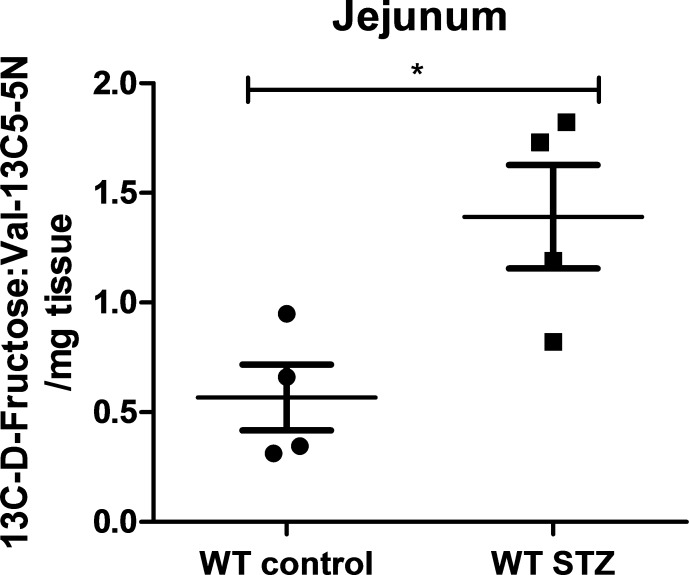
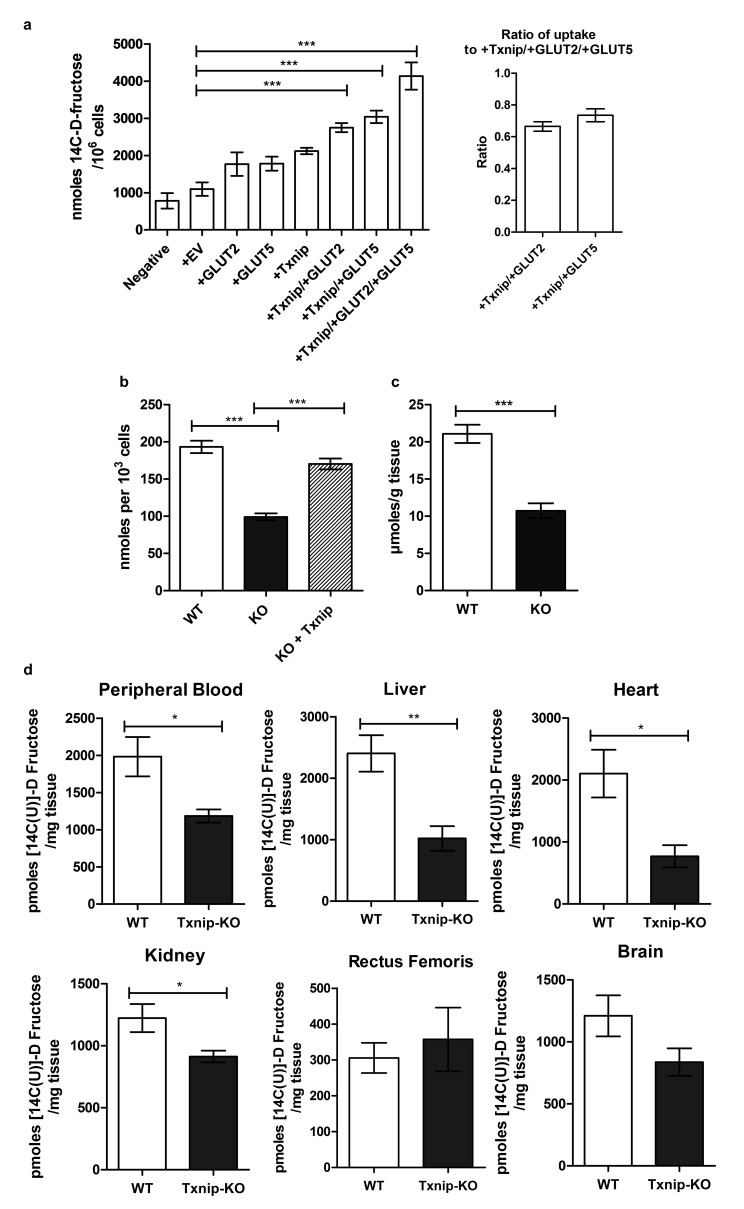
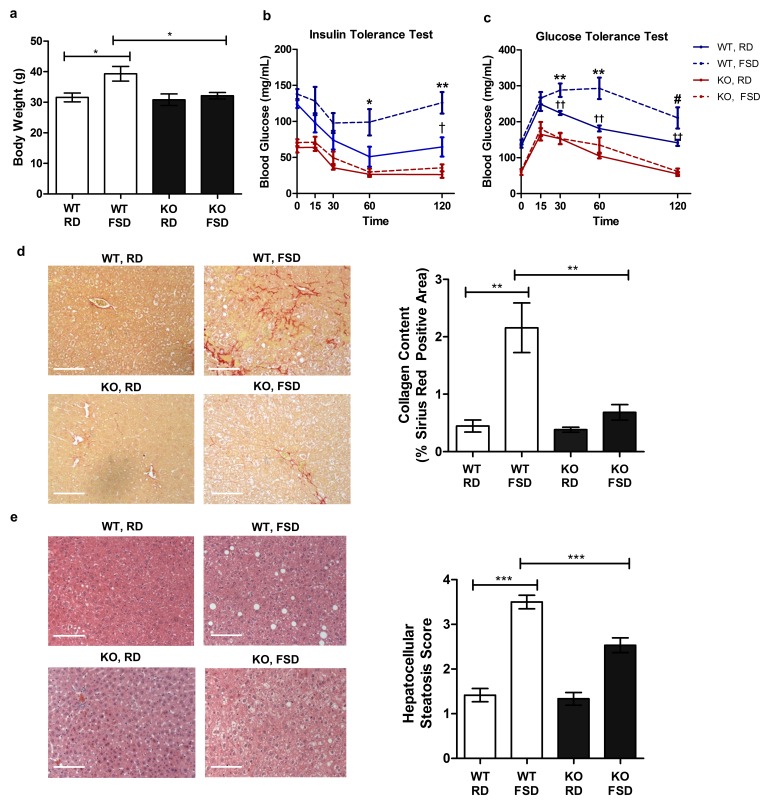
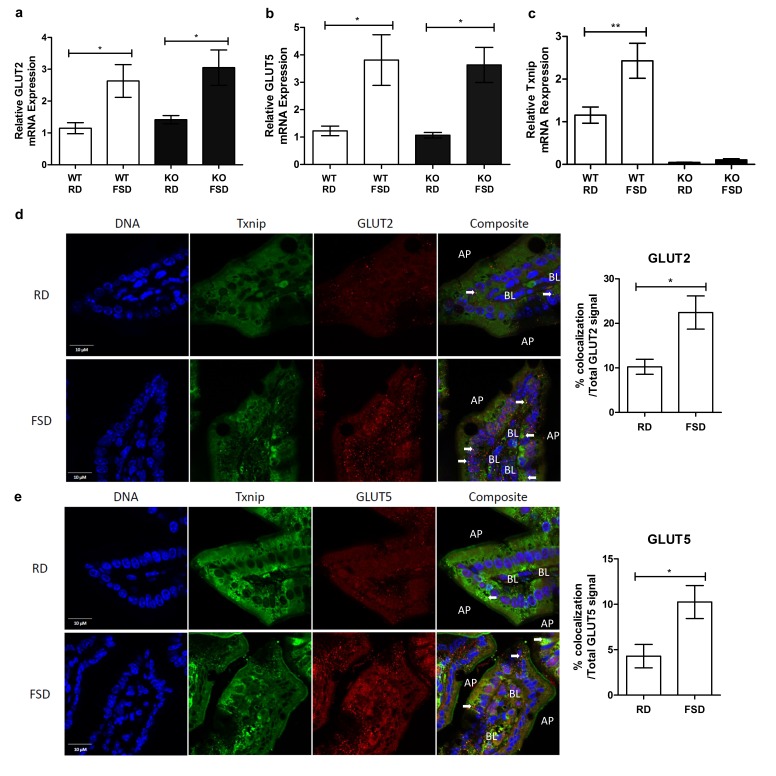
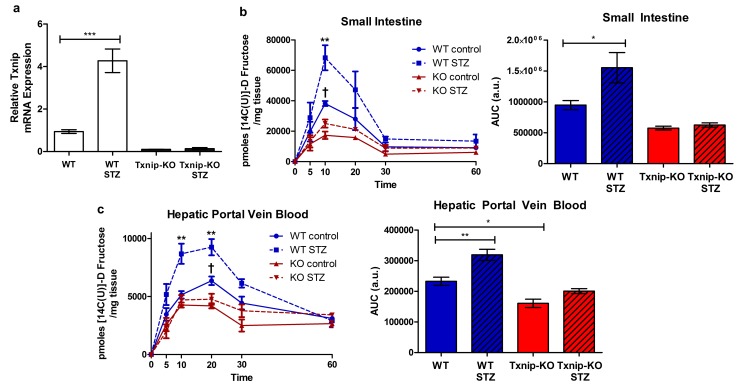
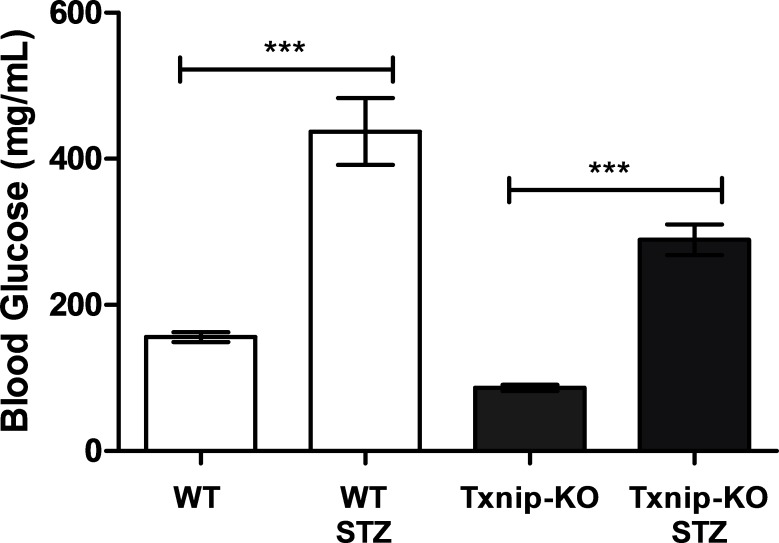
Metabolic studies suggest that the absorptive capacity of the small intestine for fructose is limited, though the molecular mechanisms controlling this process remain unknown. Here we demonstrate that thioredoxin-interacting protein (Txnip), which regulates glucose homeostasis in mammals, binds to fructose transporters and promotes fructose absorption by the small intestine. Deletion of in mice reduced fructose transport into the peripheral bloodstream and liver, as well as the severity of adverse metabolic outcomes resulting from long-term fructose consumption. We also demonstrate that fructose consumption induces expression of Txnip in the small intestine. Diabetic mice had increased expression of Txnip in the small intestine as well as enhanced fructose uptake and transport into the hepatic portal circulation. The deletion of in mice abolished the diabetes-induced increase in fructose absorption. Our results indicate that Txnip is a critical regulator of fructose metabolism and suggest that a diabetic state can promote fructose uptake.

摘要

代谢研究表明,尽管控制这一过程的分子机制尚不清楚,但小肠对果糖的吸收能力是有限的。在这里,我们证明了硫氧还蛋白相互作用蛋白(Txnip),它在哺乳动物中调节葡萄糖稳态,与果糖转运体结合并促进小肠对果糖的吸收。小鼠中Txnip的缺失减少了果糖向外周血流和肝脏的转运,以及长期食用果糖导致的不良代谢结果的严重程度。我们还证明,食用果糖会诱导小肠中Txnip的表达。糖尿病小鼠小肠中Txnip的表达增加,同时果糖摄取以及向肝门静脉循环的转运增强。小鼠中Txnip的缺失消除了糖尿病诱导的果糖吸收增加。我们的结果表明,Txnip是果糖代谢的关键调节因子,并表明糖尿病状态可促进果糖摄取。
https://cdn.ncbi.nlm.nih.gov/pmc/blobs/de02/5059142/ccc1b8d1c6d0/elife-18313-fig5-figsupp2.jpg
https://cdn.ncbi.nlm.nih.gov/pmc/blobs/de02/5059142/a01e61920861/elife-18313-fig1.jpg
https://cdn.ncbi.nlm.nih.gov/pmc/blobs/de02/5059142/e7897843c538/elife-18313-fig2.jpg
https://cdn.ncbi.nlm.nih.gov/pmc/blobs/de02/5059142/f300e123d50c/elife-18313-fig2-figsupp1.jpg
https://cdn.ncbi.nlm.nih.gov/pmc/blobs/de02/5059142/39f76363400b/elife-18313-fig2-figsupp2.jpg
https://cdn.ncbi.nlm.nih.gov/pmc/blobs/de02/5059142/bc0845e56539/elife-18313-fig3.jpg
https://cdn.ncbi.nlm.nih.gov/pmc/blobs/de02/5059142/012ebaed1486/elife-18313-fig4.jpg
https://cdn.ncbi.nlm.nih.gov/pmc/blobs/de02/5059142/10eca7adbe24/elife-18313-fig5.jpg
https://cdn.ncbi.nlm.nih.gov/pmc/blobs/de02/5059142/0005204d0e1b/elife-18313-fig5-figsupp1.jpg
https://cdn.ncbi.nlm.nih.gov/pmc/blobs/de02/5059142/ccc1b8d1c6d0/elife-18313-fig5-figsupp2.jpg
https://cdn.ncbi.nlm.nih.gov/pmc/blobs/de02/5059142/a01e61920861/elife-18313-fig1.jpg
https://cdn.ncbi.nlm.nih.gov/pmc/blobs/de02/5059142/e7897843c538/elife-18313-fig2.jpg
https://cdn.ncbi.nlm.nih.gov/pmc/blobs/de02/5059142/f300e123d50c/elife-18313-fig2-figsupp1.jpg
https://cdn.ncbi.nlm.nih.gov/pmc/blobs/de02/5059142/39f76363400b/elife-18313-fig2-figsupp2.jpg
https://cdn.ncbi.nlm.nih.gov/pmc/blobs/de02/5059142/bc0845e56539/elife-18313-fig3.jpg
https://cdn.ncbi.nlm.nih.gov/pmc/blobs/de02/5059142/012ebaed1486/elife-18313-fig4.jpg
https://cdn.ncbi.nlm.nih.gov/pmc/blobs/de02/5059142/10eca7adbe24/elife-18313-fig5.jpg
https://cdn.ncbi.nlm.nih.gov/pmc/blobs/de02/5059142/0005204d0e1b/elife-18313-fig5-figsupp1.jpg
https://cdn.ncbi.nlm.nih.gov/pmc/blobs/de02/5059142/ccc1b8d1c6d0/elife-18313-fig5-figsupp2.jpg

相似文献

1
Diabetes regulates fructose absorption through thioredoxin-interacting protein.糖尿病通过硫氧还蛋白相互作用蛋白调节果糖吸收。
Elife. 2016 Oct 11;5:e18313. doi: 10.7554/eLife.18313.
2
Thioredoxin-interacting protein (Txnip) is a critical regulator of hepatic glucose production.硫氧还蛋白相互作用蛋白(Txnip)是肝脏葡萄糖生成的关键调节因子。
J Biol Chem. 2008 Jan 25;283(4):2397-406. doi: 10.1074/jbc.M708169200. Epub 2007 Nov 12.
3
Deletion of thioredoxin-interacting protein improves cardiac inotropic reserve in the streptozotocin-induced diabetic heart.硫氧还蛋白相互作用蛋白的缺失改善链脲佐菌素诱导的糖尿病心脏的心脏变力性储备。
Am J Physiol Heart Circ Physiol. 2016 Jun 1;310(11):H1748-59. doi: 10.1152/ajpheart.00051.2016. Epub 2016 Apr 1.
4
Thioredoxin-interacting protein mediates hepatic lipogenesis and inflammation via PRMT1 and PGC-1α regulation in vitro and in vivo.硫氧还蛋白相互作用蛋白通过 PRMT1 和 PGC-1α 的调控在体外和体内介导肝脂肪生成和炎症。
J Hepatol. 2014 Nov;61(5):1151-7. doi: 10.1016/j.jhep.2014.06.032. Epub 2014 Jul 6.
5
Impaired cardiac anti-oxidant activity in diabetes: human and correlative experimental studies.糖尿病患者心脏抗氧化活性受损:人体及相关实验研究
Acta Diabetol. 2014 Oct;51(5):771-82. doi: 10.1007/s00592-014-0608-9. Epub 2014 Jun 13.
6
Thioredoxin-Interacting Protein Deficiency Protects against Diabetic Nephropathy.硫氧还蛋白相互作用蛋白缺乏可预防糖尿病肾病。
J Am Soc Nephrol. 2015 Dec;26(12):2963-77. doi: 10.1681/ASN.2014050528. Epub 2015 Apr 8.
7
Keeping tabs on fructose.监测果糖。
Elife. 2016 Oct 11;5:e21263. doi: 10.7554/eLife.21263.
8
A potential mechanism of metformin-mediated regulation of glucose homeostasis: inhibition of Thioredoxin-interacting protein (Txnip) gene expression.二甲双胍调节葡萄糖稳态的潜在机制:抑制硫氧还蛋白相互作用蛋白(Txnip)基因表达。
Cell Signal. 2012 Aug;24(8):1700-5. doi: 10.1016/j.cellsig.2012.04.017. Epub 2012 Apr 27.
9
Thioredoxin-interacting protein regulates insulin transcription through microRNA-204.硫氧还蛋白相互作用蛋白通过 microRNA-204 调节胰岛素转录。
Nat Med. 2013 Sep;19(9):1141-6. doi: 10.1038/nm.3287. Epub 2013 Aug 25.
10
Dysregulated Txnip-ROS-Wnt axis contributes to the impaired ischemic heart repair in diabetic mice.Txnip-ROS-Wnt 轴失调导致糖尿病小鼠缺血性心脏修复受损。
Biochim Biophys Acta Mol Basis Dis. 2018 Dec;1864(12):3735-3745. doi: 10.1016/j.bbadis.2018.09.029. Epub 2018 Sep 24.

引用本文的文献

1
ANGPTL3 orchestrates hepatic fructose sensing and metabolism.血管生成素样蛋白3(ANGPTL3)调控肝脏果糖感知与代谢。
Cell Rep. 2025 Jul 22;44(7):115962. doi: 10.1016/j.celrep.2025.115962. Epub 2025 Jul 9.
2
Pathogenic aspects of fructose consumption in metabolic dysfunction-associated steatotic liver disease (MASLD): A narrative review.代谢功能障碍相关脂肪性肝病(MASLD)中果糖摄入的致病因素:一篇叙述性综述
Cell Stress. 2025 Jun 24;9:49-64. doi: 10.15698/cst2025.06.305. eCollection 2025.
3
Covalent binding of thioredoxin to TXNIP is required for diet-induced insulin resistance in the liver.

本文引用的文献

1
Chemosensory Abilities in Consumers of a Western-Style Diet.西式饮食消费者的化学感应能力。
Chem Senses. 2016 Jul;41(6):505-13. doi: 10.1093/chemse/bjw053. Epub 2016 Apr 8.
2
Sugar consumption, metabolic disease and obesity: The state of the controversy.糖的摄入、代谢性疾病与肥胖:争议现状
Crit Rev Clin Lab Sci. 2016;53(1):52-67. doi: 10.3109/10408363.2015.1084990. Epub 2015 Sep 17.
3
Chronic High Fat Diet Consumption Impairs Metabolic Health of Male Mice.长期食用高脂饮食会损害雄性小鼠的代谢健康。
硫氧还蛋白与TXNIP的共价结合是饮食诱导的肝脏胰岛素抵抗所必需的。
J Biol Chem. 2025 May 8;301(6):110214. doi: 10.1016/j.jbc.2025.110214.
4
Progress in Understanding the Regulation of Glucose and Fructose Metabolism.理解葡萄糖和果糖代谢调控的进展
Annu Rev Nutr. 2025 Apr 18. doi: 10.1146/annurev-nutr-111824-012939.
5
John Yudkin's hypothesis: sugar is a major dietary culprit in the development of cardiovascular disease.约翰·尤德金的假说:糖是心血管疾病发展过程中主要的饮食致病因素。
Front Nutr. 2024 Jul 4;11:1407108. doi: 10.3389/fnut.2024.1407108. eCollection 2024.
6
Comparative interactome analysis of α-arrestin families in human and .比较人源和 的α-arrestin 家族互作组分析
Elife. 2024 Jan 25;12:RP88328. doi: 10.7554/eLife.88328.
7
GLUT5: structure, functions, diseases and potential applications.GLUT5:结构、功能、疾病及潜在应用。
Acta Biochim Biophys Sin (Shanghai). 2023 Oct 25;55(10):1519-1538. doi: 10.3724/abbs.2023158.
8
The Function of MondoA and ChREBP Nutrient-Sensing Factors in Metabolic Disease.MondoA 和 ChREBP 营养感应因子在代谢性疾病中的功能。
Int J Mol Sci. 2023 May 16;24(10):8811. doi: 10.3390/ijms24108811.
9
Dietary Polyphenols and In Vitro Intestinal Fructose Uptake and Transport: A Systematic Literature Review.膳食多酚与体外肠道果糖摄取和转运:系统文献回顾。
Int J Mol Sci. 2022 Nov 18;23(22):14355. doi: 10.3390/ijms232214355.
10
Dietary Fructose and Fructose-Induced Pathologies.膳食果糖与果糖诱导的病理生理学改变
Annu Rev Nutr. 2022 Aug 22;42:45-66. doi: 10.1146/annurev-nutr-062220-025831.
Inflamm Cell Signal. 2014;1(6):e561. doi: 10.14800/ics.561.
4
Minireview: Thioredoxin-interacting protein: regulation and function in the pancreatic β-cell.小型综述:硫氧还蛋白相互作用蛋白:在胰腺β细胞中的调节与功能
Mol Endocrinol. 2014 Aug;28(8):1211-20. doi: 10.1210/me.2014-1095. Epub 2014 Jun 9.
5
Hyperglycemia regulates TXNIP/TRX/ROS axis via p38 MAPK and ERK pathways in pancreatic cancer.高血糖通过 p38MAPK 和 ERK 通路调节胰腺癌中的 TXNIP/TRX/ROS 轴。
Curr Cancer Drug Targets. 2014;14(4):348-56. doi: 10.2174/1568009614666140331231658.
6
AMPK-dependent degradation of TXNIP upon energy stress leads to enhanced glucose uptake via GLUT1.能量应激下 AMPK 依赖性 TXNIP 的降解通过 GLUT1 促进葡萄糖摄取。
Mol Cell. 2013 Mar 28;49(6):1167-75. doi: 10.1016/j.molcel.2013.01.035. Epub 2013 Feb 28.
7
An expanded family of arrestins regulate metabolism.一个扩展的 arrestin 家族调控代谢。
Trends Endocrinol Metab. 2012 May;23(5):216-22. doi: 10.1016/j.tem.2012.03.003. Epub 2012 Apr 18.
8
Preventing β-cell loss and diabetes with calcium channel blockers.用钙通道阻滞剂预防β细胞损失和糖尿病。
Diabetes. 2012 Apr;61(4):848-56. doi: 10.2337/db11-0955.
9
Effect of myostatin depletion on weight gain, hyperglycemia, and hepatic steatosis during five months of high-fat feeding in mice.肌肉生长抑制素缺失对高脂肪喂养五个月的小鼠体重增加、高血糖和肝脂肪变性的影响。
PLoS One. 2011 Feb 24;6(2):e17090. doi: 10.1371/journal.pone.0017090.
10
Increased fructose consumption is associated with fibrosis severity in patients with nonalcoholic fatty liver disease.果糖摄入量增加与非酒精性脂肪性肝病患者肝纤维化严重程度相关。
Hepatology. 2010 Jun;51(6):1961-71. doi: 10.1002/hep.23535.