Humby Trevor, Cross Ellen S, Messer Lauren, Guerrero Silvia, Davies William
School of Psychology, Cardiff University, Tower Building, 70, Park Place, Cardiff, CF10 3AT, UK; Neuroscience and Mental Health Research Institute, Cardiff University, Hadyn Ellis Building, Maindy Road, Cardiff, CF24 4HQ, UK; Medical Research Council Centre for Neuropsychiatric Genetics and Genomics and Division of Psychological Medicine and Clinical Neurosciences, Cardiff University, Hadyn Ellis Building, Maindy Road, Cardiff, CF24 4HQ, UK.
Neuroscience and Mental Health Research Institute, Cardiff University, Hadyn Ellis Building, Maindy Road, Cardiff, CF24 4HQ, UK.
Psychoneuroendocrinology. 2016 Dec;74:363-370. doi: 10.1016/j.psyneuen.2016.09.019. Epub 2016 Sep 28.
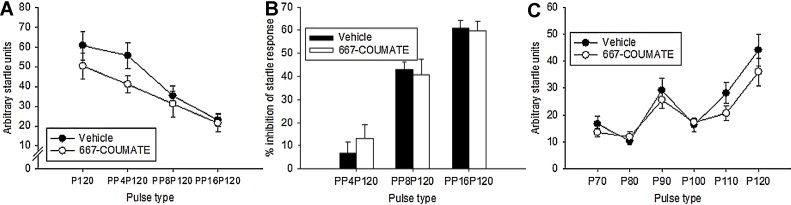
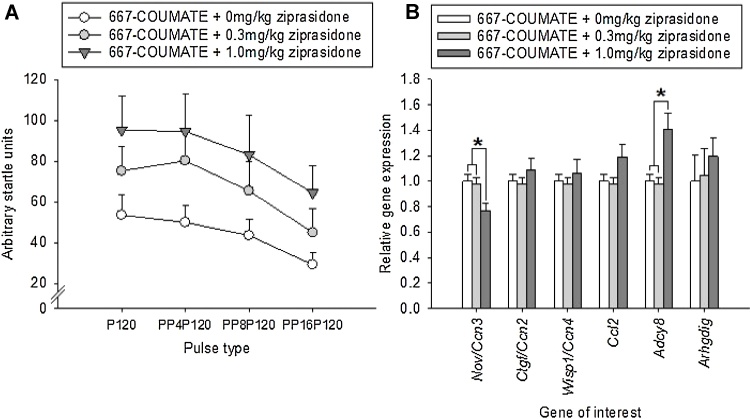
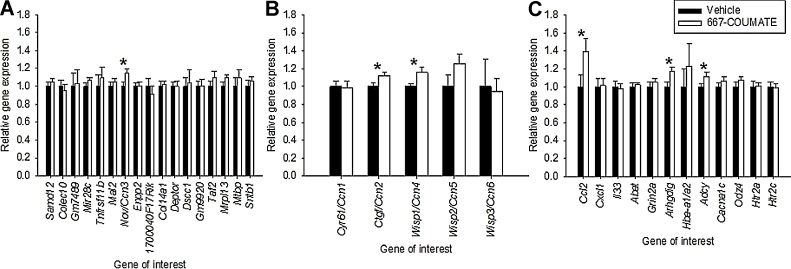
Postpartum psychosis (PP) is a severe psychiatric disorder affecting a small proportion of new mothers shortly after childbirth. The molecular pathophysiology underlying the disorder is currently poorly understood, and there are no amenable animal models for the condition; maternal deficiency for the enzyme steroid sulfatase has been proposed as a potential risk mechanism. Here we show that inhibition of steroid sulfatase with 667-COUMATE (10mg/kg p.o.) in new mouse mothers results in behavioural abnormalities that can be partially alleviated by the administration of the clinically-efficacious antipsychotic ziprasidone (0.3-1.0mg/kg i.p.). The pattern of behavioural abnormalities in 667-COUMATE-treated mice implicated a genetic substrate at 21-23cM on chromosome 15; of the 17 genes within this chromosomal interval, only one (Nov/Ccn3) was significantly differentially expressed in the brains of vehicle and 667-COUMATE-treated mice. Two additional members of the Ccn family (Ccn2/Ctgf and Ccn4/Wisp1) were also significantly differentially expressed between the two groups, as were three further genes co-expressed with Nov/Ccn3 in brain (Arhgdig) or previously implicated in disorder risk by clinical studies (Adcy8 and Ccl2). The expression of Nov/Ccn3, but not of the other differentially-expressed genes, could be normalised by ziprasidone administration (1.0mg/kg). NOV/CCN3 lies directly under a linkage peak for PP risk at 8q24, and the associated protein possesses numerous characteristics that make it an excellent candidate mediator of PP risk. Our data suggest the 667-COUMATE-treated mouse as a model for PP with some degree of face, construct, and predictive validity, and implicate a novel, and biologically-plausible, molecular risk pathway for PP.
产后精神病(PP)是一种严重的精神障碍,影响一小部分产后不久的新妈妈。目前对该疾病潜在的分子病理生理学了解甚少,且尚无适用于此病症的动物模型;有人提出母体中硫酸类固醇酶缺乏是一种潜在的风险机制。在此我们表明,给新的母鼠口服667-香豆酸酯(10mg/kg)抑制硫酸类固醇酶会导致行为异常,而临床上有效的抗精神病药物齐拉西酮(0.3-1.0mg/kg腹腔注射)给药可部分缓解这些异常。667-香豆酸酯处理的小鼠的行为异常模式表明在15号染色体21-23cM处存在一个遗传底物;在这个染色体区间内的17个基因中,只有一个(Nov/Ccn3)在给予赋形剂和667-香豆酸酯处理的小鼠大脑中显著差异表达。Ccn家族的另外两个成员(Ccn2/Ctgf和Ccn4/Wisp1)在两组之间也显著差异表达,另外三个在大脑中与Nov/Ccn3共表达(Arhgdig)或先前临床研究表明与疾病风险相关的基因(Adcy8和Ccl2)也是如此。给予齐拉西酮(1.0mg/kg)可使Nov/Ccn3的表达正常化,但其他差异表达基因则不然。NOV/CCN3直接位于8q24处PP风险的连锁峰之下,且相关蛋白具有许多特征,使其成为PP风险的极佳候选介导因子。我们的数据表明,667-香豆酸酯处理的小鼠可作为一种具有一定程度的表面效度、结构效度和预测效度的PP模型,并暗示了一种新的、生物学上合理的PP分子风险途径。