Diao H, Yan H L, Xiao Y, Yu B, Yu J, He J, Zheng P, Zeng B H, Wei H, Mao X B, Chen D W
Institute of Animal Nutrition, Sichuan Agricultural University, Key Laboratory for Animal Disease-Resistance Nutrition of China Ministry of Education, Xinkang Road 46#, Ya'an, Sichuan Province, 625014, People's Republic of China.
Department of Laboratory Animal Science, College of Basic Medical Sciences Third Military Medical University, Gaotanyan Street, Chongqing, 400038, People's Republic of China.
BMC Microbiol. 2016 Oct 11;16(1):238. doi: 10.1186/s12866-016-0851-z.
The present study was conducted to compare the differences in gut microbiota composition and gut-phenotypes among pig breeds, and determine whether these differences would transmit to mice colonized with fecal microbiota of different pig breeds. A total of 24 1-day-old germ-free BALB/C mice were divided into 3 groups (TFM, YFM and RFM), which were transplanted with intact fecal microbiota of Tibetan pig (TP), Yorkshire pig (YP) and Rongchang pig (RP), respectively.
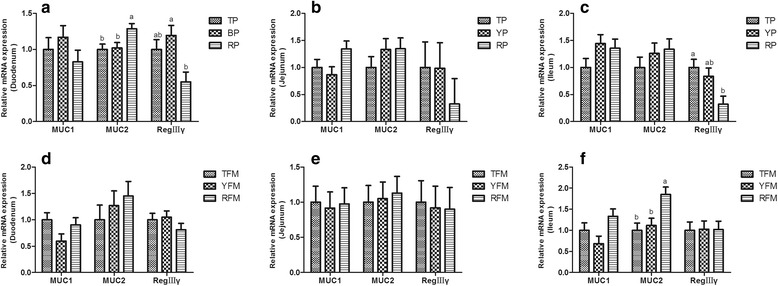
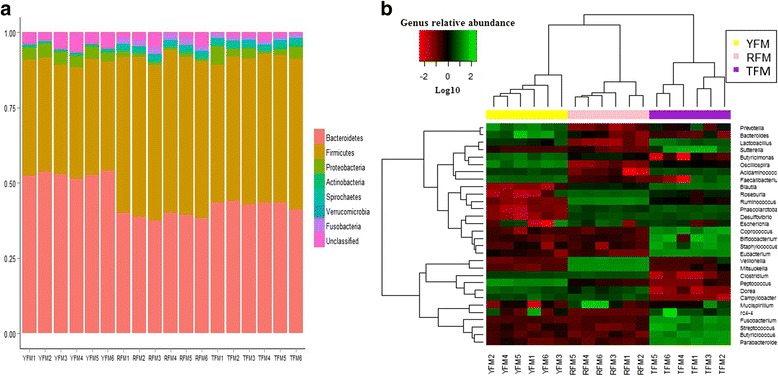
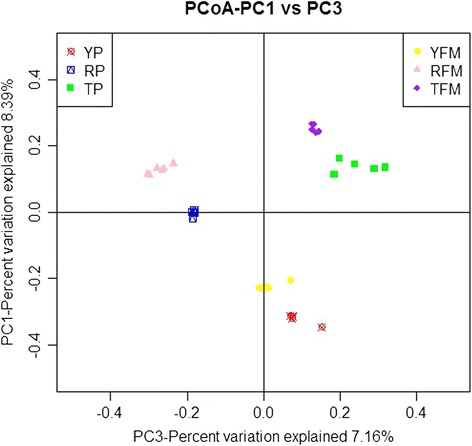
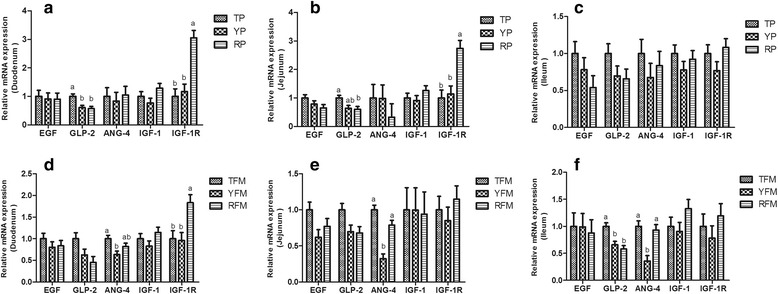
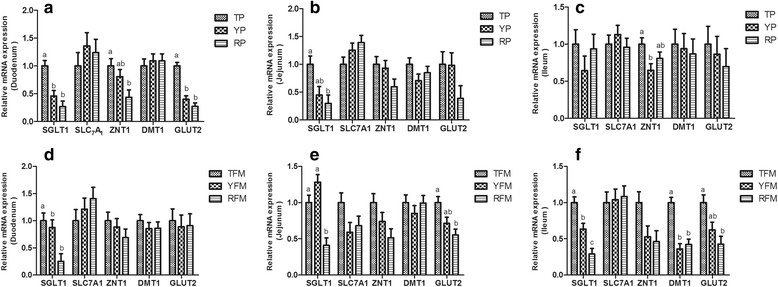
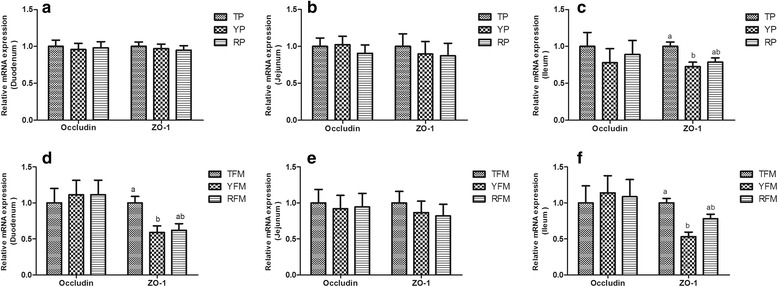
Results showed that different pig breeds exhibited distinct gut microbiota profile based on high-throughput pyrosequencing. YP exhibited a lower Firmicutes/Bacteroidetes ratio and apparent genera differences compared with RP and TP, and higher levels of bacteria from Spirochaetes were observed in TP compared with RP and YP (P < 0.05). Transplanted porcine microbiota into GF mice replicated the phenotypes of pig donors. Moreover, the three groups of donor pigs and their mice recipients exhibited different intestinal index and morphology. TP and RP had higher intestinal weight and relative CDX2 mRNA expression in ileum than YP, and longer intestine, higher villus height of duodenum and jejunum were observed in TP compared with YP and RP (P < 0.05). TP exhibited higher GLP-2 mRNA expression in duodenum and jejunum than RP (P < 0.05). Similarly, YFM had lower intestine weight and CDX2 mRNA expression in ileum than TFM and RFM (P < 0.05). The intestine length in TFM was longer than that in RFM, and TFM had higher villus height in duodenum and jejunum and GLP-2 mRNA expression in ileum than the other two groups (P < 0.05). Besides, the digestive and absorptive ability was different among the three groups in donor pigs and mice recipients. YP had higher jejunal lactase and maltase activities than TP and RP, while TP had higher activities of jejunal ATPase, γ-GT, and relative SGLT1 mRNA expression in duodenum and jejunum than YP and RP (P < 0.05). Likewise, YFM had higher jejunal sucrase and maltase activities than TFM and RFM, whereas higher jejunal γ-GT activity and relative SGLT1 mRNA expression in duodenum and ileum were observed in TFM compared with YFM and RFM (P < 0.05). In addition, Tibetan pigs-derived microbiota improved gut barrier in mice recipients. The concentration of MDA in YP was higher than that in TP and RP (P = 0.078), and the relative ZO-1 mRNA expression in ileum in TP was higher than that in YP (P < 0.05). Likely, compared with TFM and RFM, YFM exhibited increasing MDA concentration in jejunum (P = 0.098), and the relative ZO-1 mRNA expression in duodenum and ileum in TFM were higher than that in YFM (P < 0.05).
There were huge differences in gut microbiota composition and gut characteristics among pig breeds, and gut microbiota could partially convey host gut characteristics from pigs to mice.
本研究旨在比较不同猪种肠道微生物群组成和肠道表型的差异,并确定这些差异是否会传递给定植了不同猪种粪便微生物群的小鼠。将24只1日龄无菌BALB/C小鼠分为3组(TFM、YFM和RFM),分别移植藏猪(TP)、大白猪(YP)和荣昌猪(RP)的完整粪便微生物群。
高通量焦磷酸测序结果显示,不同猪种表现出明显不同的肠道微生物群特征。与RP和TP相比,YP的厚壁菌门/拟杆菌门比值较低,且明显存在属水平的差异;与RP和YP相比,TP中螺旋体门细菌的水平更高(P<0.05)。将猪的微生物群移植到无菌小鼠中重现了供体猪的表型。此外,三组供体猪及其小鼠受体表现出不同的肠道指数和形态。TP和RP的肠道重量以及回肠中CDX2 mRNA的相对表达高于YP;与YP和RP相比,TP的肠道更长,十二指肠和空肠的绒毛高度更高(P<0.05)。TP十二指肠和空肠中GLP-2 mRNA的表达高于RP(P<0.05)。同样,YFM的肠道重量和回肠中CDX2 mRNA的表达低于TFM和RFM(P<0.05)。TFM的肠道长度比RFM长,TFM十二指肠和空肠的绒毛高度以及回肠中GLP-2 mRNA的表达高于其他两组(P<0.05)。此外,供体猪和小鼠受体的三组之间消化和吸收能力存在差异。YP空肠乳糖酶和麦芽糖酶活性高于TP和RP,而TP十二指肠和空肠中ATP酶、γ-GT活性以及SGLT1 mRNA的相对表达高于YP和RP(P<0.05)。同样,YFM空肠蔗糖酶和麦芽糖酶活性高于TFM和RFM,而与YFM和RFM相比,TFM十二指肠和回肠中γ-GT活性以及SGLT1 mRNA的相对表达更高(P<0.05)。此外,源自藏猪的微生物群改善了小鼠受体的肠道屏障。YP中丙二醛(MDA)浓度高于TP和RP(P=0.078),TP回肠中紧密连接蛋白1(ZO-1)mRNA的相对表达高于YP(P<0.05)。同样,与TFM和RFM相比,YFM空肠中MDA浓度升高(P=0.098),TFM十二指肠和回肠中ZO-1 mRNA的相对表达高于YFM(P<0.05)。
不同猪种的肠道微生物群组成和肠道特征存在巨大差异,肠道微生物群可以部分地将宿主肠道特征从猪传递给小鼠。