Katsarou Konstantina, Mavrothalassiti Eleni, Dermauw Wannes, Van Leeuwen Thomas, Kalantidis Kriton
Institute of Molecular Biology and Biotechnology, Foundation for Research and Technology-Hellas, Heraklion, Greece.
Department of Biology, University of Crete, Heraklion, Greece.
PLoS Pathog. 2016 Oct 12;12(10):e1005936. doi: 10.1371/journal.ppat.1005936. eCollection 2016 Oct.
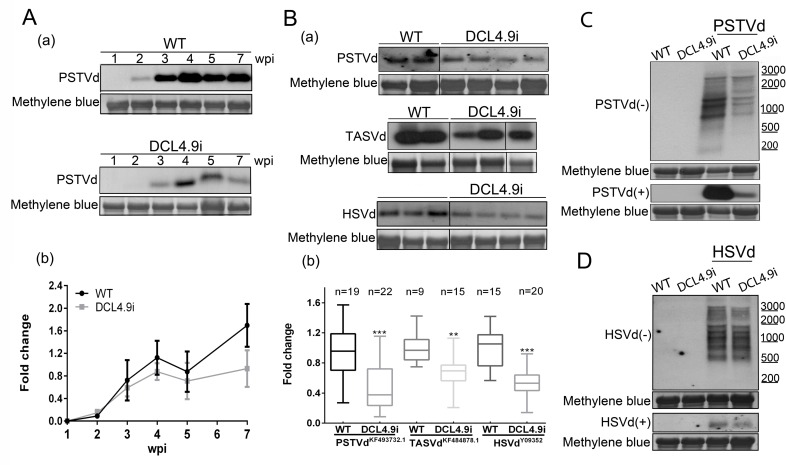
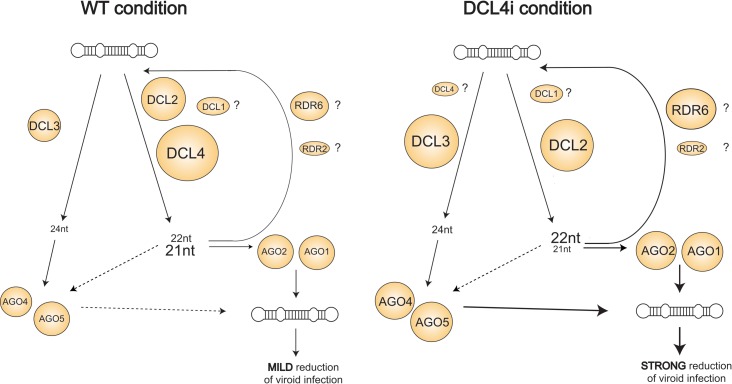
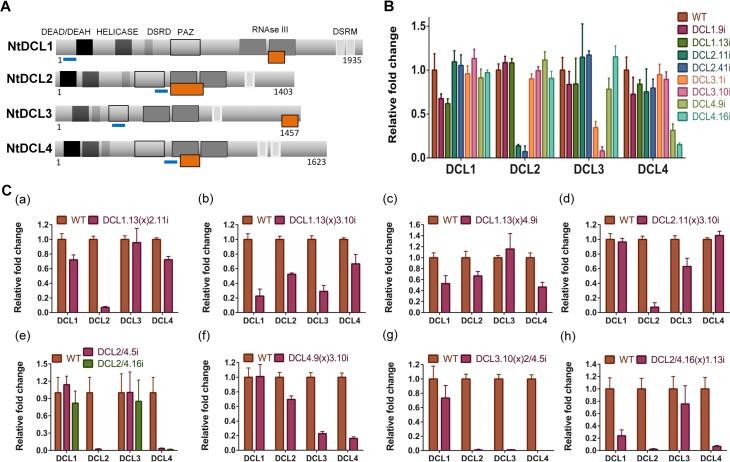
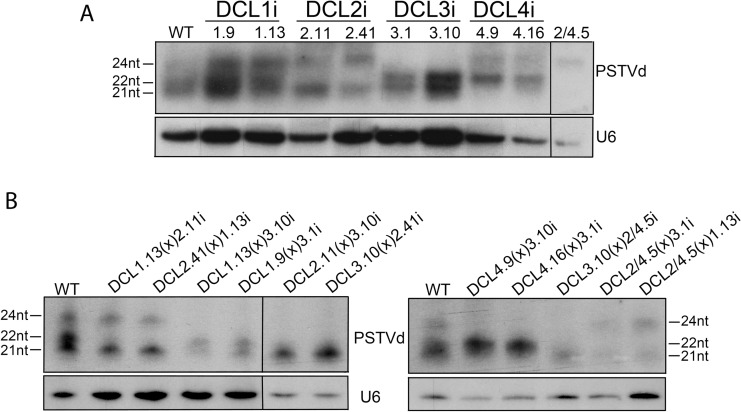
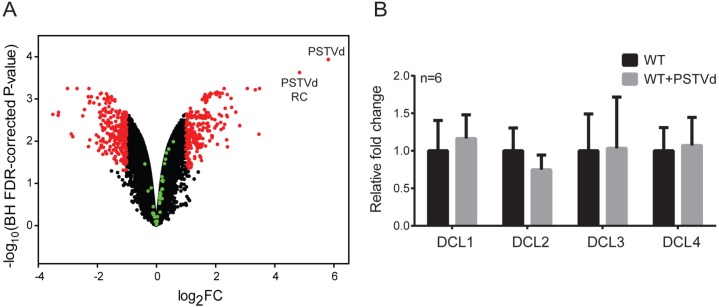
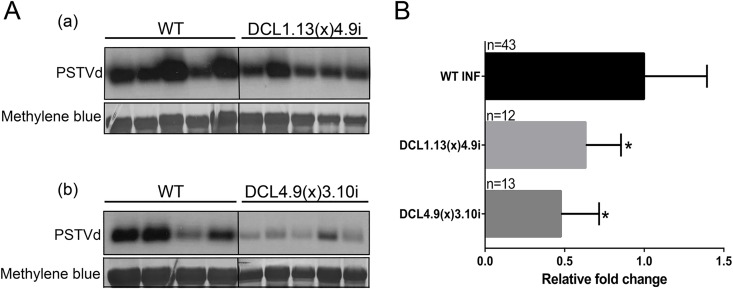
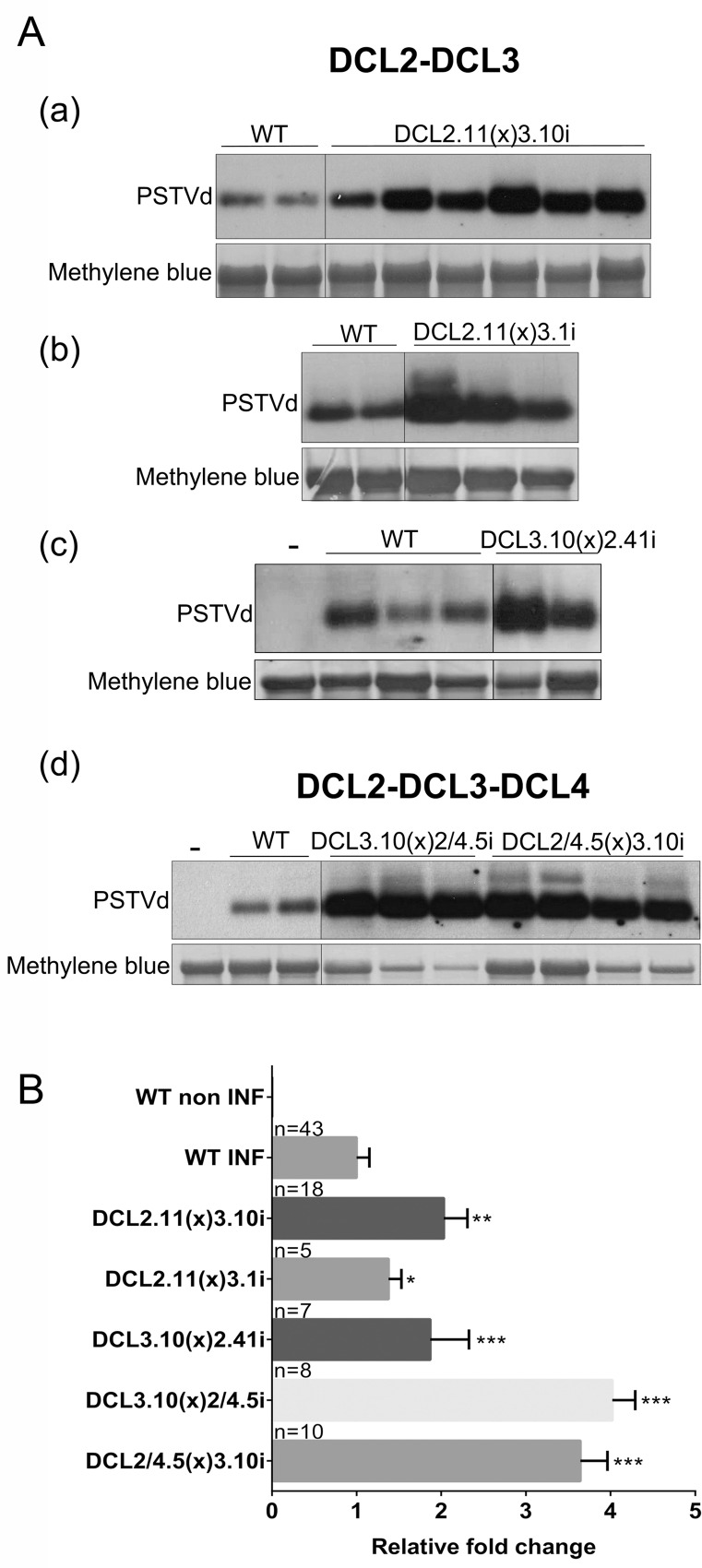
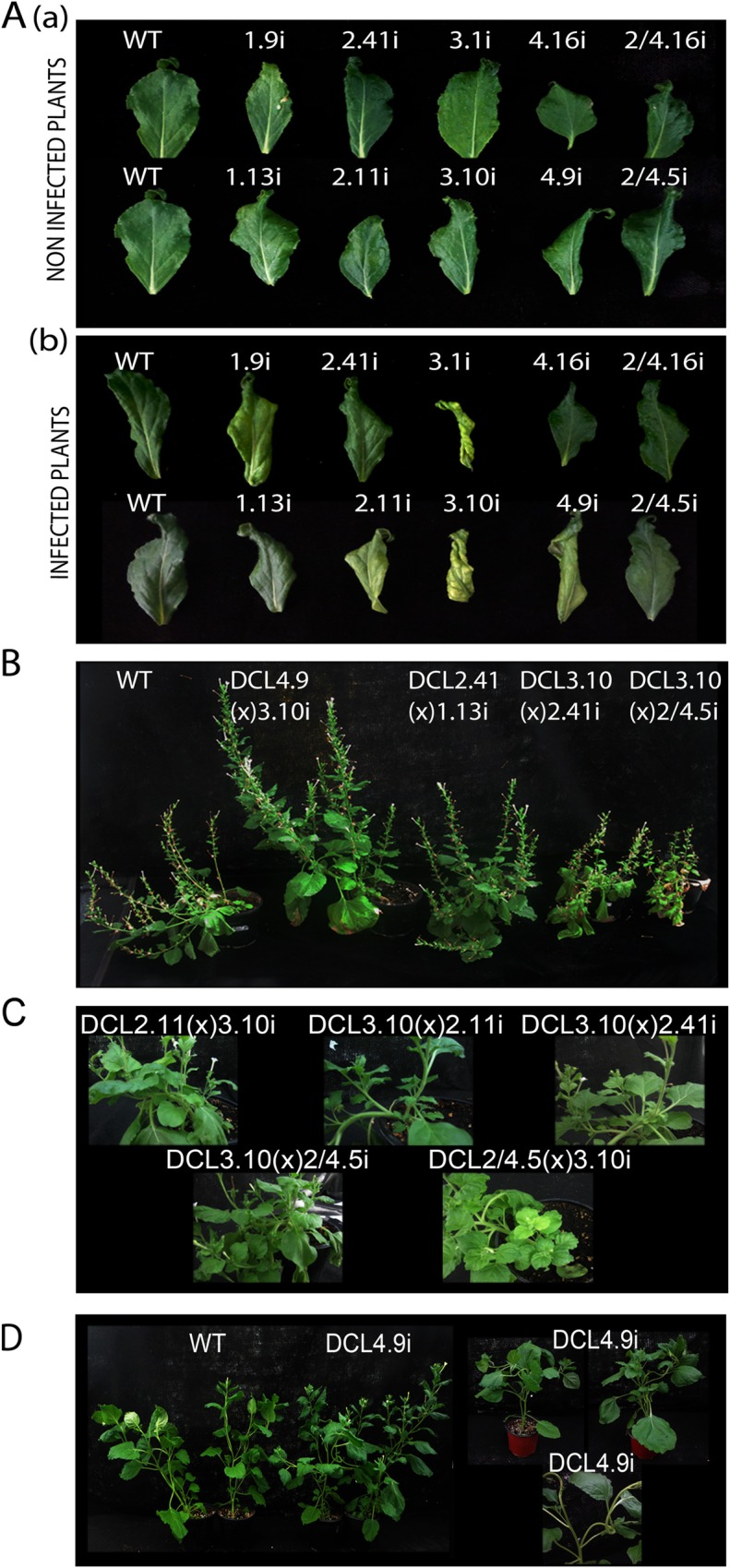
Viroids are self replicating non-coding RNAs capable of infecting a wide range of plant hosts. They do not encode any proteins, thus the mechanism by which they escape plant defenses remains unclear. RNAi silencing is a major defense mechanism against virus infections, with the four DCL proteins being principal components of the pathway. We have used Nicotiana benthamiana as a model to study Potato spindle tuber viroid infection. This viroid is a member of the Pospiviroidae family and replicates in the nucleus via an asymmetric rolling circle mechanism. We have created knock-down plants for all four DCL genes and their combinations. Previously, we showed that DCL4 has a positive effect on PSTVd infectivity since viroid levels drop when DCL4 is suppressed. Here, we show that PSTVd levels remain decreased throughout infection in DCL4 knockdown plants, and that simultaneous knockdown of DCL1, DCL2 or DCL3 together with DCL4 cannot reverse this effect. Through infection of plants suppressed for multiple DCLs we further show that a combined suppression of DCL2 and DCL3 has a major effect in succumbing plant antiviral defense. Based on our results, we further suggest that Pospoviroids may have evolved to be primarily processed by DCL4 as it seems to be a DCL protein with less detrimental effects on viroid infectivity. These findings pave the way to delineate the complexity of the relationship between viroids and plant RNA silencing response.
类病毒是能够感染多种植物宿主的自我复制非编码RNA。它们不编码任何蛋白质,因此其逃避植物防御的机制仍不清楚。RNAi沉默是植物抵抗病毒感染的主要防御机制,四种DCL蛋白是该途径的主要成分。我们以本氏烟草为模型研究马铃薯纺锤块茎类病毒感染。这种类病毒是马铃薯纺锤块茎类病毒科的成员,通过不对称滚环机制在细胞核中复制。我们构建了所有四个DCL基因及其组合的基因敲低植株。此前,我们发现DCL4对马铃薯纺锤块茎类病毒的感染性有积极影响,因为当DCL4被抑制时类病毒水平会下降。在此,我们表明在DCL4基因敲低的植株中,整个感染过程中马铃薯纺锤块茎类病毒水平持续下降,并且同时敲低DCL1、DCL2或DCL3与DCL4不能逆转这种效应。通过对多个DCL被抑制的植株进行感染,我们进一步表明同时抑制DCL2和DCL3对植物抗病毒防御的失效有重大影响。基于我们的结果,我们进一步提出马铃薯纺锤块茎类病毒科可能已经进化为主要由DCL4加工,因为它似乎是一种对类病毒感染性影响较小的DCL蛋白。这些发现为阐明类病毒与植物RNA沉默反应之间关系的复杂性铺平了道路。