Kunicka T, Prochazka P, Krus I, Bendova P, Protivova M, Susova S, Hlavac V, Liska V, Novak P, Schneiderova M, Pitule P, Bruha J, Vycital O, Vodicka P, Soucek P
Department of Toxicogenomics, National Institute of Public Health, Prague, Czech Republic.
Third Faculty of Medicine, Charles University, Prague, Czech Republic.
BMC Cancer. 2016 Oct 12;16(1):795. doi: 10.1186/s12885-016-2826-8.
This study addresses involvement of major 5-fluorouracil (5-FU) pathway genes in the prognosis of colorectal carcinoma patients.
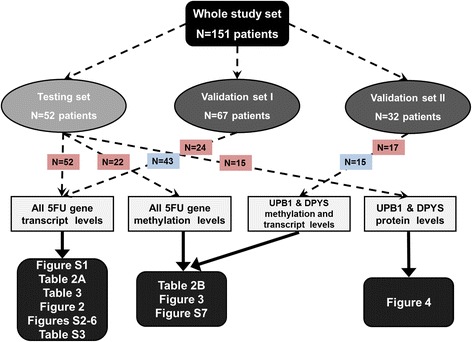
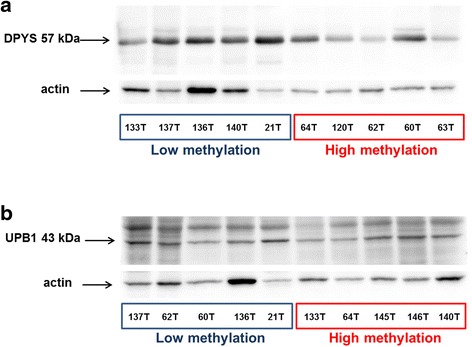
Testing set and two validation sets comprising paired tumor and adjacent mucosa tissue samples from 151 patients were used for transcript profiling of 15 5-FU pathway genes by quantitative real-time PCR and DNA methylation profiling by high resolution melting analysis. Intratumoral molecular profiles were correlated with clinical data of patients. Protein levels of two most relevant candidate markers were assessed by immunoblotting.
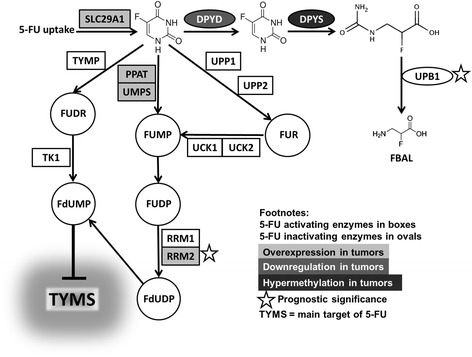
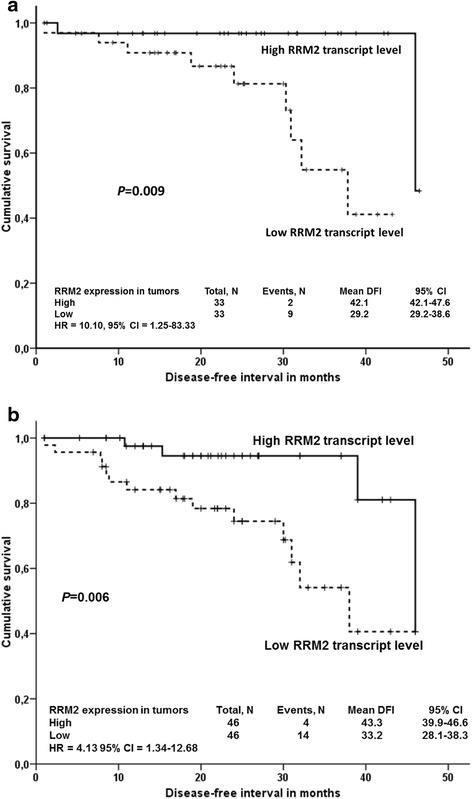
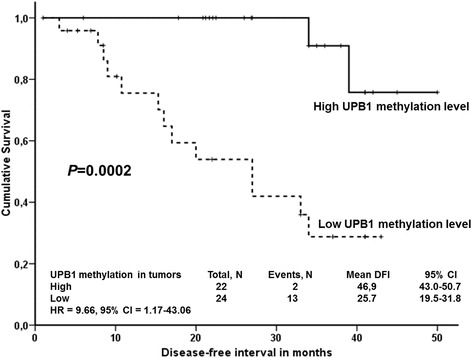
Downregulation of DPYD and upregulation of PPAT, UMPS, RRM2, and SLC29A1 transcripts were found in tumors compared to adjacent mucosa in testing and validation sets of patients. Low RRM2 transcript level significantly associated with poor response to the first-line palliative 5-FU-based chemotherapy in the testing set and with poor disease-free interval of patients in the validation set irrespective of 5-FU treatment. UPP2 was strongly methylated while its transcript absent in both tumors and adjacent mucosa. DPYS methylation level was significantly higher in tumor tissues compared to adjacent mucosa samples. Low intratumoral level of UPB1 methylation was prognostic for poor disease-free interval of the patients (P = 0.0002). The rest of the studied 5-FU genes were not methylated in tumors or adjacent mucosa.
The observed overexpression of several 5-FU activating genes and DPYD downregulation deduce that chemotherapy naïve colorectal tumors share favorable gene expression profile for 5-FU therapy. Low RRM2 transcript and UPB1 methylation levels present separate poor prognosis factors for colorectal carcinoma patients and should be further investigated.
本研究探讨了主要5-氟尿嘧啶(5-FU)通路基因在结直肠癌患者预后中的作用。
使用包含151例患者配对肿瘤和癌旁黏膜组织样本的测试集和两个验证集,通过定量实时PCR对15个5-FU通路基因进行转录谱分析,并通过高分辨率熔解分析进行DNA甲基化谱分析。肿瘤内分子谱与患者临床数据相关联。通过免疫印迹评估两个最相关候选标志物的蛋白水平。
在测试集和验证集患者的肿瘤中,与癌旁黏膜相比,发现DPYD下调以及PPAT、UMPS、RRM2和SLC29A1转录本上调。低RRM2转录水平与测试集中对一线姑息性5-FU化疗的不良反应显著相关,并且与验证集中患者的无病间期不良相关,无论是否接受5-FU治疗。UPP2高度甲基化,其转录本在肿瘤和癌旁黏膜中均不存在。肿瘤组织中DPYS甲基化水平显著高于癌旁黏膜样本。肿瘤内低水平的UPB1甲基化预示患者无病间期不良(P = 0.0002)。其余研究的5-FU基因在肿瘤或癌旁黏膜中未发生甲基化。
观察到的几种5-FU激活基因的过表达和DPYD下调表明,未经化疗的结直肠癌肿瘤具有有利于5-FU治疗的基因表达谱。低RRM2转录水平和UPB1甲基化水平是结直肠癌患者独立的不良预后因素,应进一步研究。