Zhang Xiang-Sheng, Wu Qi, Wu Ling-Yun, Ye Zhen-Nan, Jiang Tian-Wei, Li Wei, Zhuang Zong, Zhou Meng-Liang, Zhang Xin, Hang Chun-Hua
Department of Neurosurgery, Jinling Hospital, School of Medicine, Nanjing University, Nanjing, Jiangsu Province, P.R. China.
Department of Neurosurgery, Jinling Hospital, School of Medicine, Southern Medical University (Guangzhou), Nanjing, Jiangsu Province, P.R. China.
Cell Death Dis. 2016 Oct 13;7(10):e2416. doi: 10.1038/cddis.2016.292.
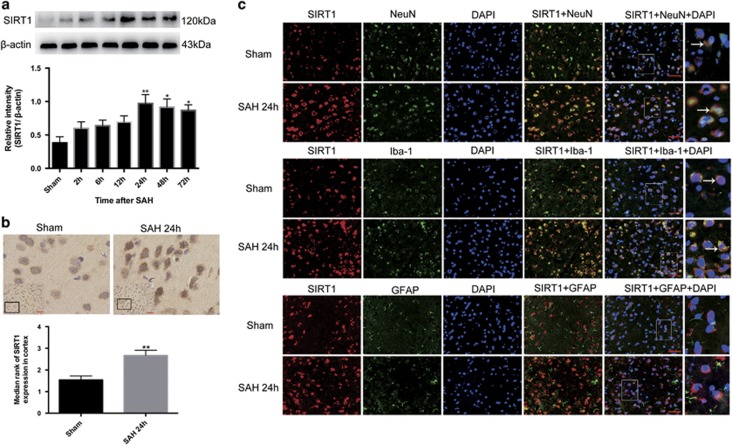
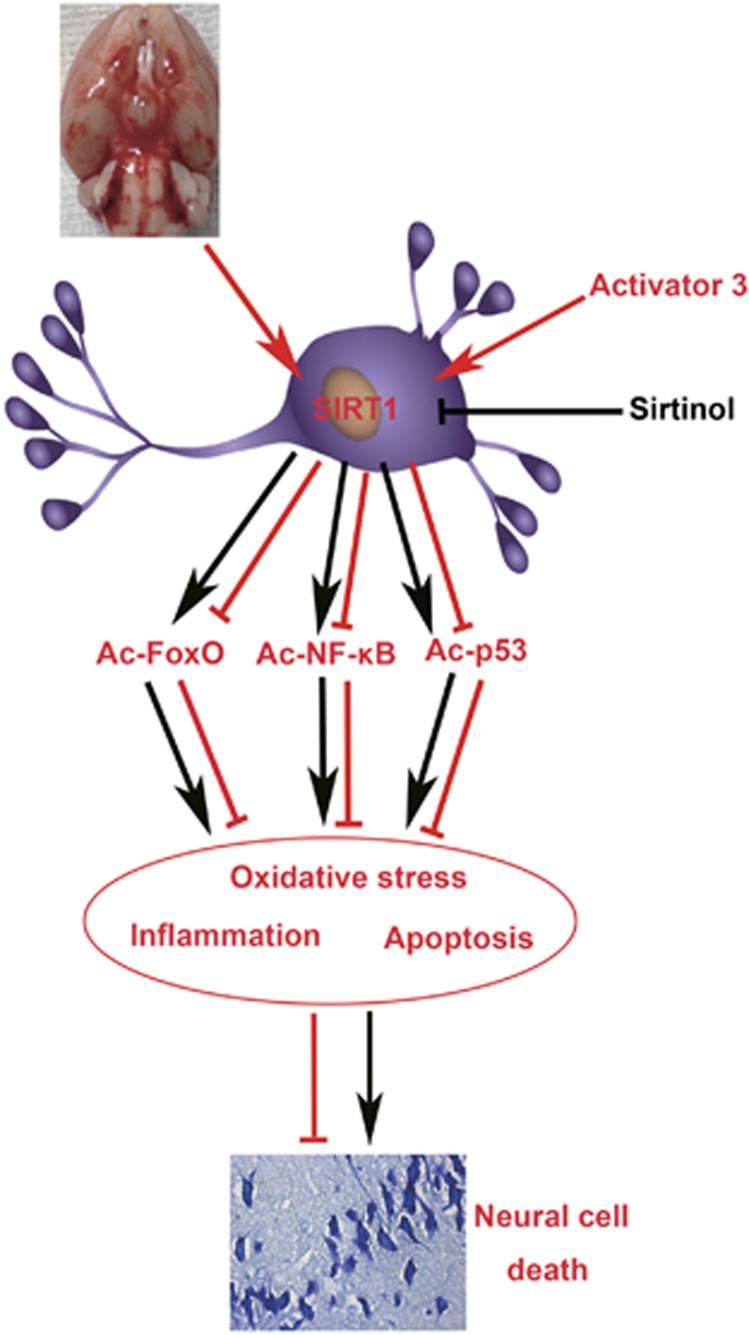
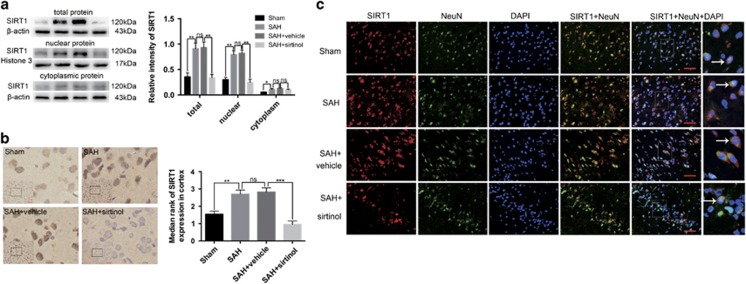
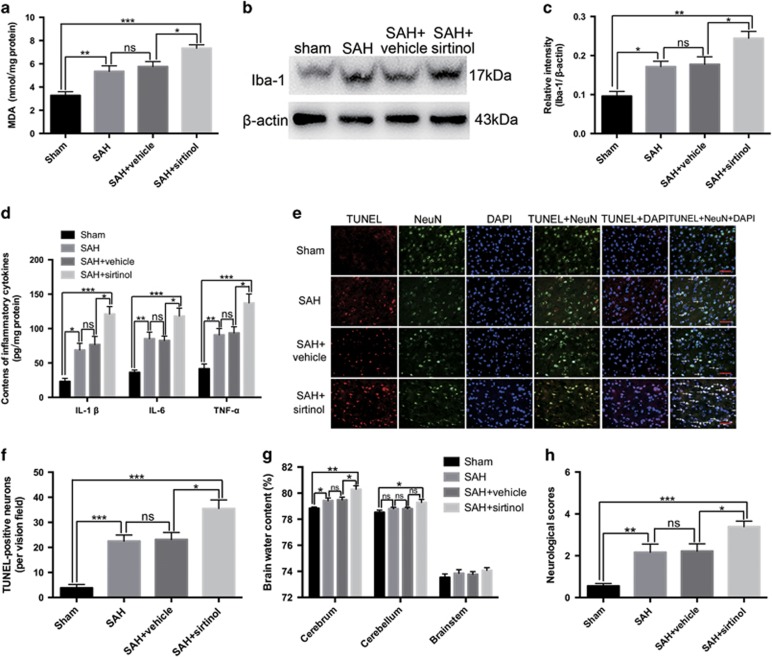
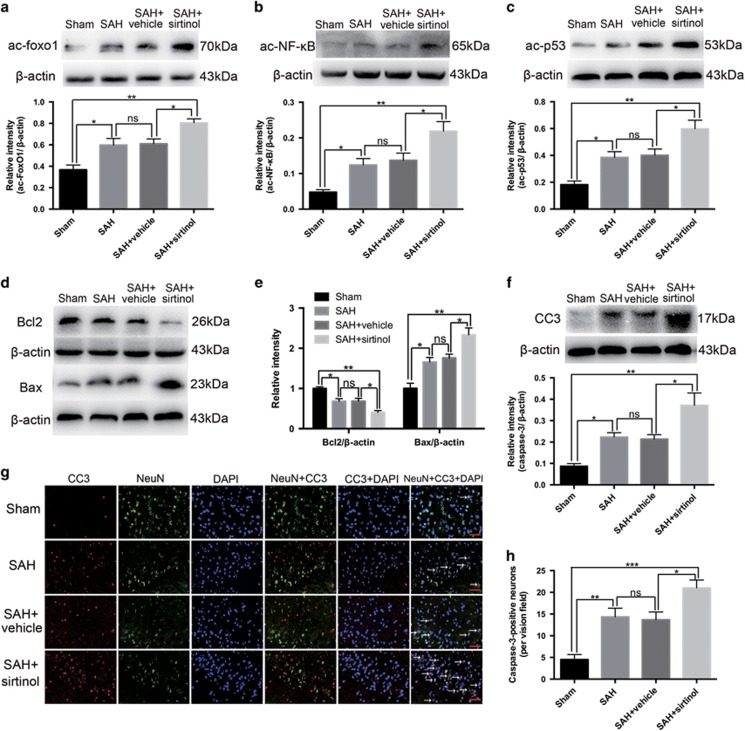
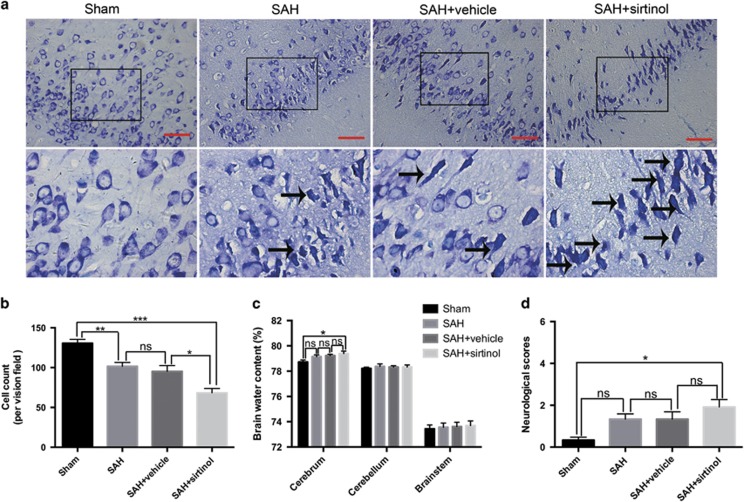
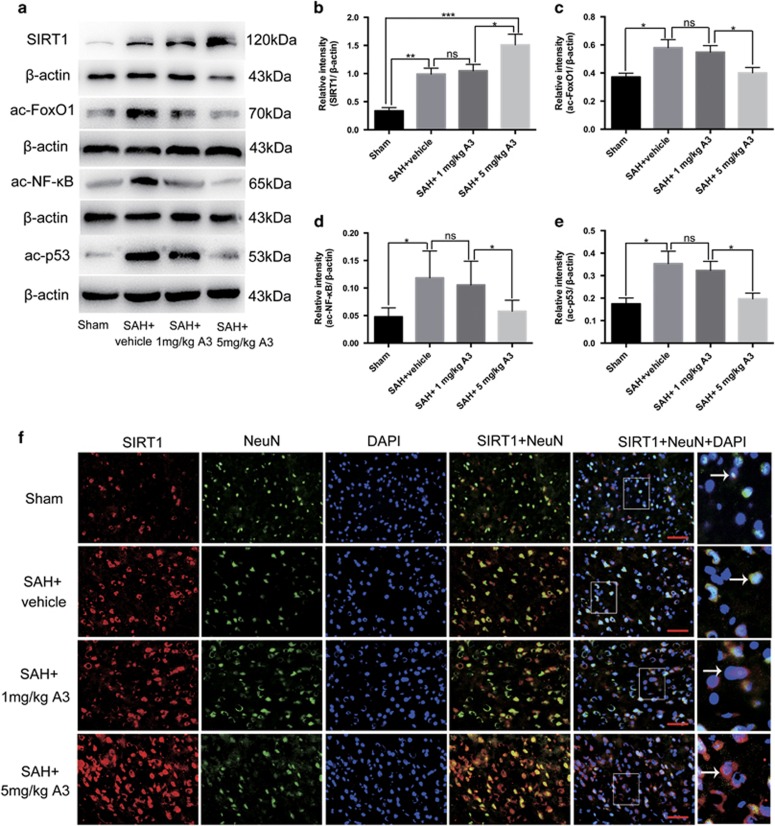
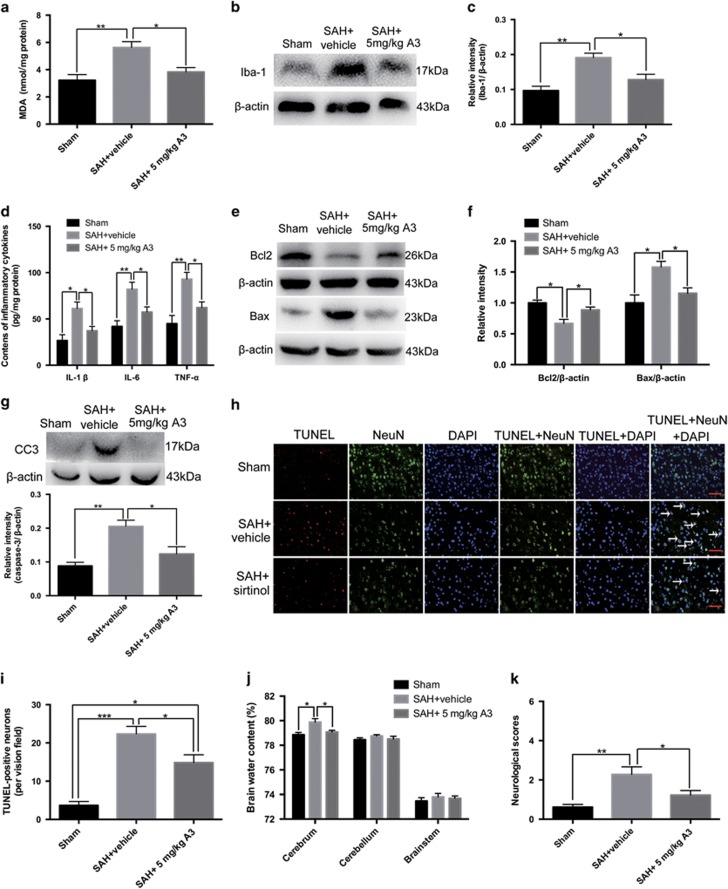
Increasing evidence indicates that sirtuin 1 (SIRT1) is implicated in a wide range of cellular functions, such as oxidative stress, inflammation and apoptosis. The aim of this study was to investigate the change of SIRT1 in the brain after subarachnoid hemorrhage (SAH) and its role on SAH-induced early brain injury (EBI). In the first set of experiments, rats were randomly divided into sham group and SAH groups at 2, 6, 12, 24, 48 and 72 h. The expression of SIRT1 was evaluated by western blot analysis, immunohistochemistry and immunofluorescence. In another set of experiments, SIRT1-specific inhibitor (sirtinol) and activator (activator 3) were exploited to study the role of SIRT1 in SAH-induced EBI. It showed that the protein level of SIRT1 was markedly elevated at the early stage of SAH and peaked at 24 h after SAH. The expression of SIRT1 could be observed in neurons and microglia, and the enhanced SIRT1 was mainly located in neurons after SAH. Administration of sirtinol inhibited the expression and activation of SIRT1 pathways after SAH, while activator 3 enhanced the expression and activation of SIRT1 pathways after SAH. In addition, inhibition of SIRT1 could exacerbate forkhead transcription factors of the O class-, nuclear factor-kappa B- and p53-induced oxidative damage, neuroinflammation and neuronal apoptosis, leading to aggravated brain injury after SAH. In contrast, activator 3 treatment could reduce forkhead transcription factors of the O class-, nuclear factor-kappa B-, and p53-induced oxidative damage, neuroinflammation and neuronal apoptosis to protect against EBI. These results suggest that SIRT1 plays an important role in neuroprotection against EBI after SAH by deacetylation and subsequent inhibition of forkhead transcription factors of the O class-, nuclear factor-kappa B-, and p53-induced oxidative, inflammatory and apoptotic pathways. SIRT1 might be a new promising molecular target for SAH.
越来越多的证据表明,沉默调节蛋白1(SIRT1)参与多种细胞功能,如氧化应激、炎症和细胞凋亡。本研究旨在探讨蛛网膜下腔出血(SAH)后大脑中SIRT1的变化及其在SAH诱导的早期脑损伤(EBI)中的作用。在第一组实验中,将大鼠在2、6、12、24、48和72小时随机分为假手术组和SAH组。通过蛋白质印迹分析、免疫组织化学和免疫荧光评估SIRT1的表达。在另一组实验中,利用SIRT1特异性抑制剂(sirtinol)和激活剂(激活剂3)研究SIRT1在SAH诱导的EBI中的作用。结果显示,SAH早期SIRT1蛋白水平显著升高,并在SAH后24小时达到峰值。在神经元和小胶质细胞中可观察到SIRT1的表达,SAH后增强的SIRT1主要位于神经元中。给予sirtinol可抑制SAH后SIRT1通路的表达和激活,而激活剂3可增强SAH后SIRT1通路的表达和激活。此外,抑制SIRT1可加剧O类叉头转录因子、核因子-κB和p53诱导的氧化损伤、神经炎症和神经元凋亡,导致SAH后脑损伤加重。相反,激活剂3治疗可减少O类叉头转录因子、核因子-κB和p53诱导的氧化损伤、神经炎症和神经元凋亡,从而预防EBI。这些结果表明,SIRT1通过去乙酰化并随后抑制O类叉头转录因子、核因子-κB和p53诱导的氧化、炎症和凋亡途径,在SAH后对EBI的神经保护中发挥重要作用。SIRT1可能是SAH一个新的有前景的分子靶点。