Toueni Maoulida, Ben Cécile, Le Ru Aurélie, Gentzbittel Laurent, Rickauer Martina
EcoLab, Université de Toulouse, CNRS, INPT, UPS Toulouse, France.
Research Federation "Agrobiosciences, Interactions et Biodiversité" Castanet-Tolosan, France.
Front Plant Sci. 2016 Sep 29;7:1431. doi: 10.3389/fpls.2016.01431. eCollection 2016.
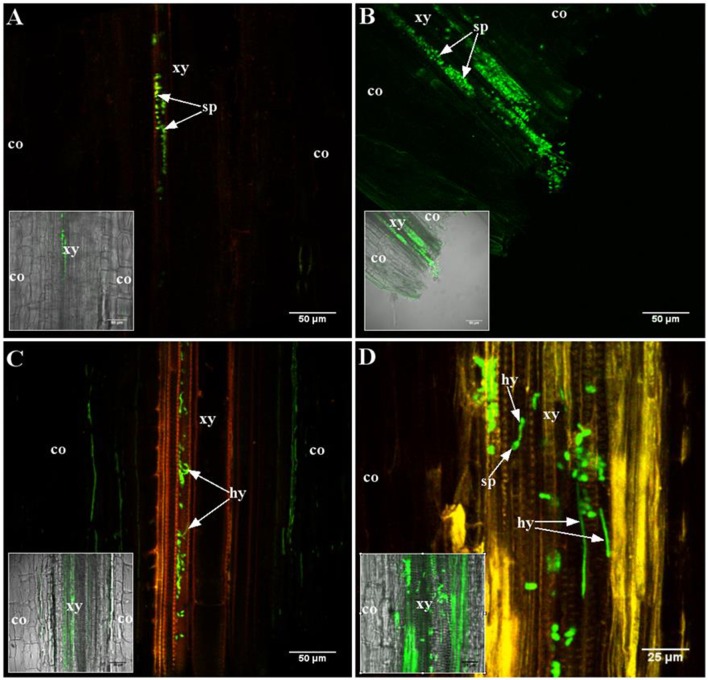
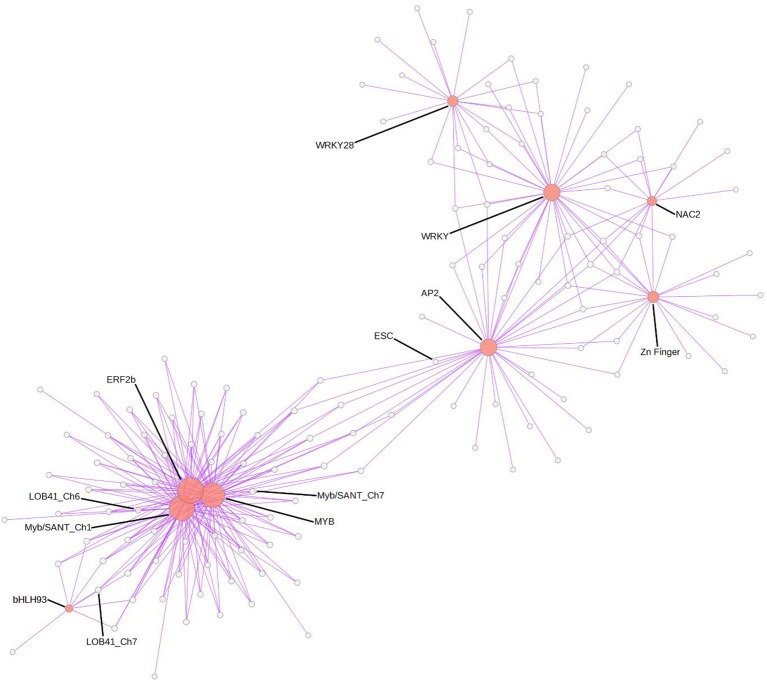
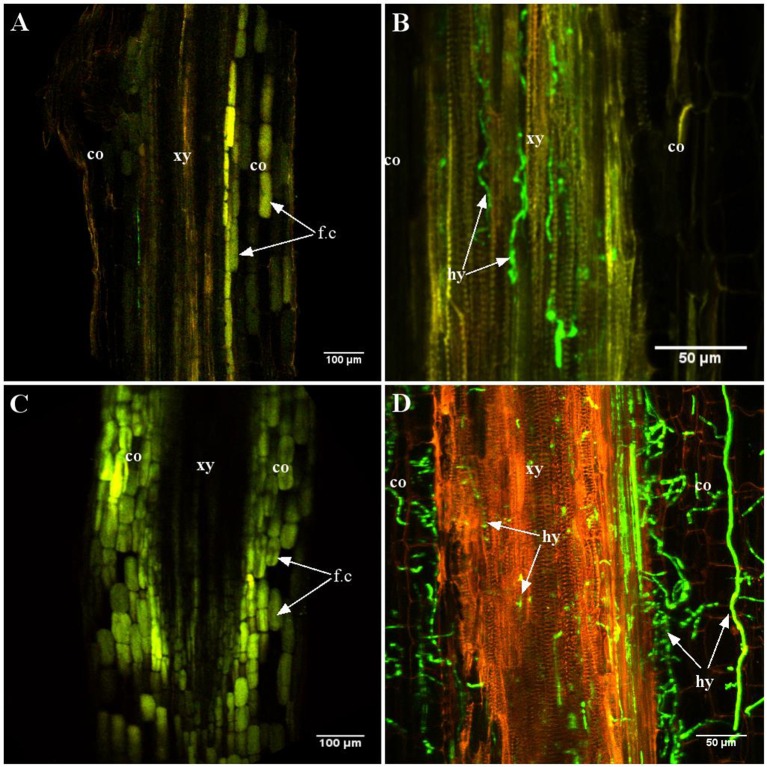
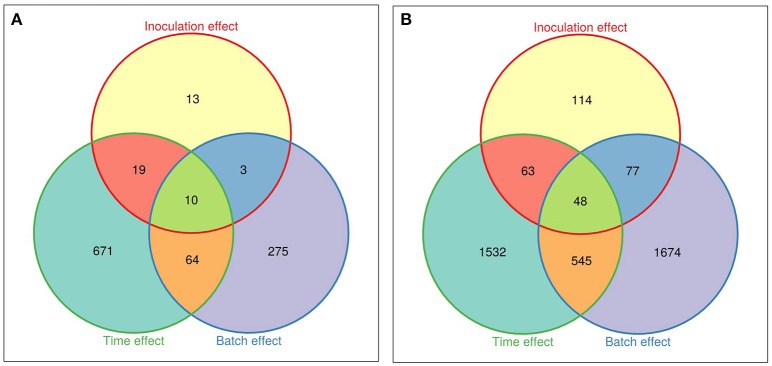
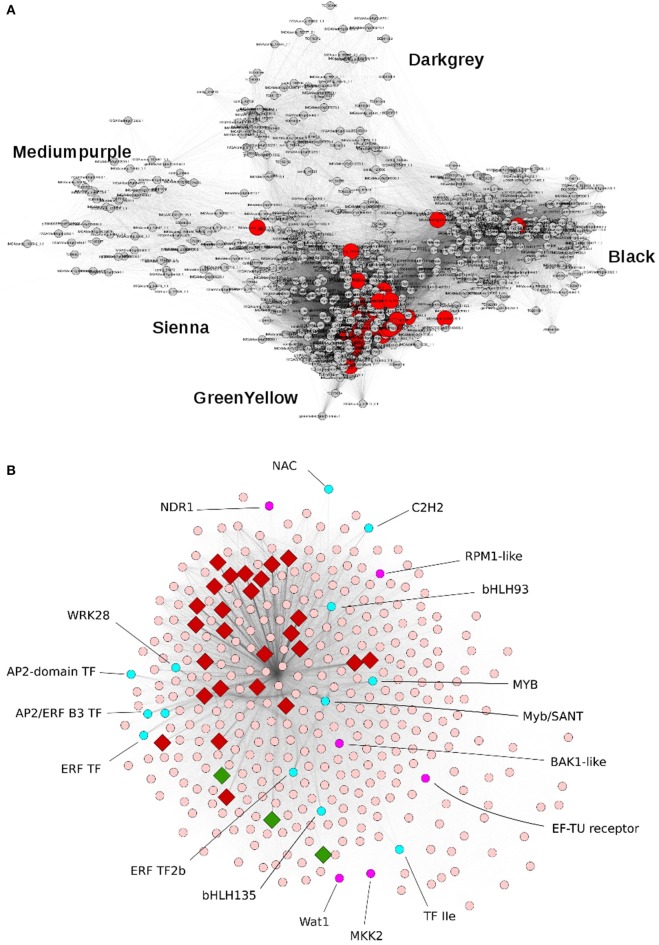
Resistance mechanisms to wilt are well-studied in tomato, cotton, and Arabidopsis, but much less in legume plants. Because legume plants establish nitrogen-fixing symbioses in their roots, resistance to root-attacking pathogens merits particular attention. The interaction between the soil-borne pathogen and the model legume was investigated using a resistant (A17) and a susceptible (F83005.5) line. As shown by histological analyses, colonization by the pathogen was initiated similarly in both lines. Later on, the resistant line A17 eliminated the fungus, whereas the susceptible F83005.5 became heavily colonized. Resistance in line A17 does not involve homologs of the well-characterized tomato 1 and 1 genes. A transcriptomic study of early root responses during initial colonization (i.e., until 24 h post-inoculation) similarly was performed. Compared to the susceptible line, line A17 displayed already a significantly higher basal expression of defense-related genes prior to inoculation, and responded to infection with up-regulation of only a small number of genes. Although fungal colonization was still low at this stage, the susceptible line F83005.5 exhibited a disorganized response involving a large number of genes from different functional classes. The involvement of distinct phytohormone signaling pathways in resistance as suggested by gene expression patterns was supported by experiments with plant hormone pretreatment before fungal inoculation. Gene co-expression network analysis highlighted five main modules in the resistant line, whereas no structured gene expression was found in the susceptible line. One module was particularly associated to the inoculation response in A17. It contains the majority of differentially expressed genes, genes associated with PAMP perception and hormone signaling, and transcription factors. An analysis showed that a high number of these genes also respond to other soil-borne pathogens in , suggesting a core of transcriptional response to root pathogens. Taken together, the results suggest that resistance in line A17 might be due to innate immunity combining preformed defense and PAMP-triggered defense mechanisms, and putative involvement of abscisic acid.
在番茄、棉花和拟南芥中,对枯萎病的抗性机制已有深入研究,但在豆科植物中的研究则少得多。由于豆科植物在其根部建立固氮共生关系,因此对攻击根部的病原体的抗性值得特别关注。使用抗性品系(A17)和敏感品系(F83005.5)研究了土壤传播病原体与模式豆科植物之间的相互作用。组织学分析表明,病原体在两个品系中的定殖起始方式相似。后来,抗性品系A17清除了真菌,而敏感品系F83005.5则被大量定殖。A17品系中的抗性不涉及已充分表征的番茄I和I基因的同源物。同样进行了初始定殖期间(即接种后24小时内)早期根部反应的转录组学研究。与敏感品系相比,A17品系在接种前防御相关基因的基础表达水平就已经显著更高,并且对感染的反应仅上调了少数基因。尽管在此阶段真菌定殖水平仍然较低,但敏感品系F83005.5表现出一种杂乱无章的反应,涉及来自不同功能类别的大量基因。基因表达模式表明不同植物激素信号通路参与抗性,这一观点得到了真菌接种前植物激素预处理实验的支持。基因共表达网络分析突出了抗性品系中的五个主要模块,而在敏感品系中未发现结构化的基因表达。一个模块与A17中的接种反应特别相关。它包含大多数差异表达基因、与病原体相关分子模式感知和激素信号传导相关的基因以及转录因子。一项分析表明,这些基因中的大量基因也对苜蓿中的其他土壤传播病原体有反应,表明存在对根部病原体转录反应的核心。综上所述,结果表明A17品系中的抗性可能归因于先天免疫,它结合了预先形成的防御和病原体相关分子模式触发的防御机制,以及脱落酸的可能参与。