Ekins Sean, Liebler John, Neves Bruno J, Lewis Warren G, Coffee Megan, Bienstock Rachelle, Southan Christopher, Andrade Carolina H
Collaborations in Chemistry, Fuquay-Varina, NC, USA; Collaborations Pharmaceuticals Inc., Fuquay-Varina, NC, USA; Collaborative Drug Discovery Inc, Burlingame, CA, USA.
Art of the Cell, Guilford, CT, USA.
F1000Res. 2016 Mar 3;5:275. doi: 10.12688/f1000research.8213.2. eCollection 2016.
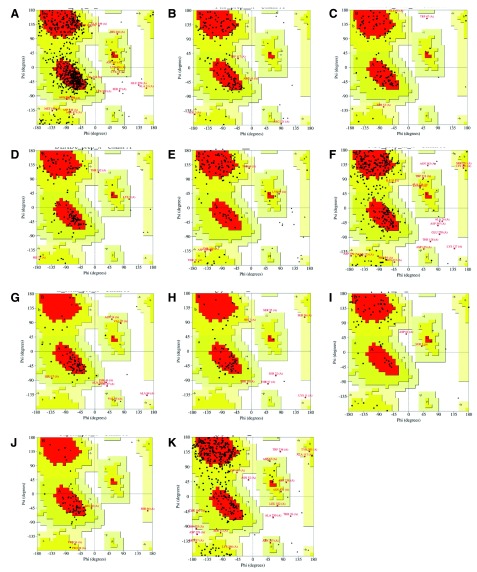
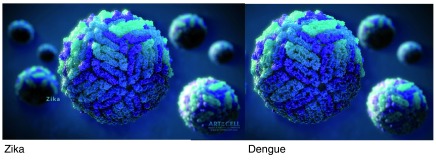
The Zika virus (ZIKV) is a flavivirus of the family , which is similar to dengue virus, yellow fever and West Nile virus. Recent outbreaks in South America, Latin America, the Caribbean and in particular Brazil have led to concern for the spread of the disease and potential to cause Guillain-Barré syndrome and microcephaly. Although ZIKV has been known of for over 60 years there is very little in the way of knowledge of the virus with few publications and no crystal structures. No antivirals have been tested against it either or . ZIKV therefore epitomizes a neglected disease. Several suggested steps have been proposed which could be taken to initiate ZIKV antiviral drug discovery using both high throughput screens as well as structure-based design based on homology models for the key proteins. We now describe preliminary homology models created for NS5, FtsJ, NS4B, NS4A, HELICc, DEXDc, peptidase S7, NS2B, NS2A, NS1, E stem, glycoprotein M, propeptide, capsid and glycoprotein E using SWISS-MODEL. Eleven out of 15 models pass our model quality criteria for their further use. While a ZIKV glycoprotein E homology model was initially described in the immature conformation as a trimer, we now describe the mature dimer conformer which allowed the construction of an illustration of the complete virion. By comparing illustrations of ZIKV based on this new homology model and the dengue virus crystal structure we propose potential differences that could be exploited for antiviral and vaccine design. The prediction of sites for glycosylation on this protein may also be useful in this regard. While we await a cryo-EM structure of ZIKV and eventual crystal structures of the individual proteins, these homology models provide the community with a starting point for structure-based design of drugs and vaccines as well as a for computational virtual screening.
寨卡病毒(ZIKV)是黄病毒科的一种病毒,与登革热病毒、黄热病病毒和西尼罗河病毒相似。最近在南美洲、拉丁美洲、加勒比地区尤其是巴西的疫情爆发引发了对该疾病传播以及引发格林-巴利综合征和小头畸形可能性的担忧。尽管寨卡病毒已被发现60多年,但关于该病毒的知识非常少,相关出版物寥寥无几,也没有晶体结构。目前也没有针对它进行过抗病毒药物测试。因此,寨卡病毒是一种典型的被忽视疾病。已经提出了几个建议步骤,可用于启动寨卡病毒抗病毒药物的研发,包括使用高通量筛选以及基于关键蛋白同源模型的结构导向设计。我们现在描述使用SWISS-MODEL为NS5、FtsJ、NS4B、NS4A、HELICc、DEXDc、肽酶S7、NS2B、NS2A、NS1、E茎、糖蛋白M、前肽、衣壳和糖蛋白E创建的初步同源模型。15个模型中有11个通过了我们的模型质量标准,可进一步使用。虽然寨卡病毒糖蛋白E的同源模型最初被描述为未成熟构象的三聚体,但我们现在描述的是成熟的二聚体构象,这使得构建完整病毒体的示意图成为可能。通过比较基于这个新同源模型的寨卡病毒示意图和登革热病毒晶体结构,我们提出了可能用于抗病毒和疫苗设计的潜在差异。在这方面,预测该蛋白上的糖基化位点可能也很有用。在我们等待寨卡病毒的冷冻电镜结构以及各个蛋白的最终晶体结构的同时,这些同源模型为药物和疫苗的结构导向设计以及计算虚拟筛选提供了一个起点。