McCue D L, Kasper J M, Hommel J D
Department of Neuroscience, University of Texas Medical Branch, Galveston, TX, USA.
Center for Addiction Research, University of Texas Medical Branch, Galveston, TX, USA.
Int J Obes (Lond). 2017 Jan;41(1):120-128. doi: 10.1038/ijo.2016.178. Epub 2016 Oct 17.
Motivation for high-fat food is thought to contribute to excess caloric intake in obese individuals. A novel regulator of motivation for food may be neuromedin U (NMU), a highly-conserved neuropeptide that influences food intake. Although these effects of NMU have primarily been attributed to signaling in the paraventricular nucleus of the hypothalamus (PVN), NMU has also been found in other brain regions involved in both feeding behavior and motivation. We investigate the effects of NMU on motivation for food and food intake, and identify the brain regions mediating these effects.
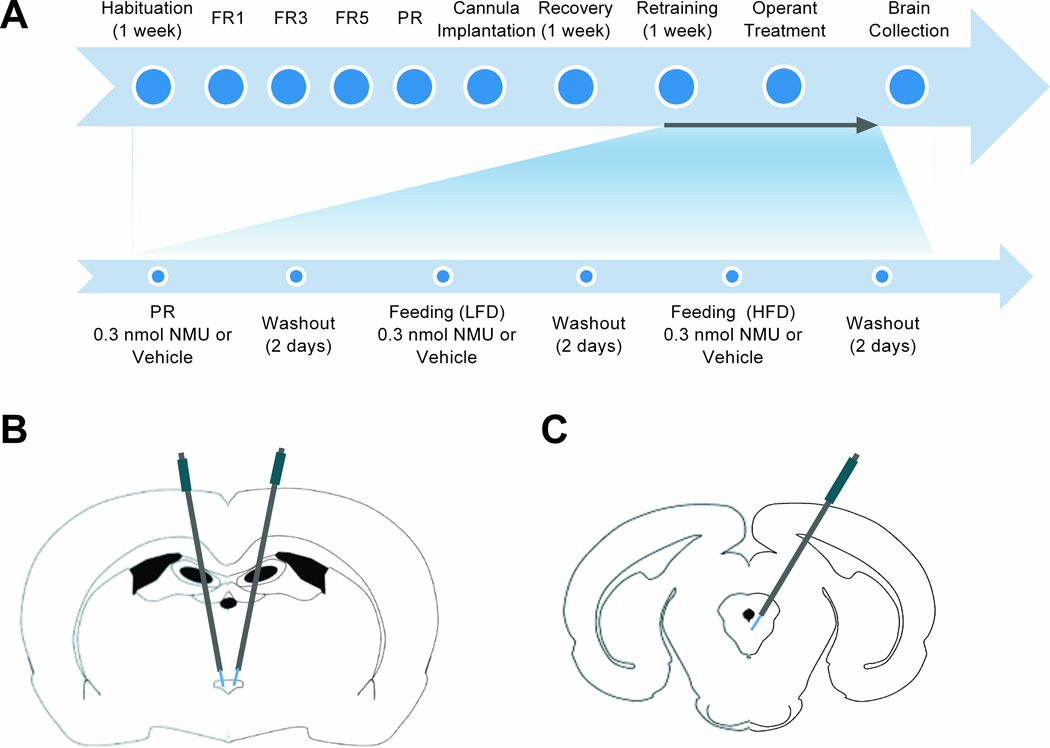
The motivational state for a particular reinforcer (e.g., high-fat food) can be assessed using a progressive-ratio schedule of reinforcement under which an increasing number of lever presses are required to obtain subsequent reinforcers. Here, we have used a progressive-ratio operant responding paradigm in combination with an assessment of cumulative food intake to evaluate the effects of NMU administration in rats, and identify the brain regions mediating these effects.
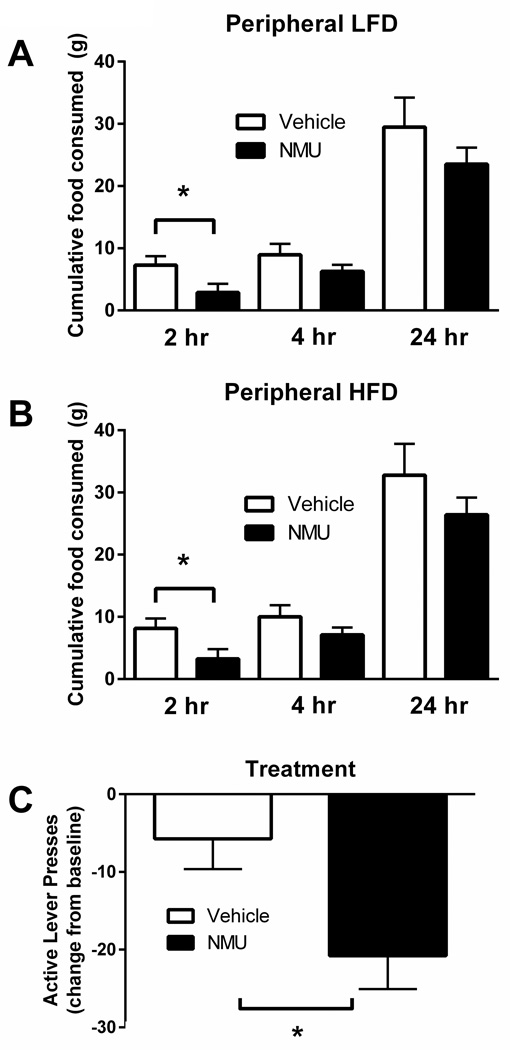
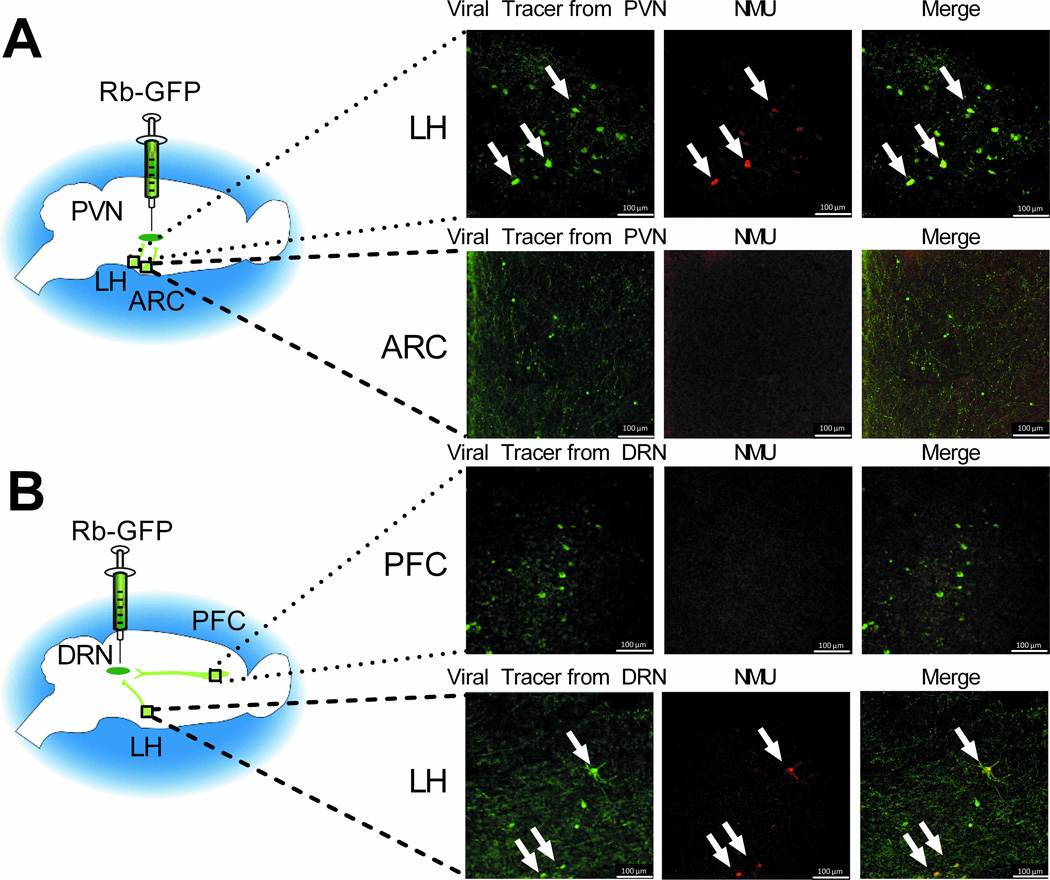
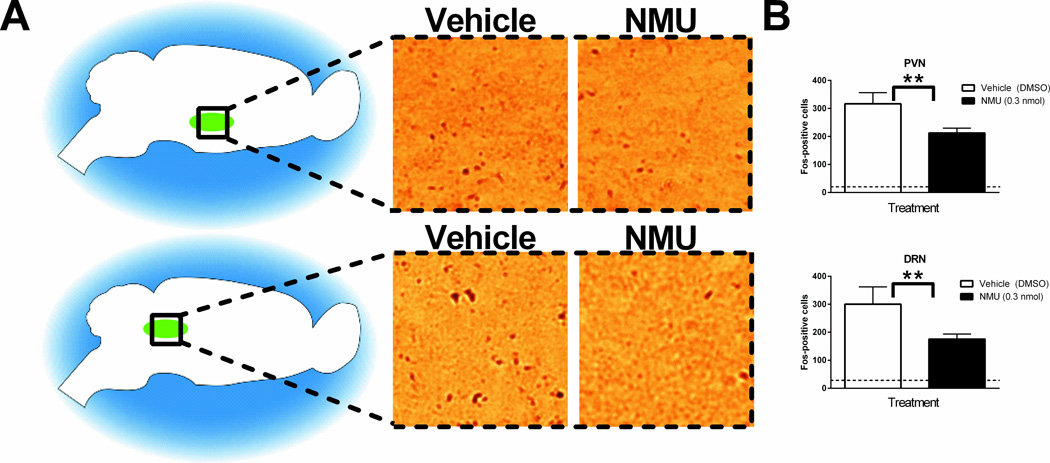
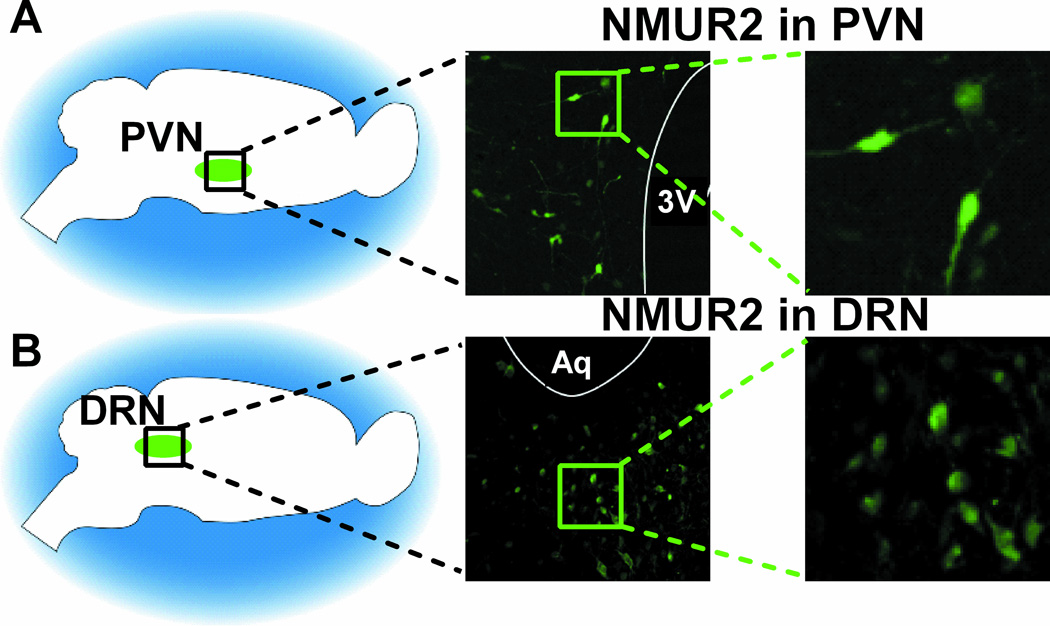
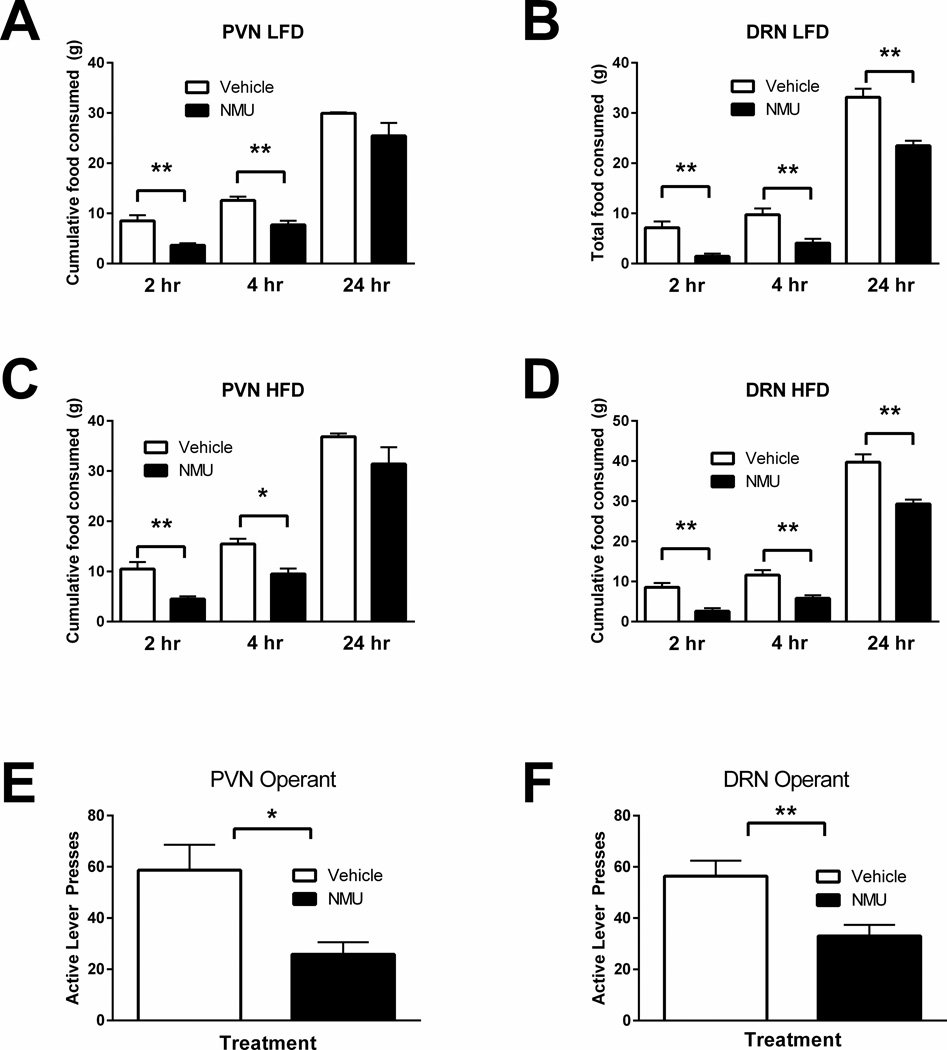
We found that peripheral administration of NMU decreases operant responding for high-fat food in rats. Evaluation of Fos-like immunoreactivity in response to peripheral NMU indicated the PVN and dorsal raphe nucleus (DRN) as sites of action for NMU. NMU infusion into either region mimics the effects of peripheral NMU on food intake and operant responding for food. NMU-containing projections from the lateral hypothalamus (LH) to the PVN and DRN were identified as an endogenous source of NMU.
These results identify the DRN as a site of action for NMU, demonstrate that the LH provides endogenous NMU to the PVN and DRN and implicate NMU signaling in the PVN and DRN as a novel regulator of motivation for high-fat foods.
高脂肪食物的动机被认为会导致肥胖个体热量摄入过多。一种新的食物动机调节因子可能是神经介素U(NMU),这是一种高度保守的神经肽,会影响食物摄入。虽然NMU的这些作用主要归因于下丘脑室旁核(PVN)中的信号传导,但在参与进食行为和动机的其他脑区也发现了NMU。我们研究了NMU对食物动机和食物摄入的影响,并确定介导这些影响的脑区。
特定强化物(如高脂肪食物)的动机状态可以通过渐进比率强化程序来评估,在该程序下,需要越来越多的杠杆按压才能获得后续强化物。在这里,我们使用了渐进比率操作性反应范式,并结合累积食物摄入量评估,来评估NMU给药对大鼠的影响,并确定介导这些影响的脑区。
我们发现,外周给予NMU会降低大鼠对高脂肪食物的操作性反应。对Fos样免疫反应性的评估表明,PVN和中缝背核(DRN)是NMU的作用位点。向这两个区域注入NMU会模拟外周NMU对食物摄入和食物操作性反应的影响。从外侧下丘脑(LH)到PVN和DRN的含NMU投射被确定为NMU的内源性来源。
这些结果确定DRN是NMU的作用位点,表明LH向PVN和DRN提供内源性NMU,并暗示PVN和DRN中的NMU信号传导是高脂肪食物动机的一种新调节因子。