Shao Xuehua, Lai Duo, Zhang Ling, Xu Hanhong
State Key Laboratory for Conservation and Utilization of Subtropical Agro-bioresources, Key Laboratory of Natural Pesticide and Chemical Biology of the Ministry of Education, South China Agricultural University, Guangzhou 510642, China.
Institute of Fruit Tree Research, Guangdong Academy of Agricultural Sciences, Guangzhou 510640, China.
Sci Rep. 2016 Oct 18;6:35482. doi: 10.1038/srep35482.
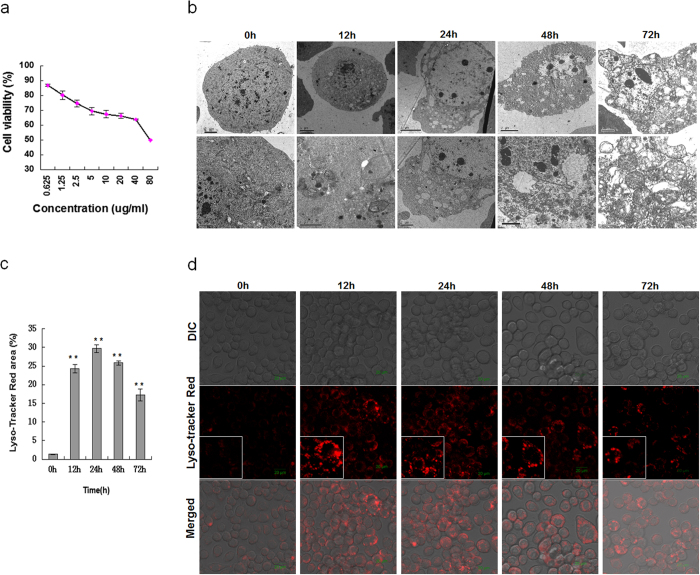
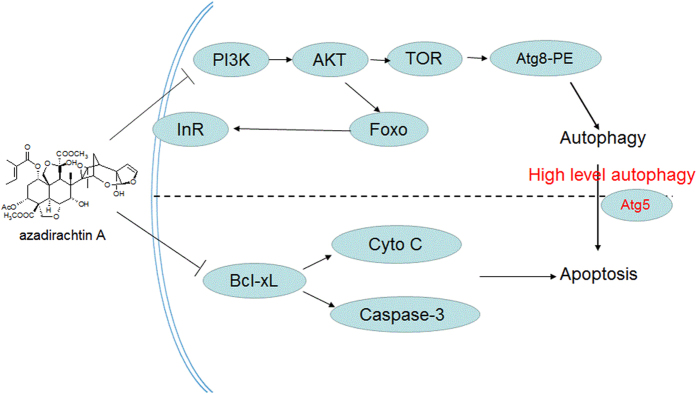
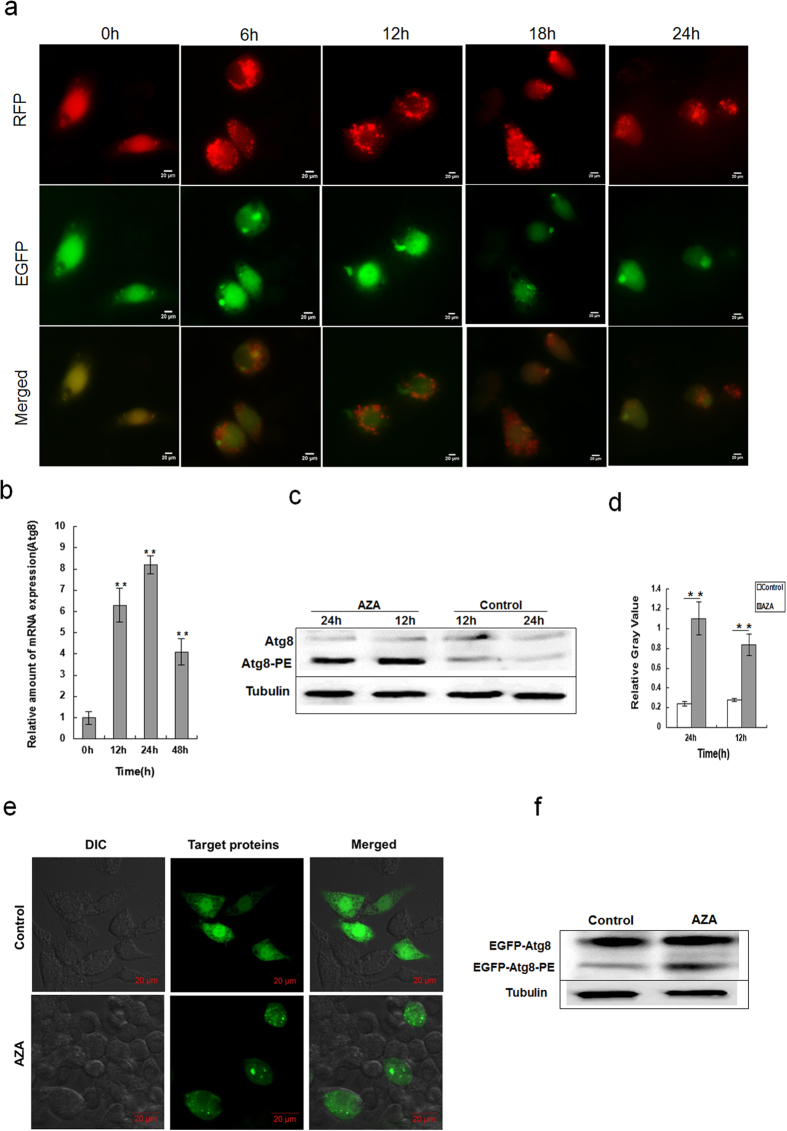
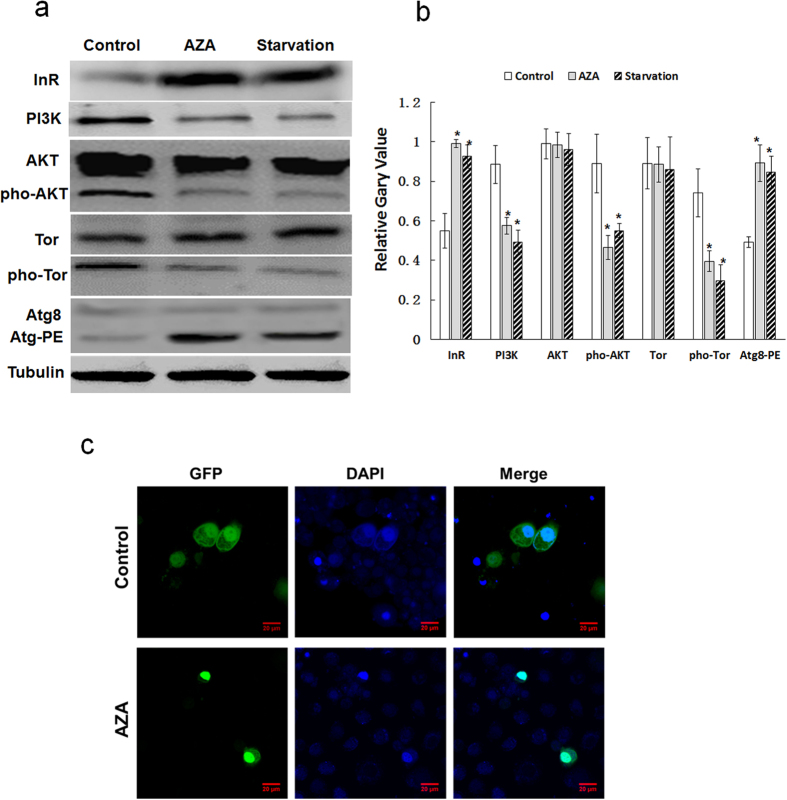
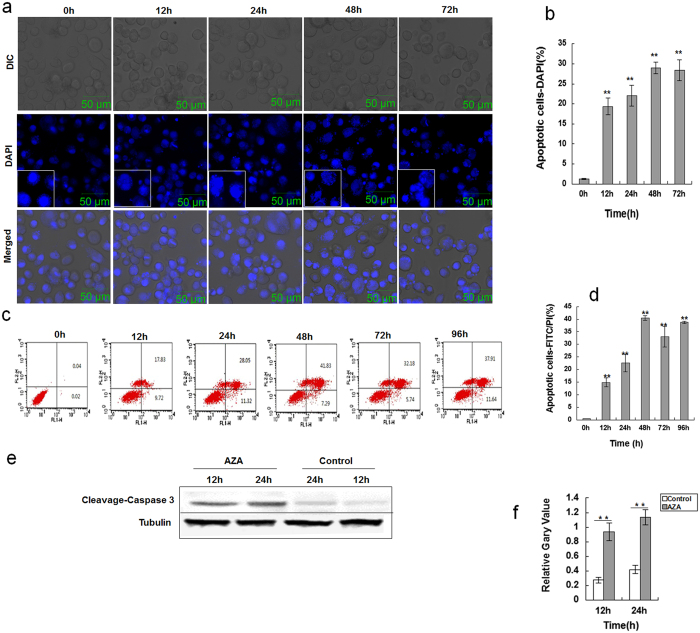
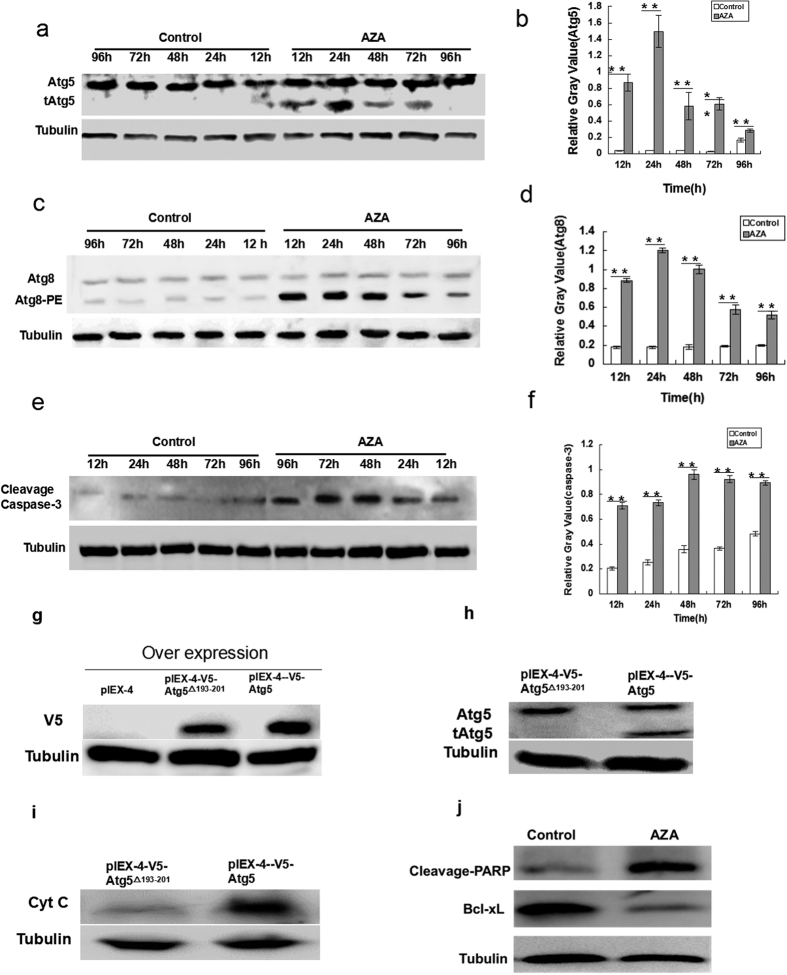
Azadirachtin is one of the most effective botanical insecticides and has been widely used in pest control. Toxicological reports show that azadirachtin can induce apoptosis in various insect cell lines. However, studies of azadirachtin-induced autophagy in cultured insect cells are lacking. This study reports that azadirachtin A significantly inhibits cell proliferation by inducing autophagic and apoptotic cell death in Spodoptera litura cultured cell line (SL-1 cell). Characteristic autophagolysosome and Atg8-PE (phosphatidylethanolamine) accumulation were observed by electron microscopy and western blotting, indicating that azadirachtin triggered autophagy in SL-1 cell. Furthermore, azadirachtin inhibited survival signaling by blocking the activation of PI3K, AKT and the down-stream target of rapamycin. Similar to the positive control of starvation, azadirachtin induced the activation of insulin receptor (InR) via a cellular feedback mechanism. In addition, the autophagy-related 5 (Atg5), a molecular switch of autophagy and apoptosis, was truncated (tAtg5) to trigger cytochrome c release into the cytoplasm under azadirachtin stress, which indicated that azadirachtin induced apoptosis through autophagy. Our findings suggest that azadirachtin primarily induced autophagy in SL-1 cell by dysregulating InR- and PI3K/AKT/TOR pathways, then stimulated apoptosis by activating tAtg5.
印楝素是最有效的植物源杀虫剂之一,已被广泛用于害虫防治。毒理学报告表明,印楝素可诱导多种昆虫细胞系发生凋亡。然而,关于印楝素诱导培养昆虫细胞自噬的研究尚缺。本研究报道,印楝素A通过诱导斜纹夜蛾培养细胞系(SL-1细胞)发生自噬性和凋亡性细胞死亡,显著抑制细胞增殖。通过电子显微镜和蛋白质免疫印迹观察到典型的自噬溶酶体和Atg8-PE(磷脂酰乙醇胺)积累,表明印楝素在SL-1细胞中触发了自噬。此外,印楝素通过阻断PI3K、AKT和雷帕霉素下游靶点的激活来抑制生存信号。与饥饿阳性对照相似,印楝素通过细胞反馈机制诱导胰岛素受体(InR)的激活。此外,自噬和凋亡的分子开关自噬相关蛋白5(Atg5)在印楝素胁迫下被截短(tAtg5),从而触发细胞色素c释放到细胞质中,这表明印楝素通过自噬诱导凋亡。我们的研究结果表明,印楝素主要通过失调InR-和PI3K/AKT/TOR信号通路在SL-1细胞中诱导自噬,然后通过激活tAtg5刺激凋亡。