School of Medical Technology, Institute of Engineering Medicine, School of Life Science, Beijing Key Laboratory for Separation and Analysis in Biomedicine and Pharmaceuticals, Beijing Institute of Technology, Beijing, 100081, P. R. China.
Department of Chemical and Biological Engineering and Department of Chemistry, Hong Kong Branch of Chinese National Engineering Research Center for Tissue Restoration and Reconstruction, Division of Life Science and State Key Laboratory of Molecular Neuroscience, The Hong Kong University of Science and Technology, Clear Water Bay, Kowloon, Hong Kong, P. R. China.
Adv Sci (Weinh). 2023 Jun;10(18):e2301295. doi: 10.1002/advs.202301295. Epub 2023 Apr 21.
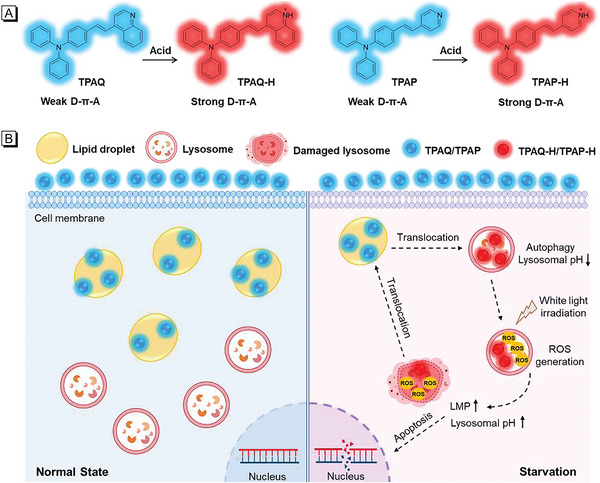
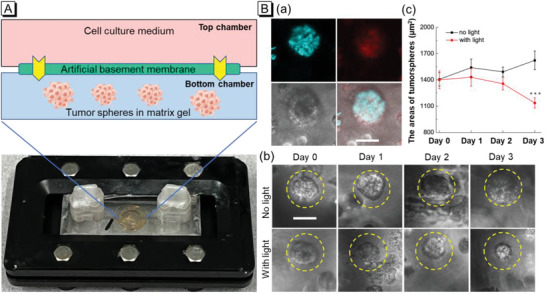
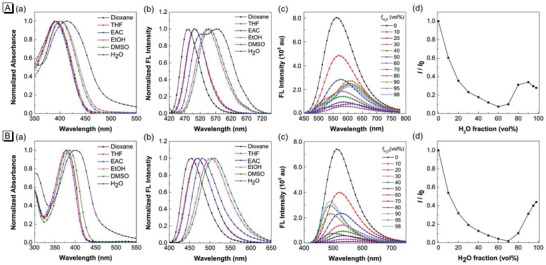
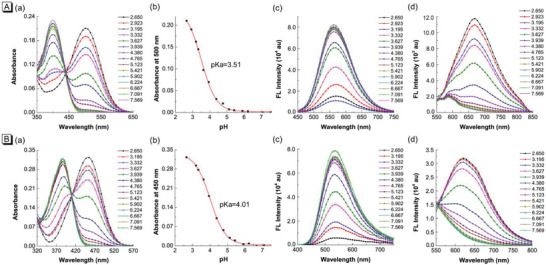
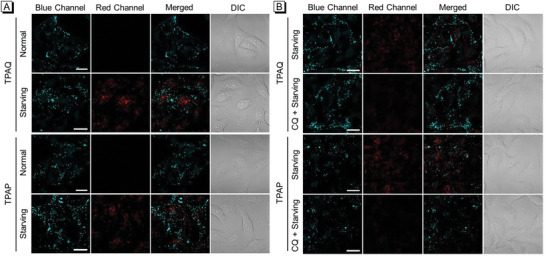
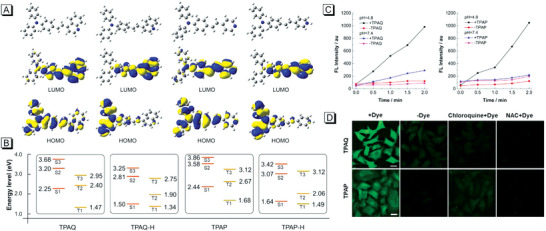
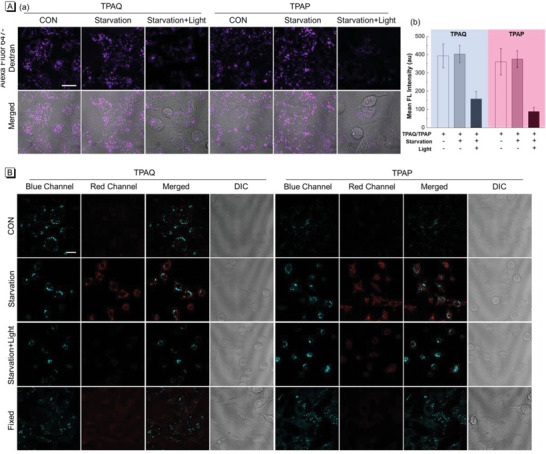
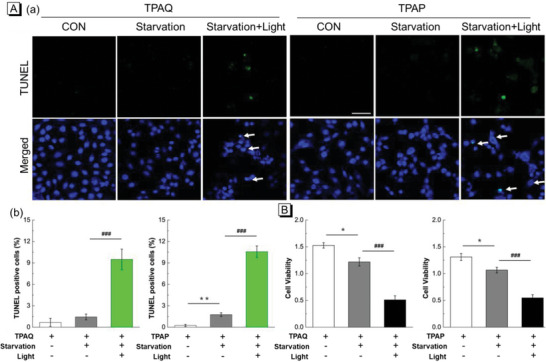
Cancer starvation therapy have received continuous attention as an efficient method to fight against wide-spectrum cancer. However, during cancer starvation therapy, the protective autophagy promotes cancer cells survival, compromising the therapeutic effect. Herein, a novel strategy by combination of autophagy-activated fluorescent photosensitizers (PSs) and cancer starvation therapy to realize the controllable and efficient ablation of tumor is conceived. Two dual-emissive self-reporting aggregation-induced emission luminogens (AIEgens), TPAQ and TPAP, with autophagy-activated reactive oxygen species (ROS) generation are prepared to fight against the protective autophagy in cancer starvation therapy. When protective autophagy occurs, a portion of TPAQ and TPAP will translocate from lipid droplets to acidic lysosomes with significant redshift in fluorescence emission and enhanced ROS generation ability. The accumulation of ROS induced by TPAQ-H and TPAP-H causes lysosomal membrane permeabilization (LMP), which further results in cell apoptosis and promotes cell death. In addition, TPAQ and TPAP can enable the real-time self-reporting to cell autophagy and cell death process by observing the change of red-emissive fluorescence signals. Particularly, the efficient ablation of tumor via the combination of cancer starvation therapy and photodynamic therapy (PDT) induced by TPAQ has been successfully confirmed in 3D tumor spheroid chip, suggesting the validation of this strategy.
癌症饥饿疗法作为一种对抗广谱癌症的有效方法受到了持续关注。然而,在癌症饥饿疗法中,保护性自噬促进了癌细胞的存活,从而影响了治疗效果。在此,我们提出了一种通过将自噬激活的荧光光敏剂(PSs)与癌症饥饿疗法相结合来实现肿瘤可控且高效消融的新策略。我们制备了两种具有自噬激活的活性氧(ROS)产生能力的双发射自报告聚集诱导发射发光体(AIEgens),TPAQ 和 TPAP,以对抗癌症饥饿疗法中的保护性自噬。当保护性自噬发生时,一部分 TPAQ 和 TPAP 会从脂滴易位到酸性溶酶体,荧光发射明显红移,ROS 生成能力增强。TPAQ-H 和 TPAP-H 诱导的 ROS 积累导致溶酶体膜通透性(LMP),进而导致细胞凋亡并促进细胞死亡。此外,TPAQ 和 TPAP 可以通过观察红色发射荧光信号的变化来实时自我报告细胞自噬和细胞死亡过程。特别是,通过在 3D 肿瘤球体芯片中成功证实了 TPAQ 与光动力疗法(PDT)联合的癌症饥饿疗法诱导的肿瘤高效消融,验证了该策略的有效性。