Kurtyka Renata, Pokora Wojciech, Tukaj Zbigniew, Karcz Waldemar
Department of Plant Physiology, Faculty of Biology and Environmental Protection, University of Silesia, Jagiellońska 28, PL-40 032 Katowice, Poland
Department of Plant Physiology and Biotechnology, Faculty of Biology, University of Gdańsk, Wita Stwosza 59, PL-80 308 Gdańsk, Poland.
AoB Plants. 2016 Nov 17;8. doi: 10.1093/aobpla/plw073. Print 2016.
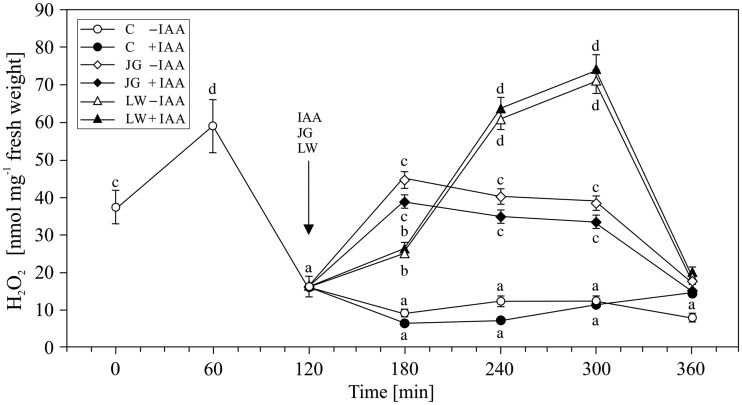
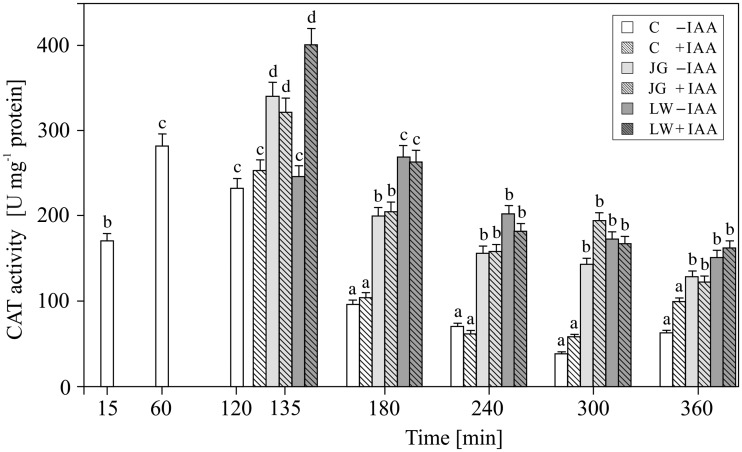
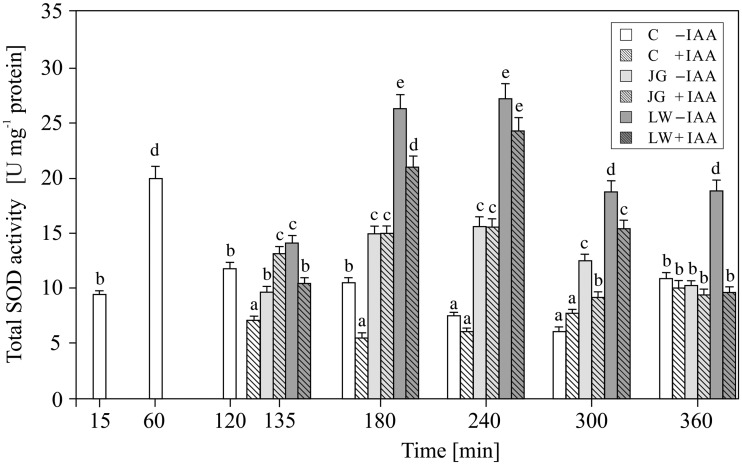
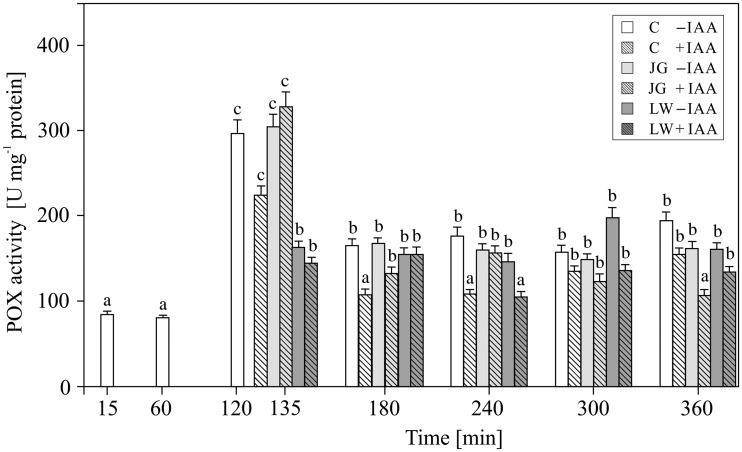
Naphthoquinones are secondary metabolites widely distributed in nature and produced by bacteria, fungi and higher plants. Their biological activity may result from induction of oxidative stress, caused by redox cycling or direct interaction with cellular macromolecules, in which quinones act as electrophiles. The redox homeostasis is known as one of factors involved in auxin-mediated plant growth regulation. To date, however, little is known about the crosstalk between reactive oxygen species (ROS) produced by quinones and the plant growth hormone auxin (IAA). In this study, redox cycling properties of two naphthoquinones, juglone (5-hydroxy-1,4-naphthoquinone) and lawsone (2-hydroxy-1,4-naphthoquinone), were compared in experiments performed on maize coleoptile segments incubated with or without the addition of IAA. It was found that lawsone was much more effective than juglone in increasing both HO production and the activity of antioxidative enzymes (SOD, POX and CAT) in coleoptile cells, regardless of the presence of IAA. An increase in the activity of Cu/Zn-SOD isoenzymes induced by both naphthoquinones suggests that juglone- and lawsone-generated HO was primarily produced in the cytosolic and cell wall spaces. The cell potential to neutralize hydrogen peroxide, determined by POX and CAT activity, pointed to activity of catalase as the main enzymatic mechanism responsible for degradation of HO Therefore, we assumed that generation of HO, induced more efficiently by LW than JG, was the major factor accounting for differences in the toxicity of naphthoquinones in maize coleoptiles. The role of auxin in the process appeared negligible. Moreover, the results suggested that oxidative stress imposed by JG and LW was one of mechanisms of allelopathic action of the studied quinones in plants.
萘醌是自然界中广泛分布的次生代谢产物,由细菌、真菌和高等植物产生。它们的生物活性可能源于氧化应激的诱导,这种氧化应激是由氧化还原循环或与细胞大分子的直接相互作用引起的,其中醌作为亲电试剂。氧化还原稳态是生长素介导的植物生长调节所涉及的因素之一。然而,迄今为止,关于醌产生的活性氧(ROS)与植物生长激素生长素(IAA)之间的相互作用知之甚少。在本研究中,在添加或不添加IAA的情况下对玉米胚芽鞘切段进行实验,比较了两种萘醌胡桃醌(5-羟基-1,4-萘醌)和紫铆因(2-羟基-1,4-萘醌)的氧化还原循环特性。结果发现,无论是否存在IAA,紫铆因在增加胚芽鞘细胞中过氧化氢(HO)的产生和抗氧化酶(超氧化物歧化酶、过氧化物酶和过氧化氢酶)的活性方面都比胡桃醌有效得多。两种萘醌诱导的铜/锌超氧化物歧化酶同工酶活性增加表明胡桃醌和紫铆因产生的HO主要在细胞质和细胞壁空间中产生。由过氧化物酶和过氧化氢酶活性测定的细胞中和过氧化氢的能力表明过氧化氢酶的活性是负责HO降解的主要酶促机制。因此,我们认为由紫铆因比胡桃醌更有效地诱导产生的HO是导致萘醌对玉米胚芽鞘毒性差异的主要因素。生长素在这个过程中的作用似乎可以忽略不计。此外,结果表明胡桃醌和紫铆因施加的氧化应激是所研究的醌在植物中化感作用的机制之一。